
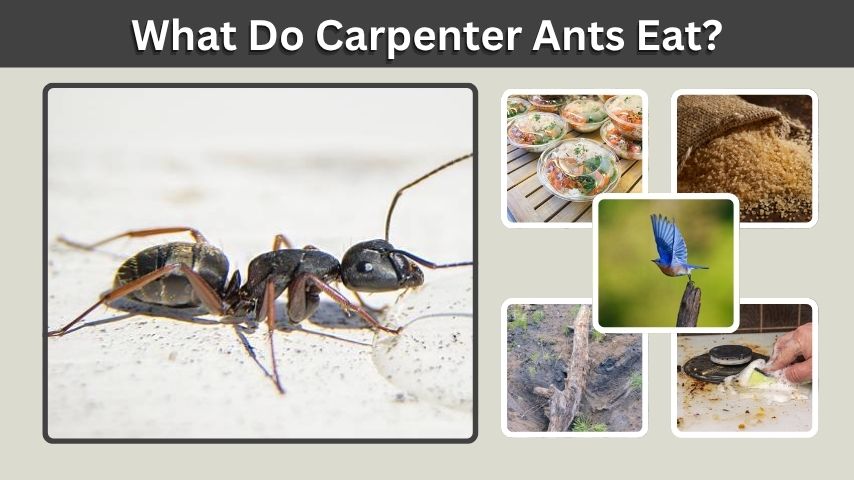
Carpenter ants eat many foods, including sugar, honeydew, insects, meat, grease, pet food, and household crumbs. However, they do not eat wood like termites. Instead, carpenter ants tunnel through wood to build nests. Understanding what carpenter ants eat can help you choose the right bait, remove attractants, and stop them from spreading inside or around your home.
What Do Carpenter Ants Eat?
Carpenter ants are omnivores, which means they eat both plant-based and animal-based foods. Their diet changes depending on the season, colony needs, and available food sources. Outside, they often feed on insects and sugary substances. Indoors, they may look for sweets, proteins, grease, and leftover food.
Common Carpenter Ant Foods
Carpenter ants commonly eat:
- Honeydew from aphids and scale insects
- Dead or living insects
- Fruit juices and overripe fruit
- Syrup, honey, jelly, and sugar
- Meat scraps and grease
- Pet food
- Crumbs and spilled drinks
- Other household food waste
Their food preference can change. Sometimes they are strongly attracted to sweet foods. Other times, they may ignore sugar and look for protein or fats instead.
Why Their Diet Matters
Knowing what carpenter ants eat helps with control. If you use the wrong bait, the ants may ignore it. For example, if a colony is searching for protein, a sweet bait may not work well. If they are feeding on sugar, protein bait may be less attractive.
That is why many pest control strategies involve testing different bait types before deciding which one to use.
Do Carpenter Ants Eat Wood?
One of the most common questions is: do carpenter ants eat wood? The answer is no. Carpenter ants do not eat wood for nutrition. They chew through wood to create tunnels, galleries, and nesting areas.
Why People Think Carpenter Ants Eat Wood
People often assume carpenter ants eat wood because they are found inside wooden walls, decks, trees, beams, and window frames. They can also leave behind piles of sawdust-like material called frass. This makes it look like they are consuming the wood.
However, the frass is actually the material they remove while excavating tunnels. It can contain wood shavings, insect parts, and other nest debris.
Carpenter Ants vs Termites
Carpenter ants and termites are often confused because both can damage wooden structures. The difference is important.
| Feature | Carpenter Ants | Termites |
|---|---|---|
| Do they eat wood? | No, they tunnel through it | Yes, they digest cellulose |
| Damage pattern | Smooth galleries and wood shavings | Mud tubes and hollowed wood |
| Food source | Sugar, insects, protein, grease | Wood and cellulose materials |
| Visible signs | Large ants, frass, trails | Mud tubes, discarded wings |
| Main concern | Nesting in damaged wood | Feeding on structural wood |
Carpenter ants can still damage a home over time, even though they do not eat wood. The damage comes from tunneling and expanding their nest.
What Do Carpenter Ants Eat in the House?
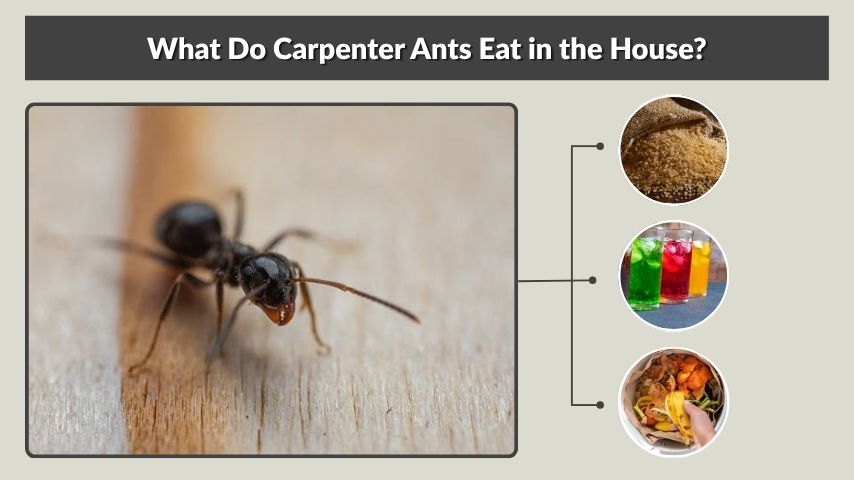
Inside homes, carpenter ants look for easy food and moisture. Kitchens, bathrooms, laundry rooms, basements, and pet feeding areas are common activity zones.
Indoor Foods That Attract Carpenter Ants
Carpenter ants may eat or collect:
- Sugar spills
- Juice, soda, or sweet drinks
- Fruit scraps
- Honey, syrup, and jam
- Bread crumbs and baked goods
- Meat scraps
- Grease around stoves
- Pet food
- Dead insects near windowsills
- Food residue in trash cans
Carpenter ants do not need a large food source to stay active. A few crumbs, a sticky spill, or a pet bowl left out overnight can attract foraging workers.
Why Carpenter Ants Come Indoors
Carpenter ants may enter a home for food, water, shelter, or nesting space. If they only enter occasionally from outside, the issue may be minor. If you see them repeatedly indoors, especially at night or during winter, there may be a nest inside the structure.
Indoor nests are often linked to moisture-damaged wood near leaks, windows, sinks, tubs, or rooflines.
Do Carpenter Ants Eat Sugar?
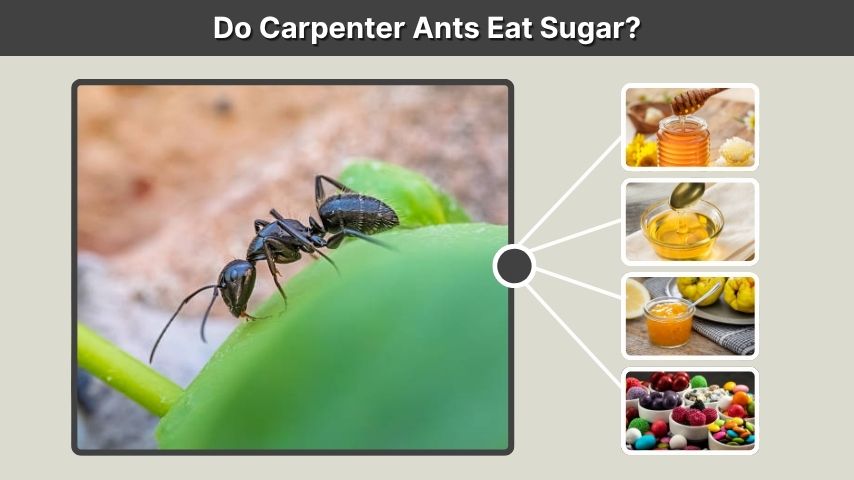
Yes, carpenter ants eat sugar and are often attracted to sweet foods. Sugar gives worker ants quick energy for foraging and colony activity.
Sweet Foods Carpenter Ants Like
Carpenter ants may feed on:
- Honey
- Syrup
- Jelly
- Candy
- Fruit
- Soda
- Juice
- Sugar water
- Sweet bait
- Honeydew from insects
Outdoors, honeydew is one of their most important sugar sources. Honeydew is a sweet liquid produced by sap-feeding insects like aphids and scale insects. Carpenter ants may protect these insects because they provide a reliable food source.
Are Carpenter Ants Always Sweet-Eating Ants?
Carpenter ants like sweets, but they are not always focused on sugar. Their diet changes depending on what the colony needs. In some cases, they may ignore sweet bait and prefer protein or grease.
This is why bait selection matters. If carpenter ants are not eating bait, the bait may not match their current feeding preference.
Do Carpenter Ants Eat Meat or Protein?
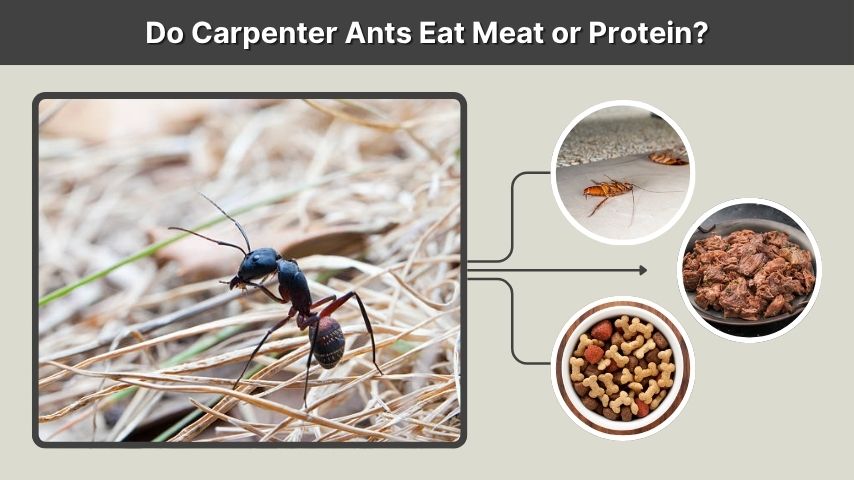
Yes, carpenter ants eat protein. Protein is especially important for growing larvae and supporting the colony. Outdoors, carpenter ants often feed on insects. Indoors, they may be attracted to meat, grease, and pet food.
Protein Sources for Carpenter Ants
Carpenter ants may eat:
- Dead insects
- Small live insects
- Meat scraps
- Grease
- Pet food
- Egg residue
- Protein-based bait
- Other ant species in some cases
If carpenter ants are active in your kitchen but ignore sugar bait, try checking whether they are feeding on grease, meat, or pet food instead.
Do Carpenter Ants Eat Termites or Other Bugs?
Carpenter ants can eat other insects, and they may feed on termites if they encounter them. However, carpenter ants are not a reliable termite control method. Seeing carpenter ants does not mean termites will disappear.
Do Carpenter Ants Eat Other Ants?
Carpenter ants may attack or feed on other ants, especially if the insects are dead or vulnerable. However, their diet is broad, and they do not depend only on other ants.
Do Carpenter Ants Eat Bed Bugs, Roaches, or Aphids?
Carpenter ants may scavenge dead insects, including roaches or other bugs. They may also prey on some small insects. Aphids are more important because they produce honeydew, which carpenter ants like to feed on.
In gardens and trees, carpenter ants are often seen near aphids because of this sweet honeydew relationship.
Do Carpenter Ants Eat Trees?
Carpenter ants do not eat healthy tree wood for nutrition. However, they may tunnel into trees that already have decay, cavities, dead limbs, or moisture-damaged areas.
Why Carpenter Ants Are Found in Trees
Carpenter ants often nest in:
- Hollow tree trunks
- Dead limbs
- Rotting roots
- Old stumps
- Cracked branches
- Moist decayed wood
When people see carpenter ants in a tree, they may think the ants are eating the tree. In reality, the ants are usually using damaged or decaying areas as nesting space.
Are Carpenter Ants Bad for Trees?
Carpenter ants can be a warning sign that a tree has internal decay. They may not be the original cause of the damage, but their presence can indicate a weak or hollow section.
If the tree is close to a house, driveway, sidewalk, or power line, it may be smart to contact an arborist. The bigger concern may be tree stability, not the ants themselves.
Do Carpenter Ants Eat Treated Wood?
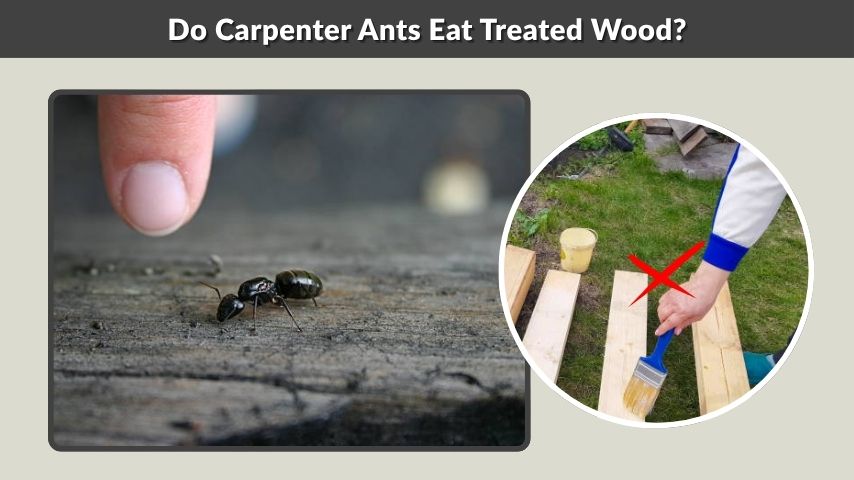
Carpenter ants generally do not eat treated wood because they do not eat wood at all. However, they may still tunnel into pressure-treated wood if the wood becomes old, wet, softened, cracked, or decayed.
Can Carpenter Ants Damage Pressure-Treated Wood?
Pressure-treated wood is more resistant to insects and decay, but it is not always permanent protection. Over time, treated wood can weather, split, absorb moisture, or develop decay in weak areas. Carpenter ants may use those softened areas for nesting.
They are more likely to infest treated wood when:
- The wood stays damp
- Soil touches the wood
- The treatment has aged
- The wood has cracks or rot
- Nearby untreated wood is already infested
Decks, posts, steps, and fences can still attract carpenter ants if moisture and decay are present.
Do Carpenter Ants Eat Drywall, Plastic, Caulk, or Insulation?
Carpenter ants do not eat drywall, plastic, caulk, spray foam, wires, or insulation for nutrition. However, they may chew or move through soft materials while expanding a nest or traveling between spaces.
Materials Carpenter Ants May Disturb
Carpenter ants may move through or damage:
- Damp drywall paper
- Foam insulation
- Soft caulk
- Decayed wood behind walls
- Wall voids
- Gaps around pipes
- Hollow doors or frames
This does not mean these materials are their food. It means the ants are creating pathways or nesting space.
What Eats Carpenter Ants?
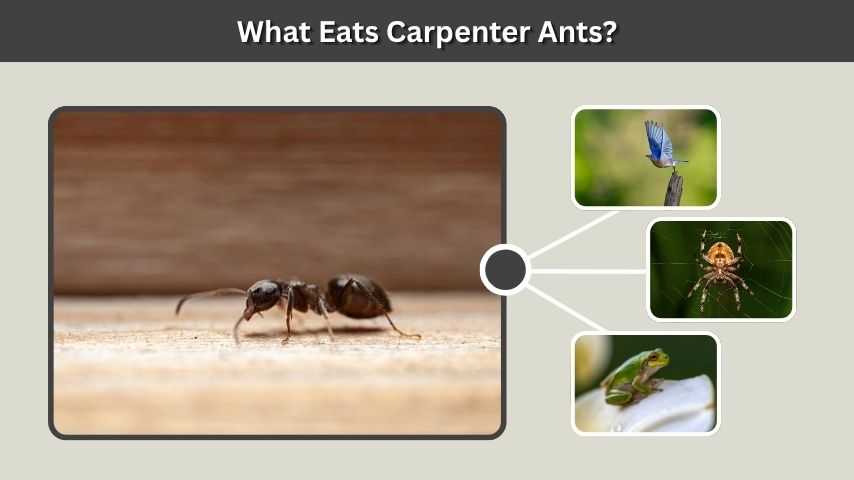
Carpenter ants are part of the food chain. Many animals and insects may eat them, especially outdoors.
Animals That Eat Carpenter Ants
Predators of carpenter ants may include:
- Birds
- Woodpeckers
- Spiders
- Centipedes
- Lizards
- Frogs
- Toads
- Wasps
- Other ants
- Small mammals in some cases
Woodpeckers are especially known for feeding on ants and other insects inside wood. If woodpeckers are repeatedly pecking at a tree or wooden area, it may indicate insect activity inside.
Do Chickens Eat Carpenter Ants?
Yes, chickens may eat carpenter ants if they find them while foraging. However, chickens should not be used as a pest control solution inside or around structures. They may reduce some outdoor insects, but they will not eliminate a hidden carpenter ant colony.
Can Dogs or Cats Eat Carpenter Ants?
A dog or cat may accidentally eat carpenter ants, but this is not ideal. Carpenter ants can bite, and some may release formic acid when threatened. A few ants are usually not a major issue, but pets should not be encouraged to eat them. If a pet reacts badly, contact a veterinarian.
What Do Black Carpenter Ants Eat?
Black carpenter ants eat the same general foods as other carpenter ants. Their diet includes sweets, insects, proteins, grease, and household scraps.
Black Carpenter Ant Food Sources
Black carpenter ants may be attracted to:
- Honeydew
- Dead insects
- Sugar
- Syrup
- Fruit
- Grease
- Meat
- Pet food
- Crumbs
The term “black carpenter ants” usually refers to large dark carpenter ants commonly found around homes, trees, and wood structures. Their color does not mean they eat something different.
Why Are Carpenter Ants Not Eating Bait?
Sometimes carpenter ants ignore bait because the bait does not match what they want at that moment. Their feeding preference can shift between sugar, protein, and fats.
Reasons Carpenter Ants Ignore Bait
Common reasons include:
- They are looking for protein, not sugar.
- The bait is old or dried out.
- The bait was placed in the wrong area.
- Sprays or cleaners disrupted their trail.
- There is a better food source nearby.
- The colony is not actively feeding.
- The bait is not labeled for carpenter ants.
To improve results, place bait near active trails and remove competing food sources. Avoid spraying near bait because it can repel ants and stop them from feeding.
How to Remove Carpenter Ant Food Sources
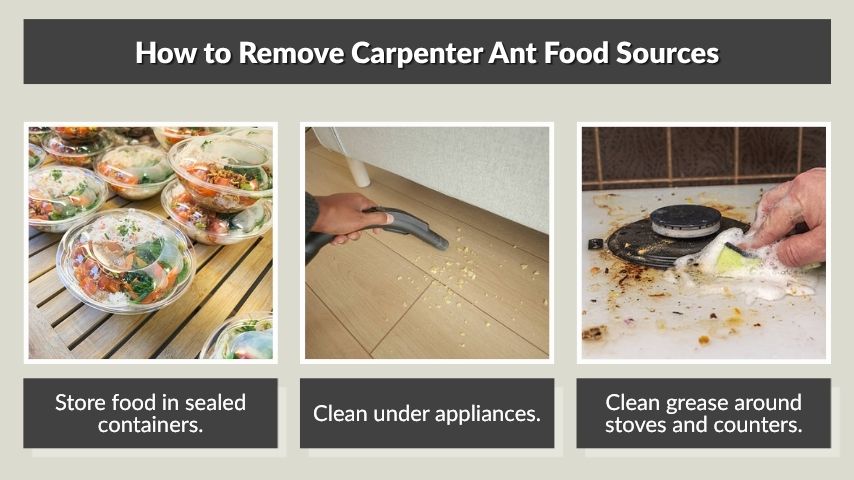
Removing food sources makes your home less attractive to carpenter ants. This is especially important if you are using bait, because competing foods can reduce bait success.
Indoor Food Prevention
Use these steps indoors:
- Wipe up sugar, syrup, and drink spills quickly.
- Store food in sealed containers.
- Clean under appliances.
- Empty trash regularly.
- Rinse recycling containers.
- Pick up pet food at night.
- Remove dead insects from windowsills and basements.
- Clean grease around stoves and counters.
Outdoor Food Prevention
Outside, focus on moisture, insects, and nesting conditions:
- Trim branches away from the house.
- Reduce aphids on plants when possible.
- Remove rotting logs and stumps.
- Keep firewood away from the foundation.
- Avoid excessive mulch against siding.
- Fix leaky outdoor faucets.
- Seal gaps around utility lines and windows.
Food control alone may not eliminate carpenter ants, but it helps reduce activity and makes baiting more effective.
FAQs
What do carpenter ants eat?
Carpenter ants eat sugar, honeydew, insects, meat, grease, pet food, crumbs, and other household foods. Outdoors, they often feed on honeydew from aphids and small insects. Indoors, they may search for sweets, protein, grease, and moisture.
Do carpenter ants eat wood?
No, carpenter ants do not eat wood. They chew through wood to build tunnels and nesting galleries. The sawdust-like material they leave behind is excavated wood, not digested food. This is different from termites, which actually eat wood.
Do carpenter ants eat sugar?
Yes, carpenter ants eat sugar and often like sweet foods such as syrup, honey, jelly, fruit, soda, and sugar water. They also feed on honeydew from aphids. However, they may switch to protein or grease depending on colony needs.
Do carpenter ants eat termites?
Carpenter ants may eat termites or other insects if they encounter them, especially as a protein source. However, they should not be considered termite control. A home can have carpenter ants, termites, or both, so proper inspection is important.
What animals eat carpenter ants?
Birds, woodpeckers, spiders, centipedes, lizards, frogs, toads, wasps, and some small mammals may eat carpenter ants. Chickens may also eat them while foraging. These predators can reduce some ants outdoors but will not remove a hidden colony inside a home.
