
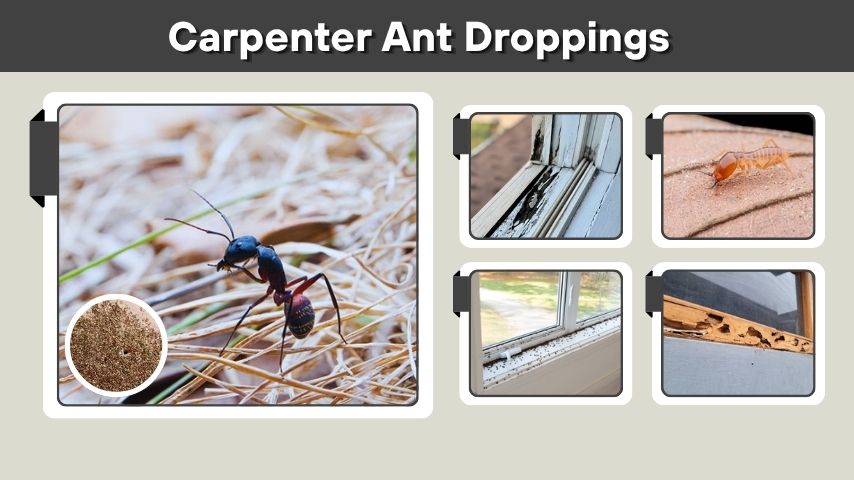
Carpenter ant droppings are often confused with termite droppings, but they are not exactly the same. What many people call carpenter ant droppings is usually frass, a mix of wood shavings, insect parts, and nest debris pushed out of carpenter ant tunnels. Learning what it looks like can help you spot an infestation early and avoid mistaking it for termite damage.
What Are Carpenter Ant Droppings?
Carpenter ant droppings are commonly called droppings, but the more accurate term is carpenter ant frass. Carpenter ants do not eat wood like termites. Instead, they chew through wood to create nesting galleries, then push the waste material out of small openings.
What Is Carpenter Ant Frass?
Carpenter ant frass is a pile of material created when ants excavate wood. It may include:
- Fine wood shavings
- Sawdust-like particles
- Small insect body parts
- Dead ant pieces
- Soil or dust
- Bits of insulation or building debris
Because carpenter ants remove wood instead of eating it, the material they leave behind often looks like loose sawdust rather than true fecal pellets.
Do Carpenter Ants Leave Droppings?
Yes, carpenter ants can leave waste behind, but the visible material homeowners usually notice is frass. This is why searches for “carpenter ant droppings,” “carpenter ants droppings,” and “what do carpenter ant droppings look like” usually refer to the same sign: a small pile of debris near wood, windows, walls, or trim.
What Do Carpenter Ant Droppings Look Like?
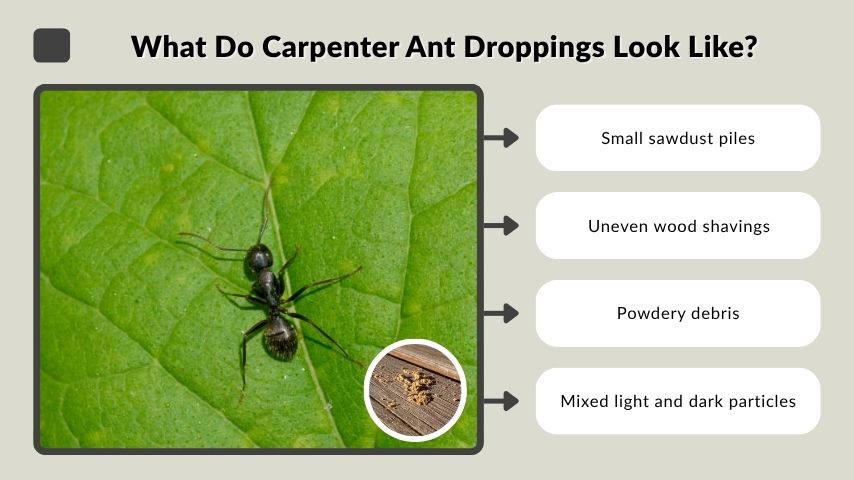
Carpenter ant droppings usually look like tiny piles of sawdust, wood dust, or shredded wood. The color depends on the wood they are tunneling through. If the wood is light, the frass may look tan or beige. If the wood is darker, the pile may look brown or mixed.
Common Appearance
Carpenter ant frass may look like:
- Small sawdust piles
- Uneven wood shavings
- Powdery debris
- Mixed light and dark particles
- Debris under wall openings
- Material near baseboards or window sills
- Tiny bits of insect parts mixed with wood dust
It is usually not shaped like neat pellets. That is one of the biggest differences between carpenter ant droppings and termite droppings.
Where You Might Find It
Carpenter ant droppings or frass may appear in several areas of the home. Common locations include:
- Window sills
- Door frames
- Baseboards
- Attics
- Crawl spaces
- Basements
- Wall voids
- Under wooden beams
- Around decks or porches
- Near damaged trim or siding
If you see repeated piles in the same area after cleaning them up, it may mean ants are actively tunneling nearby.
Carpenter Ant Droppings vs Termite Droppings
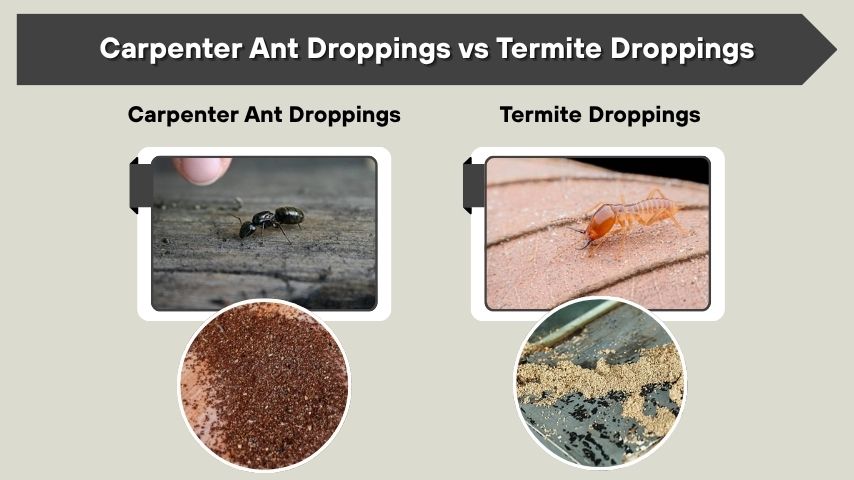
The most important comparison is carpenter ant droppings vs termite droppings. Both pests can be found around wood, but the material they leave behind is different.
Termite droppings, especially drywood termite droppings, are usually small, hard pellets. Carpenter ant frass is more like sawdust or wood shavings.
| Feature | Carpenter Ant Droppings / Frass | Termite Droppings |
|---|---|---|
| Main appearance | Sawdust-like debris | Small, hard pellets |
| Shape | Irregular particles | Oval or grain-like pellets |
| Contents | Wood shavings, insect parts, debris | Digested wood waste |
| Why it appears | Ants push out excavated wood | Termites push out fecal pellets |
| Common location | Window sills, baseboards, wood openings | Near kick-out holes, floors, sills |
| Pest behavior | Tunnels through wood | Eats wood |
Why the Difference Matters
The difference between carpenter ant droppings and termite droppings matters because the treatment approach is different. Carpenter ants usually need nest location, moisture repair, and colony treatment. Termites often require a dedicated termite inspection and treatment plan.
If you are unsure whether you are seeing termite droppings vs carpenter ant debris, it is better to get an inspection rather than guessing.
Carpenter Ant Termite Droppings: How to Tell Which Pest You Have
Many homeowners search for “carpenter ant termite droppings” because the signs can look similar at first. A pile of debris near wood is always worth checking carefully.
Signs It May Be Carpenter Ants
It may be carpenter ants if you notice:
- Large black or reddish-black ants indoors
- Sawdust-like piles near wood
- Smooth tunnels inside damaged wood
- Rustling sounds inside walls
- Ant activity at night
- Frass near damp or rotting wood
- Trails leading from trees, decks, or fences
Carpenter ants are often linked to moisture problems. Leaky windows, damaged siding, roof leaks, and wet crawl spaces can create the conditions they prefer.
Signs It May Be Termites
It may be termites if you notice:
- Pellet-like droppings
- Mud tubes along walls or foundations
- Hollow-sounding wood
- Discarded wings
- Bubbling or blistered paint
- Wood that breaks apart easily
- No visible ants
Drywood termite droppings may look like tiny grains or coffee-colored pellets. Subterranean termites may not leave visible pellets but can create mud tubes and hidden structural damage.
Carpenter Ant Droppings on a Window Sill
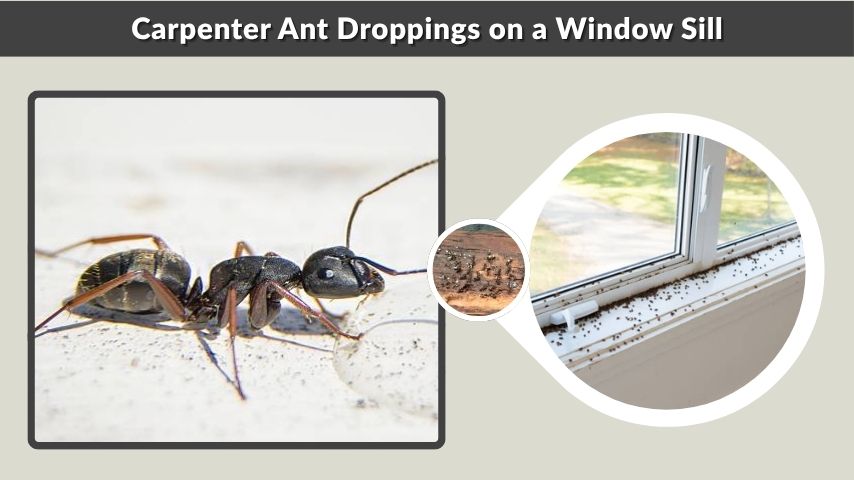
A window sill is one of the most common places to find carpenter ant frass. Windows often develop moisture problems, especially if there are leaks, condensation, damaged caulk, or rotting trim.
Why Frass Appears on Window Sills
Carpenter ant droppings on a window sill may come from a nest or tunnel nearby. The ants may be nesting in:
- Damp window frames
- Rotted trim
- Wall voids around the window
- Wooden siding near the window
- Insulation spaces
- Exterior cracks or gaps
If the pile keeps returning after cleaning, it is a stronger sign of active carpenter ant work.
What to Check Around the Window
Inspect the area carefully. Look for soft wood, bubbling paint, stains, gaps, and ant trails. Press gently on suspicious wood with a screwdriver or similar tool. If it feels soft, hollow, or crumbly, there may be moisture damage behind the surface.
Do not seal the opening immediately without investigating. Sealing an active exit hole may cause the ants to move deeper into another area.
Are Carpenter Ant Droppings an Early Warning Sign?
Yes, carpenter ant droppings can be an early warning sign of a nest or wood damage. Frass means ants are removing material from somewhere. Even if the pile is small, it should not be ignored.
Other Early Warning Signs
Watch for these signs along with frass:
- Ants appearing indoors repeatedly
- Large ants near sinks, tubs, or windows
- Winged ants inside the home
- Small openings in wood
- Damp or rotting wood
- Rustling noises in walls
- Paint bubbling near moisture damage
- Trails outside near trees or decks
A single ant is not always serious, but repeated indoor activity and frass together can indicate a hidden colony.
Why Carpenter Ant Frass Means Wood Damage
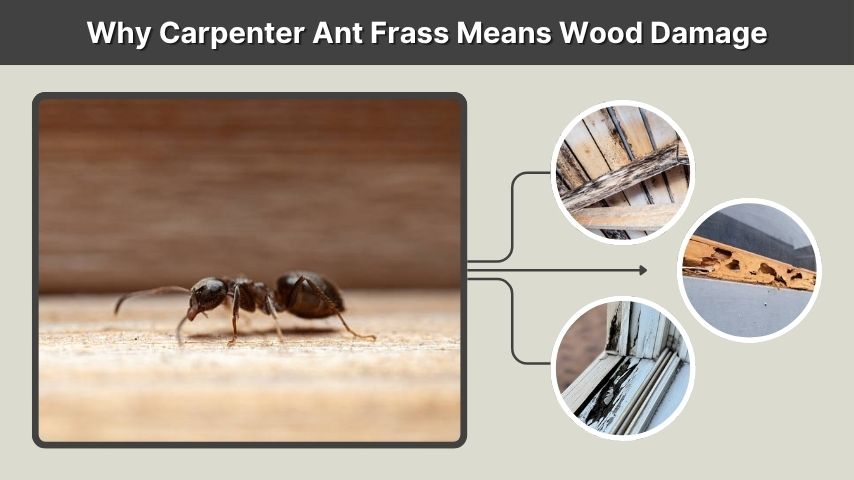
Carpenter ants are not eating the wood, but they are still damaging it. They hollow out galleries to create space for the colony. Over time, this can weaken wood, especially if the infestation is large or long-running.
Wood They Prefer
Carpenter ants are more likely to tunnel through:
- Moist wood
- Decaying wood
- Rotted trim
- Old beams
- Tree stumps
- Logs
- Wet deck boards
- Damaged window frames
- Wood near plumbing leaks
They can also expand into drier wood after establishing themselves in damp or decayed areas.
What Should You Do If You Find Carpenter Ant Droppings?
If you find carpenter ant droppings, do not just clean the pile and forget about it. Cleaning removes the visible sign, but it does not remove the nest.
Step-by-Step Response
Take these steps:
- Take a photo of the debris. This helps with identification if you call a professional.
- Clean the area once. Then check whether the pile returns.
- Look for ant trails at night. Carpenter ants are often more active after dark.
- Inspect nearby wood. Check for moisture, softness, cracks, and damage.
- Avoid random spraying. Sprays may scatter ants and make tracking harder.
- Use bait carefully. Carpenter ant bait can help workers carry treatment back.
- Fix moisture problems. Repair leaks, improve ventilation, and replace rotted wood.
- Call a professional if activity continues. Hidden nests can be difficult to locate.
When to Call an Exterminator
Call a pest control professional if you find frass repeatedly, see winged ants indoors, hear sounds in walls, or notice structural wood damage. Professional inspection is also important when you cannot tell whether the debris is from carpenter ants or termites.
Can Carpenter Ant Droppings Be Granular?
Carpenter ant frass can sometimes look granular because it may contain small wood particles, insect fragments, and debris. However, it is usually more irregular than termite pellets.
Granular Debris vs Termite Pellets
If the material looks like tiny uniform grains, it may be termite droppings. If it looks like uneven sawdust with mixed pieces, it is more likely carpenter ant frass. A close-up picture can help, but an inspection is the safest way to confirm.
Searches like “carpenter ant granular droppings,” “carpenter ant droppings picture,” and “carpenter ant droppings images” often come from homeowners trying to identify this difference visually.
Are Black Carpenter Ant Droppings Different?
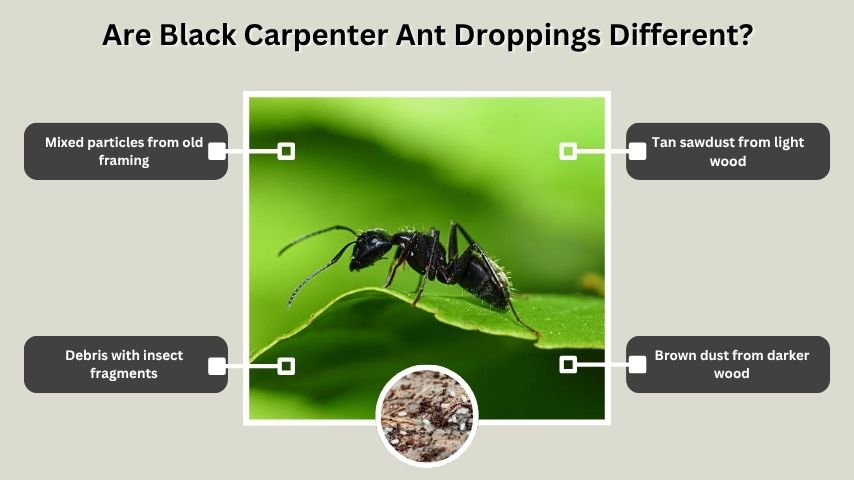
Black carpenter ants leave the same type of frass as other carpenter ants. The color of the ant does not change the basic appearance of the debris. The color of the frass depends more on the wood or material being excavated.
What Black Carpenter Ant Frass May Look Like
Black carpenter ant frass may appear as:
- Tan sawdust from light wood
- Brown dust from darker wood
- Mixed particles from old framing
- Debris with insect fragments
- Dusty piles near nesting areas
If you see large black ants and sawdust-like piles together, carpenter ants are a strong possibility.
How to Prevent Carpenter Ant Droppings From Coming Back
Prevention means removing both the ants and the conditions that attract them. Carpenter ants are strongly associated with moisture and damaged wood.
Prevention Tips
Use these steps to reduce future risk:
- Repair roof, window, and plumbing leaks.
- Replace rotted trim, siding, and boards.
- Keep gutters clean and draining properly.
- Improve ventilation in crawl spaces and attics.
- Store firewood away from the house.
- Trim branches away from the roof and siding.
- Seal cracks around windows, doors, and pipes.
- Keep mulch below siding level.
- Remove stumps, logs, and wood debris near the home.
If the moisture problem remains, carpenter ants may return even after treatment.
FAQs
What do carpenter ant droppings look like?
Carpenter ant droppings usually look like sawdust, wood shavings, or mixed debris. This material is called frass and may include wood particles, insect parts, and nest waste. It is usually irregular, not shaped like the neat pellets often associated with drywood termites.
Are carpenter ant droppings the same as termite droppings?
No. Carpenter ant droppings are usually frass, which looks like sawdust or shredded wood. Termite droppings, especially drywood termite pellets, are more uniform and grain-like. Because they can be confused, repeated debris near wood should be inspected carefully.
Why are carpenter ant droppings on my window sill?
Carpenter ant droppings on a window sill often mean ants are tunneling in nearby damp or damaged wood. Window frames can develop leaks, rot, or condensation problems. If the pile returns after cleaning, there may be an active nest or gallery nearby.
Do carpenter ants leave droppings like termites?
Carpenter ants leave visible debris, but it is not the same as termite pellets. They push out wood shavings and nest material while excavating galleries. Termites eat wood and may leave fecal pellets or mud tubes depending on the species.
Should I call a professional for carpenter ant droppings?
Yes, if the debris keeps returning, you see large ants indoors, or you are unsure whether it is carpenter ants or termites. A professional can identify the pest, locate the nest, check for moisture damage, and recommend the right treatment.
