
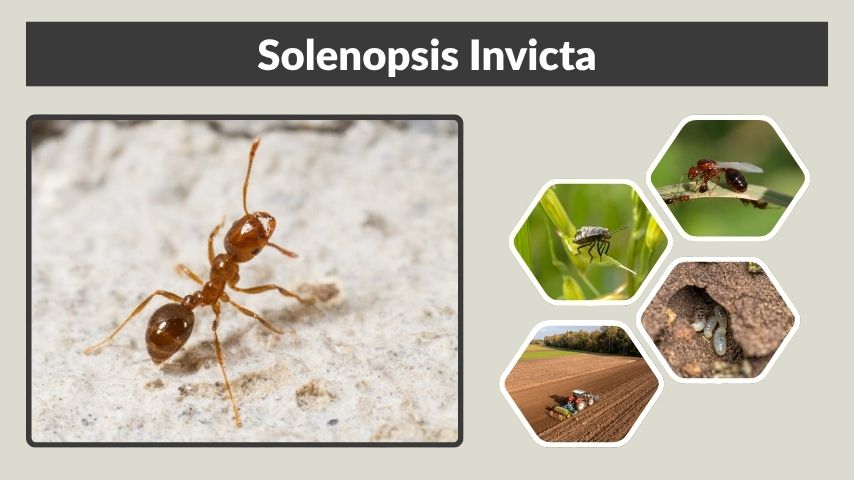
Solenopsis invicta, commonly known as the Red Imported Fire Ant, is one of the world’s most notorious invasive ant species. Originally native to South America, this aggressive ant has spread across many regions, causing ecological, agricultural, and public health concerns. Known for its painful sting and highly organized colonies, Solenopsis invicta has become a subject of extensive scientific research. This guide explores its identification, habitat, colony structure, queen characteristics, and the biological traits that make it one of the most successful invasive insects.
What Is Solenopsis Invicta?
Solenopsis invicta is a species of fire ant belonging to the family Formicidae. It is recognized for its reddish-brown coloration, aggressive defense behavior, and ability to establish large colonies. Due to its rapid spread and environmental impact, it is considered one of the most invasive ant species in the world and has become a major concern in many regions.
Common Name
The species is commonly known as the Red Imported Fire Ant. The term “imported” refers to its introduction from South America into other parts of the world through human activities and trade.
Scientific Classification
Solenopsis invicta belongs to the following taxonomic groups:
- Kingdom: Animalia
- Phylum: Arthropoda
- Class: Insecta
- Order: Hymenoptera
- Family: Formicidae
- Genus: Solenopsis
- Species: Solenopsis invicta
Physical Characteristics
Workers display a reddish-brown body color with a darker abdomen. Colonies contain workers of different sizes, which allows the ants to perform specialized tasks efficiently. Their powerful mandibles and venomous sting contribute to their effectiveness as predators and defenders.
Solenopsis Invicta Size Guide
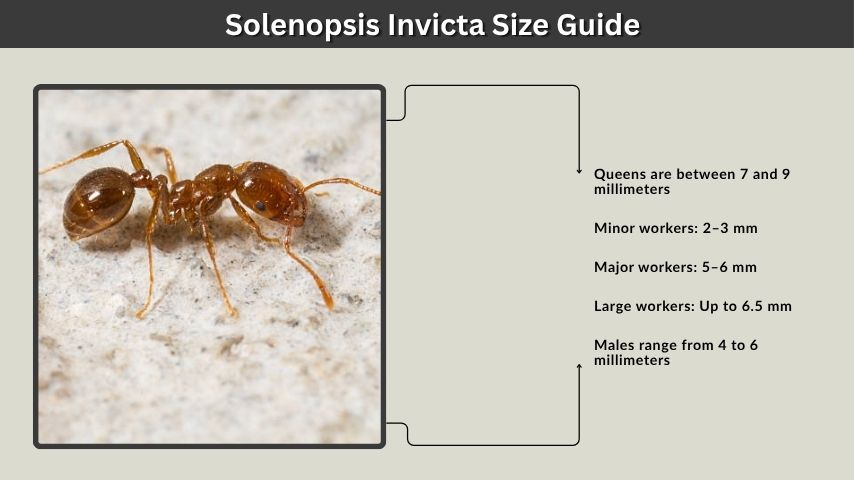
One of the defining features of Solenopsis invicta is worker polymorphism. Unlike many ant species, colonies contain workers of varying sizes that perform different roles. Queens, workers, and males each possess distinct physical characteristics that help researchers and ant keepers identify them accurately.
Queen Size
Queens are significantly larger than workers and generally measure between 7 and 9 millimeters in length. After mating, queens shed their wings and begin founding new colonies.
Worker Sizes
Workers vary considerably in size within the same colony.
- Minor workers: 2–3 mm
- Media workers: 3–5 mm
- Major workers: 5–6 mm
- Large workers: Up to 6.5 mm
Male Size
Male reproductive ants are usually darker in color and possess wings before mating flights. Most males range from 4 to 6 millimeters in length.
Solenopsis Invicta Habitat and Distribution
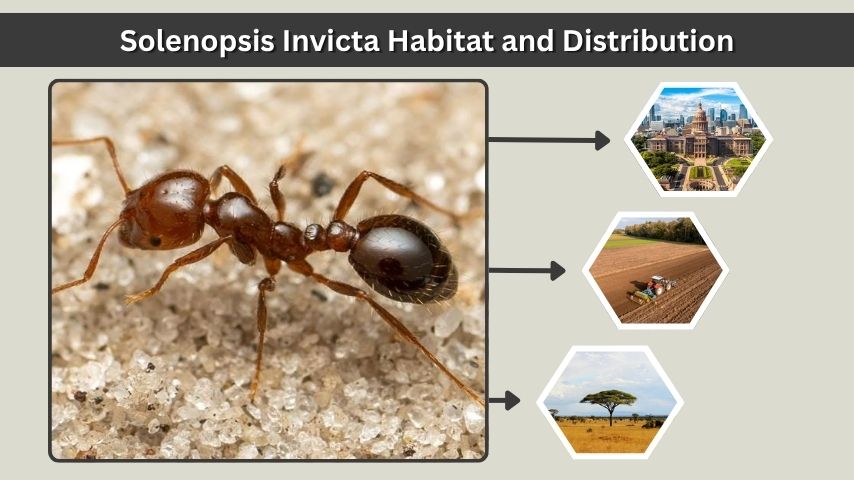
Solenopsis invicta has successfully colonized a wide variety of habitats. Its adaptability allows colonies to thrive in urban areas, agricultural land, grasslands, and disturbed environments. This flexibility has played a major role in the species’ global expansion and invasive success.
Native Range
The species originated in South America, particularly in parts of Brazil, Paraguay, and neighboring regions where environmental conditions support large populations.
Global Distribution
Today, Solenopsis invicta can be found in numerous locations worldwide, including:
- Southern United States
- China
- Taiwan
- Australia
- Caribbean islands
Nesting Habits
Fire ants construct soil mounds that serve as entrances to extensive underground nest systems. These nests contain brood chambers, food storage areas, and specialized sections for queens and workers.
Why Is Solenopsis Invicta an Invasive Species?
The remarkable success of Solenopsis invicta as an invasive species is due to a combination of biological and behavioral advantages. High reproductive rates, aggressive defense strategies, and flexible nesting habits enable colonies to outcompete many native insects and establish dominance in newly invaded environments.
Rapid Reproduction
Queens can lay hundreds to thousands of eggs, allowing colonies to grow quickly. Some populations contain multiple queens, further accelerating colony expansion.
Aggressive Behavior
Workers respond rapidly to disturbances and attack threats in large numbers. This aggressive defense mechanism helps colonies protect resources and territory from competitors.
Ecological Impact
The species often displaces native ants and other arthropods. In heavily invaded areas, biodiversity can decline as native species struggle to compete with expanding fire ant populations.
Solenopsis Invicta Colony Structure
The colony structure of Solenopsis invicta is highly organized and contributes significantly to its success. Different castes perform specialized functions that support colony growth, reproduction, defense, and food collection. This division of labor allows colonies to adapt efficiently to changing environmental conditions.
Worker Castes
Workers are divided into several size categories, each contributing differently to colony operations.
Minor Workers
Minor workers are responsible for brood care, nest maintenance, and routine foraging activities. They represent the majority of the workforce within most colonies.
Major Workers
Major workers possess larger heads and stronger mandibles. Their primary role involves colony defense and processing larger food items.
Multiple Queen Colonies
Some populations exhibit polygyne colony structures, meaning multiple queens coexist within the same colony. These colonies often achieve higher population densities and spread more rapidly than single-queen colonies.
Solenopsis Invicta Queen Guide
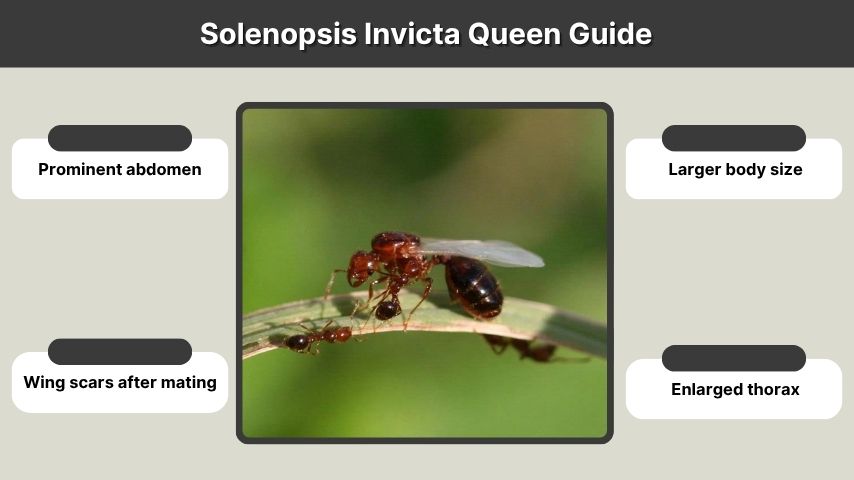
The queen is the reproductive center of every fire ant colony. Her ability to produce large numbers of offspring is a key factor behind the species’ invasive success. Understanding queen biology is essential for studying colony growth and fire ant management strategies.
Identifying a Queen
Queens can be distinguished by several characteristics:
- Larger body size
- Enlarged thorax
- Prominent abdomen
- Wing scars after mating
- Slower movement than workers
Queen Lifespan
A healthy queen can survive for several years under favorable conditions, continuously producing workers and maintaining colony growth throughout her life.
Solenopsis Invicta Life Cycle
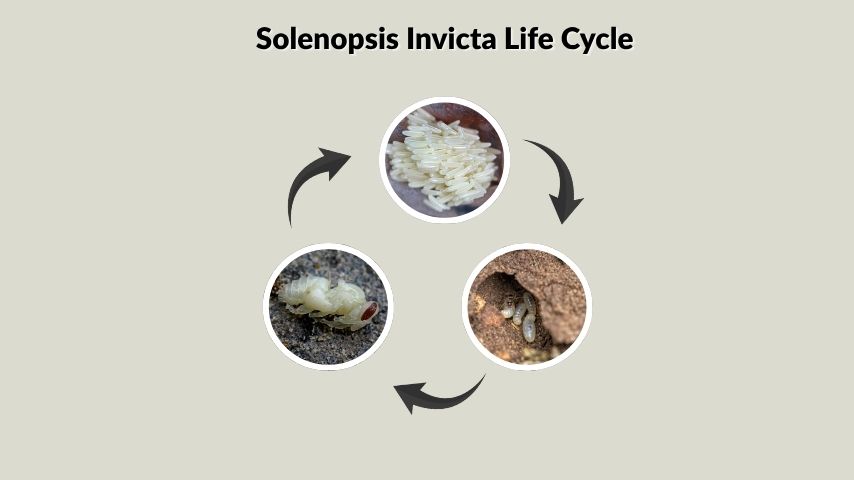
The life cycle of Solenopsis invicta consists of four developmental stages: egg, larva, pupa, and adult. The speed of development depends on factors such as temperature, humidity, food availability, and colony health. Under favorable conditions, colonies can grow rapidly and produce thousands of workers within a relatively short period.
Egg Stage
Queens lay small white eggs that are carefully cared for by worker ants. These eggs eventually hatch into larvae after several days of development.
Larval Stage
Larvae depend entirely on workers for food and care. During this stage, they consume proteins and nutrients needed for growth and future development.
Pupal Stage
Pupae resemble adult ants but remain inactive while undergoing transformation. This stage marks the final phase before emergence as a fully developed ant.
Egg-to-Worker Timeline
The development process generally follows these stages:
- Egg: 7–10 days
- Larva: 6–12 days
- Pupa: 9–16 days
- Adult worker emergence: Approximately 22–38 days
Solenopsis Invicta Nuptial Flights and Colony Founding
Nuptial flights are essential for the reproduction and spread of Solenopsis invicta. During these events, winged males and virgin queens leave established colonies to mate. After mating, queens search for suitable nesting locations where they can establish new colonies.
When Nuptial Flights Occur
Most flights occur during warm weather, particularly after rainfall when soil moisture levels are favorable for colony founding.
Colony Foundation Process
After mating, queens remove their wings and begin excavating a small chamber underground. Inside this chamber, they lay their first eggs and start the colony independently.
Claustral Founding
Solenopsis invicta queens are claustral founders. This means they rely on stored body reserves to raise their first brood without leaving the nest to forage.
Solenopsis Invicta Diet
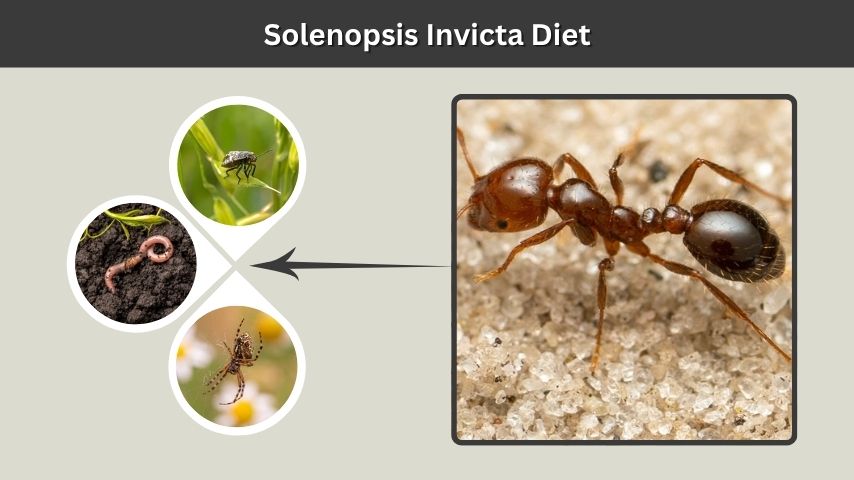
The Red Imported Fire Ant is an opportunistic omnivore capable of consuming a wide variety of food sources. This flexible feeding behavior contributes significantly to its survival and invasive success across different environments.
Protein Sources
Protein is essential for brood development and colony growth.
Common protein foods include:
- Insects
- Worms
- Spiders
- Small arthropods
- Animal remains
Sugar Sources
Adult workers rely heavily on carbohydrates for energy.
Popular sugar sources include:
- Plant nectar
- Honeydew from aphids
- Fruit juices
- Sugary liquids
- Floral secretions
Hunting Behavior
Workers actively hunt small insects and scavenge dead animals. Their aggressive foraging strategy allows colonies to exploit a wide range of food resources.
Solenopsis Invicta Sting, Venom, and Human Impact
One of the most well-known characteristics of Solenopsis invicta is its painful sting. Unlike many ants that primarily bite, fire ants use their mandibles to anchor themselves before delivering multiple venomous stings.
How Fire Ants Sting
Workers first bite the skin to secure their position. They then rotate their bodies and inject venom multiple times, creating a circular pattern of stings.
Venom Composition
The venom contains alkaloids and proteins that cause burning pain, swelling, and irritation. In sensitive individuals, serious allergic reactions may occur.
Common Sting Symptoms
Typical reactions include:
- Burning sensation
- Redness
- Swelling
- Itching
- White pustules
Solenopsis Invicta Behavior
The behavior of Solenopsis invicta has been extensively studied due to its ecological importance and invasive nature. Colonies exhibit remarkable coordination, communication, and adaptability that help them thrive in diverse environments.
Aggression
Fire ants are highly defensive and quickly respond to disturbances. Large numbers of workers can emerge from a nest within seconds when the colony is threatened.
Communication
Workers communicate primarily through chemical pheromones. These chemical signals help coordinate foraging, defense, nest relocation, and brood care.
Foraging Strategies
Colonies establish extensive foraging trails that allow workers to locate and transport food efficiently. Trail pheromones guide other workers directly to valuable food sources.
Solenopsis Invicta vs Solenopsis Geminata
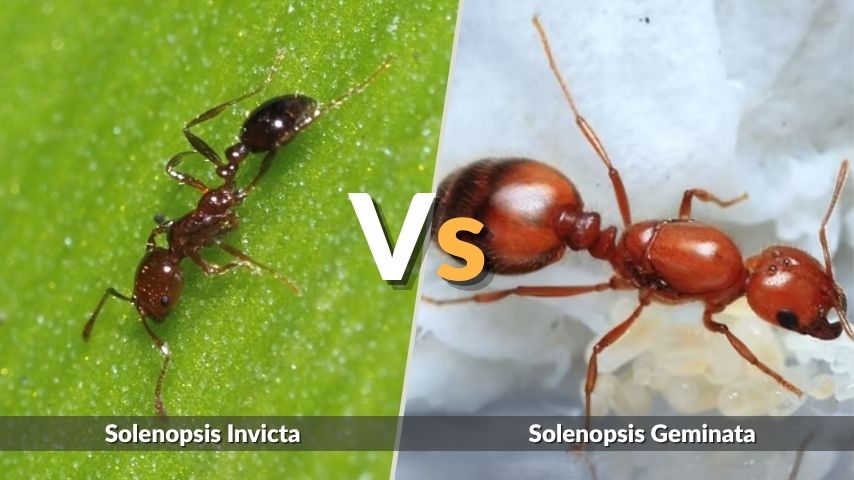
Although these two fire ant species share similarities, they differ in appearance, behavior, and distribution. Correct identification is important for researchers, pest management professionals, and ant enthusiasts.
Key Differences
| Feature | S. Invicta | S. Geminata |
| Color | Reddish-brown | Yellowish to reddish |
| Aggression | Very high | Moderate |
| Distribution | Widely invasive | Primarily tropical |
| Colony Density | Extremely high | Lower |
Identification Tips
Solenopsis invicta generally displays darker coloration and more aggressive behavior than Solenopsis geminata. Detailed identification often requires examination of worker morphology and colony characteristics.
Ecological and Economic Impact
The widespread distribution of Solenopsis invicta has resulted in significant ecological and economic consequences. Its ability to dominate habitats can affect native wildlife, agriculture, and human activities.
Impact on Native Species
Fire ants often outcompete native ant species and prey upon various insects, reptiles, and ground-nesting animals. This can disrupt local ecosystems and reduce biodiversity.
Agricultural Damage
Colonies may damage crops, irrigation systems, and farming equipment. Large infestations can create costly management challenges for agricultural producers.
Human Health Concerns
Painful stings, allergic reactions, and frequent encounters make Solenopsis invicta a significant public health concern in many affected regions.
FAQs
What is Solenopsis invicta commonly called?
Solenopsis invicta is commonly known as the Red Imported Fire Ant. It is one of the most widespread and invasive fire ant species in the world.
How big is a Solenopsis invicta queen?
A mature queen typically measures between 7 and 9 millimeters in length, making her significantly larger than worker ants.
Is Solenopsis invicta an invasive species?
Yes. Solenopsis invicta is considered one of the world’s most invasive ant species and has spread to many countries outside its native South American range.
How painful is a Solenopsis invicta sting?
The sting is known for causing an intense burning sensation followed by redness, swelling, and the formation of white pustules. Some individuals may experience severe allergic reactions.
How large can a Solenopsis invicta colony become?
Established colonies can contain tens of thousands to hundreds of thousands of workers, especially in areas where environmental conditions are favorable.
