
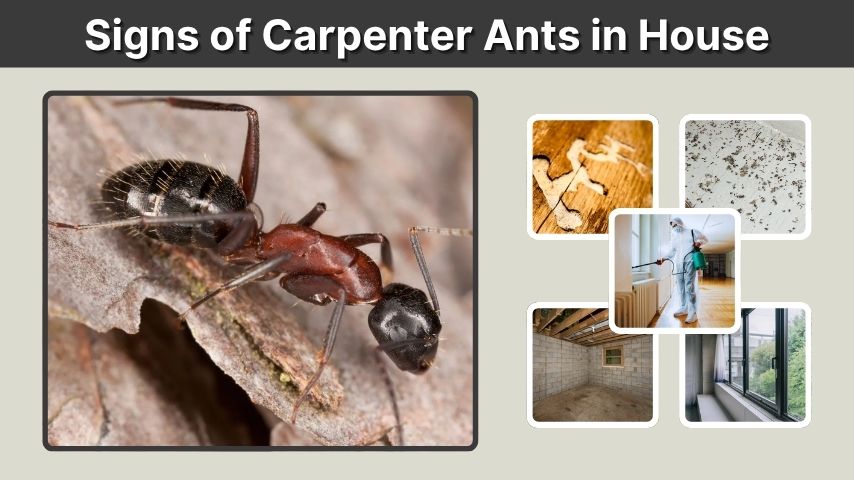
Carpenter ants can hide inside a house for a long time before the problem becomes obvious. The early signs are often small, such as a few large ants, tiny wood shavings, or activity near damp areas. Unlike termites, carpenter ants do not eat wood, but they tunnel through it to build nests. If you know what to look for, you can spot warning signs early and reduce the chance of bigger damage inside walls, basements, or wooden structures.
Early Signs of Carpenter Ants in House
Early signs of carpenter ants in house are often easy to miss because the colony may stay hidden inside wood, walls, or outdoor nesting areas. You may only see a few ants at first, especially near food, water, windows, or damp spaces. Repeated sightings are more important than a single ant because they may suggest nearby nesting activity.
Large Ants Indoors
One of the first signs is seeing large ants inside the home. Carpenter ants are usually bigger than many common household ants. They may be black, reddish, brown, or a mix of colors. A single ant does not always mean you have an infestation, but seeing them often should get your attention.
These ants may appear in kitchens, bathrooms, basements, laundry rooms, or near windows. They often search for food and water, so indoor sightings can increase when the colony is active.
Repeated Ant Sightings in the Same Area
Repeated sightings in the same place are more concerning than one random ant. If you keep seeing carpenter ants near a sink, baseboard, window frame, or wall crack, they may be using that area as a travel path.
Common repeat locations include:
- Kitchen counters and cabinets
- Bathroom floors and walls
- Basement corners
- Window frames
- Door frames
- Baseboards
- Areas near leaking pipes
When the same area keeps attracting ants, it may point to moisture, food, or a hidden entry point.
Winged Ants Inside the House
Winged carpenter ants inside the house can be a stronger warning sign. These ants are reproductive swarmers from a mature colony. If they appear indoors, especially in large numbers, there may be a nest inside or very close to the structure.
You may find them near windows, lights, doors, or vents. Dead winged ants or shed wings can also be evidence that swarmers were active inside the home.
Evidence Signs of Carpenter Ants in House
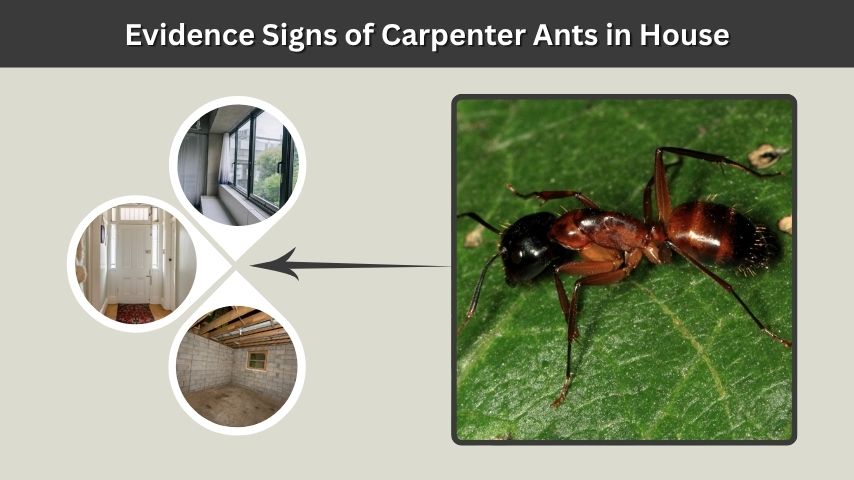
Evidence signs of carpenter ants in house are the clues that help confirm whether the problem is more than a few ants wandering indoors. These signs may include wood shavings, ant trails, dead ants, shed wings, or activity around damp wood. The more clues you find together, the more likely it is that a colony is nearby.
Signs of Carpenter Ants in House Shavings
Carpenter ant shavings are one of the most important clues. These shavings are called frass. They may look like sawdust, tiny wood chips, or dry debris. Carpenter ants push this material out as they dig tunnels inside wood.
Frass may appear near:
- Baseboards
- Window frames
- Door frames
- Wooden beams
- Basement joists
- Wall cracks
- Crawl spaces
Unlike termites, carpenter ants do not eat wood. They remove it to make smooth nesting galleries. That is why small piles of shavings can be a warning sign.
Ant Trails Near Food or Water
Carpenter ants may form trails as workers move between the nest and food or water sources. These trails can appear along walls, floors, pipes, wires, or foundation edges. They may be easier to notice when the house is quiet.
You may see ants moving toward sweets, crumbs, pet food, damp sinks, or trash areas. Trails do not always reveal the nest, but they can help you follow the ants back toward an entry point.
Damage Signs of Carpenter Ants in House
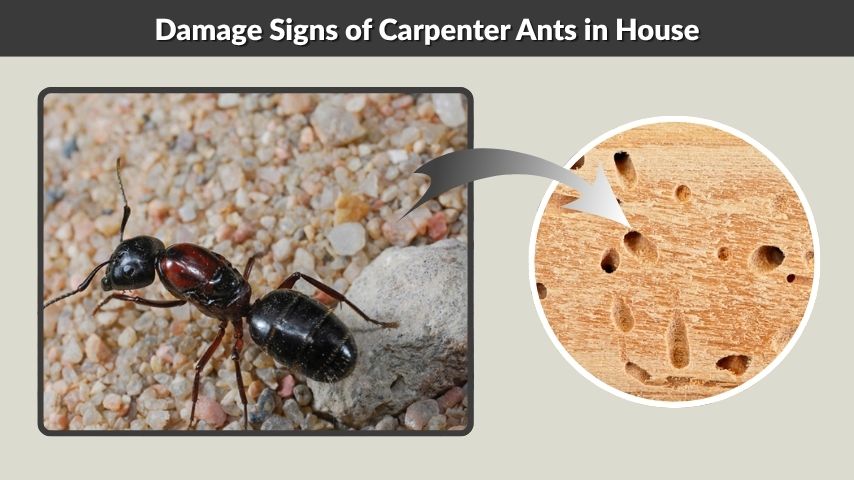
Damage signs of carpenter ants in house usually appear after ants have been nesting for some time. These pests prefer damp, soft, or moisture-damaged wood, so damage is often found near leaks, bathrooms, basements, windows, or roof problems. Carpenter ants can weaken wood over time if the colony grows and the nest remains untreated.
Smooth Tunnels in Wood
Carpenter ants create smooth tunnels inside wood. These tunnels are called galleries. They are usually cleaner than termite damage because carpenter ants remove wood instead of eating it.
You may not see the tunnels right away because they are often hidden inside walls, trim, beams, or flooring. If damaged wood is opened, the galleries may look hollow, polished, and free of mud.
Hollow or Weak Wood
Another sign is wood that sounds hollow or feels weak. This may happen when carpenter ants have removed material from the inside. The outside surface can sometimes look normal while the inner wood has hidden damage.
Soft spots around window frames, door frames, bathroom walls, or basement wood should be checked carefully. If the wood is also damp, the area may be more attractive to carpenter ants.
Moisture-Damaged Wood
Moisture is a major clue. Carpenter ants often choose wood that has already been softened by leaks, condensation, poor ventilation, or decay. They may nest near plumbing leaks, roof leaks, wet insulation, or damp crawl spaces.
Fixing the moisture problem is important. If the damp condition remains, carpenter ants may continue to return even after visible ants are removed.
Signs of Carpenter Ants in House at Night
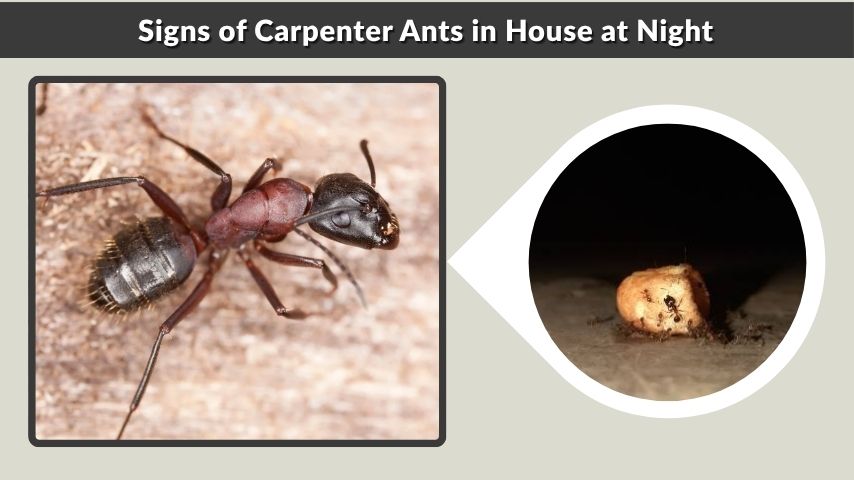
Carpenter ants are often easier to notice at night because they may become more active when the house is quiet. Workers leave the nest to search for food and water, so you may see them moving along walls, floors, counters, or baseboards. Night activity can help reveal trails and possible nesting areas.
Night Trails Along Baseboards
At night, carpenter ants may follow hidden paths along baseboards, wall edges, cracks, pipes, or electrical lines. These paths help them move between the nest and food sources without being disturbed.
If you see ants traveling in a line, do not wipe them away immediately. Watch where they go. Their trail may lead toward a wall void, window frame, sink area, basement corner, or another possible entry point.
Rustling Sounds in Walls
In some cases, carpenter ants may make faint rustling or crackling sounds inside walls or wooden areas. This sound is usually caused by ants moving through galleries or chewing through soft wood.
The sound may be easier to hear at night when the home is quieter. If you hear sounds near damp walls, window frames, or wooden beams, it may be worth inspecting the area more closely.
Basement Signs of Carpenter Ants in House
Basements are common places to find carpenter ant activity because they often have moisture, exposed wood, foundation cracks, and utility openings. Ants may enter from outside or nest in damp sill plates, joists, or wall framing. If you see ants in the basement often, check for moisture and wood debris nearby.
Ants Around Foundation Cracks
Carpenter ants can enter through small gaps around foundations, windows, vents, and utility lines. In a basement, they may appear near cracks in masonry, around pipes, or along the edge where the wall meets the floor.
These ants may not be nesting in the basement itself. They may be traveling from an outdoor nest into the house for food or water. However, repeated sightings still deserve attention.
Frass Near Beams or Joists
Frass near basement wood is a stronger warning sign. If you see sawdust-like shavings below beams, joists, sill plates, or wooden trim, carpenter ants may be tunneling nearby.
Signs to check in basements include:
- Small piles of wood shavings
- Ant trails near foundation walls
- Damp beams or joists
- Soft or damaged sill plates
- Ants around stored firewood
- Dead ants near basement windows
A basement inspection should focus on both ants and moisture. Without moisture control, the problem may continue.
Carpenter Ants vs Termites: Signs in the House
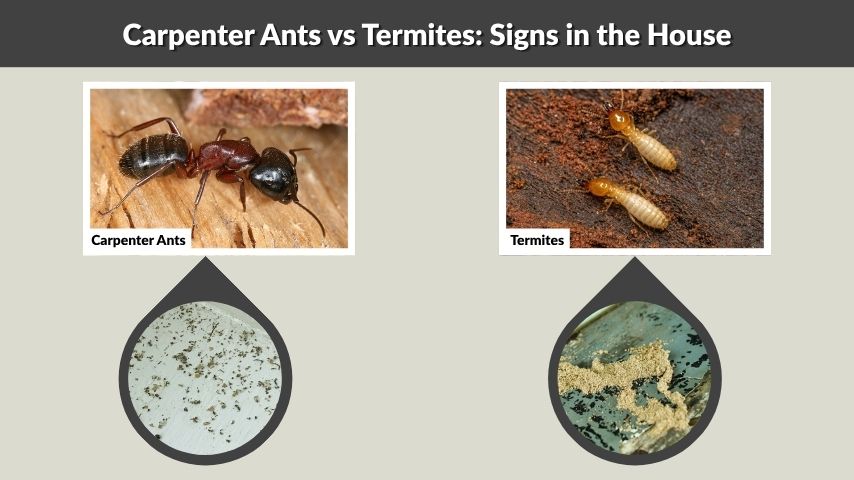
Carpenter ants and termites are often confused because both are linked to wood damage. However, their signs are different. Carpenter ants tunnel through wood to build nests, while termites eat wood. Looking at the insects, debris, wings, and damage pattern can help you understand which pest may be present.
Carpenter Ant Frass vs Termite Droppings
Carpenter ant frass often looks like sawdust, wood shavings, or small mixed debris. It may collect below kick-out holes, cracks, beams, or trim. Termite evidence may look different depending on the species. Some termites leave mud tubes, while others leave small pellet-like droppings.
If you see clean sawdust-like piles near wood, carpenter ants are possible. If you see mud tubes on walls, foundations, or crawl space surfaces, termites may be more likely.
Winged Carpenter Ants vs Winged Termites
Winged carpenter ants and winged termites can look similar at first, but their bodies are different. Carpenter ants have elbowed antennae, a narrow waist, and front wings that are longer than the back wings. Termites usually have straight antennae, a broad waist, and wings of equal length.
If the insects are dead or damaged, identification can be harder. In that case, save a sample or take clear photos before treating the area.
What to Do If You See Signs of Carpenter Ants
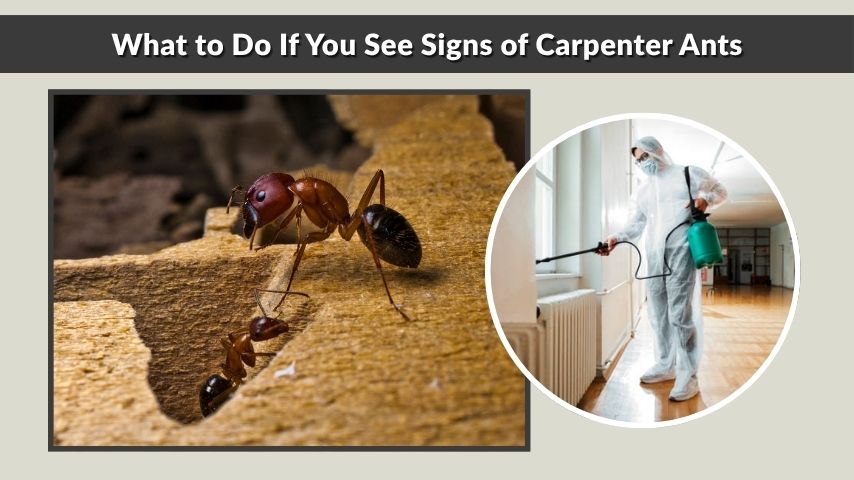
If you see signs of carpenter ants in your house, the next step is to confirm the pest and find out whether they are nesting indoors or entering from outside. Killing visible ants may not solve the issue if a hidden colony remains. Focus on inspection, moisture control, and locating the source.
Quick Inspection Checklist
Use this checklist to inspect your home:
- Look for frass near wood, trim, and beams
- Watch ant trails at night
- Check bathrooms, kitchens, and basements
- Inspect window and door frames
- Look for leaks or damp wood
- Check crawl spaces and attic areas
- Look outside for stumps, logs, mulch, and firewood
- Trim branches touching the house
These steps can help you find the conditions that attract carpenter ants and identify possible nest locations.
When to Call a Professional
You should consider calling a pest professional if carpenter ants keep appearing indoors, if you find winged ants inside, or if frass comes back after cleaning. Professional help is also useful when you cannot tell whether the problem is carpenter ants or termites.
A professional inspection may be especially important if wood sounds hollow, ants are coming from walls, or the infestation is in a hard-to-reach area.
FAQs
What are the early signs of carpenter ants in house?
Early signs include seeing large ants indoors, repeated activity near sinks or windows, small piles of sawdust-like frass, and ants moving along baseboards at night. One ant may not mean infestation, but repeated sightings should be checked.
What do carpenter ant shavings look like?
Carpenter ant shavings are called frass. They often look like sawdust, tiny wood chips, or dry debris. You may find them near baseboards, window frames, beams, wall cracks, or basement wood where ants are tunneling.
Are carpenter ants active at night?
Yes, carpenter ants are often active at night. They may travel along walls, floors, counters, pipes, or baseboards while searching for food and water. Watching trails after dark can help you find possible entry points or nest areas.
How do I know if I have carpenter ants or termites?
Carpenter ants have elbowed antennae, narrow waists, and uneven wing lengths. Termites usually have straight antennae, broad waists, and equal-length wings. Carpenter ants leave sawdust-like frass, while termites may leave mud tubes or pellet-like droppings.
Do carpenter ants in the house always mean damage?
No, one or two carpenter ants indoors do not always mean damage. They may have entered from outside. However, repeated sightings, frass, winged ants, rustling sounds, or soft wood can suggest a hidden nest or possible wood damage.
