
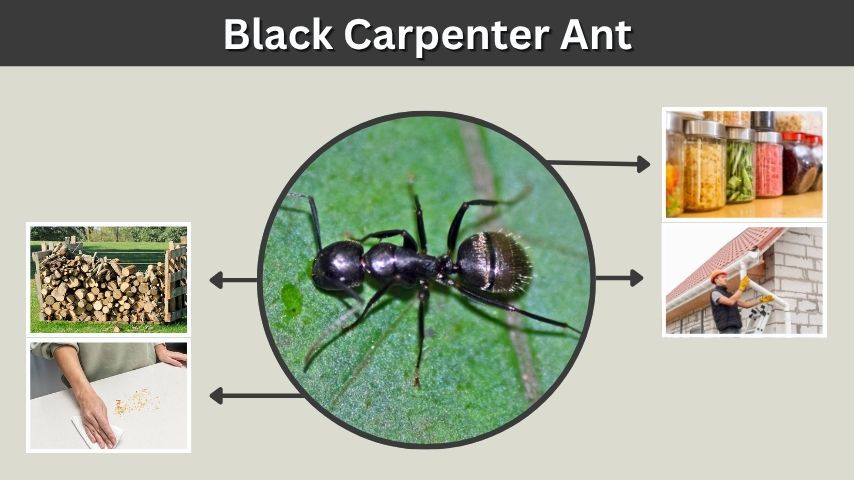
Black carpenter ants are large black ants that often worry homeowners when they appear indoors. Unlike termites, they do not eat wood, but they can tunnel through damp or damaged wood to build nests. This behavior may lead to hidden structural problems if the colony grows over time. Knowing how to identify black carpenter ants, where they nest, and what signs to watch for can help you act early before the infestation becomes harder to control.
What Is a Black Carpenter Ant?
A black carpenter ant is a large ant species known for nesting in wood. These ants are commonly found outdoors in trees, logs, stumps, and decaying wood, but they may also move into homes when they find moisture-damaged wood. Understanding what they are is the first step in deciding whether the ants in your home are harmless visitors or a possible infestation.
Basic Identification
Black carpenter ants are usually larger than many common household ants. Their bodies are dark brown to black, and they have a narrow waist with bent antennae. Worker ants may vary in size, while the queen is much larger and stays inside the nest. Their smooth, rounded upper body helps separate them from some other ant species.
Where They Usually Live
Outdoors, black carpenter ants often nest in dead trees, rotting logs, old stumps, fence posts, and piles of firewood. Around homes, they may nest in damp window frames, wall voids, crawl spaces, roof areas, or wood damaged by leaks. They prefer wood that is already softened by moisture, decay, or previous damage.
Why Black Carpenter Ants Enter Homes
Black carpenter ants usually enter homes while searching for food, water, or a suitable nesting site. A few ants indoors may simply be foragers from an outdoor colony, but repeated sightings can mean there is a nest nearby. Homes with moisture problems, wood decay, or easy entry points are more likely to attract these ants and support an infestation.
Common Reasons They Come Inside
Black carpenter ants may enter a house for several reasons, especially when indoor conditions make survival easier. They are often drawn to areas where food and moisture are available.
- Leaky pipes or damp wood near plumbing
- Cracks around doors, windows, or foundations
- Food crumbs, sweets, grease, or pet food
- Firewood stored close to the house
- Tree branches touching the roof or siding
- Rotten wood around decks, porches, or windows
Indoor Areas They Prefer
Inside the home, carpenter ants are often found near moisture. Bathrooms, kitchens, basements, attics, laundry rooms, and crawl spaces are common areas. They may also travel through wall voids or behind insulation. If ants appear from cracks, baseboards, outlets, or ceiling gaps, the nest may be hidden inside the structure.
Black Carpenter Ant Identification Signs
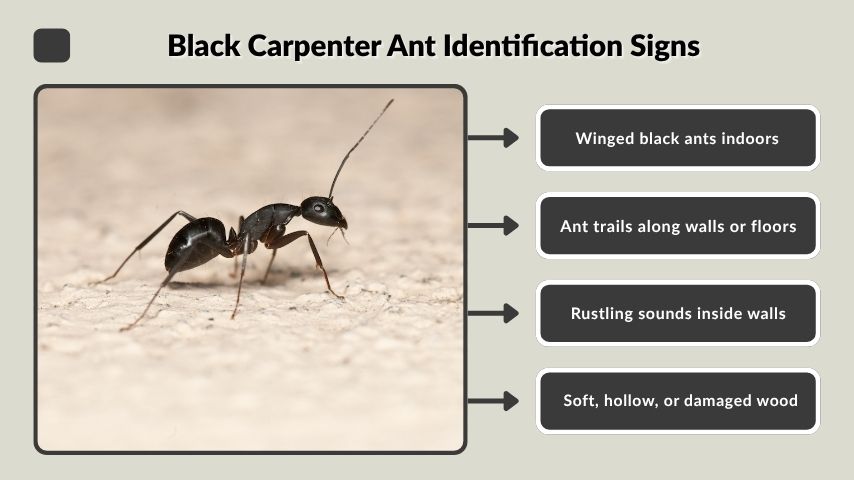
Identifying black carpenter ants correctly matters because they can be confused with ordinary black ants or termites. The signs are not always obvious at first, especially when the nest is hidden inside walls or wood. Careful observation of size, movement, nesting debris, and winged ants can help you understand whether the problem needs immediate attention.
Large Black Ants Indoors
One of the first signs is seeing large black ants inside the house. They may appear one at a time or in small groups, often near kitchens, bathrooms, windows, or doors. Carpenter ants are commonly active at night, so homeowners may notice them moving across floors, counters, or walls after dark.
Sawdust-Like Frass
Carpenter ants do not eat wood. Instead, they chew through it and push out waste material called frass. This may look like small piles of sawdust mixed with insect parts or debris. Frass is often found near baseboards, window frames, wooden beams, or wall cracks close to the nesting area.
Other Warning Signs
Several clues can suggest that black carpenter ants are nesting in or near the home. These signs become more serious when they appear repeatedly or in combination.
- Winged black ants indoors
- Ant trails along walls or floors
- Rustling sounds inside walls
- Soft, hollow, or damaged wood
- Ants appearing from the same crack or gap
- More activity at night
Black Carpenter Ant vs Termite
Black carpenter ants and termites are both linked to wood damage, but they are not the same insect. This difference is important because their behavior, damage pattern, and treatment methods are different. Termites eat wood for food, while carpenter ants remove wood to create tunnels. Still, both problems should be taken seriously when found inside a home.
Key Difference in Wood Damage
Termites consume wood and may leave mud tubes, hollow galleries, or damaged wood that looks layered. Black carpenter ants excavate wood and leave smoother tunnels inside. They often push debris outside the nest, creating small piles of frass. While carpenter ant damage is usually slower than termite damage, a large colony can still weaken wooden areas over time.
Difference in Appearance
Carpenter ants have a narrow waist, bent antennae, and front wings that are longer than the back wings when winged ants are present. Termites have a thicker waist, straight antennae, and wings of equal length. If winged insects are found indoors, correct identification is important because it may show a mature colony nearby.
Are Black Carpenter Ants Dangerous?
Black carpenter ants are not usually dangerous to people, but they can become a serious concern for property. They do not spread major diseases in the same way some pests do, and they are not aggressive unless disturbed. However, their nesting behavior can damage wood, especially when moisture problems already exist inside the home.
Do Black Carpenter Ants Bite?
Black carpenter ants can bite if they are handled or threatened. Their bite may cause brief pain or mild irritation, but it is not usually dangerous for most people. The bigger concern is not the bite itself, but what their presence may mean. Frequent indoor sightings can suggest a hidden nest or moisture-damaged wood that needs inspection.
Are They Harmful to Homes?
They can be harmful when a colony nests inside structural wood. Over time, their tunnels may weaken window frames, wall studs, beams, or other wooden areas. The damage often starts in wood that is already damp or decayed, so fixing moisture problems is an important part of controlling them.
How to Find a Black Carpenter Ant Nest
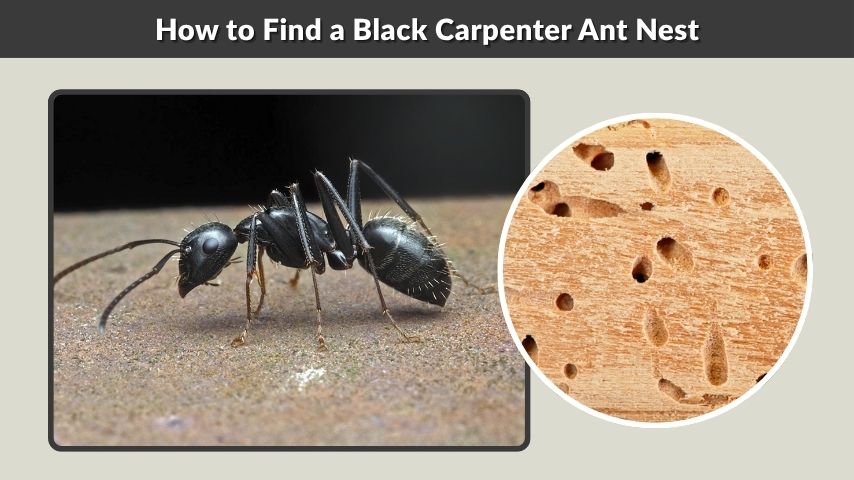
Finding the nest is one of the most important steps in solving a black carpenter ant problem. Spraying only the ants you see may reduce activity for a short time, but it usually does not remove the colony. Carpenter ants often nest in hidden wood, wall spaces, or outdoor areas near the home, so careful inspection is needed before treatment.
Follow Ant Trails
Black carpenter ants often travel along regular paths between their nest and food sources. Watch where the ants go, especially at night when they are more active. They may move along baseboards, window frames, pipes, wires, fences, decks, or tree branches. Following these trails can help you locate the main nesting area.
Check Moisture-Damaged Wood
Carpenter ants prefer wood that is damp, soft, or decayed. Inspect areas where moisture problems are common, including bathrooms, kitchens, basements, crawl spaces, attics, and laundry rooms. Also check around leaking windows, roof edges, sinks, tubs, and plumbing lines. If the wood feels soft or sounds hollow, ants may be nesting inside.
Look Around Outdoor Nesting Sites
Many black carpenter ant problems begin outdoors. A colony may live outside and send workers into the home for food. Check nearby trees, logs, stumps, firewood piles, fence posts, mulch beds, decks, and porch supports. If outdoor nests are close to the house, ants can easily enter through cracks, gaps, or branches touching the structure.
How to Get Rid of Black Carpenter Ants
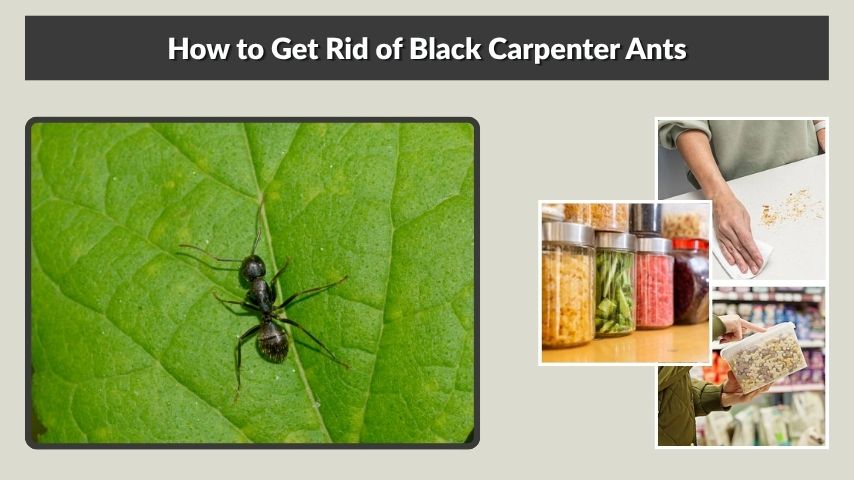
Getting rid of black carpenter ants requires more than killing the visible ants. The goal is to locate the colony, remove the conditions that attract them, and use the right treatment method. Because these ants may have satellite nests inside a house, control can take time. A complete approach works better than quick surface spraying.
Remove Food Sources
Keeping the home clean helps reduce carpenter ant activity. These ants are attracted to sweet, greasy, and protein-based foods. Simple cleaning habits can make the home less inviting.
- Wipe kitchen counters and dining areas daily
- Store sugar, snacks, and dry foods in sealed containers
- Clean grease around stoves and appliances
- Keep pet food covered or remove it overnight
- Empty trash regularly and use tight-fitting lids
- Clean up crumbs, spills, and food residue quickly
Fix Moisture Problems
Moisture control is essential because carpenter ants prefer damp wood. Repair leaking pipes, dripping faucets, roof leaks, and damaged gutters. Improve ventilation in basements, crawl spaces, bathrooms, and attics. Replace rotten wood around windows, doors, decks, and porches. When the moisture source is removed, the area becomes less suitable for nesting.
Use Ant Baits Correctly
Ant baits can help when worker ants carry the bait back to the colony. Place bait near trails, entry points, or areas where ants are active. Avoid spraying near bait because sprays may repel ants and stop them from feeding. Baits may take several days or longer to work, so patience is important.
Treat the Nest Directly
For strong infestations, direct nest treatment may be needed. This may involve applying suitable insecticidal dust, foam, or other products into wall voids, cracks, or damaged wood where the nest is located. Always follow product instructions carefully. If the nest is hidden or difficult to reach, professional pest control is often the safer choice.
Natural Ways to Reduce Black Carpenter Ants
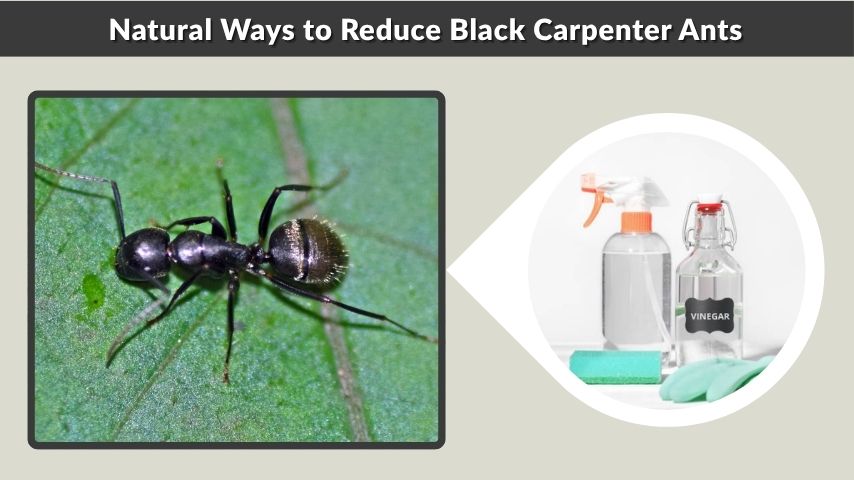
Natural methods may help reduce activity, especially when the infestation is small or the ants are coming from outside. However, natural methods may not fully remove a large hidden colony. They work best when combined with cleaning, moisture repair, sealing entry points, and removal of outdoor nesting materials near the house.
Seal Entry Points
Close gaps where ants may enter the home. Use caulk around windows, doors, pipes, wires, foundation cracks, and siding gaps. Add door sweeps where needed and repair damaged screens. Sealing does not remove an existing nest, but it helps stop more ants from entering and reduces future problems.
Remove Outdoor Attractants
Outdoor maintenance can lower the chance of carpenter ants moving indoors. Focus on removing wood and moisture sources close to the house.
- Store firewood away from exterior walls
- Remove dead logs, stumps, and rotting wood
- Keep mulch several inches away from the foundation
- Trim branches that touch the roof or siding
- Repair damaged deck boards and porch posts
- Keep gutters clean so water drains properly
Use Simple Deterrents
Some homeowners use vinegar solutions or soapy water to clean ant trails. These methods may remove scent trails and reduce visible activity, but they usually do not kill the colony. They should be seen as support methods, not a complete solution. If ants continue to appear, the nest must be found and treated.
When to Call Pest Control
A few ants indoors may not always mean a serious infestation, but some signs should not be ignored. Professional help is useful when the nest is hidden, the colony is large, or wood damage is suspected. Pest control experts can inspect the structure, identify the species, locate nesting areas, and choose a treatment method that targets the colony.
Serious Warning Signs
Call a professional if you notice repeated ant activity in the same area, winged ants indoors, sawdust-like frass, or ants coming from walls, ceilings, or electrical outlets. You should also seek help if wood sounds hollow, feels soft, or shows signs of damage. These signs may mean the colony is already established.
Why Professional Treatment Helps
Professional treatment can be more effective because carpenter ant colonies may include a main nest and several satellite nests. Killing only visible workers does not solve the problem if the queen and colony remain hidden. A professional can treat wall voids, moisture-damaged areas, and outdoor nests more accurately.
How to Prevent Black Carpenter Ants
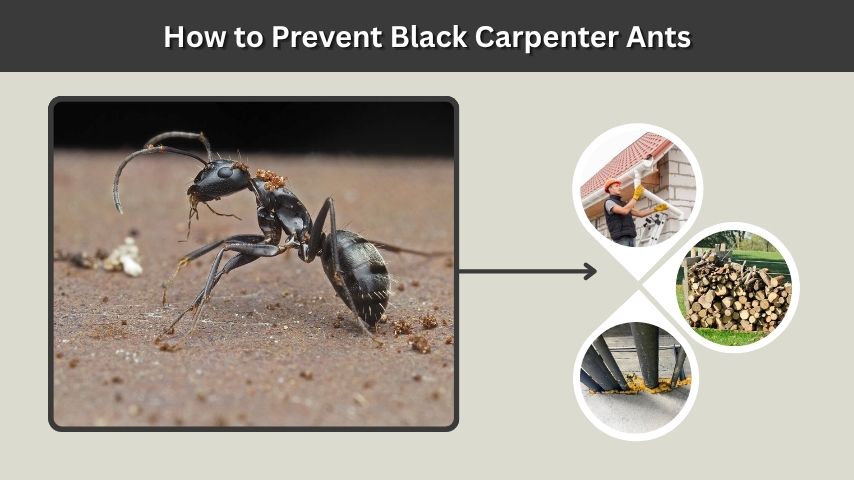
Prevention is the best way to avoid future carpenter ant problems. Since these ants are strongly linked to moisture and wood decay, keeping the home dry and well maintained is important. Regular inspections around the home can help you catch small problems before ants create a larger colony inside wooden structures.
Home Maintenance Tips
Good maintenance can make your home less attractive to black carpenter ants. Focus on reducing moisture, sealing access points, and removing wood contact near the structure.
- Repair roof, plumbing, and gutter leaks quickly
- Replace rotten or water-damaged wood
- Keep firewood off the ground and away from the house
- Seal cracks around the foundation and siding
- Trim shrubs and tree branches away from the home
- Improve airflow in damp basements and crawl spaces
Regular Inspection Areas
Check areas where carpenter ants are most likely to appear. Look around windows, door frames, decks, porches, roof edges, basements, attics, and crawl spaces. Also inspect outdoor wood, including fences, stumps, logs, and landscape timbers. Early detection can prevent a small outdoor problem from becoming an indoor infestation.
FAQs
What attracts black carpenter ants?
Black carpenter ants are attracted to moisture, damp wood, food crumbs, sweets, grease, and protein-based foods. Homes with leaks, rotting wood, poor ventilation, or firewood stored nearby are more likely to attract them. Reducing moisture and keeping food sealed can help lower ant activity.
Do black carpenter ants eat wood?
No, black carpenter ants do not eat wood. They chew through wood to create tunnels and nesting galleries. This behavior can still damage wooden areas over time, especially when the wood is already damp, soft, or decayed.
Are black carpenter ants dangerous to humans?
Black carpenter ants are not usually dangerous to humans. They can bite if handled or threatened, but the bite is usually mild. The bigger concern is property damage, because established colonies may weaken wood inside walls, window frames, decks, or other structures.
How do I know if I have a black carpenter ant infestation?
Common signs include large black ants indoors, winged ants, sawdust-like frass, repeated activity near walls or windows, and ants coming from cracks or gaps. You may also notice soft or hollow-sounding wood in areas with moisture problems.
When should I call pest control for black carpenter ants?
Call pest control if you see winged ants indoors, find frass, notice wood damage, or see ants repeatedly coming from walls, ceilings, or electrical outlets. Professional help is also useful when you cannot locate the nest or when the infestation keeps returning.
