
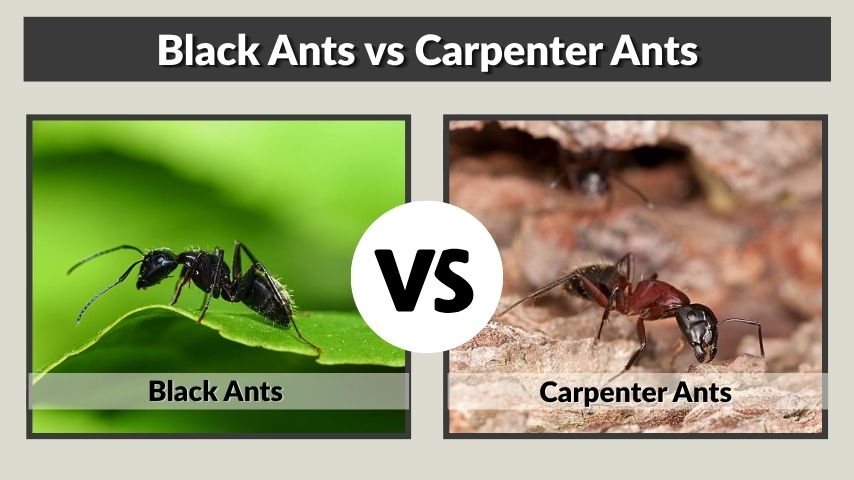
Black ants and carpenter ants can look similar, especially when both are dark and appear inside the house. However, they are not always the same pest. “Black ants” can mean several common ant species, while carpenter ants are wood-nesting ants that may cause concern around damp or damaged wood. The easiest way to tell them apart is to compare size, body shape, behavior, and signs near the home. This guide explains the main differences clearly.
Black Ants vs Carpenter Ants: Main Difference
The main difference between black ants and carpenter ants is that black ants are often small nuisance ants, while carpenter ants are usually larger and may nest in wood. Color alone is not enough for identification because carpenter ants can be black, brown, red, or mixed in color. The best clues are size, shape, nesting area, and damage signs.
Are Black Ants and Carpenter Ants the Same?
No, black ants and carpenter ants are not always the same. A carpenter ant may be black, but not every black ant is a carpenter ant. Many common ants are dark-colored and may enter homes looking for food, water, or shelter.
Carpenter ants are different because they can tunnel through wood to create nesting galleries. They do not eat wood like termites, but their nesting activity can still become a problem if the colony grows inside damp or damaged wood.
Why the Difference Matters
Correct identification matters because the control method may be different. Regular black ants often respond to cleaning, sealing entry points, and using ant baits. Carpenter ants may require a deeper inspection because the nest could be hidden inside wood, walls, or nearby outdoor structures.
If you treat carpenter ants like simple kitchen ants, the visible ants may disappear for a while, but the colony may remain active.
Carpenter Ant vs Black Ant Size
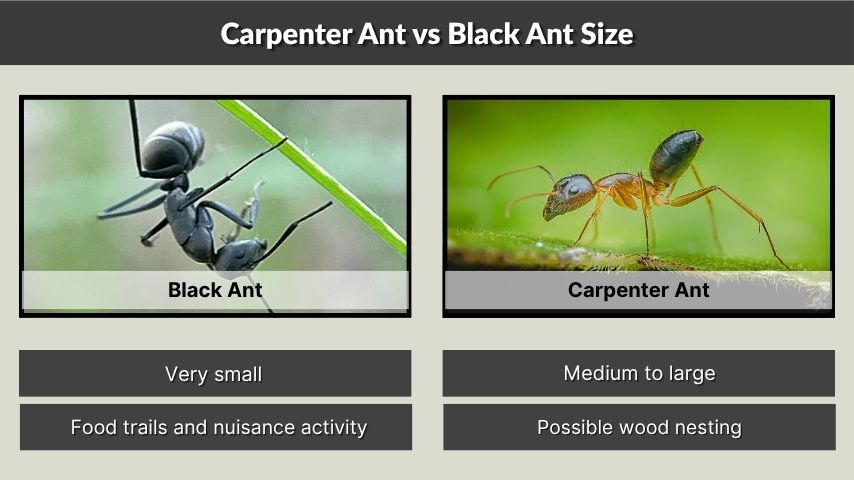
Size is one of the quickest ways to compare carpenter ants vs black ants, but it should not be the only clue. Carpenter ants are usually larger than regular black ants, and their workers may vary in size within the same colony. Small black ants are often nuisance ants, while large black ants need closer inspection.
Size of a Black Ant vs Carpenter Ant
The table below shows the basic size and risk differences.
| Ant Type | Common Size Clue | Main Concern |
| Little black ant | Very small | Food trails and nuisance activity |
| Regular black ant | Small to medium | Indoor food or moisture searching |
| Carpenter ant | Medium to large | Possible wood nesting |
| Carpenter ant queen | Very large | Mature reproductive ant |
A large black ant in the house may be a carpenter ant, but size alone does not prove it. Some field ants and other species can also look large and dark.
Big Black Ant vs Carpenter Ant
A big black ant is often suspected to be a carpenter ant, and sometimes that suspicion is correct. Carpenter ants are among the larger ants found around homes. They may appear alone or in small groups at first.
Look for other signs before deciding. A big black ant near damp wood, window frames, bathrooms, basements, or wood shavings is more concerning than one found near an open door.
How to Identify Carpenter Ants vs Black Ants
Identification should focus on body shape, size, behavior, and where the ants appear. Carpenter ants usually have a narrow waist, bent antennae, and a smooth rounded upper body. Regular black ants are often smaller and more likely to follow food trails. Evidence around the home can help confirm which type you are seeing.
Carpenter Ant Body Features
Carpenter ants often have a stronger, larger body than many common black ants. Their body shape can help separate them from other species.
Common carpenter ant features include:
- Larger body size
- Narrow waist
- Elbowed antennae
- Smooth, rounded thorax
- Black, reddish, brown, or mixed color
- Workers of different sizes in the same colony
If the ant is large and repeatedly appears near damp wood, it may be a carpenter ant. If you also see sawdust-like material nearby, the risk becomes higher.
Regular Black Ant Body Features
Regular black ants are usually smaller and more focused on food trails. They may enter kitchens, pantries, bathrooms, or trash areas looking for crumbs, sweets, grease, or water.
Common black ant signs include:
- Small dark body
- Trails near food or water
- Activity around counters or floors
- Outdoor nests in soil, cracks, or garden areas
- Less connection to wood shavings
- Fewer signs of structural damage
These ants can be annoying, but they are usually less concerning than carpenter ants unless they appear in large numbers or keep returning.
Carpenter Ants vs Black Ants in the House
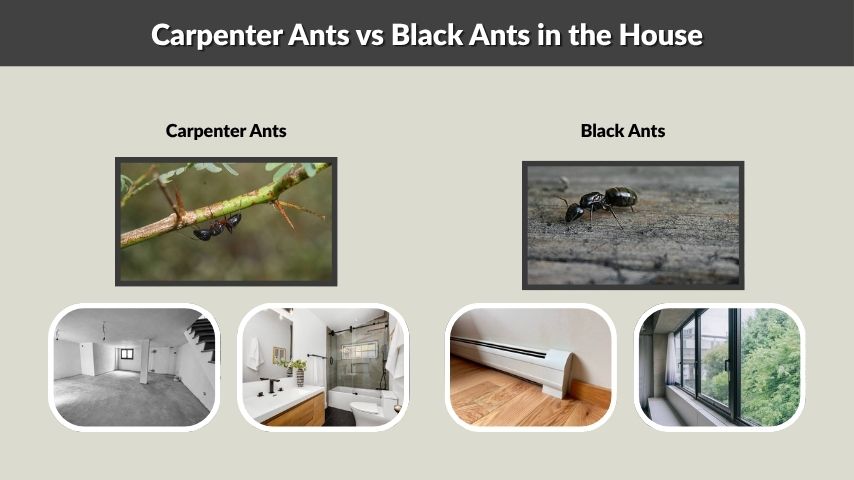
Finding ants indoors does not always mean you have a serious infestation. Regular black ants may enter through cracks to find food or moisture. Carpenter ants may also search indoors, but repeated sightings near wood, walls, bathrooms, basements, or windows may suggest a nest nearby. Location and pattern are important clues.
Food Trails vs Wood Nesting Signs
Regular black ants are often seen in lines leading to food. They may gather near sugar, crumbs, pet food, or trash. Once the food source is removed, their activity may slow down.
Carpenter ants may also visit food, but they raise more concern when they appear near wood. If you notice large ants near baseboards, window frames, damp walls, or sawdust-like debris, inspect the area more carefully.
When Indoor Ants Are More Serious
Indoor ants are more serious when they appear repeatedly in the same area. Large ants seen at night, ants coming from wall cracks, or ants near damp wood can suggest carpenter ant activity.
A single ant may have wandered in from outside. Repeated sightings, especially with wood shavings or winged ants, deserve closer attention.
Big Black Ants vs Carpenter Ants
Big black ants often make homeowners worry because carpenter ants are also commonly large and dark. However, not every big black ant is a carpenter ant. Some field ants, garden ants, or other species can also look dark and large. The best way to compare them is to look at body shape, nesting behavior, and signs around the home.
Large Black Ant vs Carpenter Ant
A large black ant may be a carpenter ant if it has a narrow waist, elbowed antennae, and a smooth rounded thorax. Carpenter ants may also appear in different worker sizes within the same colony.
A large black ant is more likely to be a carpenter ant if it appears near damp wood, wall voids, window frames, bathrooms, basements, or piles of sawdust-like frass. If the ant is only seen outside in soil or garden areas, it may be another black ant species.
Carpenter Ant vs Large Black Ant Signs
Use this table to compare common signs:
| Sign | Carpenter Ant | Other Large Black Ant |
| Size | Usually medium to large | Can also be large |
| Wood shavings | Possible sign | Usually not common |
| Nesting area | Damp wood or hidden voids | Often soil, lawn, or garden |
| Indoor concern | Higher if repeated | Often lower unless nesting inside |
| Damage risk | Possible wood tunneling | Usually less structural concern |
Size can help, but evidence around the ant is more useful. A large ant near wood damage deserves more attention than a large ant walking across a patio.
Little Black Ants vs Carpenter Ants
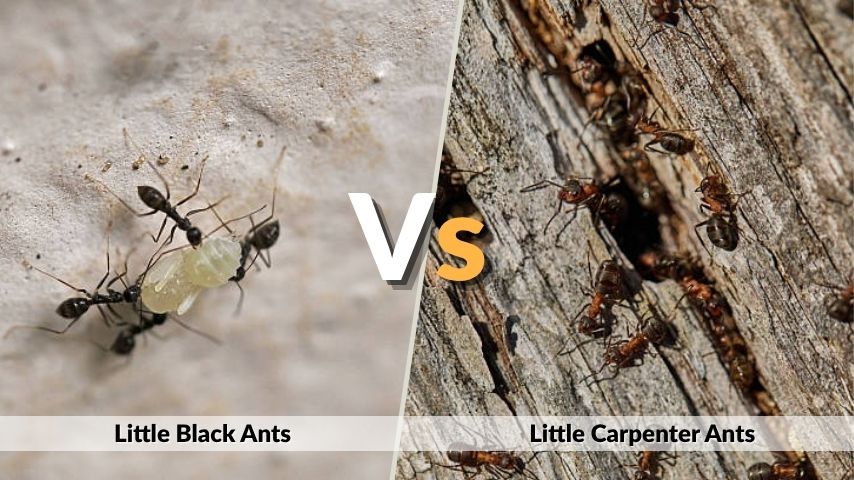
Little black ants and carpenter ants are usually easier to separate because their size and behavior are different. Little black ants are often tiny and appear in trails near food. Carpenter ants are usually larger and more concerning when found around damp wood, walls, or frass. Still, both can enter homes looking for food or moisture.
Carpenter Ant vs Little Black Ant
A little black ant is usually much smaller than a carpenter ant. These small ants often appear in kitchens, pantries, trash areas, or near sweet foods. They may form long trails across counters or floors.
Carpenter ants may also visit food, but they are more suspicious when seen near structural wood. If the ants are large, active at night, or connected with sawdust-like debris, carpenter ants are more likely.
Regular Black Ants vs Carpenter Ants
Regular black ants are often nuisance pests. They can be annoying, but they usually do not suggest wood damage. Their main problem is food contamination and repeated trails inside the house.
Carpenter ants are different because they may nest inside wood. They do not eat the wood, but they remove it to create tunnels. Over time, a large colony in damp wood can cause damage.
Flying Black Ants vs Carpenter Ants
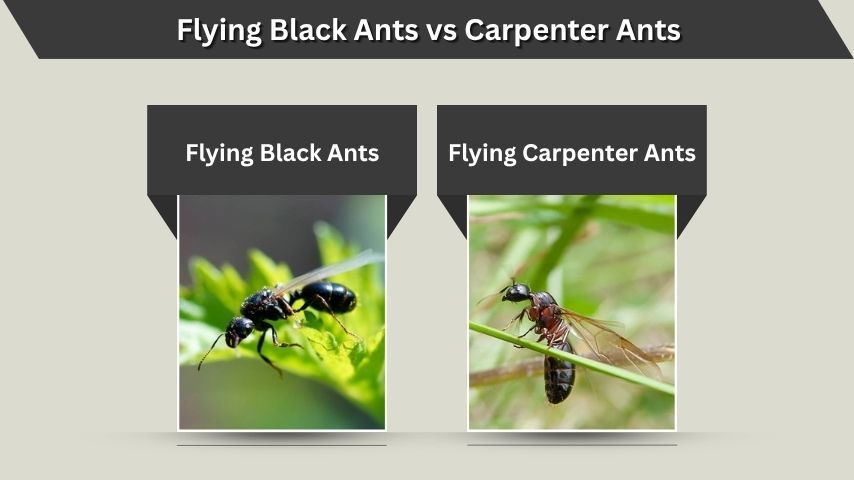
Flying black ants are reproductive ants, not a separate species. Many ant species produce winged males and queens during mating season, including carpenter ants. Seeing flying ants outdoors can be normal. Seeing large winged ants indoors, especially more than once, may suggest a mature colony inside or close to the house.
Winged Black Ants vs Carpenter Ants
Winged carpenter ants usually have a narrow waist, elbowed antennae, and front wings that are longer than the back wings. Other flying black ants may look similar, so you should compare several features before deciding.
If winged ants are large and appear near windows, lights, bathrooms, or wall cracks, carpenter ants may be possible. Dead winged ants or shed wings indoors can also be a warning sign.
Are Flying Black Ants Always Carpenter Ants?
No, flying black ants are not always carpenter ants. Many ants grow wings for mating flights. A small flying black ant may belong to another household or garden ant species.
The concern increases when the ants are large, repeated indoors, or connected with damp wood. In that case, it is better to inspect rather than assume they are harmless.
Carpenter Ants vs Black Ants Bite
Both carpenter ants and some black ants can bite, but bites are usually defensive. Carpenter ants may deliver a stronger pinch because they are larger and have strong jaws. Regular black ants are often more of a nuisance than a serious bite concern. The bigger issue with carpenter ants is usually possible nesting in wood.
Do Carpenter Ants Bite?
Yes, carpenter ants can bite if they are handled, crushed, or threatened. Their bite may feel like a sharp pinch and may cause mild redness, itching, or burning.
They do not sting like bees or wasps. Some people may feel irritation after a bite, but serious reactions are uncommon.
Do Regular Black Ants Bite?
Some regular black ants can bite, but many common household black ants are more likely to search for food than bite people. If they do bite, the reaction is usually mild.
Bites are more likely if ants are trapped against the skin or disturbed near a nest. Avoid handling ants with bare hands if you are unsure of the species.
FAQs
Are black ants and carpenter ants the same?
No, black ants and carpenter ants are not always the same. Some carpenter ants are black, but many black ants belong to other species. Carpenter ants are usually larger and may nest in damp or damaged wood.
How do I identify carpenter ants vs black ants?
Look at size, body shape, behavior, and location. Carpenter ants are usually larger, have a narrow waist and elbowed antennae, and may appear near damp wood or sawdust-like frass. Regular black ants are often smaller and follow food trails.
Are big black ants always carpenter ants?
No, big black ants are not always carpenter ants. Some field ants, garden ants, or other species can also be large and dark. However, big black ants found repeatedly indoors near wood, moisture, or grass may be carpenter ants.
Do carpenter ants bite more than black ants?
Carpenter ants can bite when handled, trapped, or threatened. Their bite may feel stronger because they are larger than many regular black ants. Most black ant bites are mild, and many common black ants are mainly nuisance pests.
Which is worse, black ants or carpenter ants?
Carpenter ants are usually worse because they can tunnel into damp or damaged wood to build nests. Regular black ants are often more of a food-seeking nuisance. If you see large ants with wood shavings or repeated indoor activity, inspect for carpenter ants.
