
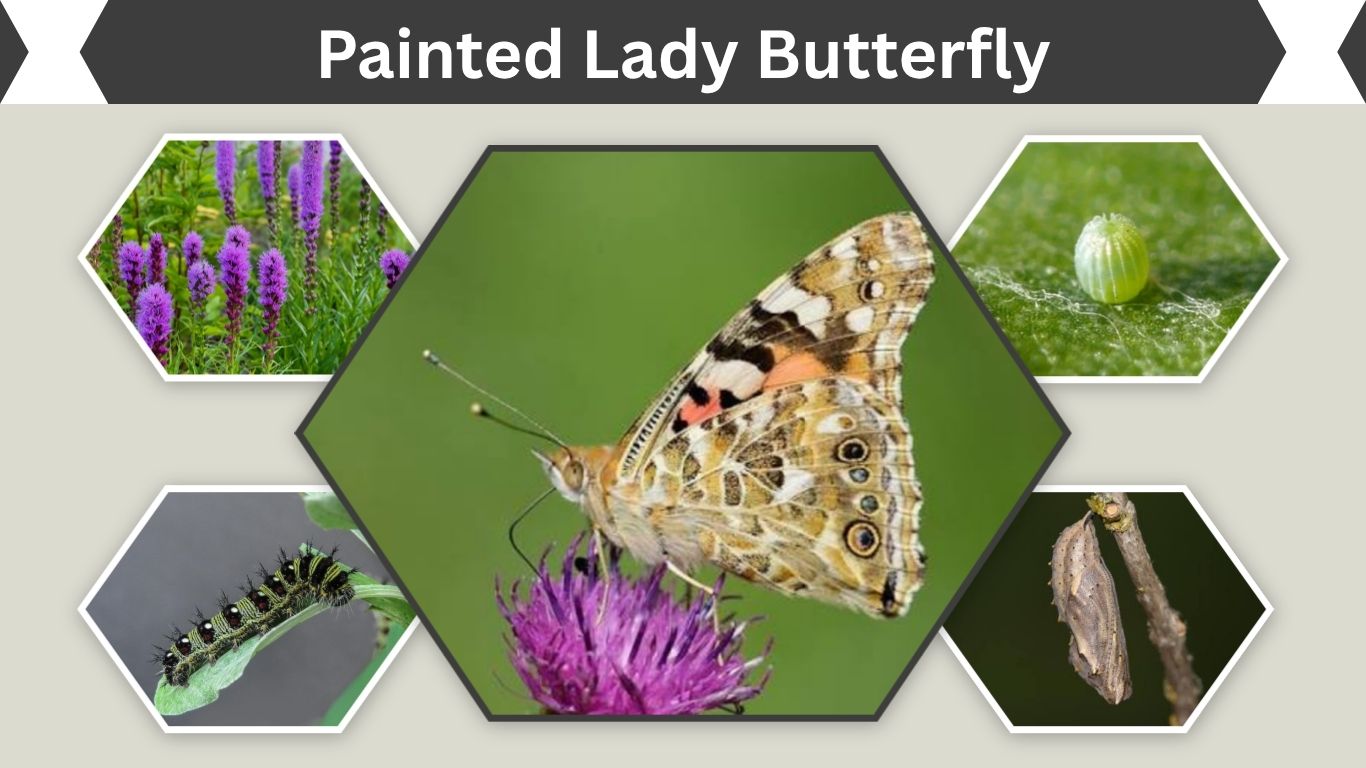
The painted lady butterfly is a colorful, widely distributed species known for its orange-patterned wings and remarkable long-distance migrations. Scientifically named Vanessa cardui, it can live in gardens, meadows, farmland, deserts, mountains, and many other open habitats. Adults drink nectar from flowers, while their caterpillars feed on thistles, mallows, sunflowers, and numerous other host plants. Painted ladies complete four life-cycle stages—egg, caterpillar, chrysalis, and adult—and several generations may contribute to a single migration. Their adaptability and extensive range make them one of the world’s most recognizable butterflies.
Painted Lady Butterfly Overview
Painted lady butterflies belong to the brush-footed butterfly family, Nymphalidae. Their scientific name is Vanessa cardui, with “cardui” referring to thistles, which are among their most important caterpillar host plants.
The species occurs across an exceptionally broad geographic range and can thrive in numerous environments. Painted ladies are particularly associated with sunny, flower-rich spaces where adults can find nectar and females can locate suitable plants for laying eggs.
| Feature | Painted Lady Butterfly |
|---|---|
| Scientific name | Vanessa cardui |
| Family | Nymphalidae |
| Average wingspan | Approximately 2–3 inches |
| Main colors | Orange, brown, black, and white |
| Diet as an adult | Flower nectar |
| Caterpillar diet | Leaves of host plants |
| Preferred host plants | Thistles, mallows, asters, and legumes |
| Life-cycle stages | Egg, larva, pupa, and adult |
| Notable behavior | Long-distance migration |
What Does a Painted Lady Butterfly Look Like?
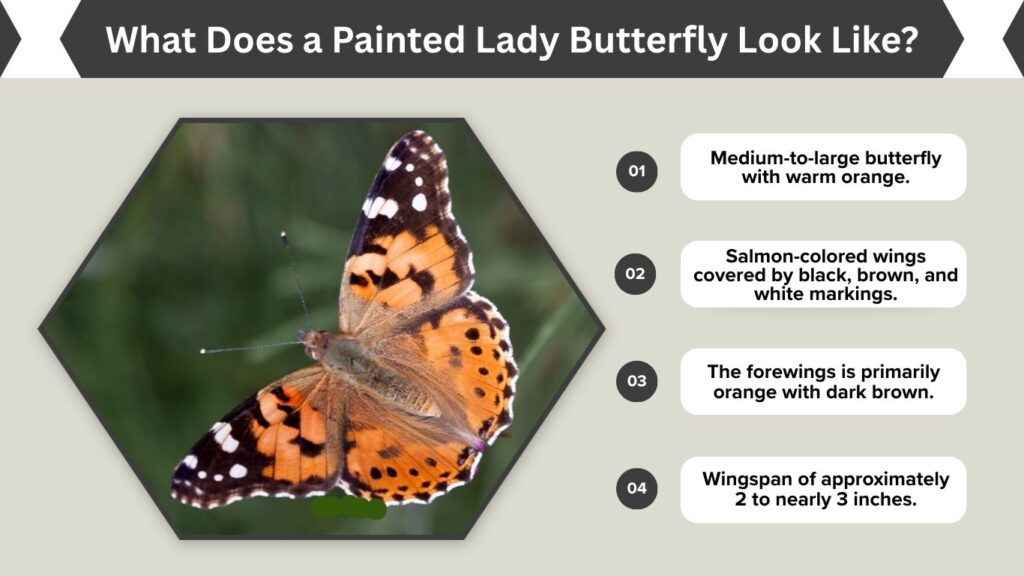
The painted lady is a medium-to-large butterfly with warm orange or salmon-colored wings covered by black, brown, and white markings. Its complex wing pattern provides identification clues from both above and below.
Upper Side of the Wings
The upper surface of the forewings is primarily orange with dark brown or black patches. Several bright white spots appear near the black tips of the forewings.
The hindwings are also orange-brown and have rows of dark spots near their outer edges. Although the pattern can resemble a monarch from a distance, the painted lady lacks the monarch’s heavy black vein pattern.
Underside of the Wings
The underside is more subdued, featuring gray, tan, cream, and brown patterns. This mottled appearance helps the butterfly blend into dry leaves, bark, and soil when its wings are closed.
Small eyespots are visible on the underside of the hindwings. These markings help distinguish a painted lady from similar butterflies.
Size
Painted ladies generally have a wingspan of approximately 2 to nearly 3 inches, although exact size varies among individuals and populations. Their streamlined bodies and broad wings support quick, powerful flight during migration.
Painted Lady Butterfly Life Cycle
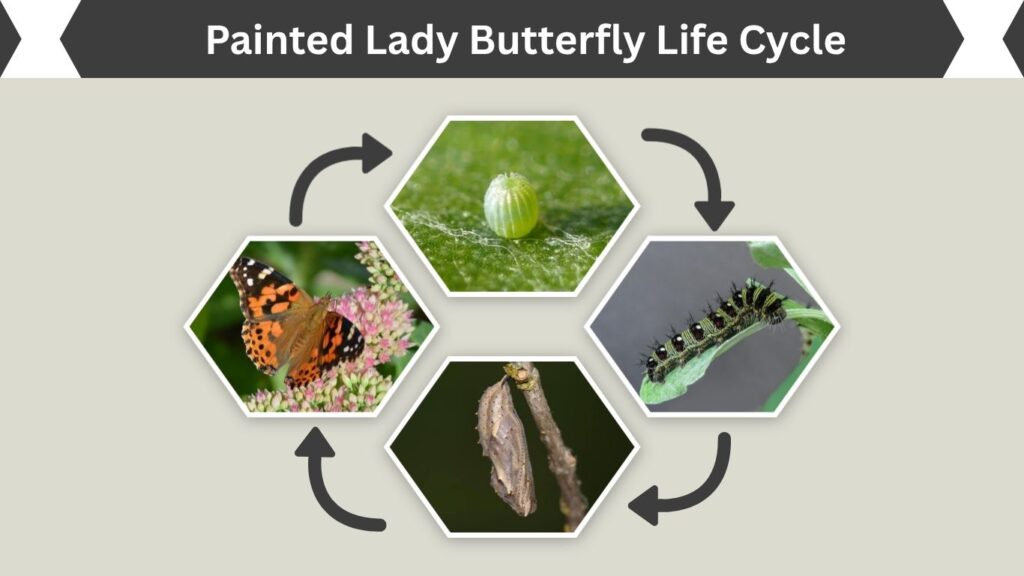
Like other butterflies, painted ladies undergo complete metamorphosis. Their development includes four separate stages: egg, caterpillar, chrysalis, and adult.
Temperature and food availability influence how quickly the cycle is completed. Development is generally faster in warm conditions and slower in cooler climates.
1. Egg
A female lays her tiny eggs individually on the leaves of suitable host plants. The eggs are usually pale green and have a barrel-like shape with vertical ridges.
Placing each egg on a food plant gives the newly hatched caterpillar immediate access to leaves. Thistles are especially important, although females use many other plants.
2. Caterpillar
The caterpillar is usually dark brown or black with lighter stripes and rows of branched, spine-like hairs. Despite its prickly appearance, it is not considered a stinging caterpillar.
Young caterpillars produce silk and pull plant leaves together to create protective shelters. They remain within or near these webbed leaves while feeding and growing.
Painted lady caterpillars molt several times. Their larval stage commonly lasts a few weeks, although weather and plant quality can change the timing.
3. Chrysalis
When fully grown, the caterpillar attaches itself to a sheltered surface and forms a chrysalis. The chrysalis usually hangs downward and may appear brown, gray, or golden, sometimes with metallic-looking spots.
The butterfly’s body is reorganized during this stage. Under favorable conditions, an adult may emerge after approximately one to two weeks.
4. Adult Butterfly
The newly emerged butterfly hangs from the empty chrysalis while its wings expand and harden. Once it can fly, the adult begins searching for nectar and eventually a mate.
Adults continue the reproductive cycle by mating and laying eggs on another generation of host plants. In migratory populations, each new generation may travel another portion of the overall journey.
How Long Do Painted Lady Butterflies Live?
An adult painted lady generally lives for only a few weeks. Under controlled conditions, adults have been recorded living roughly 10 to 24 days after emerging from the chrysalis.
The complete period from egg to the end of adult life is longer and depends heavily on climate. In warm regions, development from egg to adult may take around one month, while cooler temperatures can extend it considerably.
Several conditions affect lifespan:
- Temperature and weather
- Nectar availability
- Predators
- Parasites and disease
- Migration demands
- Habitat quality
- Exposure to pesticides
Butterflies raised in captivity may experience fewer predators, but unsuitable temperatures, poor nutrition, crowding, or handling can still shorten their lives.
What Do Painted Lady Butterflies Eat?
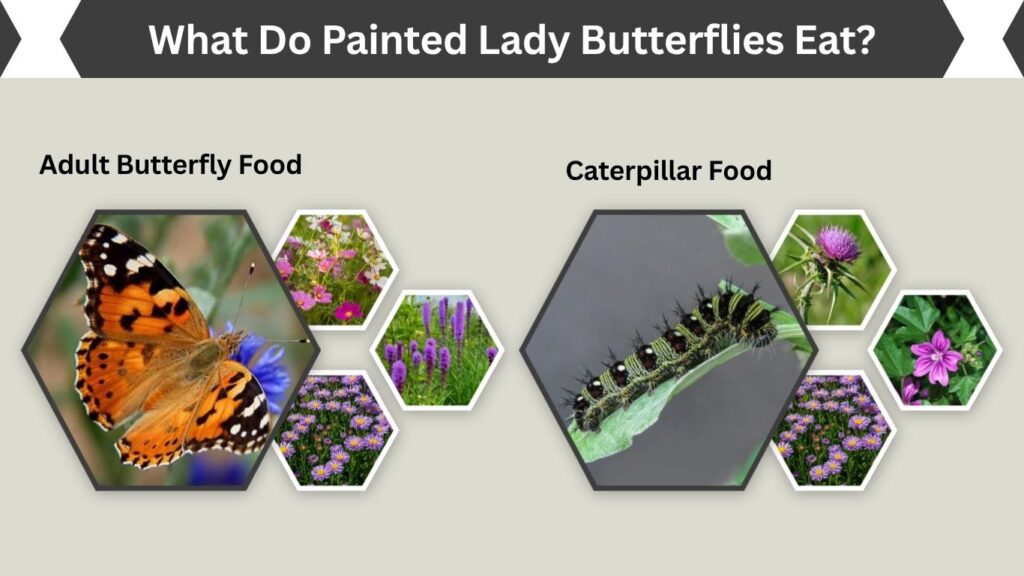
Adult butterflies and caterpillars have completely different diets. Adults depend mainly on liquids, while larvae chew the leaves of their host plants.
Adult Butterfly Food
Adult painted ladies use a long, coiled feeding tube called a proboscis to drink nectar. They visit many flowering plants, particularly those producing accessible, nectar-rich blooms.
Common nectar sources include:
- Asters
- Blazing star
- Cosmos
- Joe-Pye weed
- Ironweed
- Milkweed
- Red clover
- Buttonbush
- Thistles
- Sunflowers
Adults may occasionally consume other sugary liquids, including honeydew produced by aphids.
Caterpillar Food
Painted lady caterpillars can feed on a very wide variety of plants. More than 100 plant species have been reported as potential food sources.
Important host plants include:
- Thistles
- Hollyhock
- Mallow
- Sunflower
- Aster
- Lupine
- Nettle
- Soybean
- Fiddleneck
- Legumes
Thistles are among the most widely used host plants and are particularly valuable in butterfly-friendly gardens.
Painted Lady Butterfly Habitat
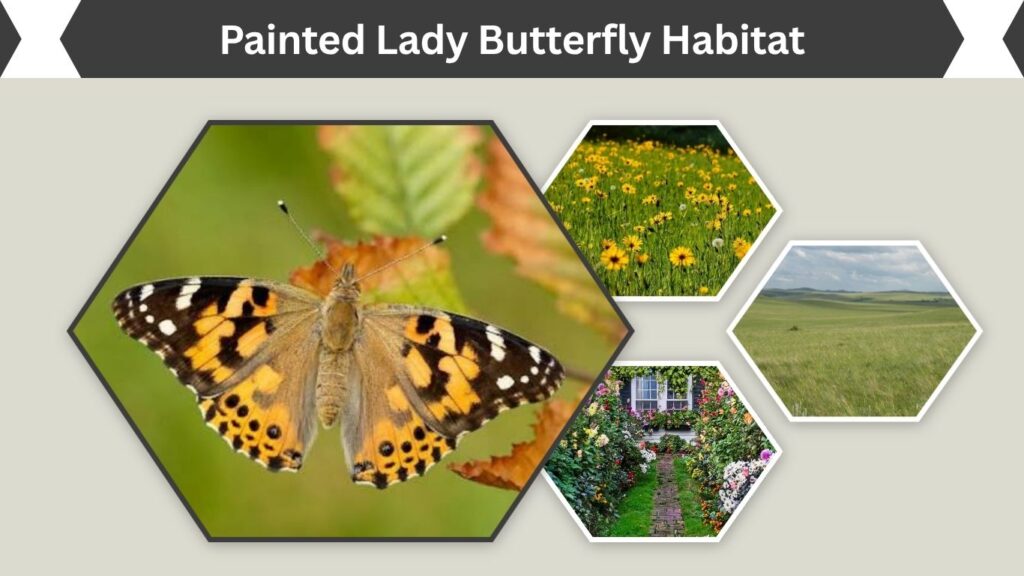
Painted ladies are highly adaptable and occupy a broader range of habitats than many butterfly species. They are frequently seen in sunny, open landscapes where flowering plants grow in abundance.
Suitable habitats include:
- Meadows
- Grasslands
- Gardens
- Roadsides
- Farmland
- Open woodland
- Deserts
- Coastal dunes
- Wetlands
- Mountains
- Suburban areas
Because painted ladies migrate, their exact habitat changes throughout the year. They may cross deserts and mountain ranges while traveling, then settle temporarily in areas with fresh plant growth and abundant nectar.
A productive habitat must supply both nectar flowers for adults and leafy host plants for caterpillars. A garden containing flowers but no host plants may attract visiting adults without supporting reproduction.
Painted Lady Butterfly Migration
Migration is one of the painted lady’s most remarkable behaviors. These butterflies can travel across countries and continents while using favorable winds to cover long distances.
No single butterfly normally completes the entire round trip. Instead, migration occurs over several generations. Adults travel to a new region, reproduce, and die; their offspring continue the journey.
In the western Palearctic region, painted ladies move between Africa and Europe through a large annual cycle. Populations in North America also move northward from warmer areas toward the United States and Canada as seasonal conditions improve.
Why Do Painted Ladies Migrate?
Migration allows the species to follow favorable weather, nectar supplies, and fresh host-plant growth. It also helps them avoid prolonged cold conditions in northern regions and extreme seasonal heat or dryness elsewhere.
The number seen in a particular location can vary dramatically from year to year. Rainfall and plant growth in distant breeding regions may contribute to exceptionally large migrations.
Painted Lady Butterfly vs Monarch
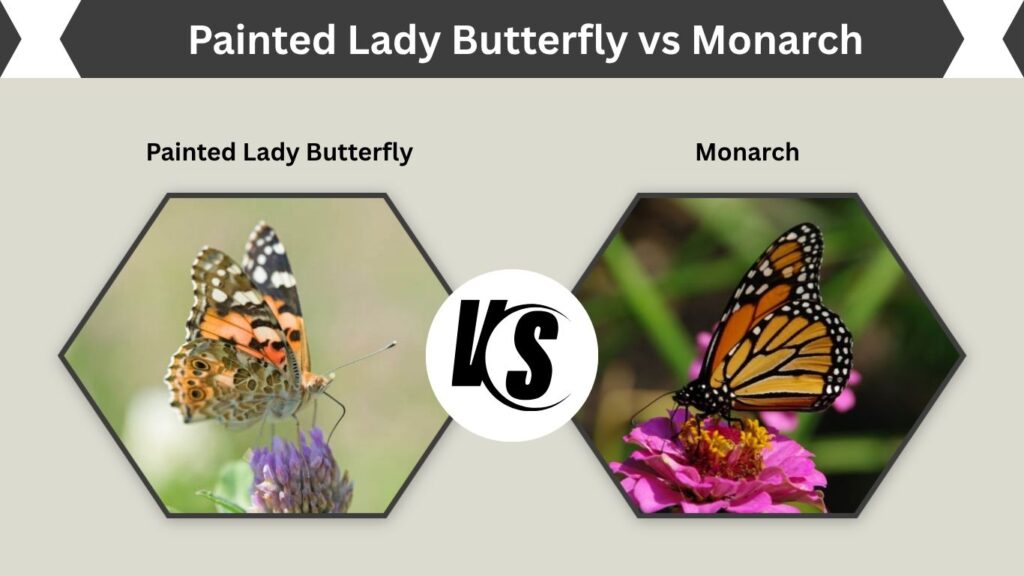
Painted ladies and monarchs are both orange migratory butterflies, but their patterns, sizes, host plants, and migration strategies differ.
| Feature | Painted Lady | Monarch |
|---|---|---|
| Scientific name | Vanessa cardui | Danaus plexippus |
| Wing pattern | Mottled orange, brown, black, and white | Orange wings with bold black veins |
| Typical size | Smaller | Usually larger |
| Hindwing markings | Small dark spots and eyespots | Black veins and white-spotted border |
| Main caterpillar hosts | Thistles, mallows, asters, and many others | Milkweeds |
| Migration | Multigenerational and widely distributed | Famous seasonal migration in North America |
| Chrysalis | Usually brownish or grayish | Typically bright green with gold details |
The simplest visual difference is the wing pattern. Monarchs have clearly defined black veins running across their orange wings. Painted ladies have a more irregular, painted-looking pattern with white patches near the forewing tips.
Male vs Female Painted Lady Butterfly
Male and female painted ladies look very similar, making visual identification difficult for casual observers. Both have nearly identical wing colors and patterns.
Males are often identified by behavior rather than obvious appearance. They may establish territories on sunny hilltops, paths, or open ground and wait for females to pass. Females spend more time searching among host plants and laying individual eggs.
A specialist may examine the abdomen or other subtle physical structures to determine sex reliably. Wing color alone is usually not sufficient.
How to Attract Painted Lady Butterflies
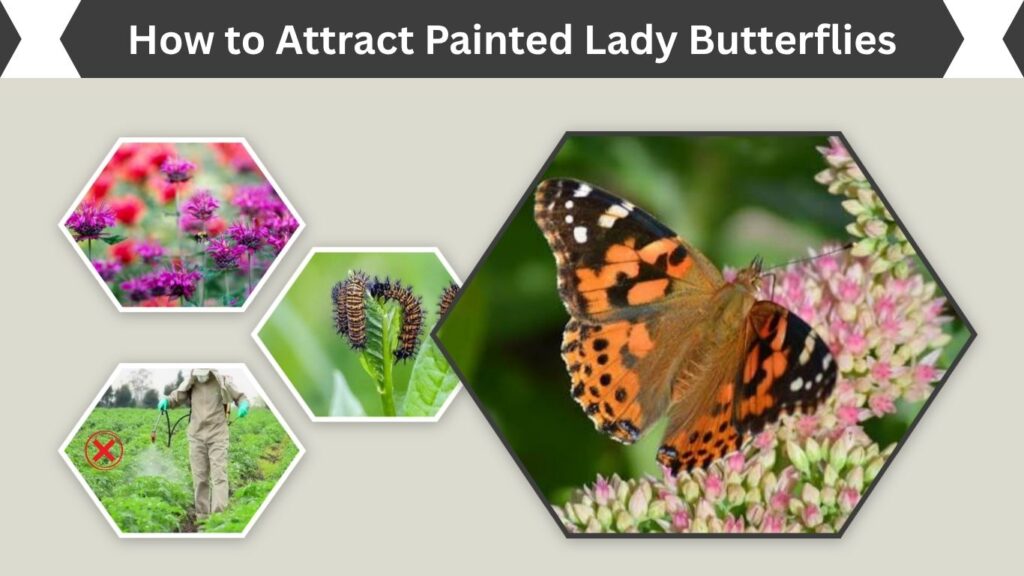
A butterfly garden should provide food throughout the insect’s entire life cycle. Nectar flowers feed adults, while host plants allow females to reproduce.
Grow Nectar-Rich Flowers
Plant groups of flowers in sunny, sheltered areas. Clusters are easier for butterflies to locate and provide an efficient source of nectar.
Good choices include asters, cosmos, blazing star, coneflowers, milkweed, ironweed, sunflowers, and native thistles.
Include Caterpillar Host Plants
Leave space for thistles, mallows, hollyhocks, asters, and other suitable host plants. Some leaf damage is natural and indicates that the garden is supporting developing butterflies.
Avoid Broad-Spectrum Insecticides
Insecticides applied to flowering or host plants may kill eggs, caterpillars, or adult butterflies. Use nonchemical garden-management methods whenever practical and carefully follow product labels when treatment is necessary.
Provide Sunny, Sheltered Areas
Butterflies depend on external warmth to remain active. Sunny locations protected from strong wind give them places to feed, rest, and warm their flight muscles.
Are Painted Lady Butterflies Harmful?
Painted lady butterflies do not bite or sting people. Adults are beneficial pollinators, while caterpillars serve as food for birds, wasps, spiders, and other wildlife.
Caterpillars can occasionally become abundant on crops such as soybeans and sunflowers, where heavy feeding may remove noticeable amounts of foliage. However, small numbers in home gardens rarely justify control. Healthy plants can often tolerate moderate leaf damage.
Interesting Painted Lady Butterfly Facts
- The scientific name of the painted lady is Vanessa cardui.
- It lives across an unusually broad portion of the world.
- Its migration may involve several generations.
- Caterpillars build shelters by joining leaves with silk.
- Adults primarily drink flower nectar.
- More than 100 plants may serve as caterpillar food.
- Thistles are among its preferred host plants.
- Adults are strong, fast flyers.
- The underside of the wings provides excellent camouflage.
- Painted ladies help pollinate flowers and support food webs.
FAQs
Where do painted lady butterflies live?
Painted ladies live in meadows, gardens, farmland, deserts, mountains, roadsides, wetlands, and suburban landscapes. They are highly adaptable and occur across a vast geographic range. Their location changes seasonally because many populations undertake long-distance migrations.
How long does a painted lady stay in its chrysalis?
The chrysalis stage often lasts approximately one to two weeks under warm, favorable conditions. Cooler temperatures can slow development and extend this period. The chrysalis darkens shortly before the fully formed adult butterfly emerges.
What flowers do painted lady butterflies like?
Painted ladies commonly visit asters, cosmos, thistles, milkweed, blazing star, ironweed, red clover, sunflowers, and Joe-Pye weed. Gardens containing several flower species with overlapping bloom periods can provide nectar for a longer part of the year.
Are painted lady butterflies invasive?
Painted ladies are naturally widespread and migratory rather than generally classified as invasive. Their numbers may suddenly increase during major migration years, but these movements are part of their normal ecology.
Can you feed painted lady butterflies sugar water?
Captive adults may drink an appropriately prepared feeding solution, but fresh nectar flowers are more suitable in outdoor gardens. Containers of sugary liquid can ferment, become contaminated, or trap insects, so butterfly-rearing instructions should be followed carefully.
