
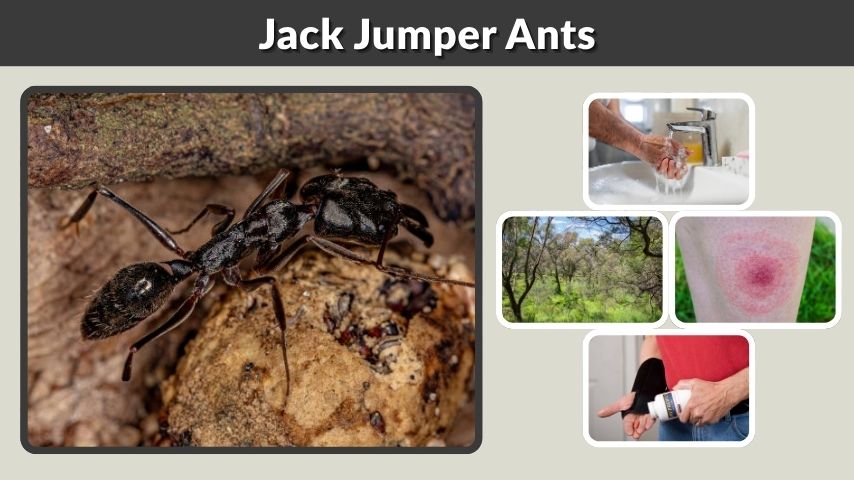
Jack jumper ants are small but aggressive Australian ants known for their painful sting, jerky movement, and ability to jump when disturbed. Also called jumping jack ants, jumper ants, or hopper ants, they are most concerning because some people can have severe allergic reactions to their venom. This guide explains how to identify them, where they live, what their sting looks like, and what to do after contact.
What Are Jack Jumper Ants?
Jack jumper ants are native Australian ants from the Myrmecia group, often compared with bull ants because of their large eyes, strong jaws, and painful sting. They are not just a backyard nuisance. In parts of Australia, especially Tasmania and southern regions, they are a serious health concern for people who are allergic to their venom.
These ants are known by several common names, including:
- Jack jumper ant
- Jack jumper ants
- Jumping jack ants
- Jumper jack ants
- Hopper ants
- Skipper ants
The names come from their sudden jumping or hopping movement when threatened. Unlike many small household ants that run away from disturbance, jack jumpers may face the threat, jump toward it, grip with their jaws, and sting.
Jack Jumper Ant Scientific Name
The best-known jack jumper ant is commonly referred to as Myrmecia pilosula. However, the “jack jumper” name can also be used for closely related Myrmecia ants with similar appearance and behaviour. For homeowners, gardeners, and bushwalkers, exact species identification can be difficult without expert help, so the practical focus is usually on recognising the ant’s appearance, nest, behaviour, and sting risk.
Jack Jumper Ant Size and Identification
Jack jumper ants are usually much larger than common indoor ants but smaller than many bull ants. A typical worker is around 10 to 15 mm long. They often have a black body, orange-brown jaws, and orange or brownish legs.
| Feature | Jack Jumper Ant | Bull Ant |
|---|---|---|
| Common size | About 10–15 mm | Often 15–25 mm or larger |
| Body colour | Black with orange/brown jaws and limbs | May be black, red, orange, or mixed |
| Behaviour | Jumpy, jerky, aggressive when disturbed | Aggressive, may chase intruders |
| Sting risk | Painful; allergy risk in some people | Painful; allergy risk also possible |
| Nest style | Underground, often with gravel or soil mound | Underground, sometimes hidden entrance |
How to Recognise Jack Jumper Ants
Look for a medium-sized ant with a dark body, long jaws, large eyes, and fast, alert movement. They may move in a jerky way and appear to hop or jump when disturbed. Their nests are often underground and may have a small entrance surrounded by fine gravel, sand, or soil.
You may see one or two ants near the nest entrance acting like guards. However, jack jumper ants can also forage alone and may travel away from the nest into gardens, yards, sheds, kitchens, or outdoor work areas.
Where Do Jack Jumper Ants Live?
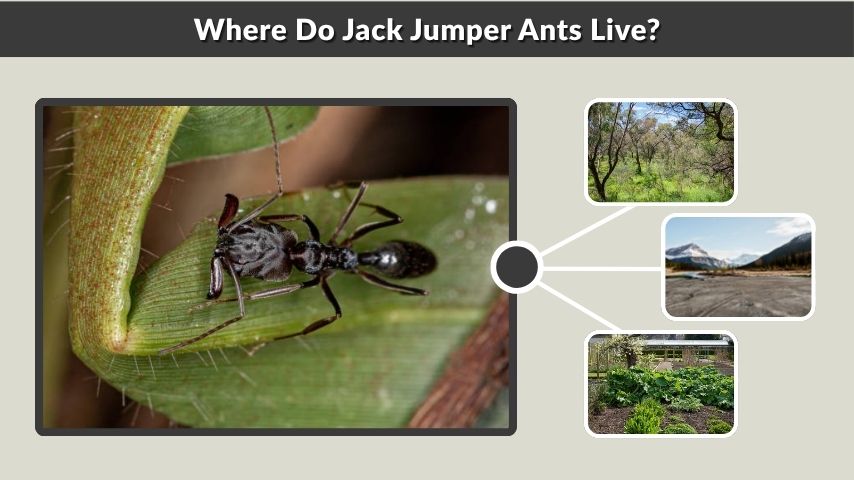
Jack jumper ants are found in several parts of Australia, especially cooler and southern regions. They are strongly associated with Tasmania, but they can also occur in Victoria, South Australia, New South Wales, the ACT, and some parts of Western Australia and Queensland.
Common habitats include:
- Bushland, woodland, and dry open forest
- Gardens near natural vegetation
- Sandy or gravelly soil
- Areas under rocks, logs, or ground cover
- Yards close to bush or open land
- Coastal and hilly regions in southern Australia
Are Jack Jumper Ants Found in Perth WA?
Search interest around “jack jumper ants in Perth WA” and “are jack jumper ants common in Perth Western Australia” shows that many people are unsure whether these ants occur in Western Australia. Jack jumper ants are reported in some parts of Western Australia, but they are more strongly associated with Tasmania and southern or south-eastern Australia.
In Perth, many ant problems may involve other native ants, coastal ants, bull ants, or invasive pest ants. If you find a black and orange jumping ant in Perth or regional WA, avoid disturbing the nest and consider professional identification before attempting treatment.
Jack Jumper Ant Nest and Behaviour
Jack jumper ants usually nest underground. Their nests can be difficult to spot because the entrance may be small, hidden under vegetation, or surrounded by loose gravel. Some nests form visible mounds, while others are subtle.
They are active hunters and often forage alone instead of forming obvious trails like many household ants. This makes them harder to detect until someone accidentally steps near a nest or disturbs a foraging worker.
Why Jack Jumper Ants Jump
Jack jumper ants jump as part of their defensive and hunting behaviour. The movement helps them close distance quickly, startle threats, and attack prey or intruders. Their large eyes also help them detect movement, which is why they may seem to watch or follow people near the nest.
Their defensive behaviour is one reason they are risky around:
- Gardens and lawns
- Children’s play areas
- Walking tracks
- Outdoor work sites
- Sheds and wood piles
- Bushland homes
- Pet areas
Jack Jumper Ant Bite vs Sting
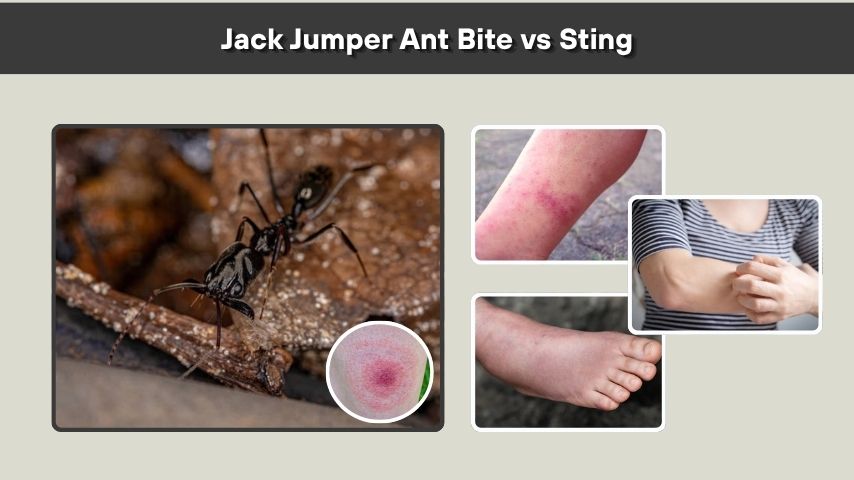
Many people search for “jack jumper ant bite,” but the main medical concern is the sting. Jack jumper ants can grip skin with their jaws, but they deliver venom through a sting at the end of the abdomen.
In simple terms, they grab first, then sting.
A jack jumper ant sting can cause sharp pain, redness, swelling, and itching. Some people develop larger swelling that lasts for days. For people with venom allergy, the sting can trigger a whole-body reaction.
Jack Jumper Ant Bite Symptoms
Most local reactions are painful but not life-threatening. Common symptoms around the sting area may include:
- Immediate sharp or burning pain
- Redness
- Swelling
- Itching
- Warmth around the site
- A small raised mark
- Larger swelling over several hours
Large local reactions can be uncomfortable and may spread beyond the immediate sting site, such as swelling across a hand, ankle, or lower leg. However, swelling alone does not always mean anaphylaxis.
Jack Jumper Ant Sting Allergy and Anaphylaxis
The most serious risk from jack jumper ants is allergic reaction. In people who are allergic, a sting may trigger anaphylaxis, which is a medical emergency. This can happen quickly and may occur even if the local sting mark looks small.
Signs that may suggest a severe allergic reaction include:
- Trouble breathing
- Wheezing or persistent coughing
- Swelling of the tongue, throat, lips, or face
- Tightness in the throat
- Difficulty speaking
- Hoarse voice
- Dizziness or collapse
- Pale, floppy appearance in young children
- Vomiting or abdominal pain after an insect sting
Anyone with these symptoms needs urgent medical help. If the person has been prescribed an adrenaline injector, it should be used according to their action plan.
Can Jack Jumper Ants Kill Humans?
Yes, jack jumper ant stings can be fatal in rare cases when they trigger severe anaphylaxis. This does not mean every sting is deadly. Many people experience only pain and local swelling. The danger is much higher for people with known jack jumper ant allergy or a history of systemic reactions after stings.
People who live, garden, hike, or work in jack jumper areas should take the risk seriously, especially if they have had previous reactions.
Jack Jumper Ant Bite Treatment
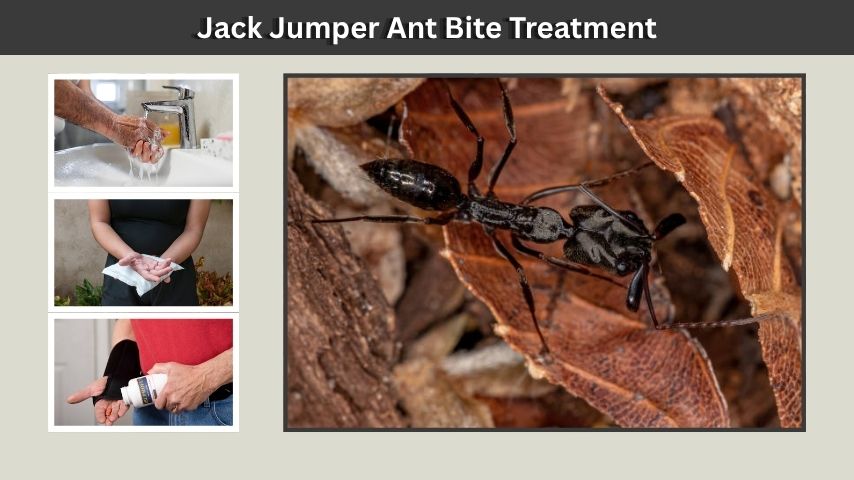
For a normal local reaction, basic first aid can help reduce pain and swelling. The affected person should move away from the nest area first because more ants may sting.
General steps include:
- Wash the area with soap and water.
- Apply a cold pack wrapped in cloth.
- Avoid scratching the sting site.
- Use an antihistamine for itch if suitable.
- Use pain relief if needed and safe for the person.
- Monitor for signs of allergic reaction.
Seek medical advice if swelling is severe, symptoms worsen, the sting is near the face or throat, the person is a child, or there is any history of allergy.
When to Get Emergency Help
Call emergency services immediately if there are signs of anaphylaxis, breathing trouble, throat tightness, faintness, collapse, or swelling of the tongue or throat. Do not wait to see if symptoms improve. Anaphylaxis can progress quickly.
People with a known jack jumper ant allergy should follow their ASCIA Action Plan or medical action plan and carry their prescribed adrenaline injector.
Jack Jumper Ant Venom and Immunotherapy
Jack jumper ant venom contains allergens that can trigger severe immune reactions in sensitive people. For people with confirmed allergy, a specialist may discuss venom immunotherapy, also called desensitisation.
This treatment exposes the immune system to controlled amounts of venom extract over time. The goal is to reduce the chance of a severe reaction after future stings. It is a specialist treatment and is not the same as over-the-counter sting relief.
In Australia, access to jack jumper ant venom immunotherapy has historically been limited to specialist allergy centres in areas where the risk is highest. Anyone who has had a whole-body reaction after a sting should speak with a doctor or allergy specialist about testing, action plans, and long-term management.
How to Avoid Jack Jumper Ants
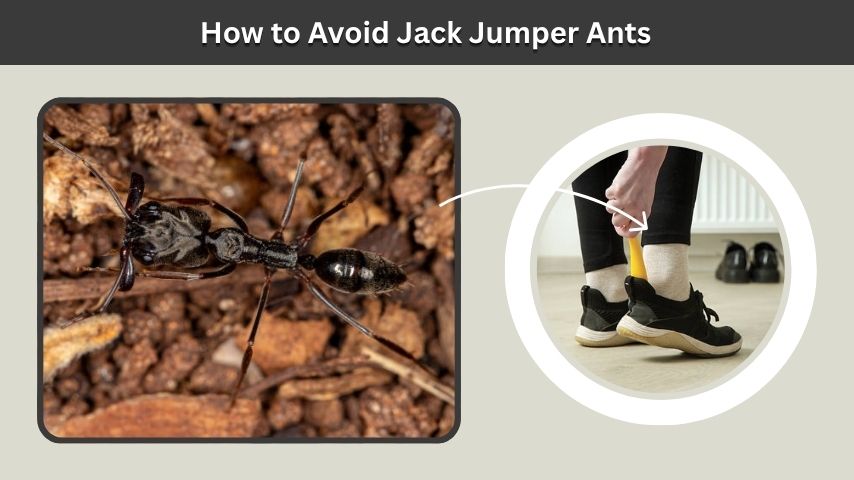
Avoidance can be difficult because jack jumper ants may forage away from the nest and nests can be hard to find. Still, a few habits can reduce the chance of being stung.
When gardening, hiking, or working outdoors:
- Wear closed shoes, socks, and gloves.
- Check the ground before kneeling or sitting.
- Avoid disturbing small gravel mounds or ant entrances.
- Keep children and pets away from suspected nests.
- Be careful when lifting rocks, logs, pots, or garden edging.
- Use extra caution in bushland or known jack jumper areas.
Heavy clothing may reduce risk but does not guarantee protection. Jack jumper ants can still find gaps or sting through some materials.
How to Get Rid of Jack Jumper Ants
Because jack jumper ants can sting aggressively and may cause severe allergy, nest treatment should be handled carefully. Homeowners should not kick, flood, dig, burn, or disturb a suspected nest. These actions can scatter ants and increase sting risk.
For nests near homes, paths, schools, workplaces, or play areas, the safest option is usually a licensed pest control professional. They can confirm the ant type, locate the nest, and apply appropriate treatment.
When Professional Control Is Needed
Professional help is especially important if:
- The nest is close to a house entrance.
- Children or pets use the area.
- Someone nearby has a known sting allergy.
- Multiple nests are present.
- Ants are entering indoor areas.
- The nest is in a public or workplace setting.
Even after one nest is treated, more ants may be present nearby. Ongoing monitoring is often needed in bushland-edge suburbs and rural properties.
Jack Jumper Ant vs Bull Ant
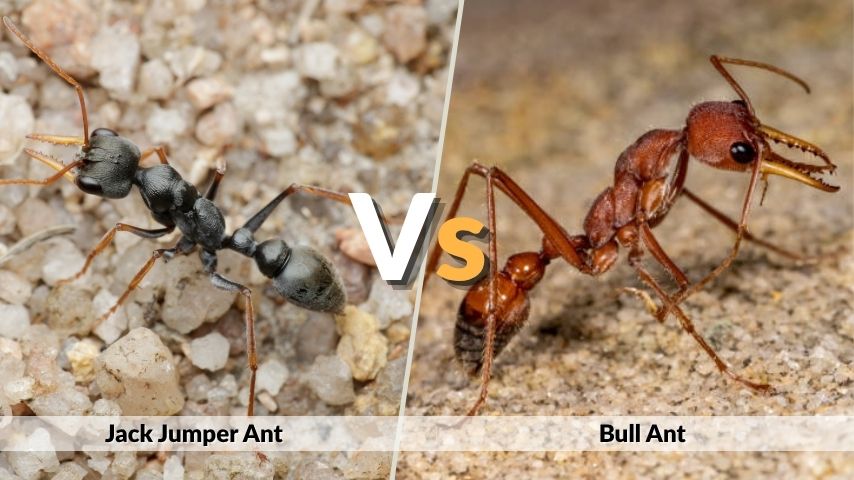
Jack jumper ants are often confused with bull ants because both belong to the Myrmecia group and both can deliver painful stings. The main difference is size and behaviour. Bull ants are often larger, while jack jumpers are smaller and known for their quick jumping movements.
Both should be treated with caution. If you are unsure whether you have jack jumper ants or bull ants, do not handle them. Identification is best done from a safe distance or by a pest professional.
Jack Jumper Ant vs Bullet Ant
The bullet ant is a Central and South American ant famous for an extremely painful sting. Jack jumper ants are Australian and much smaller, but they are medically important because of their allergy risk. For Australians, the jack jumper ant is a more relevant local danger than the bullet ant.
Jack Jumper Ant Facts
Here are key facts for quick reference:
- Jack jumper ants are native to Australia.
- They are also called jumping jack ants, jumper ants, hopper ants, or skipper ants.
- They are usually around 10 to 15 mm long.
- They often have a black body with orange-brown jaws and limbs.
- They grip with their jaws and sting from the abdomen.
- Their sting can cause pain, swelling, and allergic reactions.
- They are especially important in Tasmania and southern Australia.
- Nests are usually underground and can be hard to spot.
- They may jump or move jerkily when threatened.
- People with allergy may need an action plan and adrenaline injector.
FAQs
What does a jack jumper ant bite look like?
A jack jumper ant sting may look like a small red, swollen, painful mark. Some people develop a larger area of swelling that can last for a few days. The appearance varies, so symptoms such as breathing difficulty, dizziness, throat swelling, or widespread hives matter more than the mark itself.
Are jack jumper ants common in Perth WA?
Jack jumper ants are reported in some parts of Western Australia, but they are more strongly associated with Tasmania and southern Australia. In Perth, similar-looking ants may be other native species. If you find aggressive jumping ants near your home, arrange professional identification before treating the nest.
How painful is a jack jumper ant sting?
A jack jumper ant sting is usually sharply painful and may burn or throb. Local swelling and itching are common. Pain level varies by person, sting location, and number of stings. For allergic people, the main concern is not pain but the risk of anaphylaxis.
Can jumping jack ants kill a human?
Yes, they can in rare cases if a sting triggers severe anaphylaxis. Most people do not die from a sting, but anyone with breathing trouble, throat swelling, collapse, or a known allergy needs emergency treatment. People with previous reactions should speak with a doctor about an action plan.
How do you get rid of jack jumper ants?
Do not disturb the nest yourself, especially if it is near people or pets. Jack jumper ants can attack when threatened. The safest approach is to keep away from the area and contact a licensed pest control professional who can identify the ant and treat the nest properly.
