
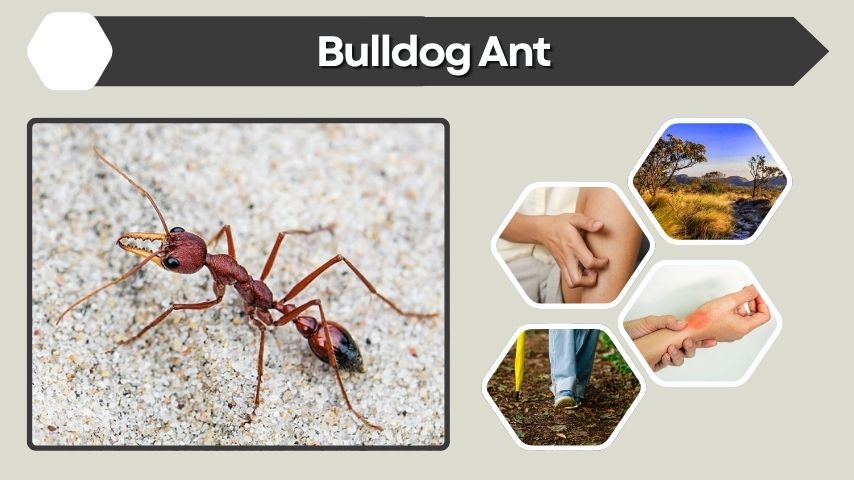
The bulldog ant is one of the most feared ants in the world because of its aggressive behavior, painful sting, and strong venom. Also known as the Australian bulldog ant, this insect is mainly found in Australia and is famous for its sharp eyesight, large size, and defensive attacks. Understanding bulldog ants can help you avoid painful encounters.
What Is a Bulldog Ant?
Bulldog ants are large, fast-moving ants from the genus Myrmecia. They are often called bull ants in Australia and are known for their strong jaws, excellent vision, and painful sting.
Bulldog Ant Overview
A bulldog ant is not like a common household ant. It has a larger body, long legs, strong mandibles, and a visible stinger. These ants are active hunters and can move quickly when searching for food or defending their nest.
Most bulldog ants live outdoors in natural areas, but they can also appear in gardens, lawns, and bushland near homes. Their aggressive defense makes them dangerous when people accidentally step near their nests.
Australian Bulldog Ant
The Australian bulldog ant is one of the best-known dangerous ants in the world. These ants are native to Australia and are especially common in forests, grasslands, woodlands, and sandy soil areas.
They are called bulldog ants because of their bold, aggressive nature. When threatened, they may face the danger directly instead of running away. This behavior makes them more frightening than many other ant species.
Bulldog Ant Size
Bulldog ant size can vary by species, but many are much larger than ordinary ants. Some species can grow around 15 to 40 mm long, making them easy to notice.
Their large size helps them hunt small insects and defend themselves. They also have powerful jaws that can grip the skin while they sting, making the attack more painful.
Bulldog Ant Facts
Here are some quick facts about bulldog ants:
- They are mainly found in Australia.
- They have excellent eyesight compared to many ants.
- They can sting more than once.
- They are aggressive around their nests.
- Their venom can cause allergic reactions.
- They hunt insects and small invertebrates.
Are Bulldog Ants Dangerous?
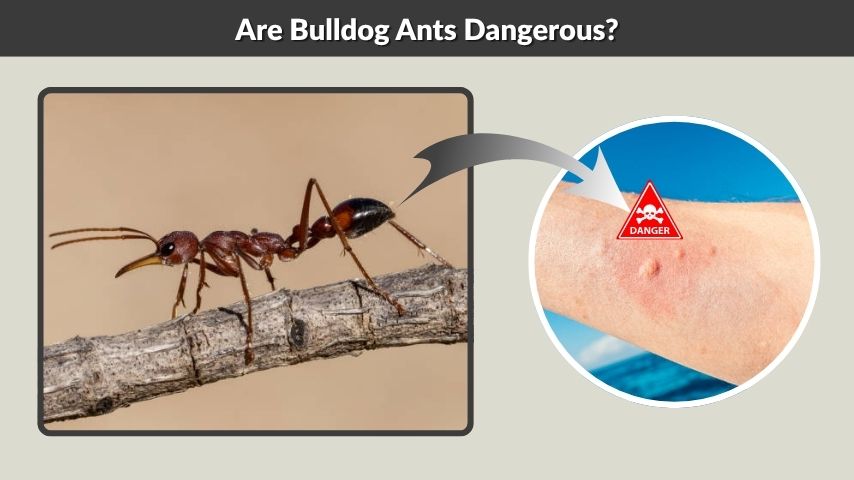
Bulldog ants are dangerous because they can bite and sting at the same time. Their venom can cause intense pain, swelling, and, in rare cases, serious allergic reactions.
Why Bulldog Ants Are Feared
Bulldog ants are feared because they do not always retreat when disturbed. If someone walks close to a bulldog ant nest, the ants may become defensive and attack quickly.
Their strong jaws allow them to hold onto the skin while they sting. This makes the sting feel more painful and difficult to avoid once the ant has attached itself.
Bulldog Ant Bite vs Bulldog Ant Sting
Many people search for “bulldog ant bite,” but the sting is usually the most painful part. The bite helps the ant grip the skin, while the stinger injects venom.
| Feature | Bulldog Ant Bite | Bulldog Ant Sting |
|---|---|---|
| Main action | Grips skin with jaws | Injects venom |
| Pain level | Painful pinch | Intense burning pain |
| Main risk | Skin irritation | Swelling or allergic reaction |
| Repeated attack | Possible | Possible |
Bulldog Ant Bite Mark
A bulldog ant bite mark may look like a small red spot, raised bump, or swollen area. If the ant also stings, the skin may become more painful, red, and irritated.
Some people may notice itching or warmth around the bite area. Scratching the area can increase the risk of infection, so it is better to clean the skin and avoid touching it too much.
Can a Bulldog Ant Kill You?
A bulldog ant can rarely kill a human, but it is possible in severe allergic cases. The biggest danger is anaphylaxis, a serious allergic reaction that can affect breathing and blood pressure.
Anyone who feels dizzy, has trouble breathing, or develops swelling of the face or throat after a bulldog ant sting should seek emergency medical help immediately.
Bulldog Ant Sting Symptoms and Treatment
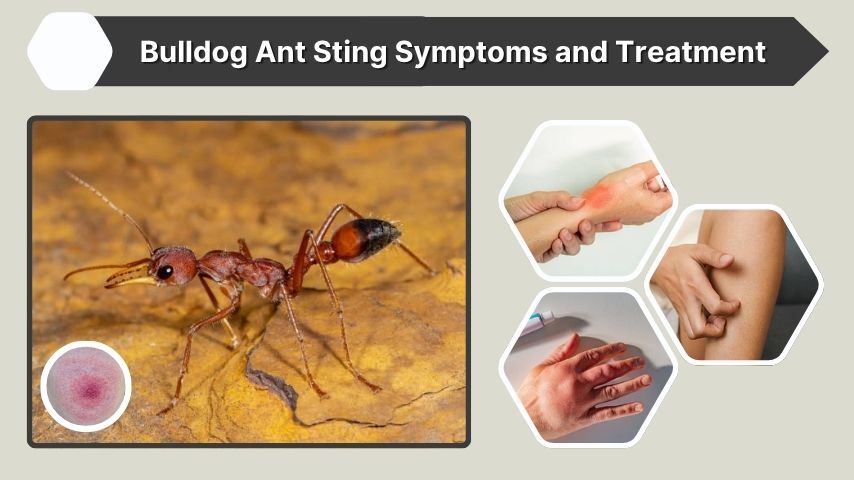
A bulldog ant sting can be extremely painful and may cause symptoms within minutes. Most reactions are local, but some people may experience serious allergic effects.
Common Sting Symptoms
Bulldog ant sting symptoms may include:
- Sharp burning pain
- Redness around the sting area
- Swelling and tenderness
- Itching or irritation
- Raised welts or bumps
- Nausea or dizziness in severe cases
- Breathing difficulty during allergic reactions
What to Do After a Bulldog Ant Sting
If you are stung by a bulldog ant, move away from the nest first to avoid more stings. Wash the affected area with soap and water, then apply a cold compress to reduce swelling and pain.
Avoid scratching the sting area. If pain or swelling becomes worse, or if you notice signs of an allergic reaction, get medical help quickly.
When to Seek Emergency Help
Emergency help is needed if a person has trouble breathing, chest tightness, faintness, rapid heartbeat, or swelling of the lips, tongue, face, or throat.
These signs may mean anaphylaxis. This condition can become life-threatening without fast treatment, especially in people who are allergic to ant venom.
Bulldog Ant Poison and Venom
Bulldog ant venom is the reason their sting is so painful. The venom is designed to defend the ant and subdue small prey, but it can also cause strong reactions in humans.
For most people, the venom causes pain and swelling. For allergic individuals, it can trigger dangerous whole-body symptoms that need urgent medical care.
Where Do Bulldog Ants Live?
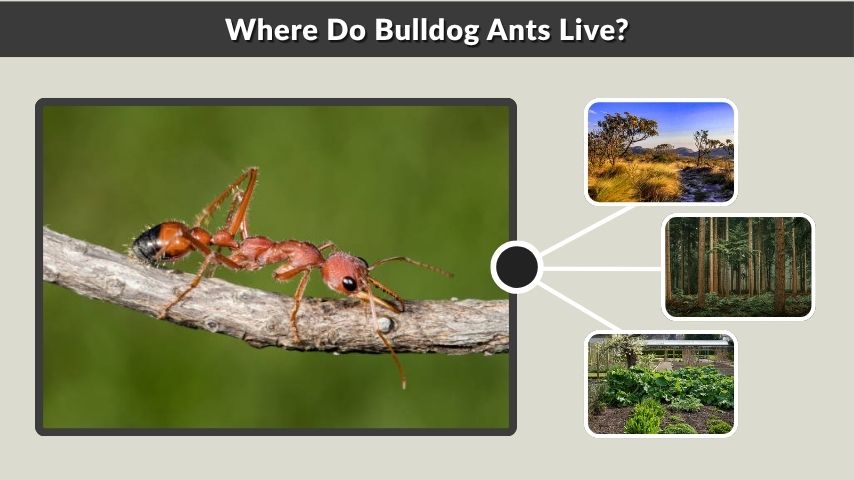
Bulldog ants live mostly in Australia, where they are found in many outdoor environments. They usually build nests in soil and become aggressive when their colony is disturbed.
Bulldog Ant Habitat
Bulldog ant habitat includes bushland, forests, open grasslands, gardens, lawns, and dry sandy areas. They prefer outdoor spaces where they can build underground nests and hunt for food.
Their nests may appear as small holes or mounds in the ground. Because they are territorial, it is best not to stand near or disturb these areas.
Where Are Bulldog Ants Found?
Bulldog ants are found mainly across Australia. Some species are more common in certain regions, including southeastern Australia and Tasmania.
People often encounter them while gardening, hiking, camping, or walking through bushland. They may also appear around homes near natural areas.
Are Bulldog Ants in Florida or California?
Bulldog ants are not naturally found in Florida or California. They are Australian ants, so they are not considered a normal outdoor pest in the United States.
If someone sees a large ant in Florida or California, it is more likely to be another species, such as a harvester ant, carpenter ant, or fire ant.
Bulldog Ant Nest Location
Bulldog ant nests are usually built in the ground. They may be located in lawns, gardens, forest soil, sandy areas, or near logs and rocks.
The nest entrance can be small and easy to miss. Since bulldog ants defend their nests strongly, people should avoid poking, digging, or standing near a visible nest entrance.
Bulldog Ant vs Other Dangerous Ants
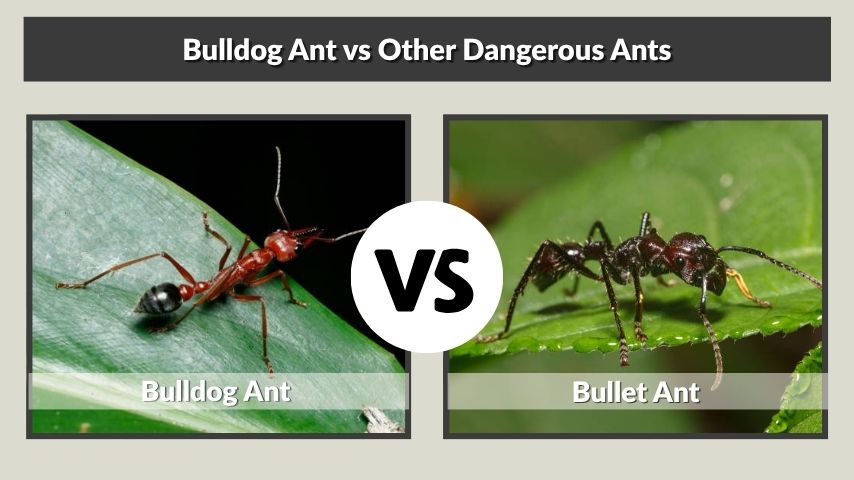
Bulldog ants are often compared with other dangerous ants because of their painful sting, aggressive behavior, and strong venom. However, each ant is dangerous in a different way.
Bulldog Ant vs Bullet Ant
The bullet ant is famous for having one of the most painful insect stings in the world. The bulldog ant is also very painful, but it is better known for aggression and repeated attacks near its nest.
In a bulldog ant vs bullet ant comparison, the bullet ant may be more famous for pain, while the bulldog ant is feared for its speed, vision, and defensive behavior.
Bulldog Ant vs Fire Ant
Fire ants are dangerous because they attack in large groups and sting repeatedly. Bulldog ants usually do not swarm in the same way, but their individual sting can be very painful.
Fire ants are more common in some parts of the United States, while bulldog ants are mostly found in Australia.
Bull Ant vs Bulldog Ant
Bull ant and bulldog ant often refer to the same group of ants in Australia. Many people use both names for large ants from the genus Myrmecia.
So, when people search for bull ant vs bulldog ant, they are usually talking about very similar or closely related ants.
Bulldog Ant vs Wasp
A bulldog ant sting and a wasp sting can both cause pain, swelling, and allergic reactions. However, bulldog ants can bite and sting together, while wasps mainly sting.
Both should be treated seriously if the person has allergy symptoms or receives multiple stings.
How to Stay Safe Around Bulldog Ants
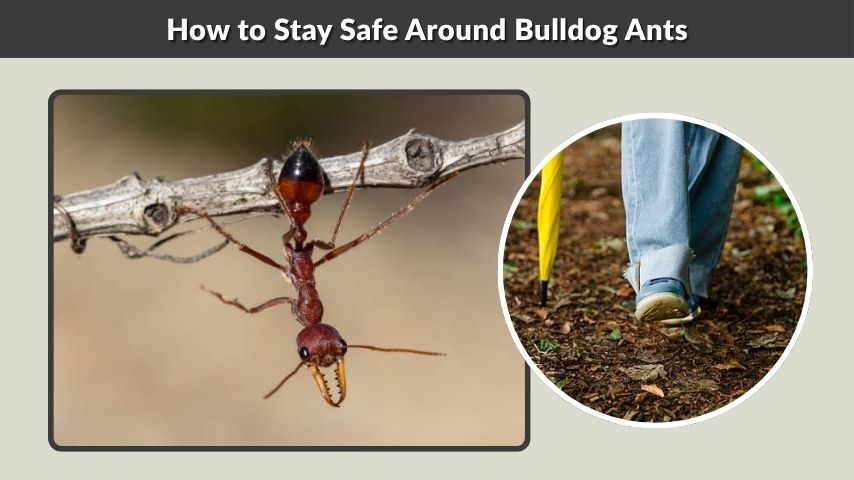
Avoiding bulldog ants is the best way to prevent painful bites and stings. Since they are defensive around nests, awareness is important when walking or working outdoors.
Safety Tips
To reduce the risk of a bulldog ant bite or sting:
- Wear closed shoes outdoors.
- Avoid walking barefoot in bushland or gardens.
- Do not disturb ant nests.
- Keep children and pets away from visible nests.
- Be careful when gardening near soil mounds.
- Move away quickly if ants become aggressive.
What to Avoid
Do not touch, crush, or provoke bulldog ants. These actions can cause them to defend themselves and sting.
Also avoid digging into unknown soil nests. If bulldog ants are nesting close to a home, it may be safer to contact a pest control professional instead of handling the nest yourself.
Are Bulldog Ants Good for the Environment?
Bulldog ants can be useful in nature because they hunt other insects and help balance local ecosystems. They are predators and scavengers, which means they play a role in controlling smaller insect populations.
However, their benefits do not mean they are safe to handle. They should always be respected from a distance.
Should You Remove a Bulldog Ant Nest?
A bulldog ant nest should only be removed if it creates a safety risk near homes, walkways, schools, or areas where people may be stung.
Because these ants can become aggressive, professional pest control is often the safest choice for nest removal.
FAQs
What is a bulldog ant?
A bulldog ant is a large, aggressive ant from Australia. It belongs to the genus Myrmecia and is known for its strong jaws, sharp vision, painful sting, and defensive behavior around nests.
Are bulldog ants dangerous?
Yes, bulldog ants are dangerous because they can bite and sting. Their sting can cause intense pain, swelling, redness, and allergic reactions. In rare cases, a severe allergic reaction can become life-threatening.
How big is a bulldog ant?
Bulldog ant size depends on the species, but many are around 15 to 40 mm long. This makes them much larger than common household ants and easier to recognize outdoors.
Where do bulldog ants live?
Bulldog ants live mainly in Australia. They are commonly found in forests, grasslands, gardens, bushland, sandy soil, and open outdoor areas where they build nests in the ground.
Can a bulldog ant kill you?
A bulldog ant can rarely kill a person, but it is possible if someone has a severe allergic reaction to the venom. Breathing trouble, faintness, or throat swelling after a sting requires emergency medical help.
