
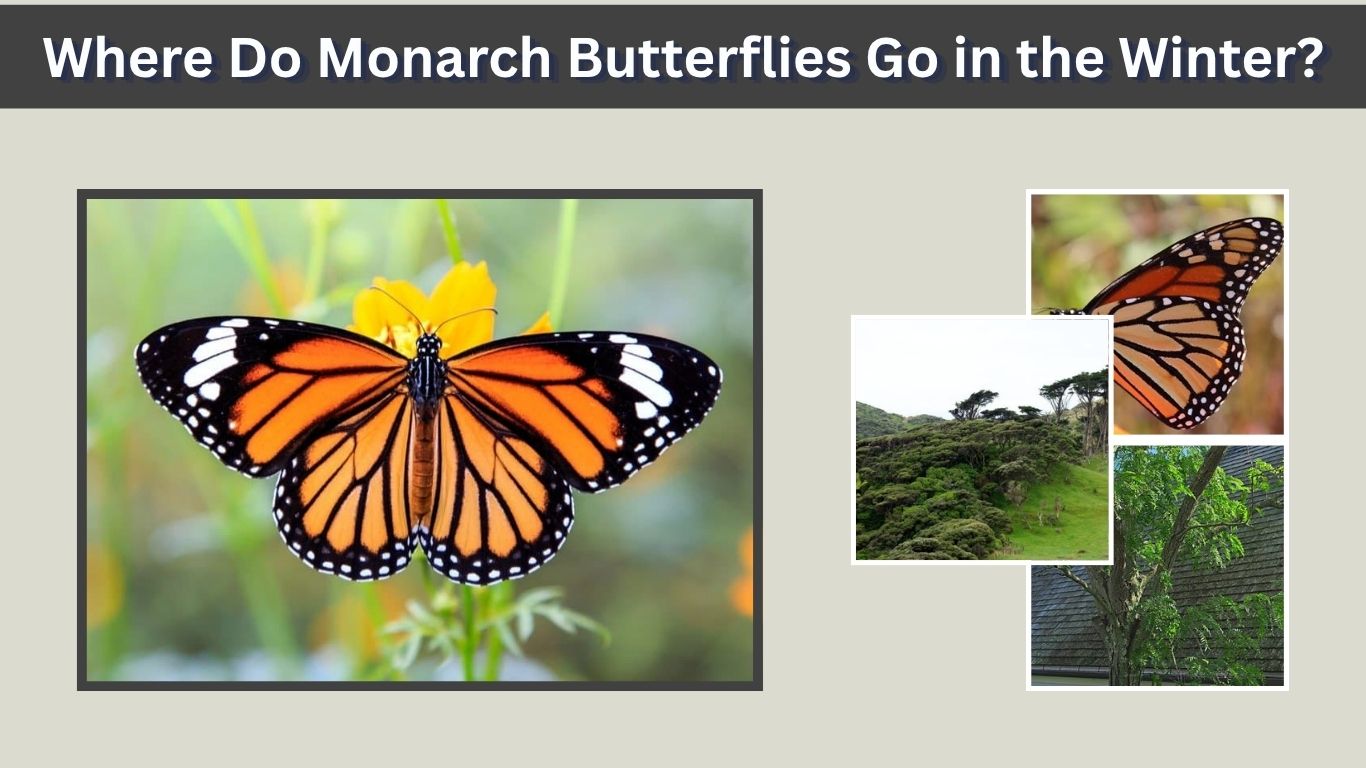
When temperatures begin dropping in fall, millions of North American monarch butterflies leave their summer habitats and travel south to escape freezing conditions. Most monarchs from eastern North America spend the winter in the high-elevation forests of central Mexico, while many western monarchs overwinter along coastal California. Some individuals travel thousands of miles to reach these protected winter habitats. Rather than truly hibernating, monarchs gather in huge clusters, reduce their activity, conserve stored energy, and wait for warmer spring weather before beginning their journey north again.
Where Do Monarch Butterflies Migrate for the Winter?
The winter destination depends largely on where a monarch spent the summer.
There are two major migratory groups in North America:
| Monarch Population | Primary Winter Destination |
| Eastern monarchs | Central Mexico |
| Western monarchs | Coastal California, with some traveling to Mexico |
Monarchs living east of the Rocky Mountains generally migrate toward Mexico. Those west of the Rockies often travel toward California’s Pacific Coast, although scientists have documented movement between the eastern and western populations.
Monarch Butterflies Spend Winter in Mexico
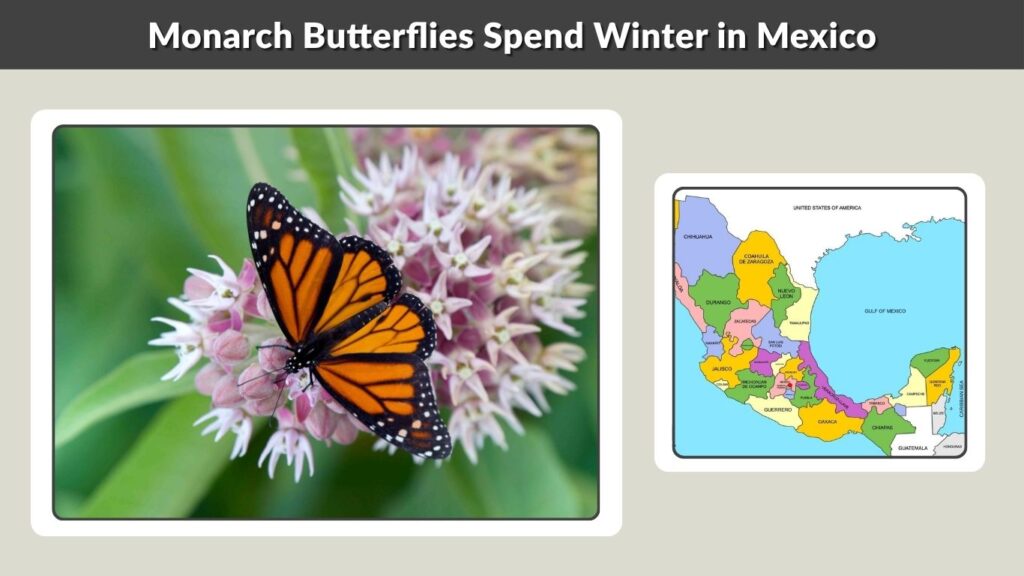
The spectacular migration to Mexico involves monarchs from Canada and large portions of the eastern and central United States.
They concentrate in mountainous areas of central Mexico, particularly within and around the Monarch Butterfly Biosphere Reserve.
What Is Their Winter Habitat in Mexico?
Monarchs overwinter in high-elevation oyamel fir forests.
These forests are generally around 3,000 meters, or nearly two miles, above sea level. The combination of dense trees, moisture, cool temperatures, and protection from wind creates a very specific microclimate.
Temperatures remain cool enough to slow monarch metabolism without usually exposing them to prolonged severe freezing.
This balance is critical. Warm conditions could cause butterflies to burn through their stored fat too quickly, while excessive cold and wet conditions can be fatal.
When Do Monarchs Arrive in Mexico?
Migrating monarchs generally begin arriving at their Mexican wintering grounds from late October into November.
Large numbers are often present around early November. They remain through much of winter before colonies begin breaking apart and butterflies start moving north again around March.
Where Do Western Monarch Butterflies Go in Winter?

Many monarchs living west of the Rocky Mountains migrate toward the California coast.
Historic overwintering sites stretch roughly from Mendocino County in northern California to San Diego County in the south.
Monarch Butterfly Winter Habitat in California
Western monarchs gather in sheltered groves containing trees such as:
- Monterey pine
- Monterey cypress
- Eucalyptus
- Other protective coastal trees
These locations provide shelter from strong winds and storms while maintaining cool, relatively mild conditions.
Famous California overwintering areas include locations around Pacific Grove and other parts of the central and southern coast.
Not every western monarch stays in California. Tracking has shown that some western butterflies cross toward Mexico instead.
How Far Do Monarch Butterflies Migrate in Winter?
Eastern monarchs traveling from the northern part of their breeding range can migrate up to about 3,000 miles before reaching central Mexico.
They generally average around 25–30 miles of movement per day, although favorable winds can help them travel considerably farther on some days. Bad weather may prevent them from moving at all.
How Can Such a Small Butterfly Travel So Far?
Monarchs conserve energy by taking advantage of air currents.
Instead of continuously flapping their wings, they can soar and glide when conditions permit. They also stop frequently at nectar-producing flowers to build and maintain fat reserves.
The generation making the fall migration is especially unusual. Often called the migratory or super generation, these monarchs can live approximately 6–9 months, much longer than the roughly 2–5 weeks typical of summer generations.
What Do Monarch Butterflies Do in Winter?
Once they reach their winter habitat, monarchs become much less active.
Thousands—and sometimes enormous numbers—cluster together on tree trunks and branches.
Why Do Monarchs Form Large Clusters?
Clustering places monarchs within a protected forest microclimate and helps them remain relatively inactive.
Cool temperatures slow their metabolism, allowing them to conserve the fat accumulated during fall migration.
During warmer, sunny periods, butterflies may leave the clusters temporarily to:
- Fly nearby
- Drink water
- Search for nectar
- Reposition themselves within the forest
They return to protective roosting areas when conditions become cooler.
Do Monarch Butterflies Hibernate in Winter?
Not in the same way as a hibernating mammal.
The more accurate term is overwintering.
Monarchs enter a period of reduced activity in which cool temperatures slow their metabolism considerably. The migratory generation also delays reproduction through a condition known as reproductive diapause.
This allows energy to be devoted to migration and winter survival rather than mating and egg production. Reproductive development resumes as winter ends and monarchs begin moving north.
How Do Monarch Butterflies Survive the Winter?
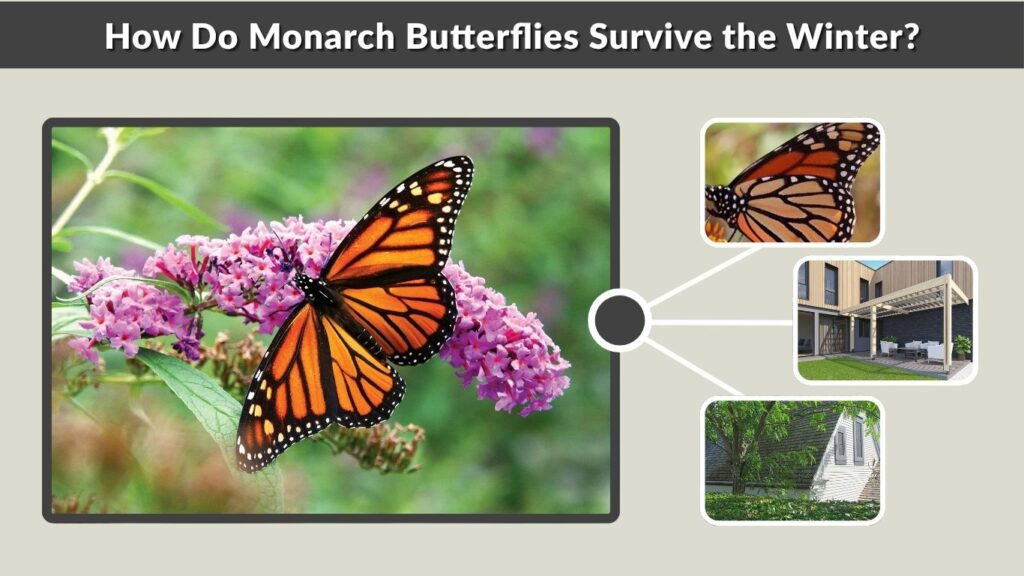
Monarch survival depends heavily on choosing the right microclimate.
Their winter forests provide:
- Protection from strong winds
- Moderate temperatures
- Shade
- Moisture
- Suitable roosting trees
- Nearby water
- Occasional nectar sources
The dense forest canopy can function almost like an umbrella and blanket, reducing exposure to severe weather.
Extreme winter storms can still kill large numbers of butterflies, particularly when cold temperatures occur together with rain or snow.
Loss or degradation of the surrounding forests can also change the protective microclimate monarchs depend on.
What Do Monarch Butterflies Eat in Winter?
Wintering monarchs survive largely on fat reserves accumulated before and during migration.
Because their metabolism slows dramatically in cool conditions, they require much less energy than actively migrating butterflies.
However, they do not necessarily go the entire winter without feeding.
During warmer periods, monarchs may leave their roosts to drink nectar from available flowers and obtain water.
This is one reason abundant nectar flowers along migration routes are so important—monarchs need substantial energy reserves before reaching their winter destination.
Do All Monarch Butterflies Fly South for Winter?
No.
Migration varies among monarch populations.
For example, monarchs in southern Florida can live and breed throughout the year because the climate remains sufficiently warm. They do not necessarily undertake the spectacular long-distance migration associated with northern monarchs.
Monarch populations elsewhere in the world also follow different seasonal patterns.
What Happens When Winter Ends?
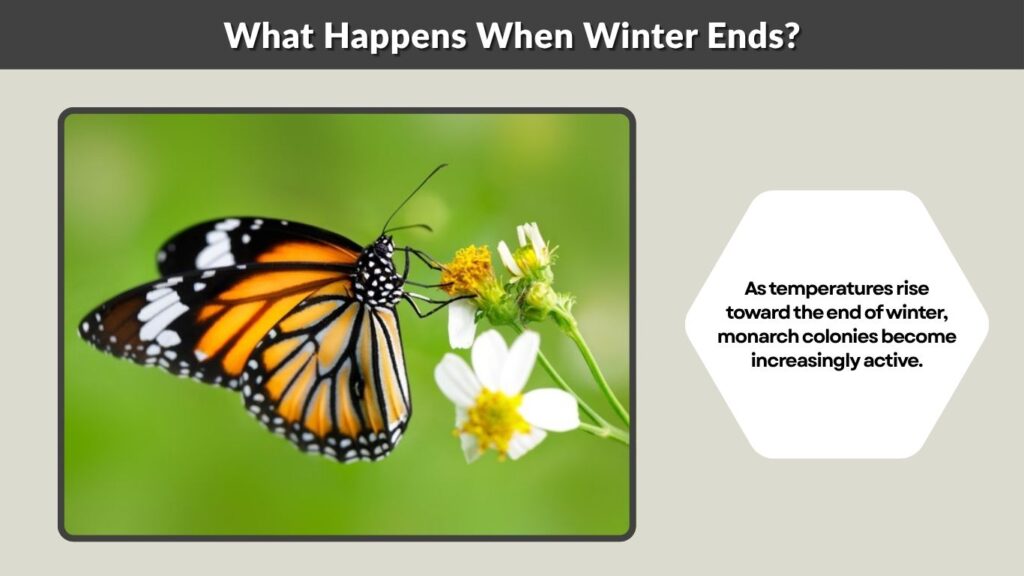
As temperatures rise toward the end of winter, monarch colonies become increasingly active.
Around March, butterflies overwintering in Mexico begin traveling north toward the United States.
The same individuals do not normally complete the entire journey all the way to the northernmost summer range.
Instead, females begin laying eggs on newly emerging milkweed. Their offspring continue northward, followed by additional generations.
By late summer and fall, a new migratory generation develops and begins the remarkable journey south once again.
Can You Keep a Monarch Butterfly Over Winter?
Keeping a healthy wild monarch indoors for the entire winter is generally unnecessary and can interfere with its natural seasonal behavior.
Migratory monarchs are adapted to spend winter in specific cool outdoor habitats where their metabolism remains low. A warm house may keep a butterfly unusually active, causing it to consume stored energy much faster.
Whenever possible, healthy wild monarchs should be allowed to follow their natural migration and overwintering cycle.
FAQs
1. Where do most monarch butterflies go in the winter?
Most eastern North American monarchs migrate to high-elevation oyamel fir forests in central Mexico. Many western monarchs instead overwinter in sheltered groves along coastal California, although some western individuals also migrate toward Mexico.
2. Do monarch butterflies fly south for the winter?
Yes. Migratory monarchs travel south during fall because they cannot tolerate prolonged freezing conditions across much of their northern breeding range. Some eastern monarchs travel as far as 3,000 miles before reaching their winter habitat in Mexico.
3. How long do monarch butterflies stay in Mexico?
Monarchs generally arrive in their central Mexican overwintering areas from late October through November. They remain there through winter, with the colonies beginning to disperse and migrate northward around March as temperatures and seasonal conditions change.
4. Do monarch butterflies sleep all winter?
Monarchs do not sleep continuously or truly hibernate. They overwinter in a state of greatly reduced activity. Cool temperatures slow their metabolism, but they may become active on warm sunny days to fly, drink water, or occasionally visit flowers.
5. Can monarch butterflies survive freezing temperatures?
Monarchs are vulnerable to prolonged freezing conditions, especially when they become wet. Their Mexican and Californian overwintering habitats provide carefully balanced microclimates that remain cool enough to conserve energy while offering protection from severe cold, wind, and winter storms.
