
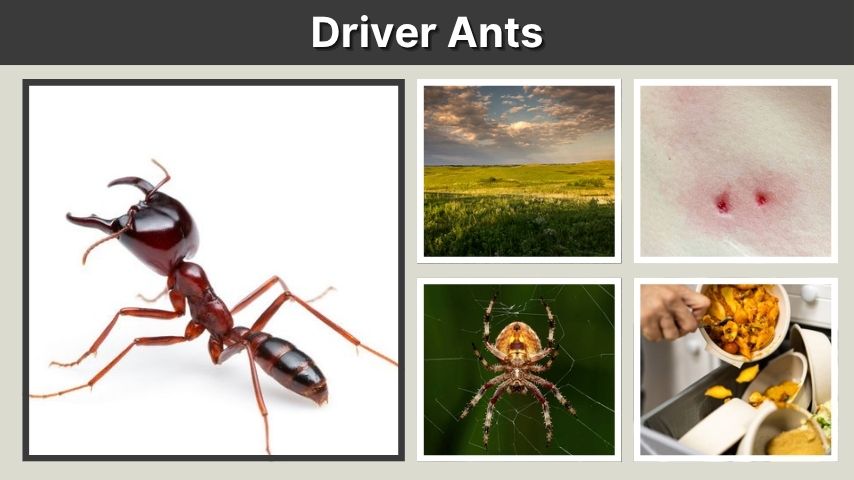
Driver ants are among the most dramatic ants in the world. Also called African driver ants, safari ants, or siafu, they are famous for huge marching columns, powerful bites, and massive colonies. Many people search for them because of viral videos, documentaries, and myths about animals being overwhelmed. This guide explains what driver ants are, where they live, how dangerous they are, and how they compare with army ants.
What Are Driver Ants?
Driver ants are ants in the genus Dorylus. They are best known from Africa, especially central, eastern, and southern regions, although some related Dorylus ants also occur in parts of tropical Asia. The African species are the ones most people mean when they search for “driver ants,” “African driver ants,” or “siafu ants.”
These ants are a type of army ant. Instead of building a permanent nest and staying in one place, many driver ant colonies move through the environment in search of food. They form long trails or swarms made up of thousands or even millions of workers.
Driver ants are social insects with a clear colony structure. A colony may include workers, large-headed soldiers, males, and a queen. Each caste has a different job, from hunting and carrying prey to defending the colony and reproducing.
Why Are They Called Driver Ants?
The name “driver ant” likely comes from their ability to drive insects, spiders, small animals, and even people away from their path. When a swarm moves through leaf litter, grass, or a forest floor, many small creatures flee ahead of it. To anyone watching, it can look as if the ants are driving everything out of hiding.
In parts of East Africa, they are also called “siafu,” a word used in several regional languages for these aggressive marching ants.
Driver Ant Size and Appearance
Driver ants vary greatly in size depending on their caste. Small workers are much smaller than soldiers, while queens can be enormous compared with normal ants. This size difference is one of the most interesting features of the colony.
| Driver Ant Type | Approximate Size | Main Role |
|---|---|---|
| Small worker | A few millimetres | Foraging, carrying food, colony tasks |
| Large worker/soldier | Larger, with big jaws | Defence and cutting prey |
| Male driver ant | Large, winged before mating | Reproduction |
| Queen driver ant | Much larger than workers | Egg laying and colony reproduction |
What Do Driver Ants Look Like?
Most driver ants are reddish-brown, dark brown, or blackish, depending on the species. Workers often look slim and fast-moving. Soldiers are easier to recognise because they have oversized heads and strong, curved mandibles.
Their jaws are their most noticeable weapon. Driver ants do not rely mainly on a sting like some other ants. Instead, the soldiers bite and hold on with powerful mandibles. This is why their bites can be difficult to remove and may leave small puncture marks.
Where Do Driver Ants Live?
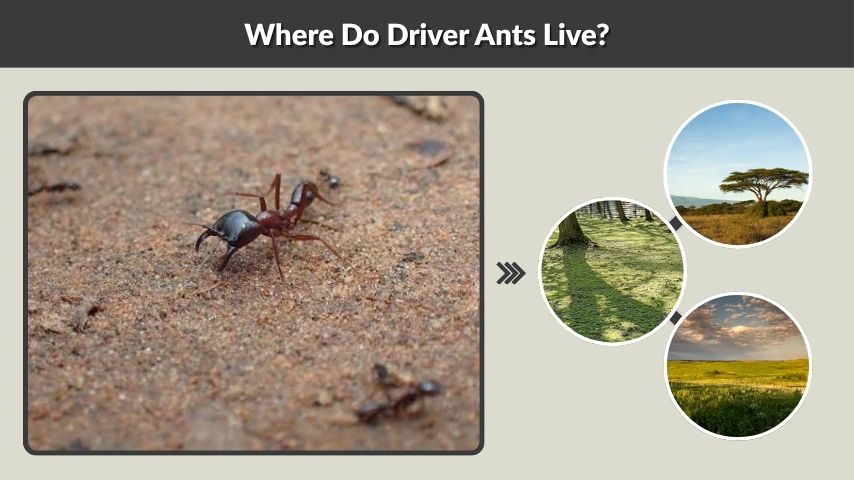
Driver ants are most strongly associated with Africa. They are commonly linked with tropical forests, savannas, grasslands, and woodland environments. Many species prefer warm, humid places where there is plenty of soil cover, leaf litter, insects, and other small prey.
They may be found in:
- Forest floors and leaf litter
- Grasslands and savannas
- Tropical and subtropical regions
- Soil tunnels and underground cavities
- Areas with termites, insects, worms, and other prey
- Rural landscapes near farms or villages
Some driver ants forage above ground in spectacular columns. Others spend much of their time underground and are rarely noticed unless disturbed.
Driver Ants in Africa
The phrase “driver ants of Africa” usually refers to the large swarm-raiding Dorylus species. These ants are part of the natural ecosystem and help control populations of insects and other invertebrates. Their raids may look destructive, but they are also part of the food web.
In some rural areas, people know to step aside when a large column appears. A driver ant swarm is not something to stand in, sit near, or disturb.
Driver Ant Colony Structure
A driver ant colony is highly organised. It functions almost like one large moving organism. Individual ants are simple, but together they can search, attack, defend, migrate, and relocate with impressive coordination.
The main colony members include workers, soldiers, males, and the queen.
Worker Driver Ants
Workers do most of the labour. They search for food, carry prey, maintain tunnels, protect larvae, and help move the colony. In a marching column, workers may create living lanes where some ants travel outward while others return with food.
Driver Ant Soldiers
Soldiers are larger and stronger than ordinary workers. They have large heads and powerful mandibles. Their job is defence. When a threat approaches the colony, soldiers may move to the outside edges of the column and bite anything that disturbs them.
Male Driver Ants
Male driver ants are large and winged before mating. In some regions, people notice these males separately because they look so different from the workers. They are sometimes mistaken for another insect because of their bulky bodies and wings.
Queen Driver Ant
The queen driver ant is one of the most remarkable ants in the world. She is much larger than the workers and is responsible for laying eggs. In mature colonies, the queen’s abdomen can become greatly enlarged as she produces huge numbers of eggs.
Searches like “queen driver ant,” “driver ant queen size,” and “African driver ant queen” are popular because the queen looks almost unreal compared with normal worker ants. She is the reproductive centre of the colony, and the survival of the colony depends heavily on her.
Driver Ant Swarms and Raids
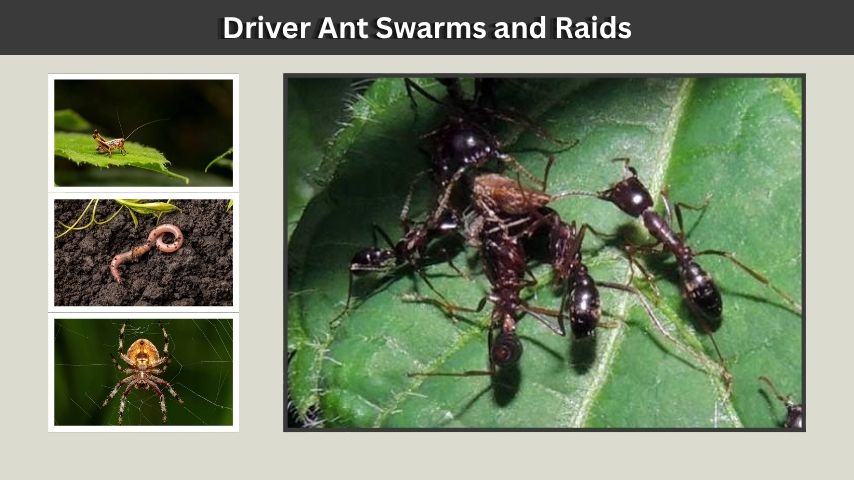
Driver ant swarms are one of the main reasons these ants are famous. A raid can involve huge numbers of ants moving together in a dense column or fan-shaped front. The ants search through soil, grass, leaf litter, and crevices, attacking insects, spiders, worms, and other small animals.
A driver ant swarm can look frightening because it appears unstoppable. However, the ants are not hunting humans. Their goal is food and movement. Problems happen when people, pets, or livestock cannot move away or accidentally disturb the ants.
What Do Driver Ants Eat?
Driver ants are predators and scavengers. Their diet may include:
- Insects
- Termites
- Worms
- Spiders
- Larvae
- Small invertebrates
- Carrion
- Other soft-bodied prey
Some species raid termite nests. Others search through leaf litter and soil for anything they can overpower. They are important natural predators and can help reduce pest insect populations.
Are Driver Ants Dangerous?
Driver ants can be dangerous in certain situations, mostly because of their numbers and painful bites. A single driver ant bite is usually not life-threatening, but a large number of ants biting at once can be serious.
They are most risky for:
- Babies or small children
- Elderly people
- Sleeping people
- Sick or immobilised people
- Small pets
- Confined animals
- Livestock that cannot move away
- People who panic and fall into a swarm
Healthy adults can usually avoid serious harm by moving away quickly and removing ants from the body. The biggest danger comes from being unable to escape or being attacked by a very large number of ants.
Can Driver Ants Kill Humans?
Yes, driver ants can kill humans in rare situations, but this is not common. They do not seek out humans as prey. Fatal cases are usually linked to vulnerability, immobilisation, sleeping in the wrong place, or being unable to get away from a large swarm.
For most people, the practical risk is painful bites, panic, and possible skin injury. However, it is still wise to take these ants seriously. Do not stand in a driver ant column, disturb a raid, or allow children or pets near a swarm.
Driver Ant Bite: What Happens?
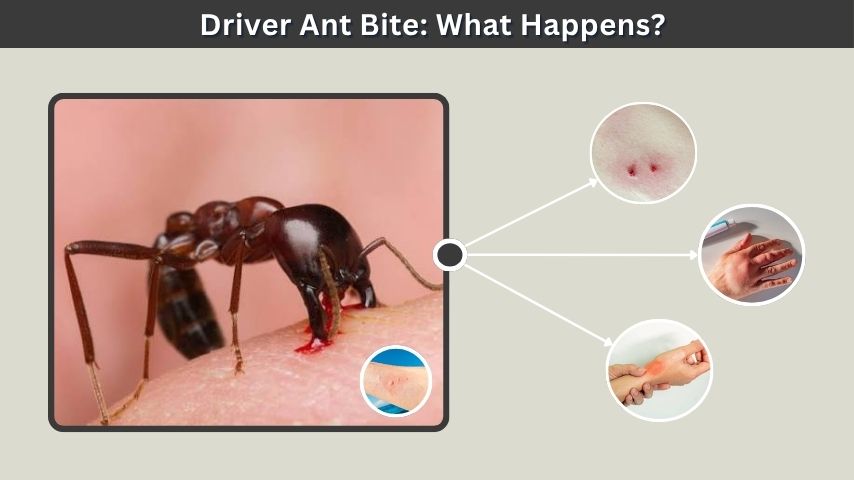
A driver ant bite is painful because the ant grips with strong jaws. Soldiers can hold on tightly, and pulling them off too quickly may make the bite worse. Their mandibles may leave two small puncture wounds.
Common bite effects include:
- Sharp pain
- Redness
- Small puncture marks
- Swelling
- Irritation
- Bleeding in some cases
- Secondary infection if wounds are scratched or not cleaned
Driver ants are mainly known for biting rather than stinging. The bite itself is the main problem.
What to Do After Driver Ant Bites
If driver ants get on your body, move away from the swarm first. Then remove the ants carefully. Do not remain near the column while trying to clean bites.
Basic first aid includes washing the area with soap and clean water, applying a cold compress, and keeping the bites clean. Seek medical care if there are many bites, severe swelling, signs of infection, fever, dizziness, or bites near the eyes, mouth, or airway.
Driver Ants vs Army Ants
Many people search for “driver ants vs army ants,” but the answer is simple: driver ants are a kind of army ant. “Army ant” is a broader term used for several groups of nomadic, swarm-raiding ants. Driver ants are the Old World African and Asian Dorylus ants.
In everyday language:
- All driver ants are army ants.
- Not all army ants are driver ants.
- Driver ants are especially associated with Africa.
- New World army ants, such as Eciton, are found in the Americas.
- Driver ants are famous for powerful biting soldiers and huge colonies.
Both groups use mass raiding behaviour, but they belong to different lineages and live in different parts of the world.
Driver Ants vs Termites
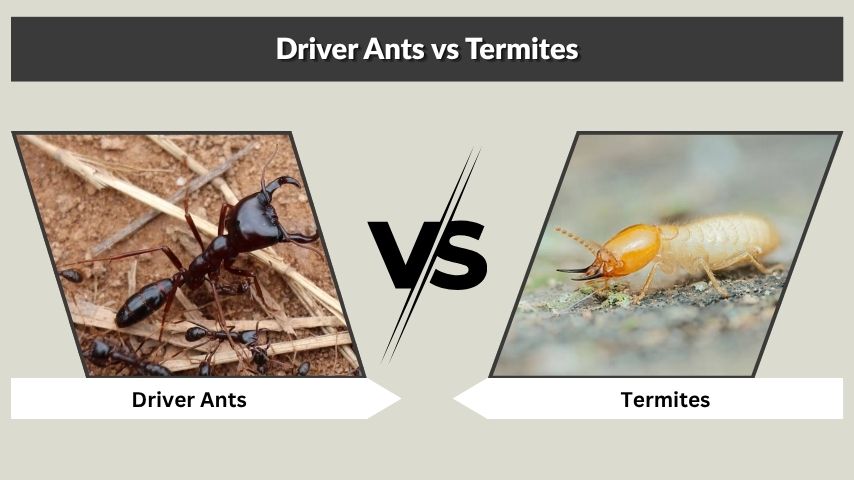
Driver ants and termites are very different insects. Termites mostly feed on cellulose, such as wood, grass, or plant material. Driver ants are predators and scavengers that hunt other animals.
Driver ants may raid termite colonies and carry termites back as food. This is one reason they can be beneficial in natural ecosystems. However, around homes, farms, or villages, a large driver ant column can still be alarming.
Do Driver Ants Eat Elephants?
Searches like “driver ants eat elephant” and “driver ants vs elephant” are usually based on exaggerated stories, documentaries, or viral content. Driver ants do not normally hunt healthy elephants. A living elephant can simply move away from a swarm.
However, driver ants may feed on dead animals or attack vulnerable, trapped, sick, or very young animals if they cannot escape. The idea of driver ants routinely killing elephants is more myth than normal behaviour.
Do Driver Ants Eat Humans?
Driver ants do not hunt humans as regular prey. They may bite humans who stand in their path, disturb them, sleep near a swarm, or cannot move away. In rare cases, many ants attacking an immobilised person could be deadly.
The phrase “driver ants eat humans” is usually sensational. A better way to understand the risk is this: driver ants are not human hunters, but a large swarm can be dangerous to anyone who cannot escape.
How to Keep Driver Ants Away
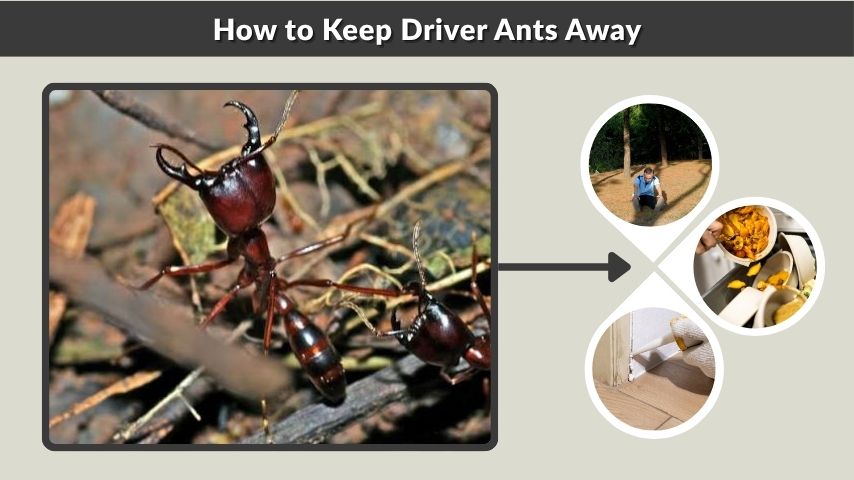
In areas where driver ants occur naturally, complete prevention may be difficult. They are wild ants that move through the environment. The best approach is awareness and avoidance.
To reduce problems:
- Keep sleeping areas clean and raised where possible.
- Avoid camping directly on ant trails.
- Check the ground before resting outdoors.
- Keep food waste controlled.
- Move away from marching columns.
- Keep children and pets away from swarms.
- Seal gaps where ants could enter buildings.
- Use local pest control advice if swarms repeatedly enter homes.
What Drives Ants Away Naturally?
Some searches for “what drives ants away” or “how to drive ants away from home naturally” may refer to household ants, not true driver ants. For ordinary house ants, cleaning food residues, sealing entry points, and removing attractants may help.
For actual African driver ants, natural repellents are not reliable against a large swarm. Physical avoidance and local pest control guidance are safer than trying to stop a moving column with home remedies.
Should You Kill Driver Ants?
Driver ants play an important ecological role. They help control insect populations and recycle nutrients. In wild areas, they should usually be left alone. If a swarm passes through an outdoor area, the safest response is often to give it space.
Control may be needed if driver ants repeatedly enter homes, schools, animal enclosures, or sleeping areas. In that case, local pest professionals or public health authorities can advise on safe management.
Driver Ant Facts
Here are quick facts for readers who want a simple summary:
- Driver ants belong to the genus Dorylus.
- They are also called African driver ants, safari ants, or siafu.
- They are a type of army ant.
- They are famous for huge swarms and marching columns.
- Soldiers have powerful jaws and painful bites.
- Queens are much larger than workers.
- Many species live in Africa, especially tropical and subtropical regions.
- Some driver ants forage above ground, while others are mostly underground.
- They eat insects, termites, worms, spiders, larvae, and other small prey.
- They can be dangerous if a person or animal cannot move away.
FAQs
Are driver ants the same as army ants?
Driver ants are a type of army ant. The term “army ant” is broader and includes swarm-raiding ants from different regions. Driver ants usually refer to Dorylus ants from Africa and parts of tropical Asia, especially the famous African species that form large marching columns.
How big is a driver ant queen?
A driver ant queen is much larger than the workers and soldiers. Her abdomen can become greatly enlarged when she is producing eggs. Exact size depends on species and condition, but driver ant queens are often described as some of the largest ant queens in the world.
Can driver ants kill a human?
Driver ants can kill humans in rare cases, usually when a person cannot escape a large swarm. They do not normally hunt people. The main risks are painful bites, panic, many ants attacking at once, and danger to babies, elderly people, sleeping people, or immobilised individuals.
Do driver ants eat elephants?
Driver ants do not normally kill or eat healthy elephants. A healthy elephant can walk away from a swarm. They may feed on dead animals or attack vulnerable animals that cannot escape, but stories about driver ants routinely eating elephants are exaggerated.
Are driver ants dangerous to homes?
Driver ants can become a problem if they enter sleeping areas, kitchens, livestock spaces, or buildings. A passing swarm outdoors may not require treatment, but repeated indoor activity should be taken seriously. In regions where they are common, local pest control advice is the safest option.
