
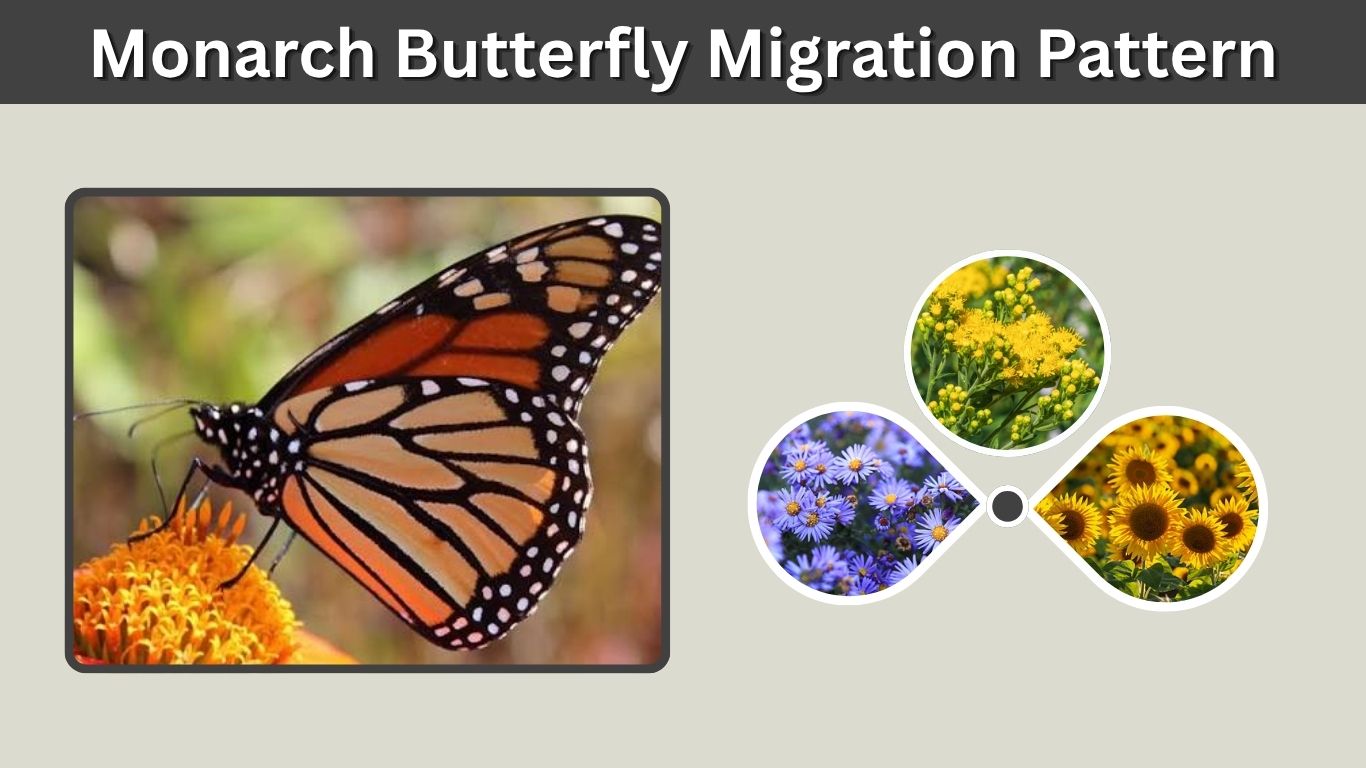
The monarch butterfly migration pattern is one of the most extraordinary seasonal movements in the insect world. Every year, monarchs travel between summer breeding grounds in the United States and Canada and winter habitats farther south. Eastern monarchs generally migrate to central Mexico, while many western monarchs overwinter along coastal California. Unlike birds, however, no single monarch completes the entire northward and southward annual cycle. Multiple generations carry the population north in spring and summer, while one long-lived generation makes the remarkable journey south in fall.
What Is the Monarch Butterfly Migration Pattern?
North American monarch migration follows a seasonal cycle of northward movement in spring and southward movement in fall.
The general pattern is:
Mexico/California → Spring movement north → Summer breeding → Fall migration south → Winter overwintering
Eastern monarchs can travel as far as approximately 3,000 miles to reach wintering forests in central Mexico. Western monarchs commonly migrate toward coastal California, although some western butterflies also travel to Mexico.
| Season | Main Movement | Major Activity |
| Winter | Little migration | Overwintering |
| Spring | North | Breeding begins |
| Summer | North and across breeding range | Several generations develop |
| Fall | South | Long-distance migration |
Eastern Monarch Butterfly Migration Pattern
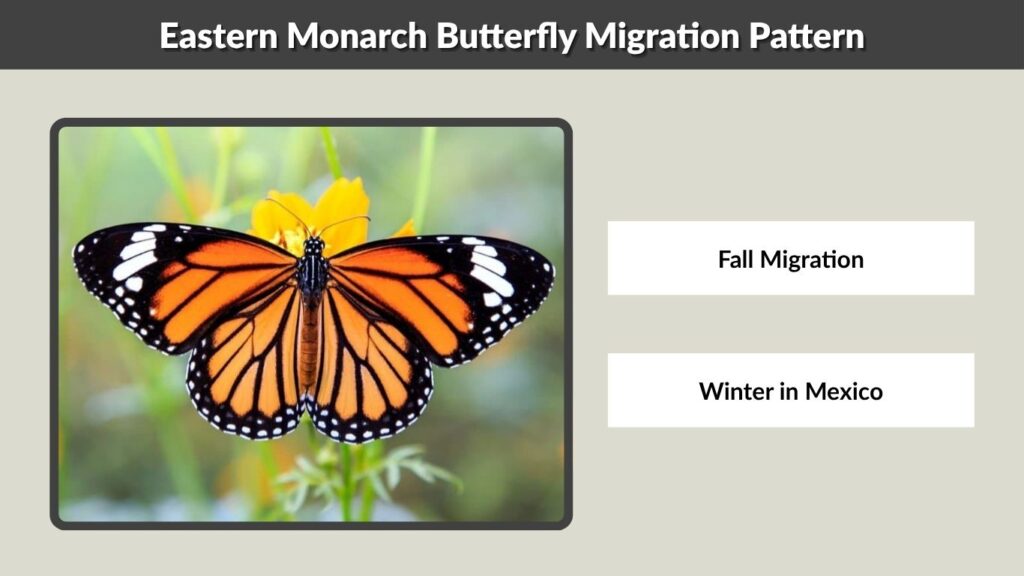
Monarchs east of the Rocky Mountains form the largest and best-known migratory population.
Fall Migration
During late summer and fall, monarchs from Canada and the northern United States begin moving south.
Their migration gradually converges as butterflies move through the central United States and toward Texas. Many then cross northern Mexico before continuing to mountainous areas of central Mexico.
The migration pattern can look somewhat like a funnel: butterflies begin across an enormous breeding range but become increasingly concentrated as they approach Mexico.
Winter in Mexico
Eastern monarchs primarily overwinter in high-elevation forests in central Mexico.
They gather in dense colonies on oyamel fir trees, where cool, sheltered conditions help reduce their metabolism and conserve stored energy.
Monarchs typically begin arriving around late October and early November and remain through winter.
Spring Monarch Butterfly Migration Pattern
Spring migration works differently from fall migration.
The monarchs that survived winter in Mexico begin traveling north around March. They move into northern Mexico and the southern United States, where females find milkweed and lay eggs.
These overwintering adults eventually die.
Their offspring become the next generation and continue traveling north.
Multiple Generations Complete the Journey
The northward expansion usually takes several generations.
A simplified pattern is:
- Overwintering generation: Leaves Mexico in spring and moves north.
- First generation: Develops in the southern U.S. and continues north.
- Second generation: Expands farther through the United States.
- Third generation: Occupies northern breeding regions during summer.
- Migratory generation: Develops later in summer and migrates south in fall.
The exact number and timing can vary, but the important point is that several generations collectively complete the spring and summer expansion.
Fall Monarch Butterfly Migration Pattern
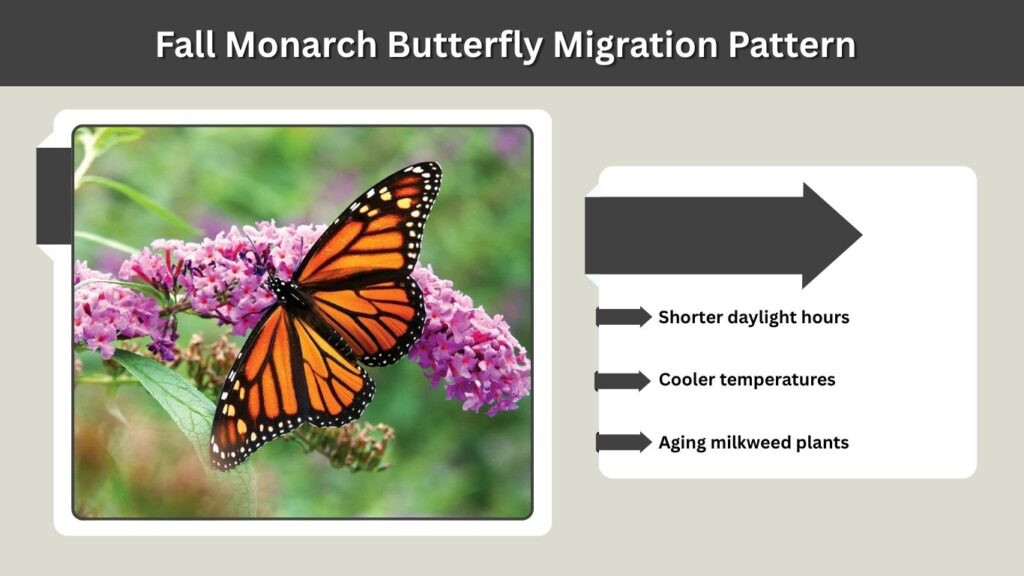
Fall migration is particularly remarkable because individual butterflies may complete the entire trip south.
Beginning in late summer, environmental conditions trigger major biological changes in monarchs.
Important cues include:
- Shorter daylight hours
- Cooler temperatures
- Aging milkweed plants
- Changing nectar availability
- Seasonal weather patterns
Instead of immediately mating and reproducing, migratory monarchs enter reproductive diapause, delaying reproduction until after winter.
This allows them to devote more energy to migration and survival.
Why Is the Fall Generation Different?
Most summer monarch adults live only several weeks.
The migratory generation is dramatically different.
Fall migrants may live six to nine months, allowing them to travel south, survive winter, and begin moving north the following spring.
They also build large fat reserves by drinking nectar during migration.
This is why late-blooming wildflowers are especially important along migration routes.
Western Monarch Butterfly Migration Pattern
Monarchs west of the Rocky Mountains traditionally follow a different pattern.
Many migrate toward overwintering groves along the California coast.
Western monarchs generally begin leaving these sites during February and March. They move inland and north as milkweed becomes available.
Several generations then occupy areas throughout the western United States during spring and summer.
By late summer and fall, the long-lived migratory generation begins moving back toward wintering locations, commonly arriving along the California coast around late October.
Do Western Monarchs Always Go to California?
No.
The eastern and western migration patterns are not completely separate.
Some western monarchs cross toward Mexico, while other movements occur between regions. Scientists therefore view the Rocky Mountains as an approximate division rather than an absolute barrier between two completely isolated populations.
How Far Do Monarch Butterflies Migrate?
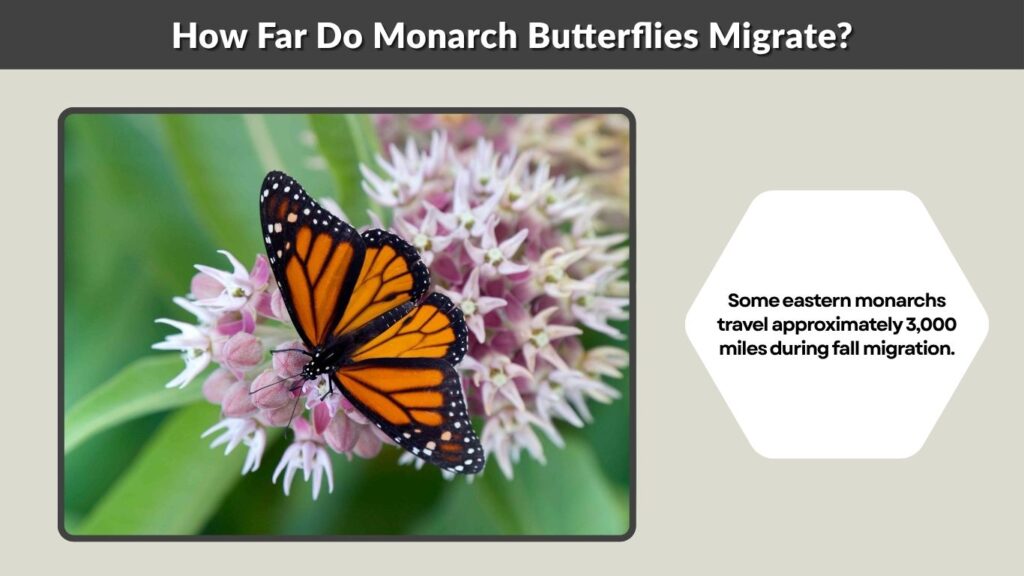
Some eastern monarchs travel approximately 3,000 miles during fall migration.
The distance depends on where the butterfly begins.
A monarch starting in southern Canada obviously has farther to travel than one beginning in Texas.
Monarchs commonly travel roughly 25–30 miles per day, though favorable winds can allow substantially greater progress. Poor weather may stop migration entirely for a day or longer.
How Do Monarch Butterflies Know Where to Go?
This remains one of the most fascinating aspects of monarch migration.
The butterflies traveling south have never visited Mexico before, yet they can reach the same relatively small overwintering region used by previous generations.
Scientists have found that monarchs use a combination of environmental and biological navigation systems.
Sun Compass
Monarchs can use the position of the sun to maintain their general direction.
Because the sun moves throughout the day, they combine this information with an internal biological clock, allowing them to compensate for changing sun position.
Environmental Cues
Their migration is also influenced by:
- Day length
- Temperature
- Wind direction
- Weather
- Geographic features
- Seasonal changes
Monarchs do not simply follow their parents because the butterflies that made the previous fall migration are several generations removed from the next migratory generation.
Monarch Butterfly Flight Pattern During Migration
Monarchs do not continuously flap their wings for thousands of miles.
They frequently use rising columns of warm air called thermals.
A monarch may circle upward within a thermal and then glide forward while gradually losing altitude. It can then find another rising air current and repeat the process.
This strategy helps conserve precious energy during long-distance travel.
Large bodies of water can create challenges because suitable rising air currents may be less available, so migration routes are partly influenced by geography and weather.
Why Do Monarchs Stop During Migration?
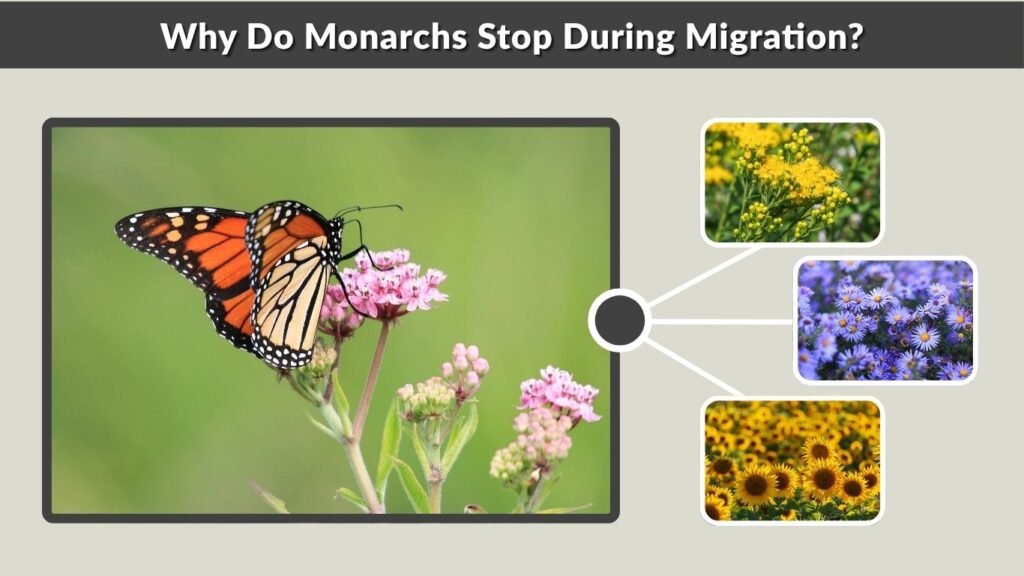
Monarch migration includes many stopovers.
Butterflies need places where they can rest, shelter from weather, and replenish energy.
Migrating adults frequently visit nectar-rich flowers such as:
- Goldenrod
- Asters
- Blazing star
- Sunflowers
- Ironweed
- Coneflowers
- Other native fall-blooming plants
At night, groups may gather in trees to form temporary roosts before continuing their journey after conditions improve.
Can Monarch Migration Patterns Be Disrupted?
Yes. Migration depends on suitable conditions across thousands of miles.
Potential disruptions include:
Extreme Weather
Strong storms, drought, excessive heat, unusually cold temperatures, and strong winds can delay migration or increase mortality.
Loss of Nectar Plants
Migrating monarchs need flowers to replenish energy. Long stretches without suitable nectar can make their journey more difficult.
Loss of Milkweed
Milkweed is essential during the breeding portion of the annual cycle because monarch caterpillars depend on it.
Habitat Fragmentation
Monarchs require connected networks of breeding habitat, nectar-rich stopover areas, and protected wintering habitat. Losing any part of this network can affect the success of the overall migration.
FAQs
1. What is the migration pattern of monarch butterflies?
Monarchs generally move north from Mexico or California during spring, reproduce across the United States and Canada during spring and summer, and migrate south again in fall. Multiple generations complete the northward expansion, while one long-lived generation makes the fall journey south.
2. When does monarch butterfly fall migration begin?
Fall migration starts earliest in northern areas, generally from late summer into early fall. Monarchs farther south begin their main movement later. Timing varies according to latitude, temperature, day length, weather, and other environmental conditions.
3. Where do monarch butterflies migrate in winter?
Most eastern North American monarchs migrate to mountainous overwintering forests in central Mexico. Many western monarchs traditionally spend winter in sheltered groves along coastal California, although some western butterflies also migrate to Mexico.
4. How many generations complete monarch migration?
Several generations are involved in the annual cycle. Spring and summer movement north is completed by successive generations. In contrast, a special long-lived migratory generation can travel all the way south, overwinter, and begin the following spring’s northward journey.
5. How far can monarch butterflies migrate?
Eastern monarchs originating near the northern edge of their breeding range may travel up to approximately 3,000 miles to central Mexico. They commonly cover around 25–30 miles per day, although daily distance varies considerably with wind and weather conditions.
