
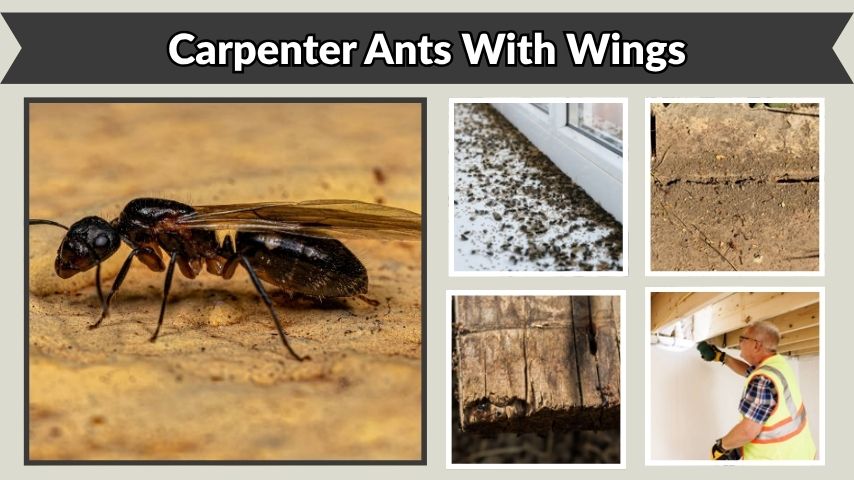
Carpenter ants with wings can be confusing because they often look like termites or other flying ants. These winged ants are usually reproductive carpenter ants, also called swarmers. They leave a mature colony to mate and start new nests. Seeing one outside may be normal, but seeing several inside your house can be a warning sign. This guide explains what carpenter ants with wings look like, why they appear, how to tell them from termites, and when you should take action.
What Are Carpenter Ants With Wings?
Carpenter ants with wings are not a separate kind of ant. They are adult reproductive ants from a mature carpenter ant colony. Their main job is to leave the nest, mate, and help create new colonies. Some winged ants are males, while others are future queens. Their appearance indoors may suggest a nest is nearby.
Why Do Carpenter Ants Have Wings?
Carpenter ants grow wings during the reproductive stage. These winged ants are called swarmers or alates. They usually appear during mating season when a mature colony releases males and young queens.
After mating, male carpenter ants usually die. A fertilized female may lose her wings and search for a place to start a new nest. This is why people sometimes find dead winged ants or shed wings near windows, doors, or lights.
Are Winged Carpenter Ants Queens?
Some carpenter ants with wings are queens, but not all of them. A queen carpenter ant with wings is a reproductive female before she starts a new colony. Male carpenter ants also have wings, but they do not build nests or become queens.
A queen carpenter ant is usually larger than worker ants. She may have a thicker body and a bigger middle section because her wing muscles are developed for flight.
What Does a Carpenter Ant With Wings Look Like?
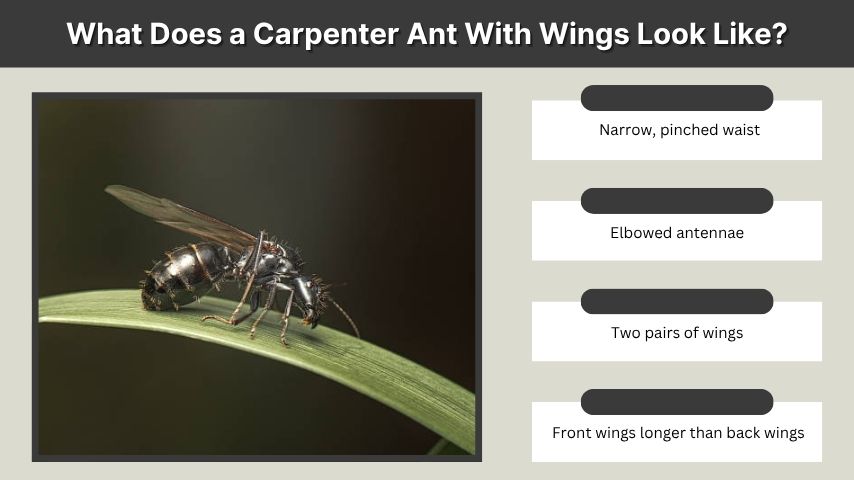
A carpenter ant with wings usually has a narrow waist, elbowed antennae, and two pairs of wings. The front wings are often longer than the back wings. Carpenter ants may be black, reddish-black, red, brown, or chestnut depending on the species. Their large size often makes homeowners notice them quickly.
Carpenter Ant With Wings Identification
You can identify a carpenter ant with wings by looking at several body features, not just color. Many flying insects look similar, so shape is more important than size alone.
Common identification signs include:
- Narrow, pinched waist
- Elbowed antennae
- Two pairs of wings
- Front wings longer than back wings
- Large ant-like body
- Black, red, brown, or bicolored appearance
If the insect has a broad waist, straight antennae, and equal-length wings, it may be a termite instead of a carpenter ant.
Carpenter Ants With Wings Size
Carpenter ants are usually larger than many common household ants. Winged carpenter ants may look even bigger because their wings extend past the body. A large carpenter ant with wings can look alarming, especially when found indoors.
Size can vary by species, colony role, and region. Some winged carpenter ants are large and black, while others may be smaller, reddish, or chestnut-colored. Because of this variation, size should be used with body shape for better identification.
Black, Red, and Chestnut Carpenter Ants With Wings
Carpenter ants with wings can appear in different colors. Black carpenter ants with wings are common in many areas, but red carpenter ants with wings and chestnut carpenter ants with wings may also be seen.
Color examples include:
- Black carpenter ants with wings
- Red and black carpenter ants with wings
- Reddish-brown carpenter ants with wings
- Chestnut carpenter ants with wings
- Large dark carpenter ants with wings
Color alone does not confirm the species. A red flying ant is not always a carpenter ant, and a black flying insect is not always harmless. Identification should include antennae, waist shape, wing length, and where the insect was found.
Carpenter Ants With Wings vs Termites
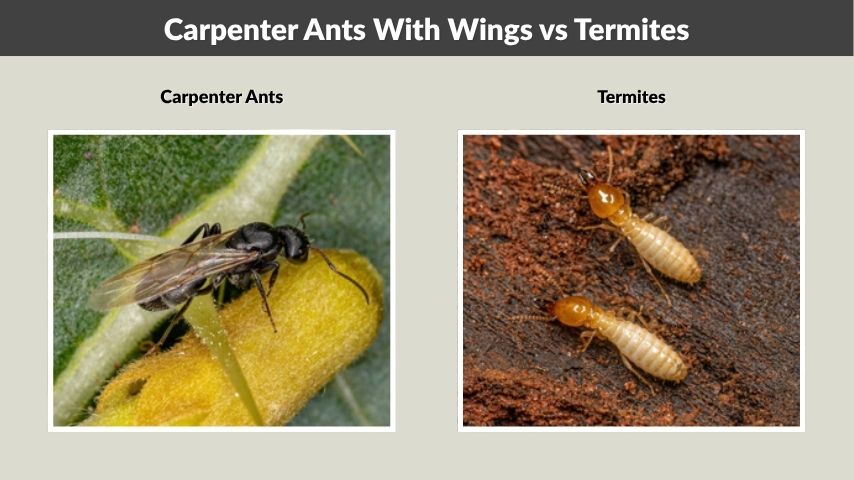
Carpenter ants with wings and termites are often confused because both can swarm and appear near wood, windows, lights, or doors. However, they are different pests with different body shapes and damage patterns. Carpenter ants tunnel through wood to build nests, while termites eat wood. Correct identification is important before treatment.
Carpenter Ant With Wings vs Termite
The easiest way to compare a carpenter ant with wings vs termite is to look at the waist, antennae, and wings. Carpenter ants have a narrow waist and bent antennae. Termites usually have a straight body shape and straight antennae.
Key differences include:
- Carpenter ants have a pinched waist; termites have a broad waist
- Carpenter ants have elbowed antennae; termites have straight antennae
- Carpenter ants have longer front wings; termites have equal-length wings
- Carpenter ants look more ant-like; termites look more uniform
- Carpenter ants tunnel in wood; termites eat wood
If you are unsure, save a clear photo or a dead specimen before starting treatment. This can help with proper identification.
Why People Confuse Winged Carpenter Ants and Termites
People often confuse them because both may appear suddenly in large numbers. Both can also show up around damp wood, windows, bathrooms, basements, or wall voids. When insects are dead or missing wings, identification becomes even harder.
The concern is understandable because both can be linked to wood problems. However, the treatment approach may differ, so it is important not to guess based only on the fact that the insect has wings.
Carpenter Ants With Wings in the House
Carpenter ants with wings in the house can be a warning sign, especially if you see several of them indoors. A single ant may have flown in from outside, but repeated sightings may suggest a nest inside walls, ceilings, damp wood, or nearby outdoor structures. Their location and number matter when judging the risk.
What It Means If You See Them Indoors
Seeing carpenter ants with wings indoors may mean a mature colony is close. If swarmers are coming from inside the house, the colony may be nesting in damaged or moist wood. This is more concerning than finding one ant near an open door or window.
Pay attention to where they appear. Winged carpenter ants are often noticed near windows, lights, bathrooms, kitchens, basements, or wood trim. These areas may offer moisture, shelter, or access from a hidden nest.
Carpenter Ants With Wings in Bathroom
Bathrooms can attract carpenter ants because they often have moisture. A leak behind a wall, under a sink, or near a tub can create damp wood that carpenter ants may use for nesting. If winged ants appear in a bathroom more than once, the moisture source should be checked.
This does not always mean serious damage, but it should not be ignored. Winged ants in a bathroom may point to a hidden nest in a wall void, floor space, or nearby wood framing.
Are Carpenter Ants With Wings Bad?
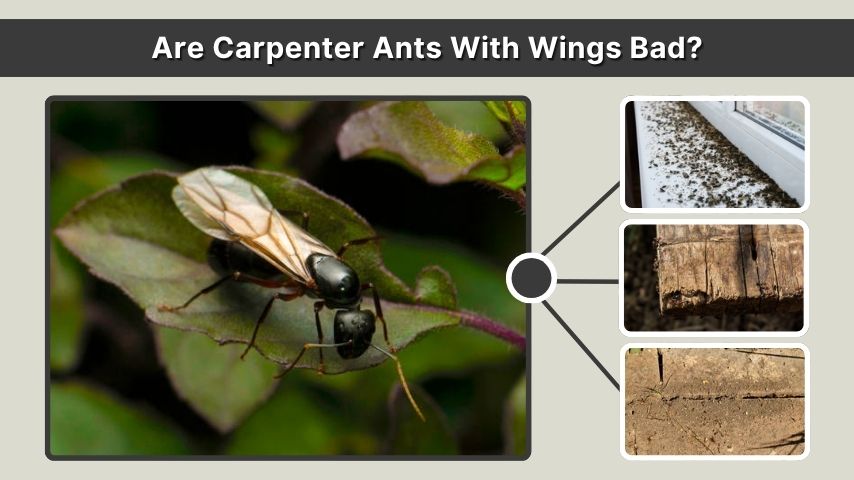
Carpenter ants with wings are not dangerous just because they have wings. The main concern is what they may signal. Winged ants often come from a mature colony. If that colony is inside or close to your home, it may be nesting in damp or damaged wood and could become a larger problem over time.
Do Carpenter Ants With Wings Cause Damage?
The winged ants themselves are not the main cause of damage. They are reproductive ants that leave the colony to mate. The real issue is the colony they came from. Worker carpenter ants create tunnels in wood to build galleries and expand the nest.
Carpenter ants do not eat wood like termites. Instead, they remove wood particles and leave smooth tunnels. Over time, a large colony in a structure can weaken wood, especially if the wood is already damp or damaged.
Signs of a Carpenter Ant Nest
You may have a carpenter ant nest nearby if you notice:
- Winged carpenter ants indoors
- Large black or reddish ants walking inside
- Sawdust-like material called frass
- Rustling sounds inside walls
- Ants near damp wood or leaks
- Dead winged ants near windows
- Ant trails around the foundation
These signs do not always prove a severe infestation, but they are strong reasons to inspect the area more closely.
Do Carpenter Ants With Wings Bite?
Carpenter ants with wings can bite, but they usually do not bite unless handled, trapped, or threatened. Their main purpose is reproduction, not attacking people. A bite may feel like a sharp pinch and may cause mild redness or burning. They do not sting like bees, wasps, or fire ants.
Carpenter Ant With Wings Bite Symptoms
A carpenter ant with wings bite is usually mild. The ant uses its jaws to bite the skin. Some people may feel a short burning sensation if the ant releases formic acid during the bite.
Common symptoms may include mild pain, redness, itching, swelling, or tenderness. These symptoms usually stay near the bite area and improve with basic care.
Do Carpenter Ants With Wings Sting?
Carpenter ants with wings do not sting. They do not have a stinger like many wasps, bees, or fire ants. Their defense is biting with strong jaws.
If you feel a painful sting and later see blisters or strong swelling, another insect may be responsible. Fire ants, wasps, or other pests can cause stronger reactions than carpenter ants.
How to Get Rid of Carpenter Ants With Wings
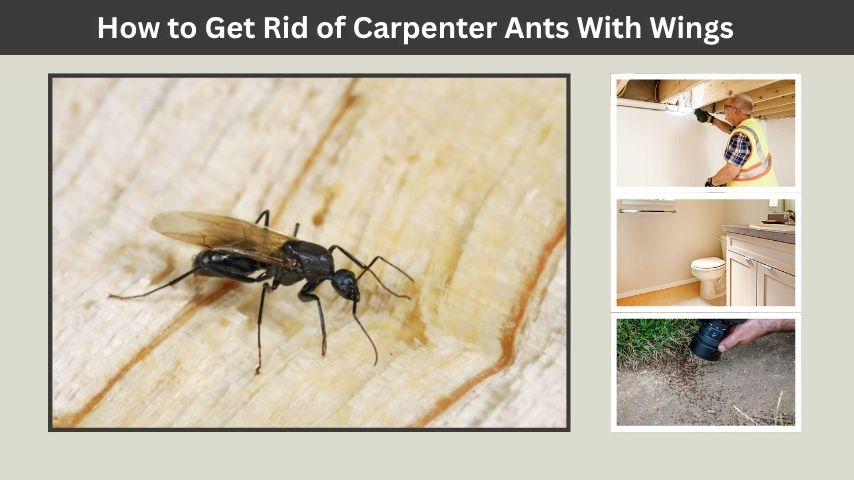
Getting rid of carpenter ants with wings requires more than killing the insects you see. Winged ants may be a sign of a hidden colony. The best approach is to identify the insect, locate the nest, fix moisture issues, and treat the source. Surface sprays may reduce visible ants but often fail to solve the root problem.
What to Do First
Start with careful inspection before treatment. This helps you avoid confusing carpenter ants with termites or other flying ants.
Helpful first steps include:
- Take a clear photo for identification
- Save a dead insect if possible
- Note where the ants appeared
- Check for leaks or damp wood
- Look near windows, bathrooms, and baseboards
- Search for frass or ant trails
- Avoid disturbing a large nest without protection
These steps can help you decide whether the ants came from outside or from a hidden indoor colony.
Treatment and Prevention Tips
If the ants are only entering from outside, sealing gaps and reducing outdoor nesting sites may help. Trim branches away from the house, remove rotting wood, and store firewood away from exterior walls.
If carpenter ants are nesting indoors, treatment should target the nest. Baits, dusts, or professional pest control may be needed depending on the location. Moisture repairs are also important because carpenter ants often prefer damp or damaged wood.
FAQs
What are carpenter ants with wings?
Carpenter ants with wings are reproductive ants from a mature colony. They are also called swarmers or alates. Their job is to leave the nest, mate, and help start new colonies. They are not baby ants or a separate species.
Are all ants with wings carpenter ants?
No, not all ants with wings are carpenter ants. Many ant species produce winged males and queens during mating season. To identify carpenter ants, look for a narrow waist, elbowed antennae, and front wings that are longer than the back wings.
Are carpenter ants with wings bad?
Carpenter ants with wings can be a warning sign if they appear indoors in large numbers. They may mean a mature colony is nearby or inside the structure. The ants themselves are not highly dangerous, but the colony may be nesting in damp or damaged wood.
Do carpenter ants with wings bite?
Yes, carpenter ants with wings can bite, but they usually bite only when handled, trapped, or threatened. Their bite may feel like a sharp pinch and can cause mild redness, itching, swelling, or burning. They do not sting.
How do you get rid of carpenter ants with wings?
To get rid of carpenter ants with wings, find and treat the colony, not just the visible ants. Check for damp wood, leaks, frass, and ant trails. Seal entry points, remove rotting wood, and consider professional pest control if ants keep appearing indoors.
