
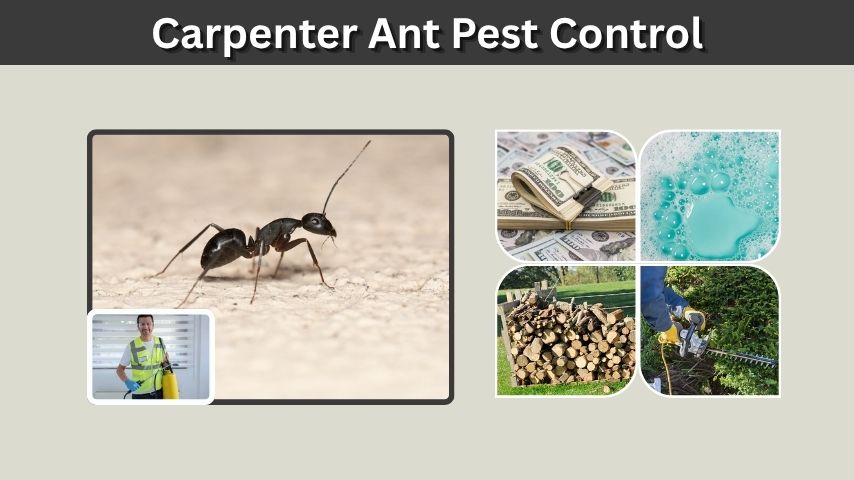
Carpenter ants can cause serious problems when they establish colonies inside or around homes. Unlike regular ants, they tunnel through wood to build nests, which can weaken structural areas over time. Homeowners often search for pest control services to locate nests, prevent further damage, and remove existing colonies. This guide covers how pest control works, warning signs, DIY vs professional methods, cost factors, and effective prevention strategies.
What Is Carpenter Ant Pest Control?
Carpenter ant pest control involves inspecting, locating, and treating carpenter ant colonies to prevent structural damage and recurring infestations. Unlike standard ant problems, carpenter ant infestations often require targeting hidden nests and correcting environmental conditions that attract ants. Understanding this process helps homeowners decide when DIY solutions are enough and when professional intervention is necessary.
Why Carpenter Ants Require Special Treatment
Carpenter ants often maintain both outdoor and indoor nests. Treating only visible foraging ants rarely resolves the problem. A proper pest control plan targets the nest, uses effective treatment, and addresses factors like moisture or rotting wood that encourage colony establishment.
Carpenter Ants vs Regular Ants
Regular ants usually create nuisance trails seeking food, while carpenter ants can cause property damage over time. They tunnel through damp or decayed wood to create nesting galleries. Detecting these ants early and acting promptly can prevent more extensive structural damage.
Signs You Need Pest Control for Carpenter Ants
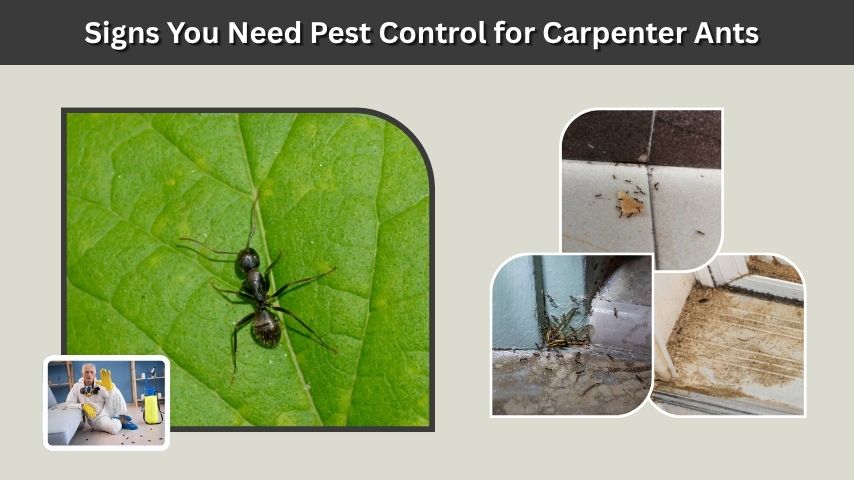
Recognizing the signs of carpenter ant activity is essential before hiring pest control. Early detection helps minimize damage and ensures targeted treatment. While seeing a few ants may not indicate an infestation, repeated sightings, winged ants indoors, or wood debris are warning signs.
Common Warning Signs
- Large black or reddish-black ants inside the house
- Ants appearing repeatedly in the same area
- Winged carpenter ants indoors
- Sawdust-like frass near walls, window frames, or wooden structures
- Rustling sounds inside walls or hollow wood
- Ant trails along decks, trees, or foundation areas
- Soft or hollow wood near moisture sources
When to Take Action
One ant does not always indicate a serious problem, but repeated sightings, especially near damp wood or during nighttime, suggest that a colony may be nearby. Winged ants indoors are a stronger indication of a mature nest requiring attention.
How Pest Control Gets Rid of Carpenter Ants
Professional carpenter ant pest control focuses on inspecting, locating nests, and applying targeted treatments. Unlike DIY sprays, professional approaches aim to remove the colony and prevent re-infestation. Homeowners can expect a structured process including inspection, nest treatment, and preventive measures.
Step 1: Inspection
Technicians check both indoor and outdoor areas, including kitchens, bathrooms, basements, attics, crawl spaces, decks, stumps, trees, and firewood piles. This step identifies foraging trails and possible nesting locations.
Step 2: Nest Location
Finding the main and satellite nests is crucial for effective treatment. Professionals follow ant trails, check frass deposits, and examine moisture-damaged or hollow wood to locate the colony accurately.
Step 3: Targeted Treatment
- Ant bait placement along trails and entry points
- Dust treatment inside wall voids or cracks
- Foam treatment for hidden nests
- Exterior barrier treatment around the structure
- Direct nest treatment when accessible
Step 4: Prevention Advice
After treatment, pest control providers often advise homeowners on sealing entry points, repairing leaks, improving ventilation, trimming vegetation, and removing decaying wood to prevent future infestations.
Carpenter Ant Pest Control Cost
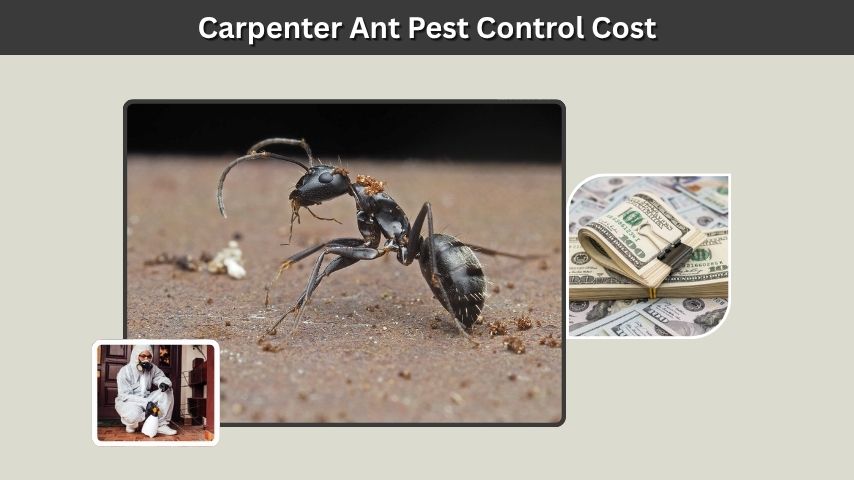
The cost of carpenter ant pest control varies based on infestation severity, property size, nest accessibility, treatment methods, and regional service rates. A small, easily accessible colony may require only a one-time treatment, while larger or hidden infestations often need follow-up visits. Understanding cost factors helps homeowners plan and compare services effectively.
Factors Affecting Cost
- Infestation size: More ants and larger colonies require more extensive treatment.
- Nest location: Hidden nests in walls or ceilings are harder to treat than outdoor nests.
- Property size: Larger homes or buildings require more inspection and treatment time.
- Treatment method: Baits, dusts, foams, and barrier sprays differ in cost.
- Follow-up needs: Some infestations require repeated visits to ensure complete eradication.
One-Time Treatment vs Ongoing Service
Small infestations may be handled with a single visit, while established colonies with multiple nests might need a service plan. Professional services often include inspection, treatment, and prevention advice in their pricing.
DIY Pest Control for Carpenter Ants
For minor ant activity or early detection, DIY methods may reduce indoor carpenter ant presence. These strategies work best in combination with preventive measures and regular inspections but rarely solve large or hidden infestations alone.
DIY Methods Homeowners Use
- Cleaning up food crumbs and spills daily
- Storing food in sealed containers
- Using carpenter ant bait strategically
- Sealing cracks and gaps where ants enter
- Removing outdoor wood debris near the house
- Moving firewood at least several feet away from structures
- Fixing leaks and reducing moisture
Limitations of DIY Treatment
Sprays and traps often kill only visible ants. If the nest remains, ants can return. Baits may fail if the wrong type is used or if competing food sources exist. Homeowners should monitor activity closely and consider professional help if the problem persists.
Natural Pest Control for Carpenter Ants
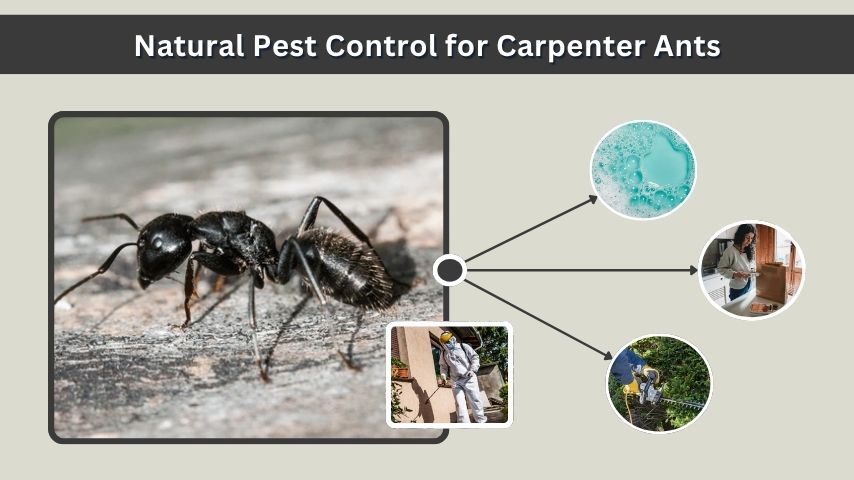
Natural approaches can help prevent carpenter ant infestations and reduce minor activity. They are not a guaranteed solution for established colonies but are effective for home maintenance and early-stage control.
Natural Prevention Methods
Homeowners can focus on environmental control:
- Keeping wood dry and replacing rotting or damp materials
- Cleaning ant trails with vinegar or soapy water
- Reducing food availability indoors
- Trimming trees and shrubs away from structures
- Maintaining proper drainage around the home
Effectiveness of Natural Methods
Natural methods discourage ants and prevent easy access but usually do not eliminate a full colony. Persistent indoor activity indicates that professional treatment may be necessary.
Best Pest Control for Carpenter Ants
The most effective pest control combines inspection, accurate nest location, targeted treatment, and preventive measures. Choosing the right company ensures a complete solution and reduces the chance of recurring infestations.
Key Features to Look for in a Service
- Experienced with carpenter ant infestations
- Offers full indoor and outdoor inspection
- Provides a clear treatment plan
- Targets nests directly, not just visible ants
- Includes follow-up visits or monitoring
- Licensed and insured technicians
- Offers prevention recommendations
- Transparent pricing and service guarantees
Questions to Ask Before Hiring
- Do you inspect both indoor and outdoor nests?
- What treatment methods will you use?
- Are follow-up visits included?
- How long does the treatment take?
- What should homeowners do before and after service?
Local Carpenter Ant Pest Control
Homeowners often prefer local pest control services because they understand regional species, seasonal ant behavior, and common nesting areas. Local providers can offer faster response times and more personalized treatment.
Choosing a Local Provider
- Look for companies with experience in your city or region
- Check reviews and references
- Ensure licensing and insurance compliance
- Confirm availability for inspections and follow-up
Creating Local Landing Pages (SEO Strategy)
For businesses, targeting specific locations is more effective with individual landing pages:
- Carpenter Ant Pest Control in Vancouver, WA
- Carpenter Ant Pest Control in Houston, TX
- Carpenter Ant Pest Control in Austin, TX
- Carpenter Ant Pest Control in Toronto, ON
- Carpenter Ant Pest Control in Calgary, AB
Can Pest Control Get Rid of Carpenter Ants Completely?
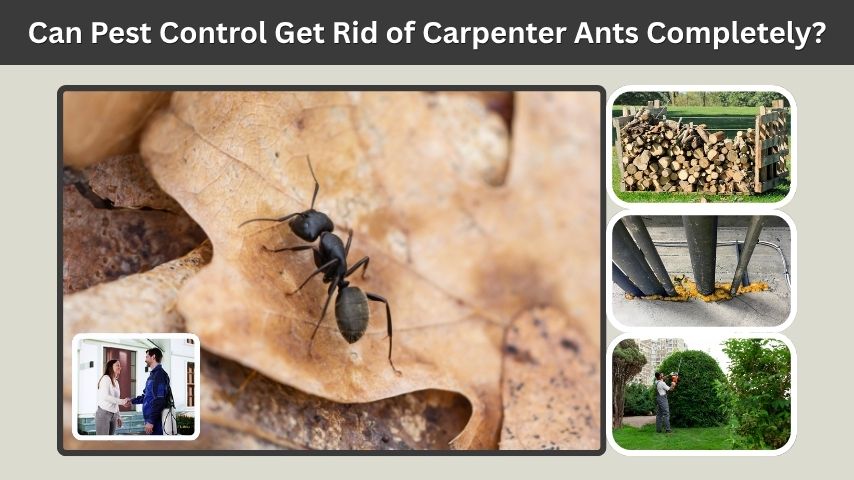
Professional pest control can often eliminate carpenter ant colonies when nests are found and treated. Long-term success also depends on correcting environmental conditions such as moisture, decayed wood, and entry points.
Why Colonies Return
- Moisture issues remain unaddressed
- Decayed or damp wood is still accessible
- Outdoor nests near the house are untreated
- Entry points are not sealed
How to Keep Them Away
- Repair leaks and water damage promptly
- Replace rotten wood
- Seal cracks and gaps
- Store firewood away from the home
- Trim tree branches and shrubs away from structures
- Maintain gutters and proper drainage
- Schedule periodic inspections
FAQs
How much does carpenter ant pest control cost?
Carpenter ant pest control cost depends on the size of the infestation, nest location, home size, treatment method, and local service rates. Small infestations may need only one visit, while hidden or large colonies may require follow-up treatments and more detailed inspection.
Can pest control completely get rid of carpenter ants?
Yes, pest control can often get rid of carpenter ants when the nest is found and treated correctly. Long-term success also depends on fixing moisture problems, removing rotten wood, sealing entry points, and preventing outdoor colonies from moving back into the home.
Is DIY pest control enough for carpenter ants?
DIY pest control may help with minor activity, especially if ants are only coming from outside. However, it may not work for hidden indoor nests. If ants keep returning, appear from walls, or leave sawdust-like frass, professional pest control is usually the better option.
What is the best pest control treatment for carpenter ants?
The best treatment depends on where the nest is located. Pest control companies may use baits, dusts, foams, exterior treatments, or direct nest treatment. The most effective method targets the colony instead of only killing the visible ants.
When should I call pest control for carpenter ants?
You should call pest control if you see winged ants indoors, repeated ant trails, frass, hollow wood, or ants coming from walls, ceilings, or electrical outlets. These signs may mean there is an established colony that needs professional inspection and treatment.
