
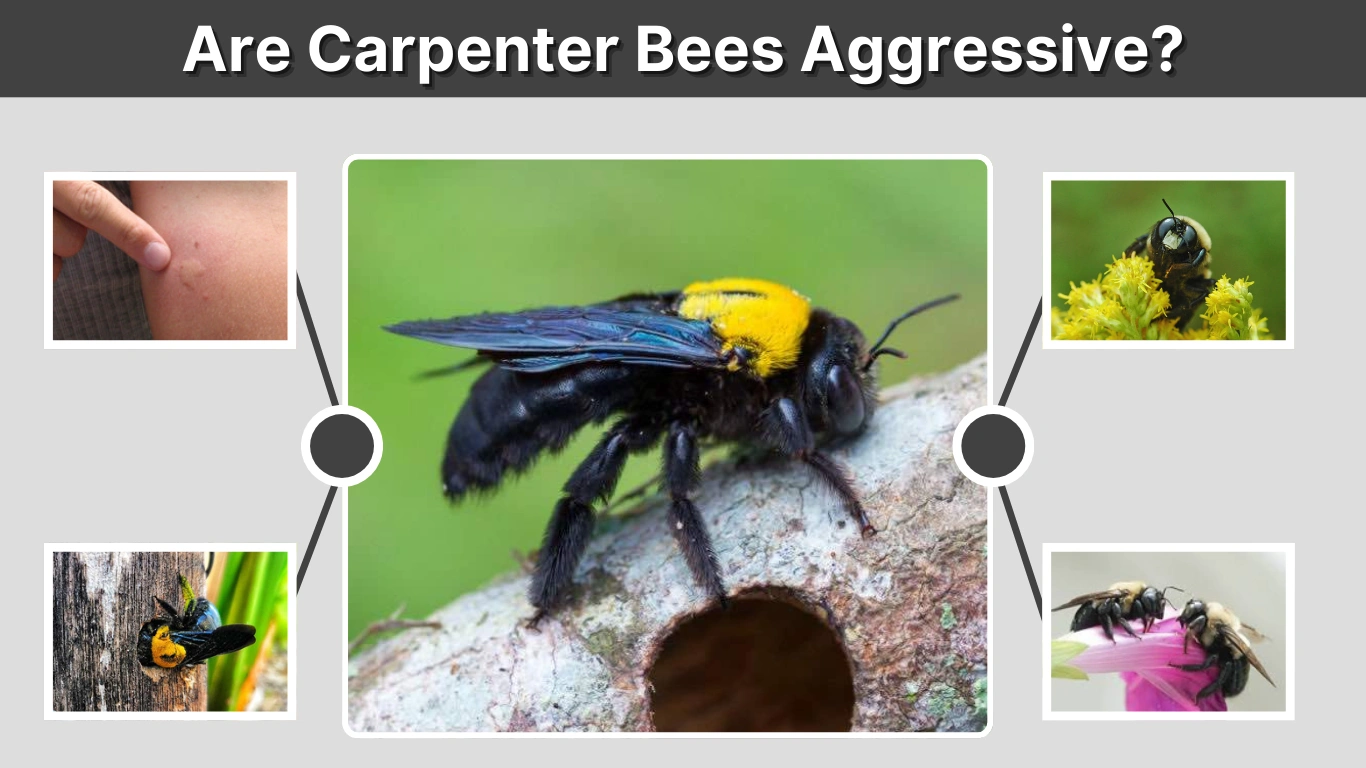
Carpenter bees (Xylocopa spp.) are large, buzzing insects often found hovering near wooden structures or garden plants. Their size, sound, and hovering behavior give them a reputation for being aggressive, which leads many people to fear them. But how aggressive are they really? To understand their behavior, we need to look at the differences between males and females, their nesting habits, and how their actions are often misinterpreted.
Are Carpenter Bees Aggressive?
General Behavior
Carpenter bees are often seen buzzing loudly near people or flying close to homes and decks. This gives the impression of hostility, but in most cases, it is territorial behavior rather than aggression toward humans. Males, in particular, patrol the area around their nests and chase anything that enters their space.
Misunderstanding Their Actions
People commonly mistake their defensive displays for actual attacks.
- Buzzing and hovering: Loud, intimidating but harmless.
- Dive-bombing flights: Sudden swoops are intended to scare off intruders.
- Close hovering: A way of inspecting threats, not attacking.
These behaviors may feel aggressive, but they are usually harmless displays.
Why Are Carpenter Bees So Aggressive?
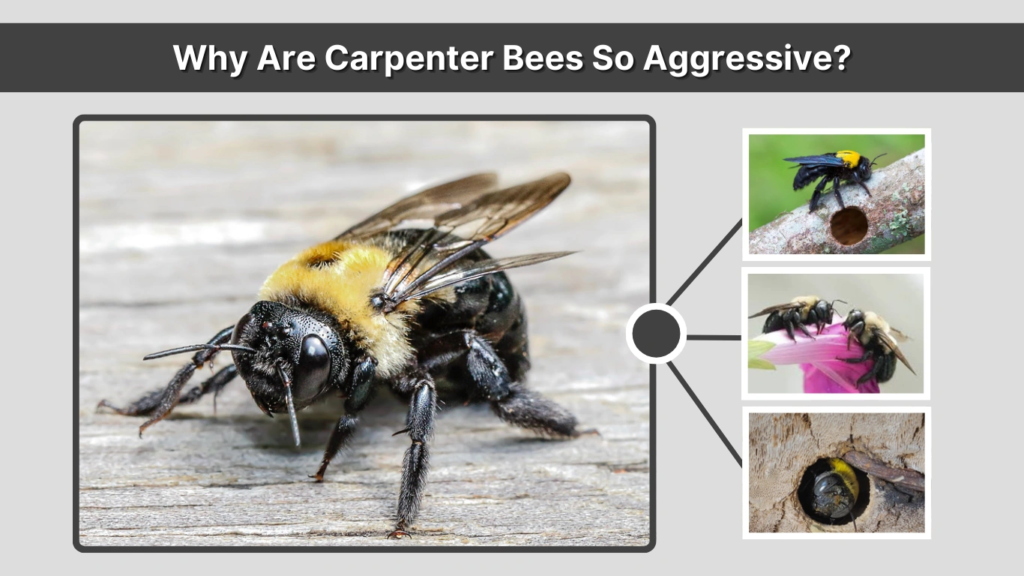
Carpenter bees are not social insects like honeybees or wasps. They live solitary lives, which means each individual must defend its nesting site. Their “aggression” comes from:
- Territorial instinct: Males protect nesting areas to attract mates.
- Reproductive cycle: Males hover around females and chase rivals during spring.
- Nest defense: Females guard the tunnel they have drilled for their eggs.
This explains why carpenter bees seem especially aggressive during the breeding season.
Are Carpenter Bees Aggressive to Humans?
Intimidating But Harmless
For humans, carpenter bees pose very little threat. Males are the ones most often seen hovering near people, but they cannot sting. Their behavior is meant to scare, not harm.
Female Carpenter Bees
Female carpenter bees do have stingers, but they are generally docile. They will not sting unless they are physically provoked—such as being grabbed or trapped. Compared to wasps or hornets, their aggression level toward humans is extremely low.
Male vs Female Carpenter Bee Aggression
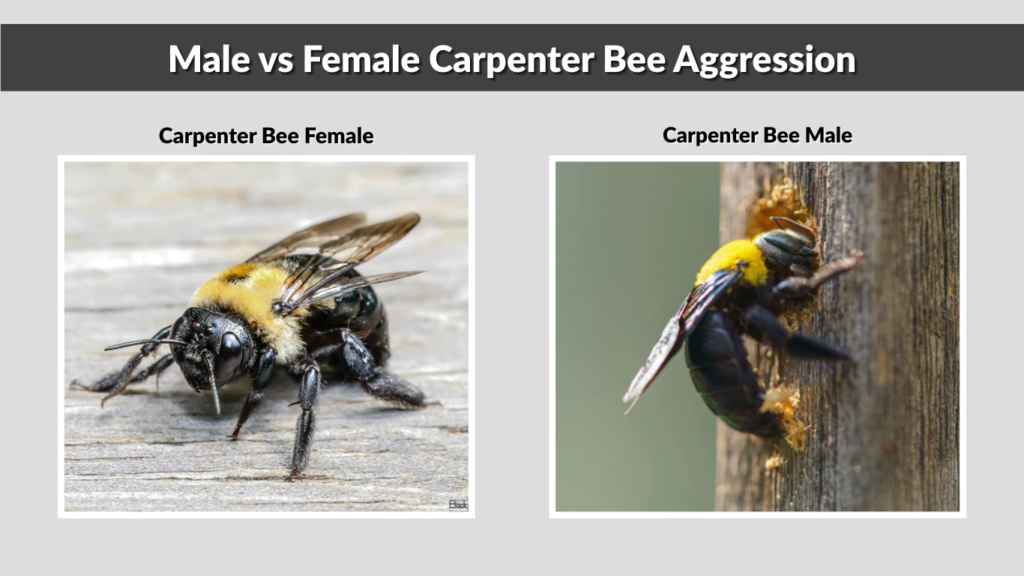
Male Carpenter Bees
- Males are the most noticeable and “aggressive” in behavior.
- They hover, chase, and buzz loudly around anyone who approaches their territory.
- They perform “dive-bombing” flights but have no stingers, making them harmless.
Female Carpenter Bees
- Females are far less confrontational.
- They spend most of their time drilling nests and caring for larvae.
- They sting only as a last resort, when handled or directly threatened.
Are Black Carpenter Bees Aggressive?
The black carpenter bee (Xylocopa virginica), common in North America, often appears more intimidating because of its size and dark coloration. People frequently assume they are aggressive, but their behavior is similar to other carpenter bees:
- Males are territorial but harmless.
- Females are calm unless provoked.
- Their loud buzzing is defensive, not hostile.
Eastern Carpenter Bees

The eastern carpenter bee (Xylocopa virginica) is one of the most familiar species in the United States. During spring, males guard their wooden nesting tunnels and are highly territorial. This is when people mistake their actions as aggression toward humans. In truth, their energy is directed at rivals and potential threats to the nest rather than attacking people.
How Aggressive Are Carpenter Bees?
Aggression Scale
Compared with other stinging insects, carpenter bees are far less aggressive:
- Honeybees: Can sting when defending their hive.
- Wasps and hornets: Extremely aggressive, sting repeatedly.
- Carpenter bees: Mostly bluff aggression, with females stinging only if provoked.
Behavior Toward Other Bees
Carpenter bees are often more aggressive toward other bees than toward humans. Males chase away rivals to secure mates and protect their nesting territory. This territorial behavior ensures reproductive success but rarely poses a danger to people.
Carpenter Bees and Their “Aggressive” Reputation
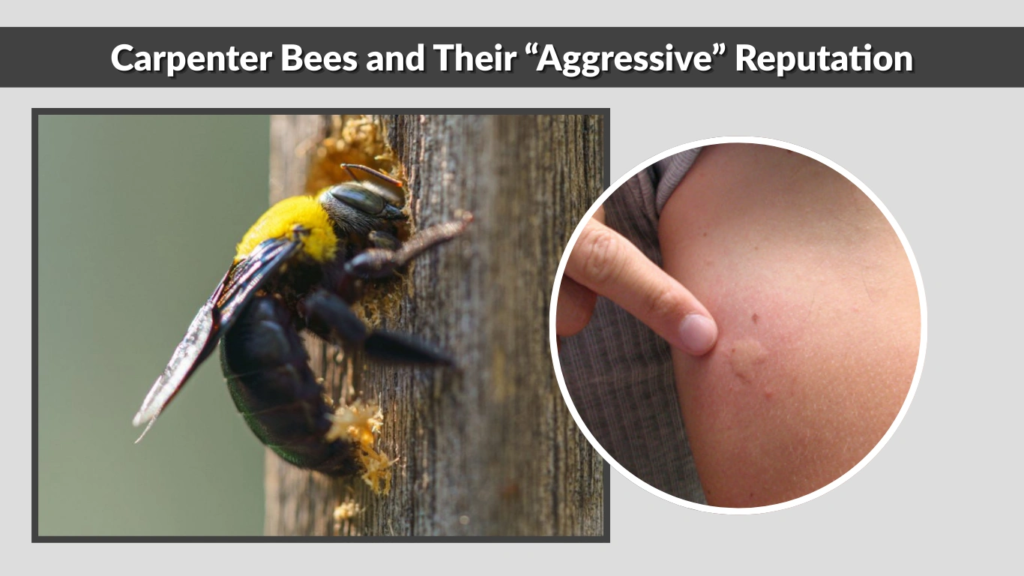
It is common to hear people say, “Carpenter bees are aggressive but do not have stingers.” This is partly true and partly misunderstood.
- Males, the aggressive ones, lack stingers.
- Females, though quieter, do have stingers but rarely use them.
- What appears as aggression is often just territorial defense and posturing.
This reputation makes them seem more dangerous than they are in reality.
Why Do Carpenter Bees Hover in Pairs?
People sometimes see two carpenter bees circling or “fighting” mid-air. This can appear aggressive toward humans, but it is usually:
- Two males competing for territory.
- Mating displays around females.
- Boundary patrols, where each bee defends a nearby nest.
These behaviors may look like aggression toward people, but in truth, it is bee-to-bee interaction that humans happen to witness.
Protecting Your Home From Carpenter Bees
Why They Target Wood
Carpenter bees are named for their ability to bore holes into wood. They prefer:
- Untreated or unpainted wood.
- Softer woods like pine or cedar.
- Exposed wooden decks, railings, and siding.
How to Prevent Damage
Carpenter bees are beneficial pollinators, so killing them is discouraged. Instead, homeowners can take preventive steps:
- Paint or seal wood to make it less attractive.
- Install hardwoods or treated lumber in vulnerable areas.
- Provide nesting alternatives, like bamboo bundles.
- Use safe deterrents, such as citrus sprays, rather than pesticides.
This allows coexistence with carpenter bees while reducing property damage.
Key Facts About Carpenter Bee Aggression
Carpenter bees often confuse and alarm people. To clarify their behavior, here are some essential points:
- Males cannot sting – even though they look the most aggressive.
- Females sting only if provoked – they are not naturally hostile.
- Buzzing and hovering are defensive – designed to scare, not harm.
- They are territorial, not predatory – aggression is aimed at protecting nests.
- Less dangerous than wasps or hornets – their sting risk is far lower.
These facts highlight that carpenter bees are mostly misunderstood rather than truly aggressive.
Carpenter Bees and Humans: Coexistence Tips
While their territorial behavior can be unnerving, carpenter bees are valuable pollinators. Instead of fearing them, it is possible to coexist by following a few simple practices:
- Do not swat or provoke them – males will buzz but cannot harm you.
- Leave females alone – they rarely sting unless touched.
- Protect wooden structures – paint, seal, or cover exposed wood.
- Use safe deterrents – citrus sprays, almond oil, or bee repellent paint.
- Encourage pollinator-friendly spaces – plant native flowers to support their role in the ecosystem.
With these precautions, humans and carpenter bees can share space without conflict.
FAQs
Are carpenter bees aggressive all year?
Carpenter bees are most aggressive during spring and early summer, which is their mating and nesting season. Outside this period, they are less active and rarely confront people.
Why do carpenter bees chase people?
Males “chase” humans to defend territory near their nests. This is a bluff display. Since they cannot sting, their chase is more intimidating than dangerous.
Are carpenter bees more aggressive than honeybees?
No. Honeybees sting to defend their hives, while carpenter bees are solitary. Males only perform intimidation displays, and females sting rarely, making them less aggressive overall.
Do carpenter bees attack pets?
Not intentionally. Pets may be buzzed at if they come near a nest, but there is no targeted aggression. If a pet catches or swats at a female, a sting is possible but uncommon.
