
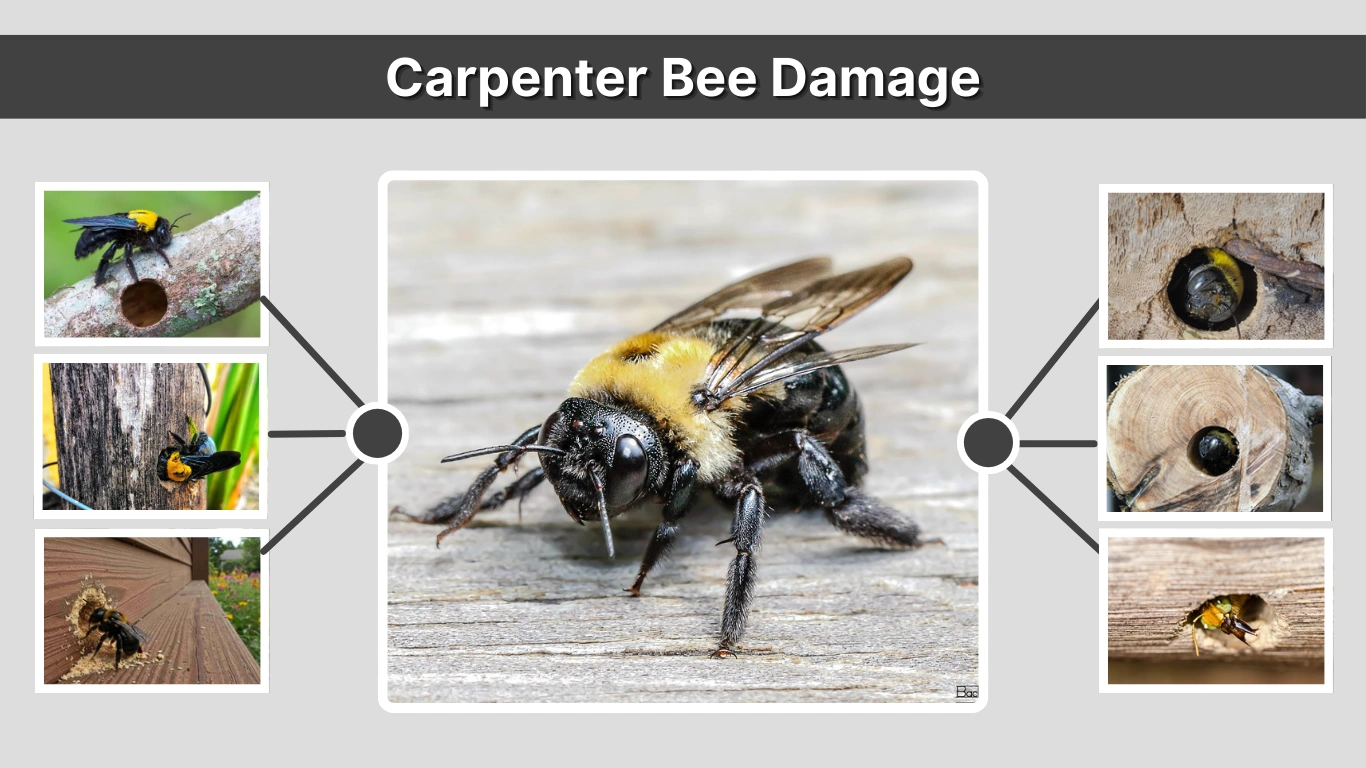
Carpenter bees (Xylocopa spp.) are large, solitary insects often mistaken for bumblebees. While they play an important role in pollination, they also have a destructive side. By drilling holes into wood to create nests, they can damage decks, fences, siding, and even parts of homes. Over time, this activity can weaken structures and create repair costs for homeowners. Understanding how to recognize, prevent, and fix carpenter bee damage is essential for protecting both property and pollinators.
Do Carpenter Bees Cause Damage?

Behavior Behind the Damage
Unlike termites, carpenter bees do not eat wood. Instead, they excavate tunnels to create nesting chambers. The female bee drills a nearly perfect, round hole about ½ inch wide, then carves a tunnel that may extend several inches inside the wood. These tunnels serve as nurseries where she lays eggs and stores pollen for the larvae.
Although one or two bees may cause only minor harm, repeated nesting over several years can lead to widespread structural issues.
How Much Damage Can Carpenter Bees Do?
The scale of carpenter bee damage depends on:
- Number of bees present – a single bee causes limited damage, but multiple bees can infest large areas.
- Nesting duration – tunnels expand each year if reused.
- Wood type – untreated, soft woods like pine and cedar are more vulnerable.
While they rarely cause immediate collapse, carpenter bees can gradually compromise wood integrity, especially in homes and decks.
What Does Carpenter Bee Damage Look Like?
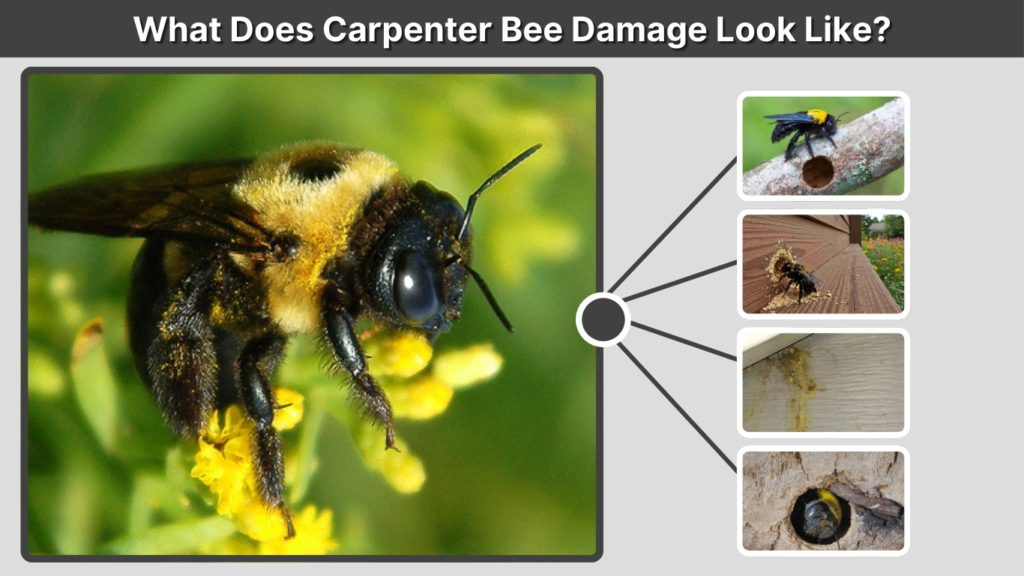
Signs of Carpenter Bee Damage
Recognizing carpenter bee activity early is key to preventing costly repairs. Common signs include:
- Round entry holes – approximately ½ inch in diameter, often in decks, fences, or eaves.
- Sawdust piles (frass) – beneath holes, created as bees excavate tunnels.
- Yellowish stains – pollen or waste near entry points.
- Buzzing activity – frequent hovering bees around wooden structures.
Pictures and Visual Indicators
Photographs of carpenter bee damage often show smooth, clean entry holes that look like they were drilled by a tool. Unlike termites, which chew irregular patterns inside wood, carpenter bees create neat circular holes that are easy to spot.
Carpenter Bee Damage vs Termite Damage

Key Differences
Carpenter bee and termite damage are often confused, but they are very different:
- Carpenter Bees
- Drill smooth, round entry holes.
- Do not eat wood – only remove it.
- Leave sawdust piles near openings.
- Drill smooth, round entry holes.
- Termites
- Hollow out wood from the inside.
- Leave mud tubes or tunnels as signs.
- Cause more rapid and widespread structural damage.
- Hollow out wood from the inside.
By examining the patterns, homeowners can usually distinguish between the two pests and determine the right control method.
Where Carpenter Bees Cause Damage
Carpenter Bees and Wood Structures
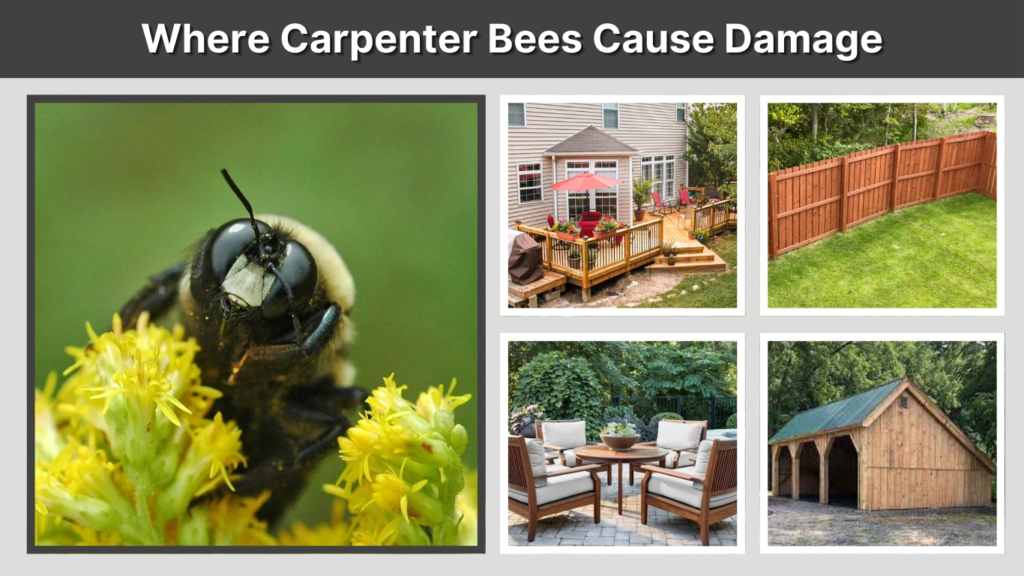
Carpenter bees are drawn to unfinished or untreated wood. They often damage:
- Decks and porches.
- Wooden fences.
- Outdoor furniture.
- Shed and barn siding.
- Window frames and railings.
Carpenter Bees and Houses
Homeowners often find holes under eaves, around door frames, and in exposed beams. Over time, multiple entry points can weaken these areas. While one bee may not cause structural damage, an infestation over many years can become costly.
Carpenter Bees and Trees
Carpenter bees prefer dead or weakened wood rather than healthy, living trees. They sometimes excavate fallen logs or dead branches but rarely harm strong, living tree trunks.
Carpenter Bee Damage Complications
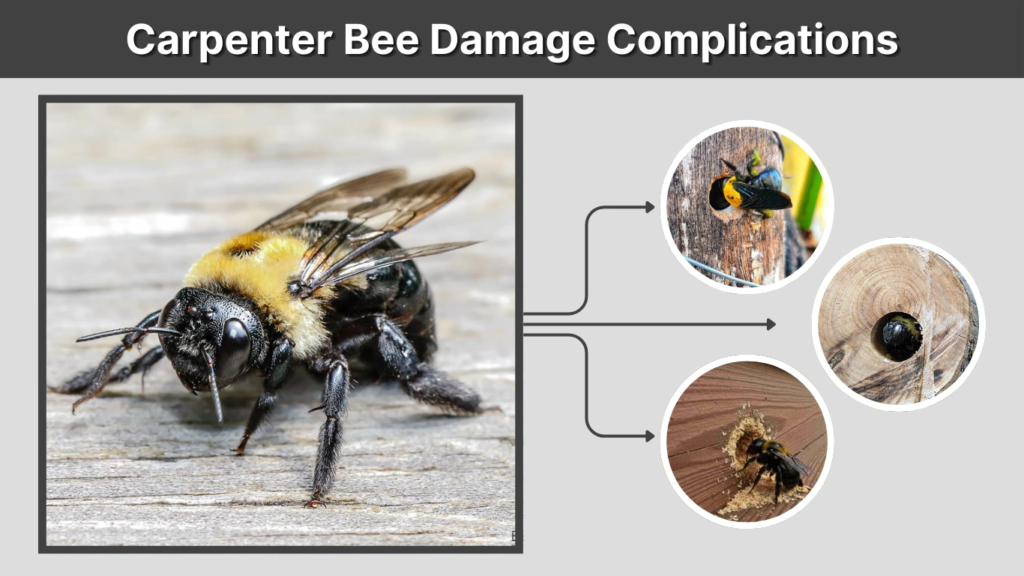
Woodpecker Damage on Top of Carpenter Bee Holes
One of the biggest complications is woodpeckers, which are attracted to carpenter bee larvae inside tunnels. When woodpeckers peck into wood to reach the larvae, they create larger holes and worsen the structural damage.
Secondary Damage
Carpenter bee tunnels can expand over time. Each season, females may reuse and extend old galleries, resulting in:
- Multiple interconnected tunnels.
- Greater wood weakening.
- Openings that allow moisture, rot, and decay to set in.
Preventing Carpenter Bee Damage
How to Stop Carpenter Bees From Damaging Wood
Preventing carpenter bee infestations is far easier than repairing them. Homeowners can:
- Paint or seal exposed wood – bees prefer untreated surfaces.
- Use hardwoods or pressure-treated lumber – less attractive for nesting.
- Replace siding with vinyl or aluminum in high-risk areas.
Preventing Recurring Infestations
Carpenter bees may return to the same nesting sites each year. To prevent this, it’s important to:
- Fill and seal old holes with wood putty or caulk.
- Cover exposed wood with protective mesh or netting.
- Apply natural deterrents like citrus or almond oil, which repel bees.
- Install decoy nests to divert them away from homes.
By taking preventive measures early, you can significantly reduce the risk of long-term damage.
Repairing Carpenter Bee Damage
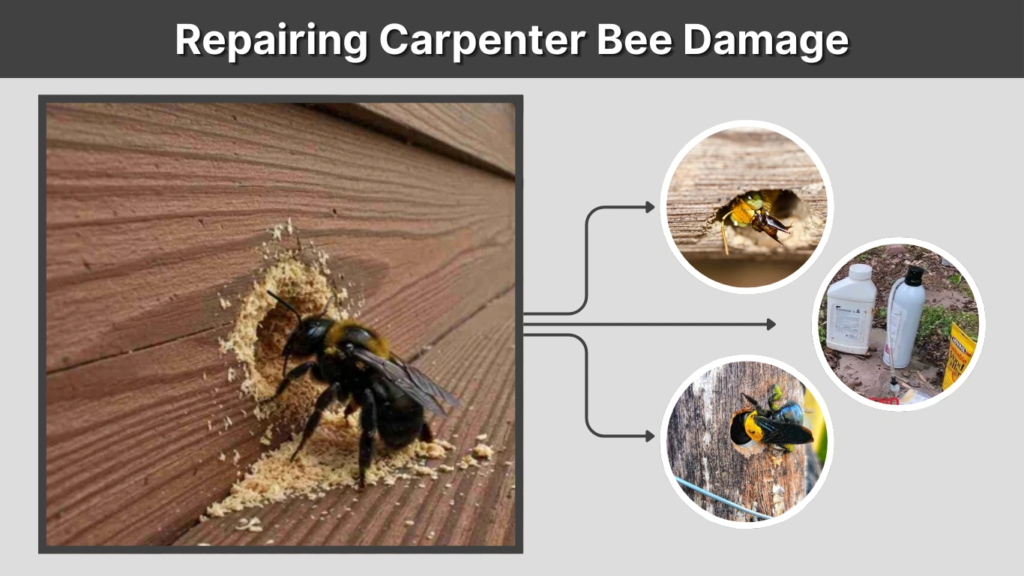
How to Repair Holes in Wood
Once carpenter bees have left, homeowners should repair holes promptly to prevent further nesting. The steps include:
- Inspect the holes – ensure no active bees remain inside.
- Apply insecticide dust if needed – to eliminate lingering larvae (optional, if infestation is active).
- Clean the tunnel – remove frass or debris.
- Fill the hole – use wood putty, dowels, or caulk to seal openings.
- Sand and repaint – restore the surface and deter future nesting.
Repairing Larger Damage
When carpenter bees or woodpeckers cause extensive tunneling, the damage may require more intensive repair:
- Replace damaged boards – best for decks, fences, and siding.
- Reinforce beams – when structural integrity is compromised.
- Hire professionals – if multiple galleries weaken critical home areas.
Cost to Repair Carpenter Bee Damage
Repair costs vary depending on severity:
- DIY fixes – wood filler and paint, usually under $50.
- Moderate damage – replacing a few boards, $200–$500.
- Severe infestations – structural repairs and professional services, $1,000+.
Preventing carpenter bee activity is far cheaper than fixing large-scale damage later.
Carpenter Bee Damage and Insurance
Does Homeowners Insurance Cover Carpenter Bee Damage?
Most standard homeowners insurance policies do not cover insect damage. Carpenter bee tunneling is considered a maintenance issue, meaning the homeowner is expected to prevent and repair it themselves.
However, exceptions may apply if:
- Carpenter bee activity leads to secondary damage (e.g., collapse caused by compromised wood during a storm).
- Damage occurs to parts of the home already covered under different policy terms.
Long-Term Financial Impact
Ignoring carpenter bee damage can lead to higher costs over time. Preventive measures—like sealing wood or applying deterrents—are far less expensive than professional repairs or structural replacements.
Carpenter Bee Damage: Key Facts Recap
Here’s a quick summary of the most important points homeowners should know:
- Carpenter bees drill ½-inch round holes into untreated wood.
- They do not eat wood but excavate it to build nests.
- Damage increases if tunnels are reused year after year.
- Woodpeckers often worsen damage by hunting larvae inside tunnels.
- Prevention (painting, sealing, deterrents) is cheaper than repair.
- Insurance rarely covers carpenter bee damage.
FAQs
Can carpenter bees cause structural damage to a home?
Yes. A few holes may not be serious, but repeated nesting can weaken decks, beams, or eaves, especially when combined with woodpecker activity.
Do carpenter bees damage trees as well as houses?
Carpenter bees may burrow into dead or weakened trees, but they rarely attack healthy, living wood. They are far more damaging to exposed wooden structures in homes.
What’s the difference between carpenter bee damage and termite damage?
Carpenter bees leave smooth, round entry holes with sawdust nearby. Termites hollow out wood from the inside, often leaving mud tubes and brittle structures.
How do I repair carpenter bee damage quickly?
Fill the hole with wood filler, caulk, or a dowel plug, then sand and repaint the surface. For large infestations, replace damaged boards.
How can I prevent carpenter bees from damaging my deck or fence?
Paint or seal exposed wood, plug old holes, and use natural repellents like citrus or almond oil. Installing vinyl or treated lumber can also deter them.
