

At first glance, some wasps can easily be mistaken for ants. This confusion often happens because certain wasp species have wingless females, slender bodies, and jerky walking movements that closely resemble ants. Their ant-like appearance is not accidental—it helps them avoid predators and survive in environments where ants are dominant. Below, you’ll find seven fascinating wasps that mimic ants, along with details about their identification, behavior, habitat, and sting.
1. Velvet Ant (Mutillidae)
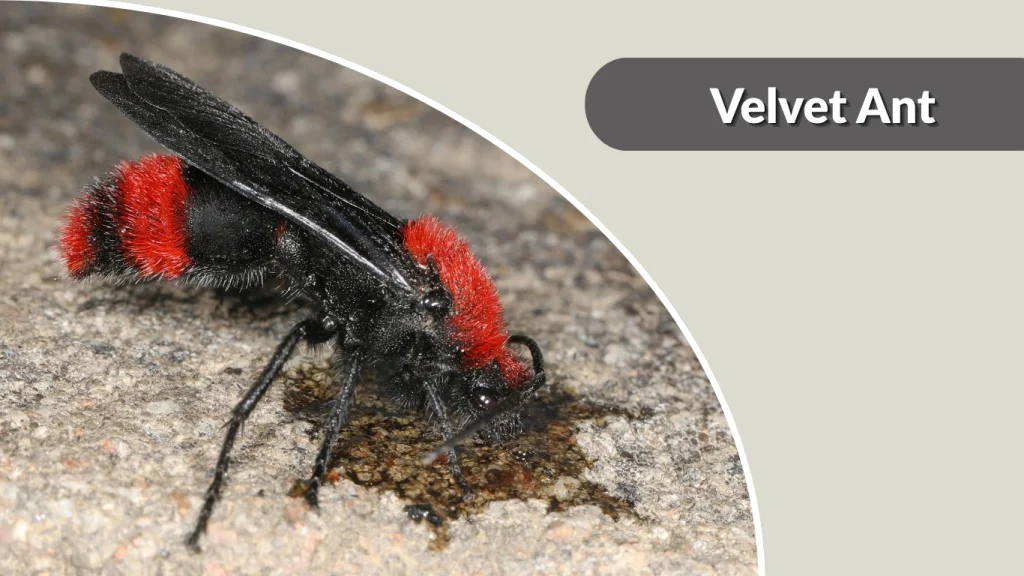
Velvet ants belong to the family Mutillidae and are often mistaken for ants because of their wingless females. Despite the name, they are not ants at all but wasps with a very tough exoskeleton and striking warning colors. These insects are found in warm, sandy regions worldwide, especially in North America. They are solitary wasps and do not form colonies like ants or bees.
Identification
- Wingless females closely resemble large ants
- Body covered in thick, velvet-like hairs in red, orange, white, or yellow patterns
- Tough exoskeleton that makes them hard to crush
- Males are winged but less commonly observed
- Females run quickly on the ground like ants
Behavior
Velvet ants are parasitic wasps. Females search for underground nests of solitary bees or wasps, where they lay eggs. Once hatched, the larvae feed on the host’s developing pupae. They are usually active during the day, moving swiftly in open sandy areas.
Sting
Their sting is one of the most painful among wasps, earning the nickname “cow killer.” However, it is not fatal to humans. The sting, combined with their bright warning colors, protects them from predators.
2. Ant-Mimicking Spider Wasp (Ageniellini species)
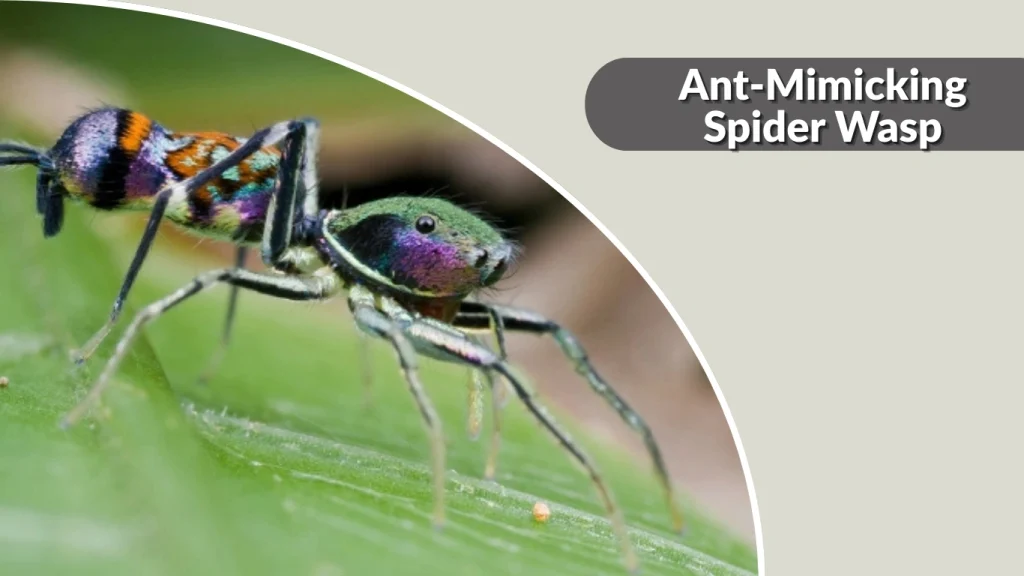
These wasps are part of the spider wasp family (Pompilidae) and are known for their close resemblance to ants. Their body structure and movement patterns are designed to mimic ants, providing them protection from predators that avoid ants due to their aggressive behavior and formic acid defenses. They are usually slender, fast-moving, and often black or reddish in color.
Identification
- Slender body with narrow waist similar to ants
- Long legs that enhance ant-like movement
- Ant-like jerky walking patterns
- Colors range from black, brown, to reddish tones
- Wings often held flat or hidden while walking
Behavior
These wasps prey on spiders, especially small ones, which they paralyze and drag back to burrows or hidden nests. Their ant mimicry helps them move unnoticed in environments where predators may avoid ants.
Sting
Their sting is primarily used to paralyze spiders. They are not aggressive toward humans but can sting if handled roughly.
3. Red Velvet Ant (Dasymutilla occidentalis)

The Red Velvet Ant, also called the “Eastern Velvet Ant,” is one of the most famous ant-like wasps. Found mostly in the eastern and southern United States, it is recognized by its bright red and black coloration. Like other velvet ants, the females are wingless and look very much like large, furry ants running across the ground.
Identification
- Wingless females with a bright red and black body
- Covered in dense, velvety hair
- Strong, ant-like appearance with a narrow waist
- Males have black wings and fly, but are less commonly seen
- Can grow up to 2 cm in length
Behavior
Red Velvet Ants are solitary and do not form colonies. Females actively search for ground-nesting bees or wasps, where they lay their eggs. The larvae then feed on the host pupae. They are usually found in sandy soils, fields, and open sunny areas.
Sting
The sting of the Red Velvet Ant is extremely painful and has earned it the nickname “cow killer.” Despite the pain, the sting is not lethal, and the wasp is not aggressive unless provoked.
4. Ant-Mimic Wasp (Myrmosa atra)
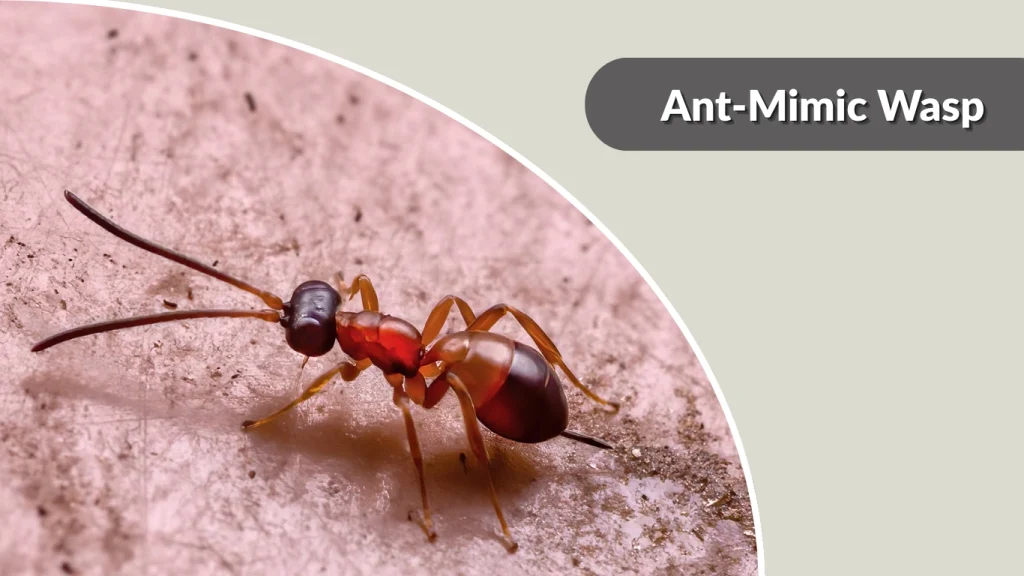
The Ant-Mimic Wasp, Myrmosa atra, is a small wasp species native to Europe. Females are wingless and strongly resemble ants in both size and behavior, which helps them move unnoticed among real ants. Males, however, have wings and a more typical wasp-like appearance.
Identification
- Females are wingless and mimic the look of ants
- Slender black body with a narrow waist
- Shiny exoskeleton similar to many ant species
- Small in size, usually around 5–7 mm
- Males possess wings but are rarely observed
Behavior
These wasps are parasitic in nature. The females invade the nests of solitary bees and wasps to lay eggs, where their larvae consume the host’s brood. Their ant-like mimicry offers protection, as many predators avoid attacking ants.
Sting
Myrmosa atra is capable of stinging, but it is not aggressive toward humans. The sting is used mainly for defense and host interaction.
5. Mutilla europaea
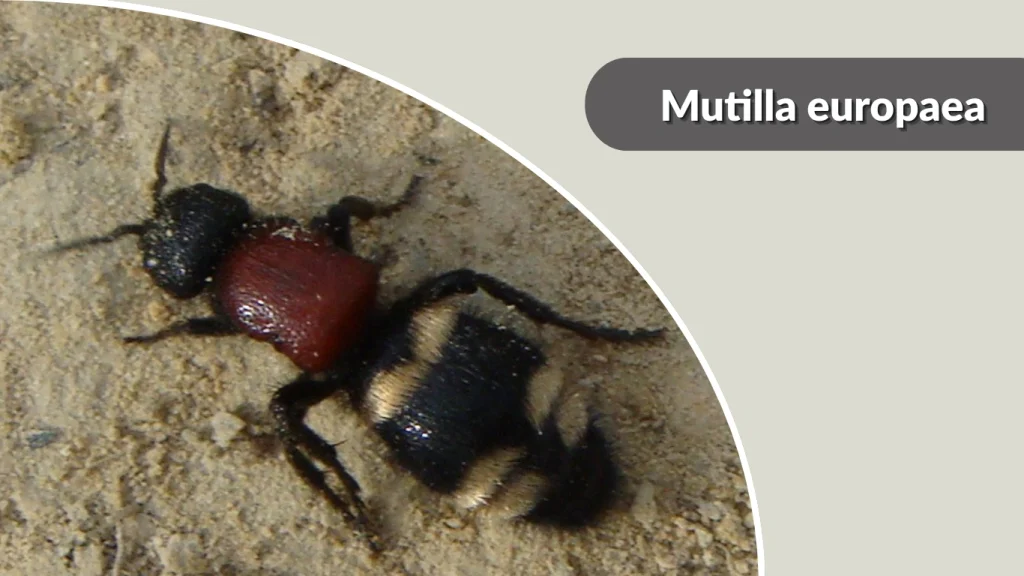
Mutilla europaea is a species of velvet ant found across Europe and parts of Asia. Like other members of the Mutillidae family, the females are wingless and bear a strong resemblance to large ants. Their bodies are tough and covered with sparse hairs, often in black and reddish patterns, making them appear both ant-like and warningly colorful.
Identification
- Females are wingless and ant-like in appearance
- Black body with patches of reddish or orange hair
- Strong, compact exoskeleton resistant to pressure
- Males are winged but less commonly encountered
- Typically around 6–12 mm long
Behavior
These wasps are solitary parasites. Females infiltrate the nests of ground-nesting bees and wasps to lay eggs. The larvae then consume the host larvae or pupae. They are commonly found in meadows, sandy soils, and open fields.
Sting
The sting of Mutilla europaea is very painful, similar to other velvet ants. They are not aggressive but will sting if handled or threatened.
6. Pseudomyrmecinae (Slender Ant-Mimicking Wasps)
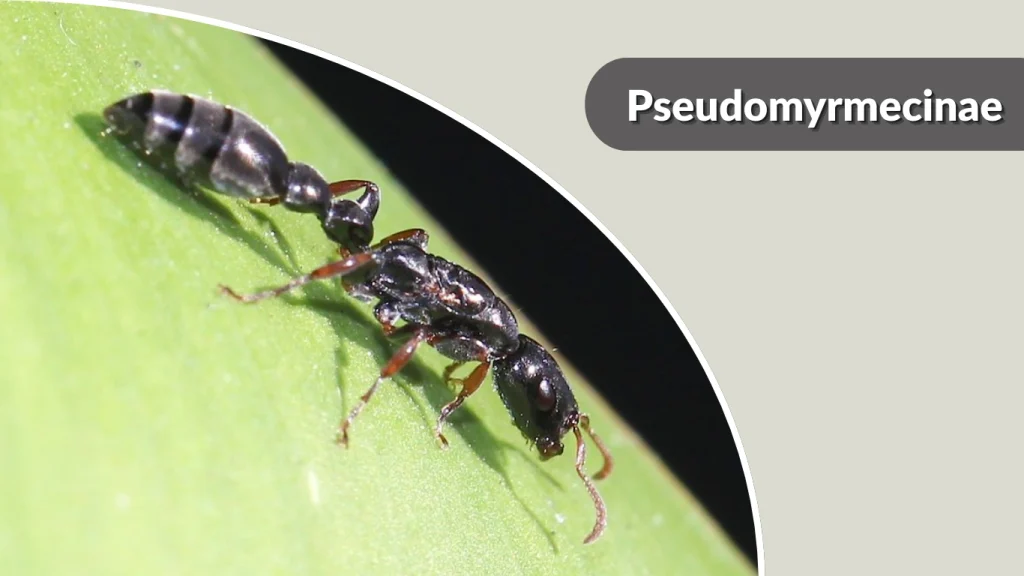
Pseudomyrmecinae are a subfamily of wasps known for their striking resemblance to ants. Their elongated bodies, narrow waists, and fast, jerky movements mimic ants so closely that they can blend into ant-rich environments. This mimicry helps them avoid predation while they go about their solitary lifestyle.
Identification
- Slender body with long legs resembling ants
- Narrow waist with smooth, shiny exoskeleton
- Typically brown, reddish, or black in color
- Females often wingless or with reduced wings
- Move quickly in an ant-like manner
Behavior
These wasps are solitary hunters and parasites. They usually target small arthropods or infiltrate nests of other insects to lay eggs. Their mimicry allows them to move undetected in environments where ants dominate.
Habitat
Pseudomyrmecinae are found in warm and tropical regions worldwide. They are common in grasslands, open fields, and forest edges where ants are abundant. They may also be observed on vegetation or sandy soils.
Sting
Their sting is used mainly for subduing prey or defense. While painful, it is not life-threatening to humans. They rarely sting unless provoked.
7. Ephutomorpha species
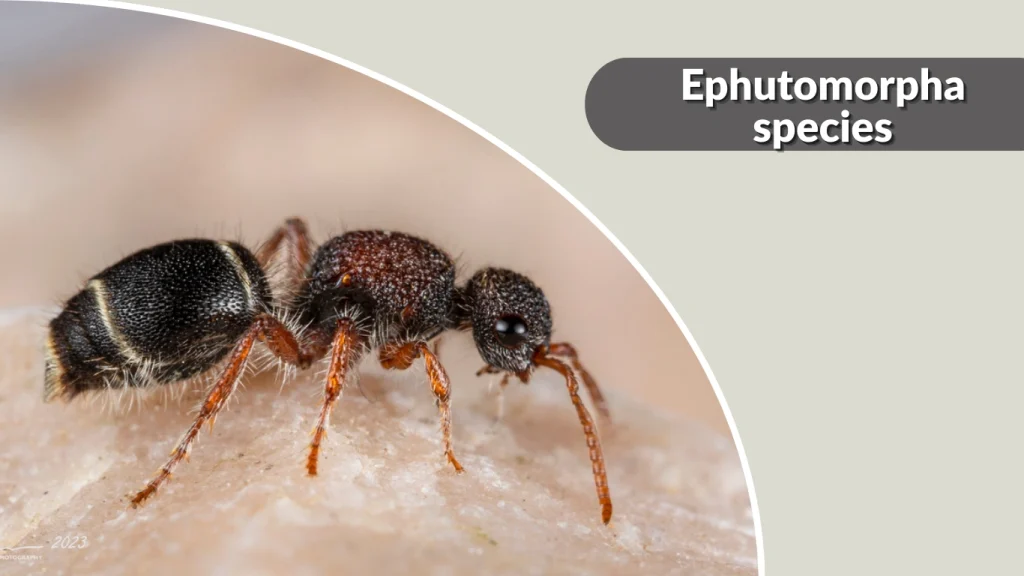
Ephutomorpha is a genus of velvet ants (family Mutillidae) that strongly resemble ants, especially because the females are wingless and move quickly across the ground. Their body shape, coloration, and jerky walking style make them easy to mistake for large ants at first glance.
Identification
- Wingless females with ant-like body structure
- Compact body with dense hair in colors like red, orange, or black
- Narrow waist and fast movement similar to ants
- Males are winged but less frequently observed
- Usually small to medium-sized (5–15 mm)
Behavior
Ephutomorpha wasps are solitary parasites. Females seek out the nests of ground-nesting bees or wasps, laying eggs inside. Their larvae then feed on the developing brood. They are most active during warm, sunny days.
Habitat
These wasps are typically found in sandy soils, dry grasslands, and open meadows. They prefer areas with a high presence of host insects, making ant-rich habitats ideal for their survival.
Sting
The sting of Ephutomorpha species is painful and serves as an effective defense mechanism. They are not aggressive but will sting if handled or threatened.
FAQs
1. Why do some wasps look like ants?
Some wasps mimic ants as a survival strategy. Ants are aggressive and well-defended, so predators often avoid them. By resembling ants in appearance and movement, these wasps reduce their chances of being attacked.
2. Are velvet ants real ants?
No, velvet ants are not ants at all. They are wasps from the family Mutillidae. Their wingless females resemble ants, but their biology and behavior are closer to parasitic wasps.
3. Do ant-mimicking wasps sting humans?
Yes, most of them can sting, but they are not aggressive toward humans. They usually sting only when handled or threatened. Some, like the Red Velvet Ant, are known for having an extremely painful sting.
4. Where can I find ant-like wasps?
They are commonly found in sandy soils, meadows, open fields, and forest edges. Many species live in regions where ground-nesting bees or wasps are abundant, as these serve as their hosts.
5. What is the main difference between an ant and an ant-mimicking wasp?
The key difference is that ants live in colonies with queens, workers, and soldiers, while ant-mimicking wasps are solitary. Additionally, wasps have different wing structures (when present) and stingers designed mainly for paralyzing prey rather than colony defense.
