

Paper wasps are some of the most recognizable stinging insects, often seen around homes, gardens, and wooded areas. With their distinctive umbrella-shaped nests and thin-waisted bodies, they’re commonly found in both natural environments and manmade structures. But where exactly do paper wasps live? And which countries see the most activity?
In this guide, we’ll explore the habitats paper wasps prefer, from forests and grasslands to attic corners and window frames. You’ll also learn which regions and countries have the highest populations of these wasps, why they thrive there, and how climate and human environments play a role in their presence.
Overview of Paper Wasp Habitat Preferences
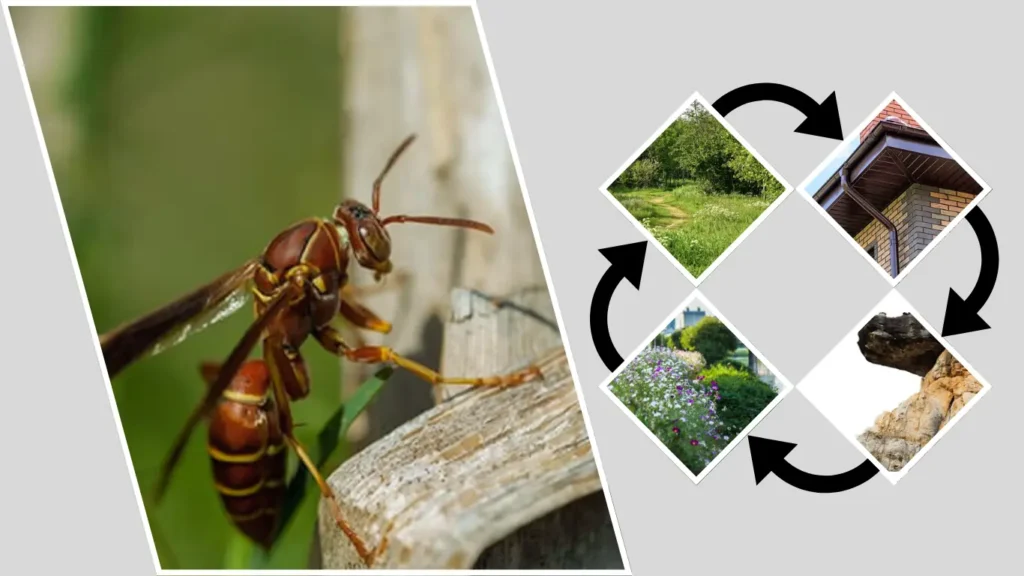
Paper wasps are highly adaptable insects that can live in a wide range of environments. Their choice of habitat is influenced by temperature, availability of nesting material, shelter, and access to food. Whether in the wild or around human structures, paper wasps seek out safe, elevated spaces to build their nests.
Natural Habitat
In natural settings, paper wasps typically nest in areas that provide protection from weather and predators. Common natural habitats include:
- Forest edges and woodland clearings
- Shrubs, tall grasses, and low-hanging tree branches
- Rocky overhangs or cliff faces
- Undisturbed meadows with abundant flowering plants
These environments offer plenty of insects to feed on, water sources, and fibers needed for nest construction.
Human-Made Structures
Paper wasps often build nests around buildings, taking advantage of stable surfaces and shelter provided by human-made architecture. Typical nesting spots include:
- Under roof eaves and overhangs
- Inside sheds, garages, and barns
- Within wall voids or behind shutters
- On fences, satellite dishes, and outdoor furniture
Their nests are usually attached to horizontal surfaces in shaded, dry areas.
Climate Tolerance
Paper wasps prefer warmer climates and are most active in temperate and subtropical zones. They do not tolerate freezing temperatures well, which is why their activity is seasonal in colder regions. Key climate considerations:
- Active during late spring to early fall
- Found year-round in tropical and warm coastal areas
- Overwintering queens seek sheltered areas during cold months (e.g., attics, crevices)
Global Distribution of Paper Wasps

Paper wasps are found on nearly every continent, with certain regions supporting more species and higher population density than others. Some species are native to specific areas, while others have spread through human activity and trade.
North America
- United States: Home to multiple species like Polistes fuscatus, Polistes dominula (invasive), and Polistes metricus
- Canada: Found primarily in the southern regions during warmer months
- Common in both rural and suburban areas, especially in attics, eaves, and barns
Central and South America
- Native paper wasps thrive in the tropics, including species like Polistes canadensis
- Often found in forests, on plant stems, and building corners
- Brazil and Colombia report high biodiversity in wasp species
Europe
- Polistes dominula is widespread across Southern and Central Europe
- Frequently seen in Mediterranean countries like Italy, Spain, and Greece
- Often build nests under roof tiles and old stone buildings
Asia

Asia hosts a wide variety of paper wasp species, especially in warm and humid regions. These wasps are commonly found in rural villages, cities, and forested landscapes.
- India, China, Thailand, and Malaysia are notable hotspots for native species like Polistes olivaceus and Ropalidia marginata
- They often nest on temple eaves, rooftops, and trees in residential and agricultural areas
- Tropical climates allow some species to remain active year-round
- Urban paper wasps have adapted well to human structures and are frequently spotted in densely populated zones
In many parts of Asia, paper wasps play a beneficial role in natural pest control due to their insect-hunting habits.
Australia and Oceania
Paper wasps are widespread in Australia and surrounding islands, where both native and introduced species are thriving.
- Native species: Polistes humilis is one of the most common native paper wasps in Australia
- Invasive species: Polistes chinensis (Asian paper wasp) has established itself in parts of eastern Australia and New Zealand
- Found in suburban gardens, under decks, roof spaces, and even playground equipment
- Warm climates support year-round activity in many parts of the region
Invasive paper wasps have become a concern in New Zealand, where they disrupt local ecosystems and compete with native insects for food.
Africa
Paper wasps are present in many parts of Africa, particularly in warm and semi-arid regions. While they are not as widely studied as in other continents, several species are well established.
- Common in Northern, Eastern, and Central Africa, especially in savanna and woodland zones
- Nest in acacia trees, roof edges, and agricultural structures
- Less aggressive than hornets but still territorial
- In regions with seasonal rains, nesting activity peaks after the dry season
Paper wasps in Africa often contribute to natural pest control in farming areas, though they can become a nuisance when nesting near homes.
Countries with the Most Paper Wasps

Some countries report higher paper wasp populations due to a combination of warm climates, urban development, and available nesting sites.
United States
- Home to both native (Polistes fuscatus) and invasive (Polistes dominula) species
- Common in all states, especially the South, Midwest, and coastal regions
- Thrive in suburban and agricultural zones with wood structures and shelter
Australia
- Supports large populations of both native and introduced paper wasps
- Warm conditions allow colonies to survive for longer periods
- Found in most populated regions, including Queensland, New South Wales, and Victoria
Brazil
- One of the richest countries in terms of paper wasp diversity
- Tropical forests and cities host species like Polistes canadensis
- Nests appear on tree trunks, buildings, and even utility poles
India
- Several native species found across the country
- Often nest in temples, homes, and rural structures
- Active from spring through the monsoon season in most regions
Thailand
- High humidity and warm temperatures make it ideal for paper wasps
- Common in both rural and urban areas
- Many species are visible in gardens, markets, and roadside trees
Seasonal Patterns of Paper Wasp Activity

Paper wasp activity follows a predictable seasonal cycle in temperate regions but may continue year-round in warmer areas.
Spring
- Overwintered queens emerge to start new colonies
- Small, single-layer nests are built
- First generation of worker wasps appears
Summer
- Colony grows rapidly
- Nests expand with additional layers
- Most wasp-human encounters occur during this time due to increased activity
Fall
- Colony declines as temperatures drop
- Queens and males emerge for mating
- Nests are often abandoned by early winter
Winter
- Only fertilized queens survive, hiding in protected spots
- Old nests are not reused the following year
Are Paper Wasps Invasive in Some Countries?
Yes, several paper wasp species have become invasive outside their native range, often disrupting local ecosystems.
Examples of Invasive Paper Wasps
- Polistes dominula (European paper wasp): Now widespread in the U.S., South America, and parts of Asia
- Polistes chinensis (Asian paper wasp): Introduced in New Zealand and eastern Australia
- Impact: Displace native insects, compete for food, and create pest control challenges
Invasive wasps can become aggressive in unfamiliar environments, especially when they have no natural predators.
How to Manage Paper Wasps in Your Region
Proper management depends on early detection, prevention, and safe removal practices.
Prevention Tips
- Seal gaps around windows, vents, and roof edges
- Keep outdoor trash sealed and clean up sugary spills
- Remove old or abandoned nests in early spring before new queens arrive
- Trim vegetation near buildings to reduce nesting areas
Removal Advice
Small nests: Can be safely removed in early spring using commercial wasp spray
Large or hidden nests: Should be handled by pest control professionals
Protective gear: Gloves, long sleeves, and goggles are essential during any DIY removal
Time of day: Evening or early morning is safest, as wasps are less active
Early action and awareness are key to preventing paper wasp colonies from becoming a recurring problem.
FAQs
Can paper wasps survive in cold climates like Canada or the UK?
Yes, but only during the warmer months. In cold climates, paper wasps die off in winter, except for fertilized queens that hibernate in protected areas. These queens start new colonies in spring.
Are paper wasps more common in cities or rural areas?
They thrive in both. In cities, they often nest on buildings, fences, and light fixtures. In rural areas, they nest in barns, under tree limbs, or around gardens. Urban environments may actually provide more stable nesting spots due to human structures.
Which paper wasp species is the most widespread globally?
Polistes dominula (European paper wasp) is one of the most widely distributed species worldwide. Originally from Europe, it has spread to North America, South America, parts of Asia, and Australia.
Why do paper wasps build nests around human homes?
Human-made structures offer flat, sheltered surfaces ideal for nest attachment. Eaves, porches, and overhangs protect nests from rain and wind, making them perfect spots for colony building.
Do paper wasps migrate between countries?
Not naturally. Their spread across countries usually happens through global trade, travel, and shipping containers where overwintering queens hide unknowingly. This is how invasive species like Polistes chinensis reached places like New Zealand.
