

Ever wondered what paper wasps eat when they’re buzzing around your garden or building nests near your home? These slender, reddish-brown wasps have a surprisingly varied diet. Adult paper wasps mainly feed on nectar and sugary substances, while their larvae rely on a high-protein diet of chewed-up insects. From caterpillars and flies to fruit juice and plant sap, paper wasps consume more than you might expect.
In this guide, we’ll break down exactly what paper wasps eat at different life stages and how their diet affects their behavior.
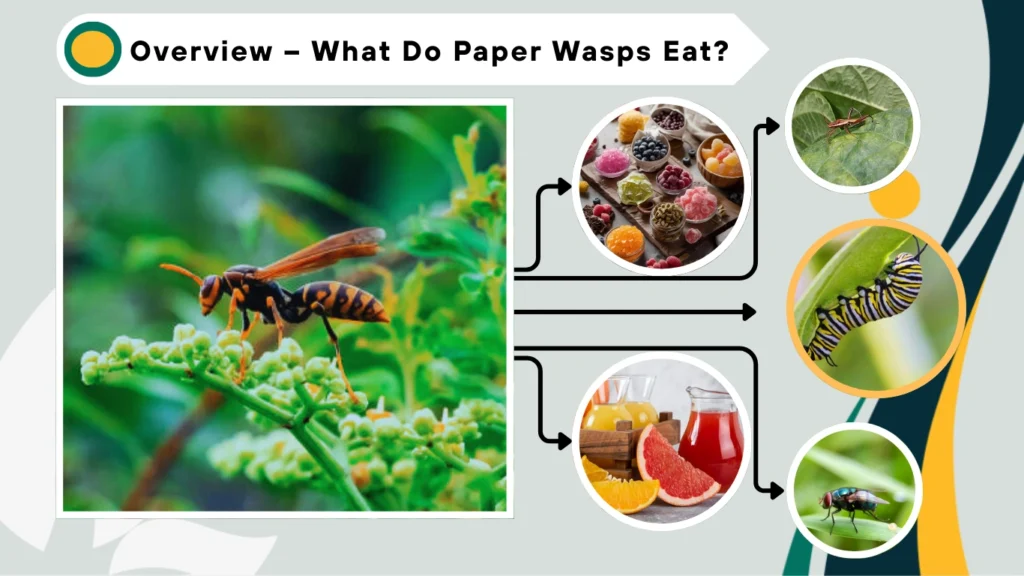
Overview – What Do Paper Wasps Eat?
Summary of Diet
Paper wasps have a dual-purpose diet depending on their life stage. Adult wasps feed mostly on sweet, sugary substances like nectar, honeydew, and ripe fruit juices. Their primary goal is to stay energized. In contrast, their larvae need protein-rich food to grow—so adult wasps hunt small insects like caterpillars and flies, chew them up, and feed them to the young. This combination makes paper wasps both pollinators and natural pest controllers.
What Do Adult Paper Wasps Eat?
Common Foods
Adult paper wasps do not eat solid food. Instead, they drink liquids rich in sugar or nutrients. Their favorites include flower nectar, tree sap, and honeydew from aphids. When near humans, they might also sip sugary drinks, fruit juice, or even leftovers from sweet foods. Occasionally, they’re seen near beehives trying to steal honey. However, adults do not hunt insects for themselves—they only chew and carry prey to feed their larvae.
What Do Paper Wasp Larvae Eat?

Larval Diet Explained
Paper wasp larvae require a protein-rich diet to grow. They don’t gather their own food—instead, adult wasps do the hunting. Adults capture soft-bodied insects like caterpillars, flies, or beetle larvae, chew them into a pulp, and feed this mixture directly to the larvae. In return, the larvae sometimes secrete a sweet liquid that the adults consume, creating a mutual exchange.
Do Paper Wasps Eat Other Insects?
Yes – Here’s What They Commonly Hunt
Paper wasps are efficient insect hunters, especially during the spring and summer breeding seasons. They actively prey on a variety of small insects, mainly to feed their larvae. Some common targets include:
- Caterpillars – their primary food source for young
- Flies and mosquitoes – caught and chewed for larval meals
- Beetles, including Japanese beetles – mostly soft-bodied stages
- Grasshoppers – smaller or young ones
- Aphids and roaches – sometimes included
They rarely eat ants, ladybugs, or bees, though they may scavenge dead or injured ones.
Do Paper Wasps Eat Plants or Leaves?
Their Relationship with Vegetation
Paper wasps do not eat leaves or solid plant parts. However, they do rely on plants for nectar, which is a key part of their adult diet. While foraging, they visit flowering plants to sip nectar. They may also chew fibrous plant stems or soft, weathered wood—not for food, but to gather material for building their nests. So, while they interact with plants frequently, they don’t actually consume leaves or greenery.
Do Paper Wasps Eat Wood, Drywall, or Paper?

Clarifying the Confusion
Paper wasps don’t eat wood, drywall, or paper in the traditional sense. However, they do chew weathered wood, plant stems, and fibrous materials to create their nests. They mix the chewed fibers with saliva to form a papery pulp, which hardens into the structure of the nest. This behavior might look like they’re “eating” these materials, but it’s purely for nest-building purposes—not for nutrition.
Do Paper Wasps Eat Honey or Honey Bees?
Occasional Interaction
Paper wasps aren’t major threats to bees, but they may take advantage of exposed beehives. If they find honey, they might sip it just like they would nectar. They typically don’t attack healthy adult honey bees, but they may feed on dead or dying ones if available. Their interest in bees is more opportunistic than aggressive.
Seasonal Changes in Diet
Spring to Fall Eating Habits
Paper wasps shift their diet based on the season:
- Spring/Early Summer: Adults hunt insects to feed growing larvae
- Mid to Late Summer: Insect hunting decreases; adults seek more sugar for energy
- Fall: Focus turns to sweet substances—nectar, rotting fruit, and human food
As winter approaches, most paper wasps die, and only fertilized queens survive by hibernating.
What Do Northern Paper Wasps Eat?
Specific to Northern Species
Northern paper wasps (Polistes fuscatus), common in the U.S. and Canada, eat almost the same foods as other paper wasps. Adults feed on nectar, sugary liquids, and ripe fruits. They hunt caterpillars and soft-bodied insects to feed their larvae. Their food choices may vary slightly based on regional plant and insect availability, but their diet follows the same general pattern.
Paper Wasps and Human Environments
What They’re Attracted to Around Homes
Paper wasps are often seen near homes because they’re attracted to:
- Sweet food or drinks left outside
- Trash cans and food scraps
- Ripe fruit or juice spills
- Flowering plants in gardens or porches
They may also build nests in quiet areas like roof corners, eaves, mailboxes, or sheds. Keeping food and drinks covered outdoors can reduce unwanted visits.
FAQs
Do paper wasps eat mosquitoes?
Yes, adult paper wasps may capture mosquitoes to feed their larvae. While they don’t actively seek them out like caterpillars, mosquitoes are small enough to be caught and used as a protein source for developing wasps.
Can paper wasps eat cockroaches or termites?
They may feed smaller roaches or termites to their larvae if they find them. However, these are not their main targets. Soft-bodied insects like caterpillars and fly larvae are preferred because they’re easier to chew and digest.
Do paper wasps eat other wasps or bees?
Rarely. Paper wasps do not typically hunt other wasps or bees unless scavenging from a dead or dying insect. They may occasionally steal honey if they come across an unprotected hive.
What should I avoid leaving outside to keep wasps away?
Avoid leaving sugary drinks, open fruit, sweet sauces, and food scraps outside. Also, cover trash cans and clean up spills. These attract adult wasps looking for sugar.
How can I attract paper wasps to control garden pests?
Plant flowering herbs and native flowers that offer nectar. Avoid using pesticides that kill beneficial insects. If you’re comfortable with their presence, allowing paper wasps to nest nearby can naturally reduce caterpillar and beetle populations in your garden.
