
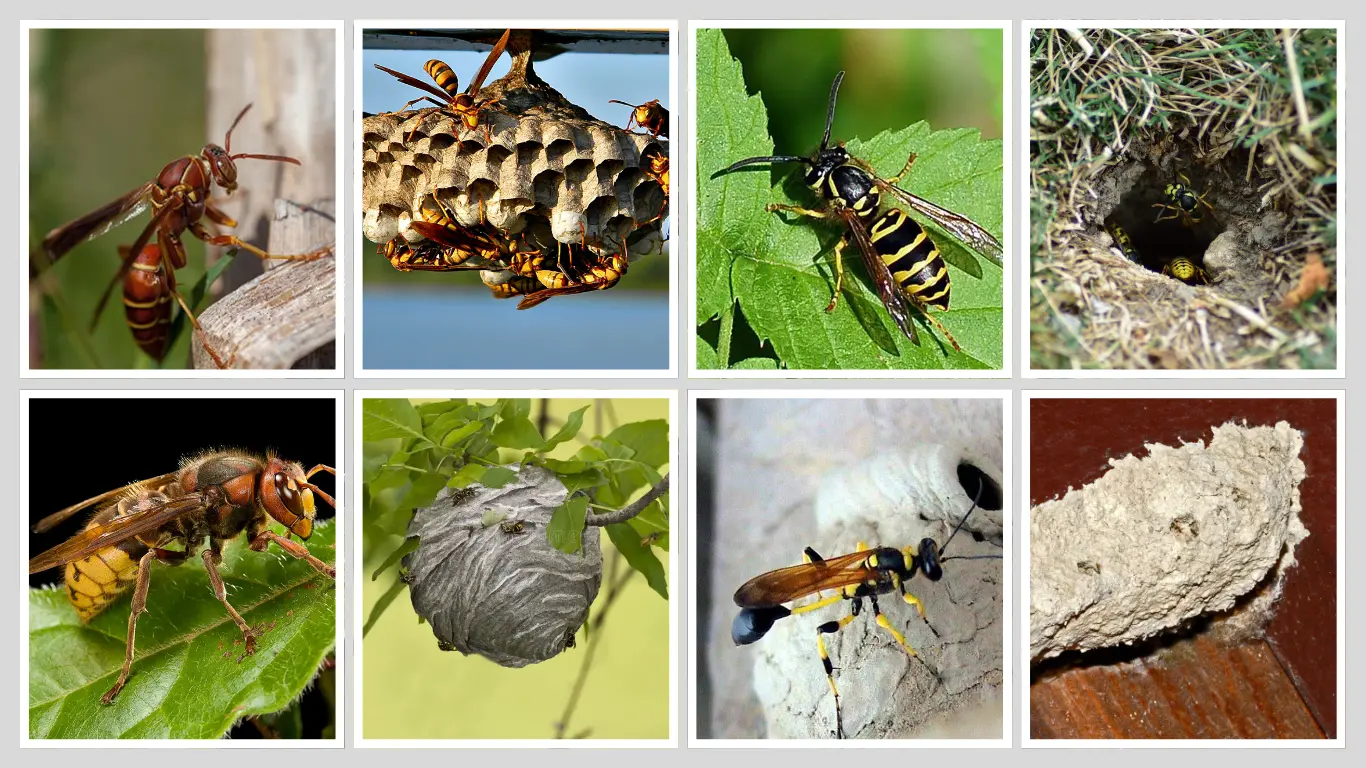
Wasp nests often appear in unexpected places—under eaves, inside bushes, trees, wall gaps, or even underground. But just because a structure looks like a wasp nest doesn’t mean it is one. Misidentifying a nest could lead to unnecessary fear or, worse, accidental disturbance and stings.
This article will help you accurately identify different types of wasp nests by their appearance, structure, material, and location. We’ll also compare them to other nests—like those built by bees, spiders, and birds—that can sometimes be mistaken for wasp nests. Whether you’re inspecting your garden or attic, this guide will give you the clarity to tell the difference safely.
What Do Wasp Nests Look Like?

Wasp nests vary in size, shape, and material depending on the species, but they all serve the same purpose: to protect and house the colony. Understanding the key characteristics can help you distinguish a wasp nest from other similar-looking nests.
Common Materials Used by Wasps
Most wasps use a mixture of materials found in nature to build their nests. The most common materials include:
- Chewed wood pulp mixed with saliva – This creates a papery texture seen in most wasp nests.
- Mud – Some wasps, like mud daubers, use moist soil or clay to construct tubular nests.
- Plant fibers – Occasionally used by some species to reinforce nest structures.
General Shape and Size
The shape of a wasp nest depends heavily on the species:
- Paper wasps build open, umbrella-shaped nests with visible hexagonal cells.
- Yellowjackets construct fully enclosed, layered nests that resemble a football or basketball.
- Hornets typically build large, oval-shaped, enclosed nests with smooth outer surfaces.
- Mud daubers create small, mud tube structures that may appear like organ pipes or tiny clay pots.
Sizes range from a few inches (small paper wasp nests) to more than a foot across (large hornet nests).
Typical Nest Locations
Wasps are adaptable and can build nests in a wide range of places. Common nest locations include:
- Under roof eaves or porch ceilings
- Inside attics or wall voids
- In trees or dense shrubs
- Underground, especially in abandoned rodent burrows (yellowjackets)
- Behind shutters, light fixtures, or within shed corners
Wasps usually choose sheltered, undisturbed areas that provide cover and access to food sources.
Types of Wasp Nests by Species

Different wasp species build distinct types of nests. Knowing the differences helps with proper identification and safer handling.
Paper Wasp Nests
Paper wasps build small, open-celled nests that look like an upside-down umbrella. These nests are usually attached to horizontal surfaces such as beams, porch ceilings, or under tree branches.
Appearance: Exposed hexagonal cells, gray or brown papery texture
Size: Typically 3 to 6 inches across
Location: Under eaves, rooflines, or ledges
Behavior: Paper wasps are less aggressive than yellowjackets but will defend their nests when threatened
Yellowjacket Nests
Yellowjackets are ground or cavity nesters and build enclosed nests that can grow very large during summer.
Appearance: Football-shaped, fully enclosed, layered with a smooth paper exterior
Size: Can grow up to the size of a basketball or larger
Location: Underground, inside wall voids, hollow trees, or attics
Behavior: Highly aggressive, especially when disturbed; known for painful stings
Bald-Faced Hornet Nests
Though technically a type of yellowjacket, bald-faced hornets build unique and easily recognizable nests.
- Appearance: Large, gray, oval-shaped with a smooth surface and a single entry hole
- Size: Often the size of a volleyball or larger
- Location: High in trees, bushes, utility poles, or building overhangs
- Behavior: Extremely territorial and quick to defend their nest
Mud Dauber Nests
Mud daubers are solitary wasps that build nests out of mud rather than wood pulp.
- Appearance: Small cylindrical or oval tubes that resemble organ pipes or lumps of clay
- Size: Each tube is about 1 inch long; grouped nests may cover several inches
- Location: Walls of garages, attics, sheds, or under outdoor furniture
- Behavior: Not aggressive; rarely sting
Insect Nests That Look Like Wasp Nests (But Aren’t)

Many insects and animals build nests that, at first glance, might look like wasp nests. Here’s how to tell them apart.
Spider Egg Sacs
Spider egg sacs can look like small, round nests tucked in corners or under eaves. They are:
- Material: Silk, often white or gray
- Shape: Small, cotton-ball-like
- Clue: Usually attached to webbing or hidden in dark corners
Ant Nests (Especially Carpenter Ants)
Carpenter ants excavate wood, leaving behind hollowed spaces that may be confused with abandoned wasp nests.
- Material: No external nest structure; found within walls or wooden beams
- Clue: Presence of sawdust-like material (frass) and ant activity
Bird Nests (Small Species)
Some birds, like swallows or finches, build nests that could resemble wasp nests in shape or color.
- Material: Twigs, feathers, plant matter, or even trash
- Clue: Often located on ledges or eaves, and lined with soft materials
- Difference: Bird nests are generally bulkier and messier in construction
Recognizing these differences is essential for proper identification and avoiding accidental harm to non-aggressive species.
Wasp Nest vs Bee Nest: Key Differences

While wasps and bees both build nests to house their colonies, the materials, structure, and appearance of their nests are quite different. Misidentifying a bee nest as a wasp nest can lead to improper handling, which is risky for both people and pollinators.
| Feature | Wasp Nest | Bee Nest |
| Material | Paper-like (chewed wood pulp), or mud | Wax |
| Structure | Exposed or enclosed, with distinct layers | Internal combs within a hive or cavity |
| Color | Grayish or brown | Yellow-white wax |
| Cell Visibility | Often visible (especially with paper wasps) | Usually hidden inside hive |
| Location | Eaves, attics, trees, or underground | Tree hollows, beekeeping boxes, walls |
| Aggression | Many wasp species are aggressive | Most bee species are defensive, not aggressive unless provoked |
| Seasonal Behavior | Nest dies off in winter | Bee colonies may survive year-round |
By checking material, location, and visible structure, you can usually tell whether you’re dealing with a wasp or a bee nest.
How to Safely Identify a Wasp Nest
Wasp nests should never be disturbed unless you’re sure they’re inactive—or you’re trained in pest control. Here’s how to identify them safely and accurately.
Visual Inspection Tips
- Stay at a distance: Observe from 6–10 feet away
- Use binoculars: Especially helpful for spotting nests in high places
- Avoid direct light: Midday inspection may disturb wasps; dusk or dawn is safer
- Look for symmetry and structure: Wasp nests have consistent, organized shapes, unlike random piles or debris
Signs of an Active Nest
- Frequent traffic: Wasps flying in and out of a single point
- Buzzing sounds: Audible hum or buzzing from within the nest
- Sentry behavior: Some wasps will hover around the entrance as guards
- Fresh building material: Active nests often have new papery layers
When to Remove a Wasp Nest and What to Do
Knowing when and how to remove a wasp nest is just as important as identifying it. Improper removal can provoke an aggressive swarm.
Best Time to Remove
- Early spring: Ideal, as nests are smaller and have fewer wasps
- Evening or early morning: Wasps are less active and easier to approach
- Before peak summer months: Colonies grow rapidly in summer
DIY vs Professional Removal
- DIY: Only safe for small, visible nests using approved wasp sprays
- Protective gear: Wear gloves, long sleeves, and eye protection
- Professional help: Recommended for large, hidden, or hard-to-reach nests—especially yellowjacket or hornet colonies
Never attempt removal if you’re allergic to stings or unsure about the nest’s species. It’s safer and more effective to call a pest control professional.
FAQs
Can wasps rebuild nests in the same location?
Yes, especially paper wasps. While they don’t reuse old nests, they often return to the same protected spot to build a new one each season.
How long do wasp nests last?
Most wasp nests only last for one season. When cold weather arrives, the colony dies off, and the nest is abandoned.
Do all wasps build nests?
No. Some solitary wasps, such as certain parasitic species, don’t build visible nests at all. Others, like mud daubers, create very different nest types from social wasps.
Can a wasp nest be completely underground?
Yes. Yellowjackets are known for building large, aggressive nests in underground burrows, especially in lawns and fields.
How do I know if a nest is abandoned?
Signs include no wasp activity for several days, a crumbling or damaged structure, and no audible buzzing. However, always observe from a distance and avoid poking the nest to be certain.
Are wasp nests dangerous if left alone?
They can be. While some species are docile, others (like yellowjackets or hornets) become aggressive if disturbed. Nests near high-traffic areas pose the greatest risk.
What happens if I destroy a wasp nest during the day?
It’s dangerous. Wasps are active during daylight and will swarm to defend their nest. Always wait until evening when they are less aggressive—or better, hire a professional.
