
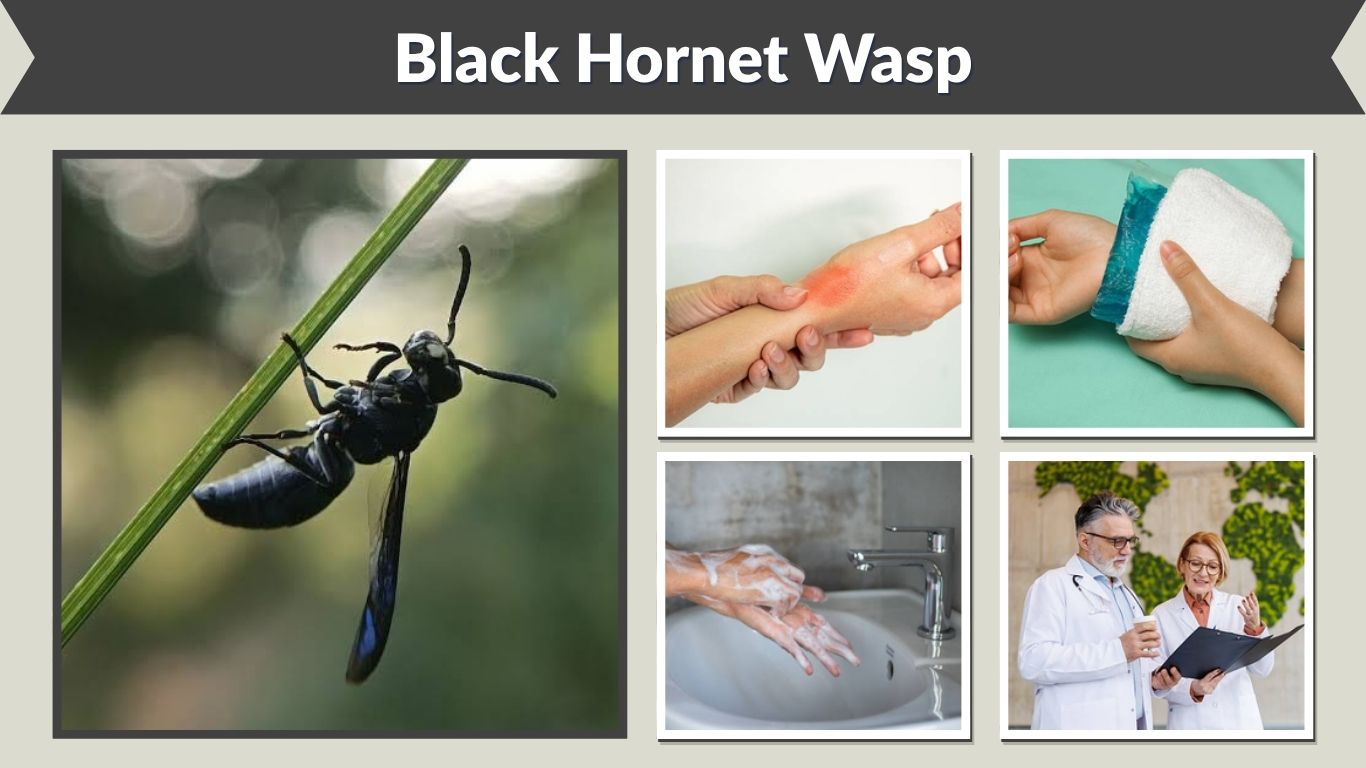
A black hornet wasp is often mistaken for an ordinary wasp because of its large body, dark coloration, and powerful-looking wings. However, not every black wasp is a true hornet. Some are solitary hunting wasps, while others belong to social species that defend large nests. Understanding the differences between black hornets and wasps can help you identify them correctly, recognize potential sting risks, and decide whether nest removal is necessary. Their color patterns, behavior, and nesting habits provide important identification clues.
What Is a Black Hornet Wasp?
The term black hornet wasp does not describe a single insect species. People commonly use it for large, dark-colored wasps resembling hornets. True hornets belong to the genus Vespa, while several black wasps belong to unrelated genera. The bald-faced hornet is another common example, although it is technically a type of yellowjacket rather than a true hornet.
Black Hornet Wasp Identification
Different species have distinctive physical features. Common identification characteristics include:
- Body color: Black, dark brown, or black with white, yellow, or orange markings.
- Body size: Varies considerably, often around 15–35 mm among commonly confused species.
- Wings: Transparent, smoky brown, or dark with a bluish reflection.
- Head: Usually broad with visible antennae and strong mandibles.
- Abdomen: May be completely black or display contrasting stripes.
- Waist: Noticeably narrowed between the thorax and abdomen.
- Legs: Usually six, sometimes appearing long and slender.
Identification should include several characteristics rather than relying on body color alone.
Are Black Hornets and Black Wasps the Same?
No. Hornets are a particular group of wasps, but not all wasps are hornets.
True hornets are social insects that establish colonies with queens and workers. In contrast, many large black wasps are solitary, meaning females construct and provision their own nests.
This distinction is important because social species can defend their colonies aggressively, whereas solitary species usually sting only when handled or threatened.
Common Types of Black Hornet-Like Wasps
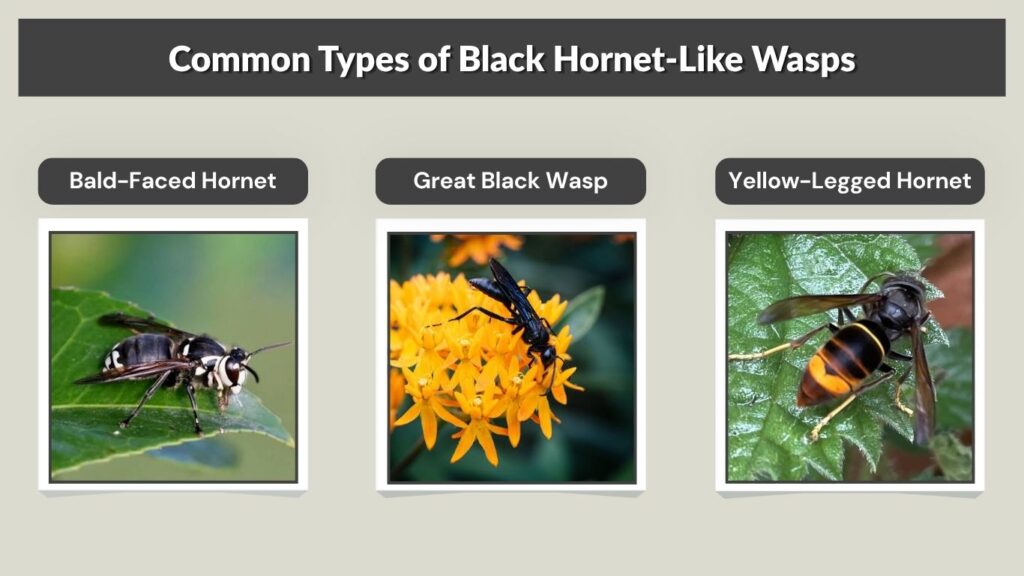
Several wasp species resemble black hornets, especially when seen flying quickly around homes and gardens. Their coloration can range from completely black to combinations of black, white, yellow, and reddish-orange. Understanding the most common lookalikes makes identification easier and prevents harmless solitary insects from being confused with more defensive social species.
1. Bald-Faced Hornet
The bald-faced hornet (Dolichovespula maculata) is one of North America’s most recognizable black-and-white wasps.
It has a predominantly black body with white facial markings and contrasting white patches on the abdomen. Adults commonly measure approximately 15–20 mm, although queens can be larger.
Despite its name, this species belongs to the yellowjacket group. Colonies construct large, enclosed paper nests in trees, shrubs, and around buildings.
Workers can sting repeatedly when defending their nests.
2. Great Black Wasp
The great black wasp (Sphex pensylvanicus) is a large, solitary hunting wasp found across much of North America.
Its body is almost entirely black, with smoky wings that sometimes show a metallic blue reflection. Unlike social hornets, females construct underground nests.
These wasps hunt katydids and grasshoppers to feed their developing larvae.
Although their size may appear intimidating, great black wasps are generally nonaggressive around people.
3. Yellow-Legged Hornet
The yellow-legged hornet (Vespa velutina), also called the Asian hornet, has a predominantly dark body with an orange-yellow abdominal band.
Its legs have distinctive yellow tips, making them particularly useful for identification.
This social hornet originates from Asia and has established invasive populations in parts of Europe. Its workers prey on other insects, including honey bees.
Unlike solitary black wasps, yellow-legged hornets establish colonies and actively defend occupied nests.
4. Black, Yellow, and Red Wasp Lookalikes
Some insects described as black and yellow hornet wasps are European hornets, paper wasps, or yellowjackets.
European hornets have reddish-brown heads and thoraxes with yellow-and-black patterned abdomens.
A black hornet wasp with a red abdomen may instead be a different species, such as a scoliid wasp with reddish abdominal hairs.
Color alone cannot establish whether an insect is a hornet, so location and body structure should also be examined.
Black Wasp vs Hornet: What’s the Difference?
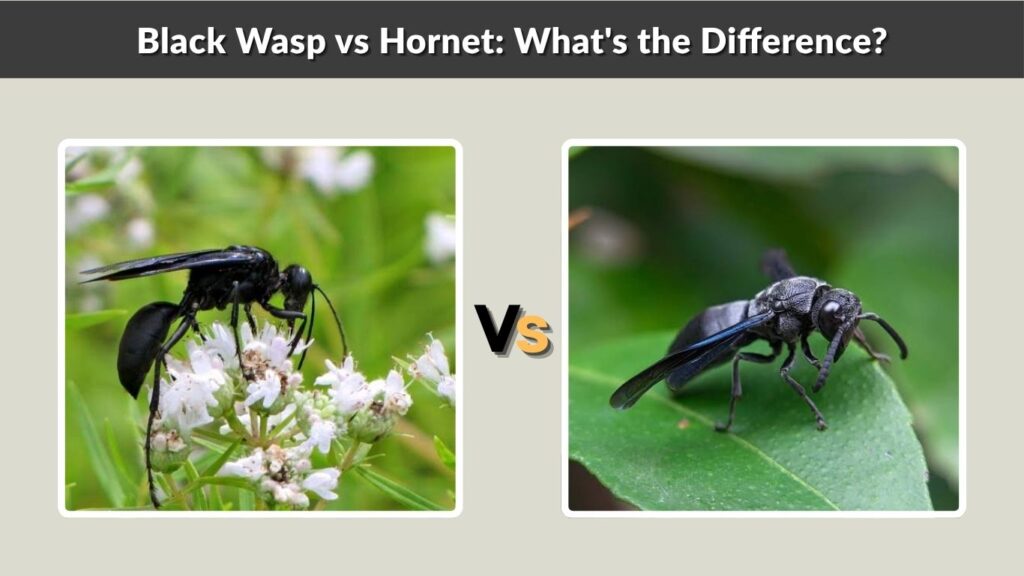
Black wasps and hornets can appear similar because both have narrow waists, two pairs of wings, and stingers in females. However, their social organization, feeding habits, and nest structures can differ substantially. A large black insect flying near flowers might be a harmless solitary wasp, while several insects guarding one nest may indicate a social colony.
Key Differences Between Black Wasps and Hornets
- Social structure: True hornets live in colonies; many black hunting wasps are solitary.
- Nesting: Hornets construct paper nests; solitary digger wasps may use underground tunnels.
- Appearance: Hornets generally have robust bodies, while some solitary wasps are more slender.
- Aggression: Hornets can defend nests collectively; solitary wasps lack worker colonies.
- Diet: Hornets hunt insects, while individual solitary wasp species often specialize in particular prey.
- Stinging: Females of both groups may sting, but defensive behavior differs.
These differences are useful identification clues, although exceptions exist.
Which Is More Aggressive?
Social hornets generally present a greater defensive risk near occupied nests because multiple workers may respond to a perceived threat.
Solitary wasps usually do not defend a communal nest and are less likely to sting people who leave them undisturbed.
However, individual behavior varies, and no wasp should be handled casually.
Black Hornet Wasp Nest Identification
A black hornet wasp nest may look completely different depending on which insect constructed it. Social hornets and bald-faced hornets produce paper structures, while some large black solitary wasps excavate soil. Recognizing the nest’s appearance and location can help determine whether the insects are likely to defend a colony or are simply using individual nesting chambers.
Common Nest Types
Look for the following structures:
- Enclosed paper nests: Common among bald-faced hornets and several social hornets.
- Underground burrows: Used by great black wasps and other solitary digger wasps.
- Mud tubes: Constructed by mud daubers, which are commonly confused with hornets.
- Tree cavities: Used by certain true hornets for nesting.
- Building cavities: Some social wasps occupy protected spaces within structures.
Never open a suspected nest to investigate its contents.
Where Do Black Hornets Build Nests?
Social hornets may build nests in trees, building cavities, sheltered structures, or other protected areas, depending on the species.
Bald-faced hornets frequently construct enclosed, grayish paper nests suspended from branches or attached to buildings.
Great black wasps use soil burrows instead. Their nesting activity may be visible as individual females enter and leave holes in the ground.
Nest architecture is often more useful for identification than insect color.
Are Black Hornet Wasps Dangerous?
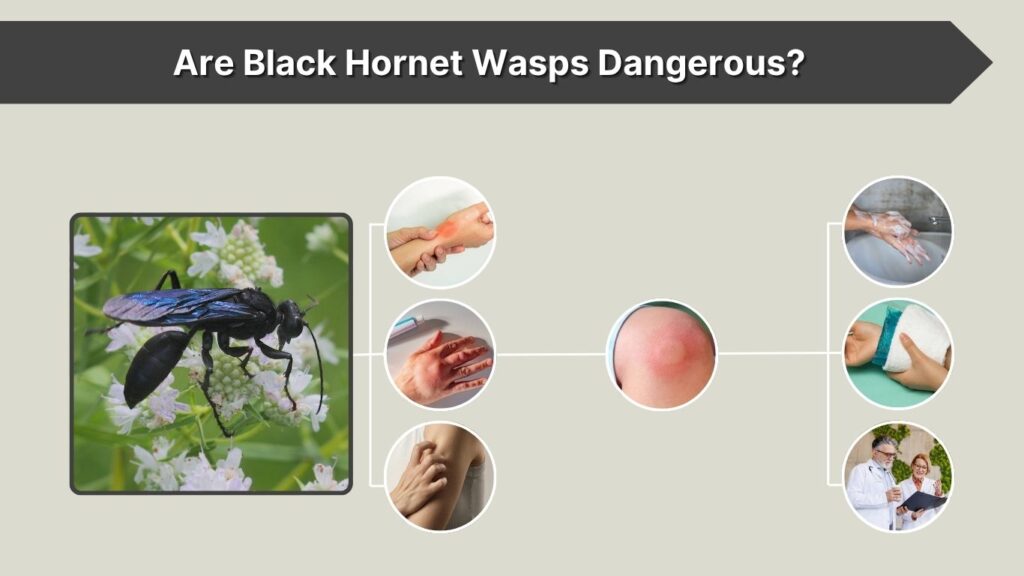
The danger associated with a black hornet wasp depends on its identity and the circumstances of the encounter. Solitary wasps generally present little risk when left alone, while social species may sting repeatedly during nest defense. Regardless of species, venom allergies can make an otherwise ordinary sting medically serious for certain individuals.
Black Hornet Wasp Sting
Female hornets and many female wasps can deliver venomous stings. Symptoms may include immediate pain, redness, swelling, and itching.
Most uncomplicated stings cause temporary discomfort, but reactions vary. Multiple stings and stings inside the mouth or throat can be especially dangerous.
Wasps and hornets generally retain their stingers and may sting more than once.
What to Do After a Sting
Basic first aid includes:
- Move away from the insect and any nearby nest.
- Wash the affected area with soap and water.
- Apply a cold compress to reduce discomfort and swelling.
- Avoid scratching the affected skin.
- Monitor for unusual swelling or other developing symptoms.
- Seek medical advice if symptoms worsen or remain concerning.
When Is a Sting an Emergency?
A severe allergic reaction, or anaphylaxis, requires immediate medical treatment.
Warning signs include breathing difficulties, swelling of the tongue or throat, faintness, and widespread hives accompanied by other symptoms.
Call emergency services immediately if these occur. Anyone prescribed an epinephrine auto-injector should follow their emergency action plan.
How to Get Rid of Black Hornet Wasps
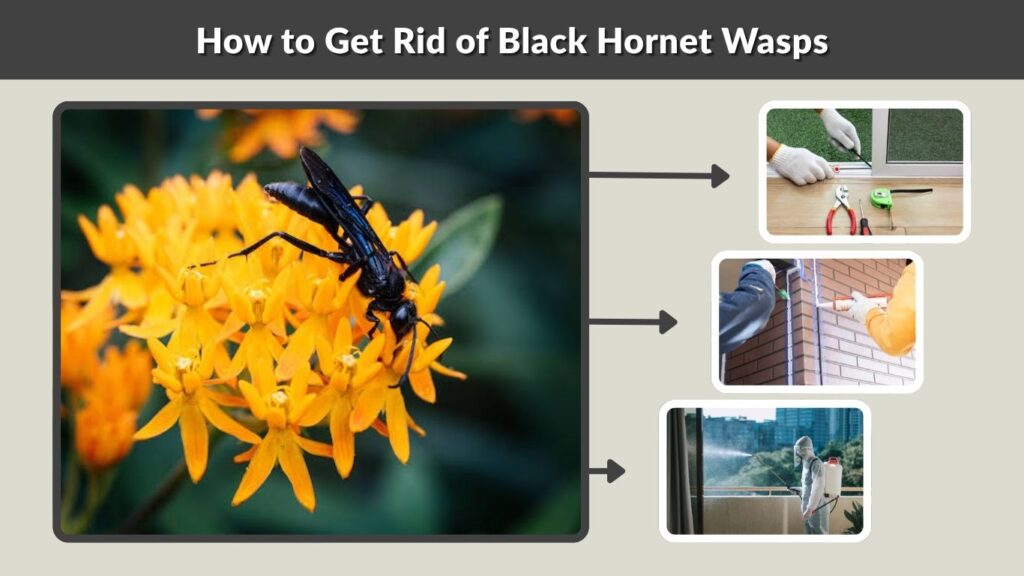
Removing a black wasp or hornet should depend on its species, nesting location, and actual risk. Many solitary hunting wasps are beneficial predators and do not require control. However, occupied social nests near entrances, playgrounds, or frequently used outdoor spaces can become hazardous. Correct identification and avoiding unnecessary disturbance are important first steps.
Safe Prevention and Management
Useful precautions include keeping garbage containers closed, repairing damaged window screens, and sealing suitable building openings after confirming they are unoccupied.
If an individual wasp enters the house, isolate the room and allow it to leave through a safe exterior opening when possible.
Avoid spraying unidentified nests or blocking active nest entrances. Professional pest control is generally the safer option for occupied social nests in difficult locations.
Does Black Flag Wasp and Hornet Killer Work?
Black Flag offers wasp and hornet killer sprays, including foaming formulations intended for labeled outdoor pest control.
Specific formulations are labeled for wasps, hornets, and yellowjackets, while some also include spiders and other pests.
Products must be used strictly according to their current labels. Black Flag’s listed foaming and aerosol products are intended for outdoor use, not indoor application.
For a large, inaccessible, or actively defended hornet nest, professional treatment is preferable to attempting removal yourself.
FAQs
Black hornets and their lookalikes raise many questions about identification, sting severity, nest construction, and geographic distribution. Because the name can refer to several different insects, accurate answers depend on the particular species involved. The following questions cover the most common concerns homeowners have when encountering large, dark-colored wasps.
1. Are There Completely Black Hornets or Wasps?
Yes. Several wasp species have almost entirely black bodies, including the great black wasp. Some true hornets are also predominantly dark, but most have additional yellow, orange, or reddish markings.
2. What Is a Black and White Hornet Wasp?
In North America, a black wasp with prominent white markings is often a bald-faced hornet. Despite its common name, it is a type of aerial yellowjacket rather than a true hornet.
3. Can Black Hornet Wasps Sting More Than Once?
Yes. Female hornets and many other wasps can sting repeatedly because their stingers do not normally remain embedded in the skin. Sting risk increases when social nests are disturbed.
4. Why Is a Black Hornet Wasp in My House?
An individual may enter through an open window, doorway, or damaged screen. Occasionally, wasps emerge from nests inside structural cavities. Repeated sightings should prompt an inspection from a safe distance.
5. Should I Kill a Black Hornet Wasp?
Not necessarily. Many large black wasps are solitary insects that help control pest populations. If an active social hornet nest threatens people or pets, consider professional identification and removal rather than approaching it yourself.
