
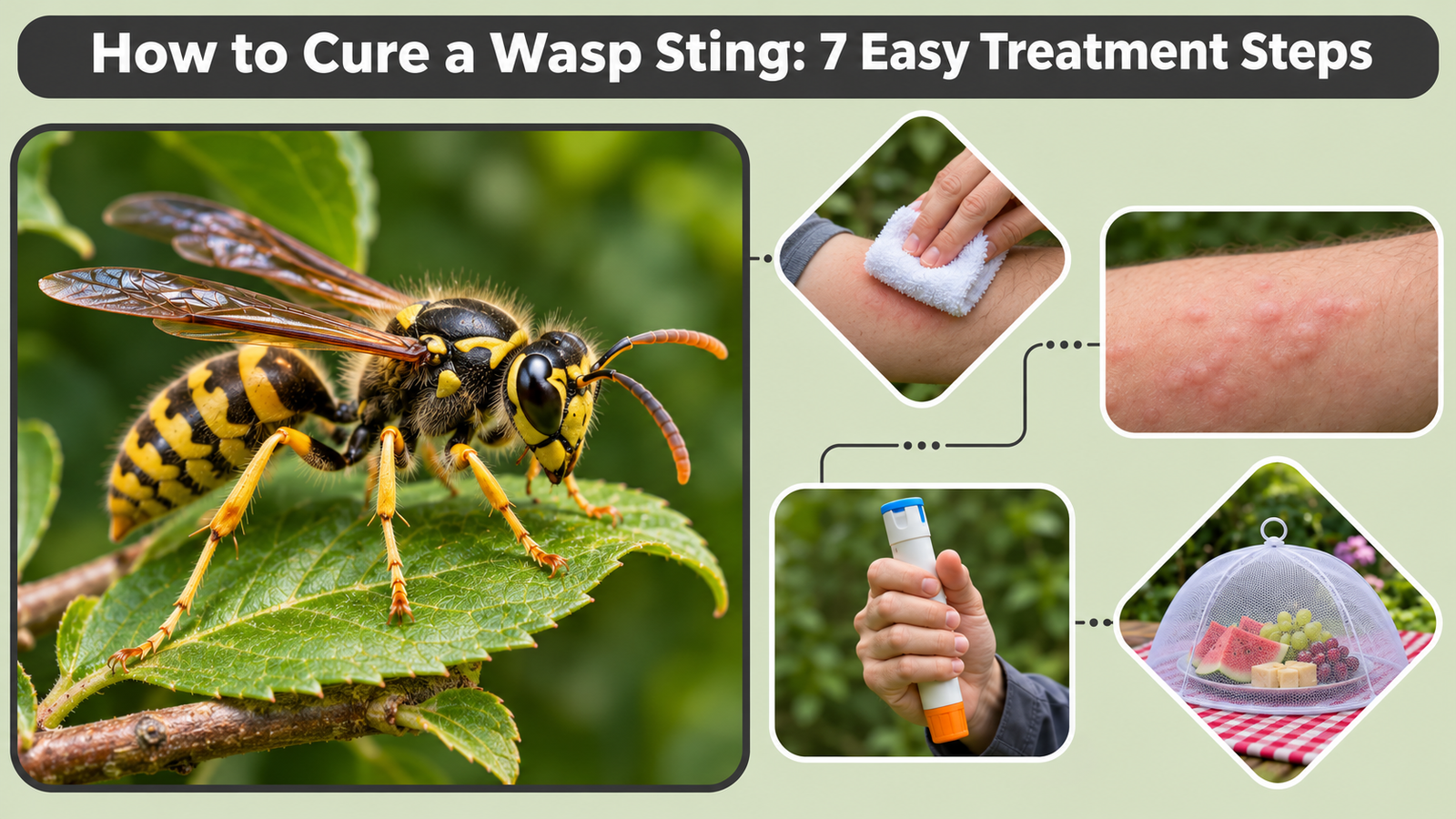
A wasp sting can cause sudden pain, redness, itching, and swelling that make everyday activities uncomfortable. Knowing how to cure a wasp sting can help you manage these symptoms safely and prevent unnecessary irritation. Most mild wasp stings improve with simple first aid, including washing the affected area, applying a cold compress, and using appropriate medication. However, some people experience severe allergic reactions that require immediate medical attention. This guide explains effective wasp sting treatments, practical home care methods, recovery time, and important warning signs.
What Happens When a Wasp Stings You?
A wasp injects venom through its stinger, triggering an inflammatory response in the skin. The venom contains substances that irritate tissues and stimulate the immune system, resulting in pain, redness, itching, and swelling around the affected area. The severity of the reaction depends on individual sensitivity, the number of stings, and the location of the injury.
Unlike honeybees, wasps generally do not leave their stingers embedded in the skin. They can sting multiple times, which makes moving calmly away from the insect especially important.
Common Symptoms of a Wasp Sting
Most people experience a localized reaction that remains limited to the sting site. Common symptoms include:
- Sharp Pain: An immediate burning or stinging sensation.
- Redness: Red or discolored skin around the puncture.
- Swelling: Mild puffiness or a raised bump.
- Itching: Irritation that may develop after the initial pain.
- Tenderness: Sensitivity when touching the affected area.
- Warmth: Slightly increased skin temperature caused by inflammation.
These symptoms generally improve without medical intervention. However, spreading hives, breathing difficulties, or swelling of the tongue or throat may indicate a serious allergic reaction rather than an ordinary local response.
How to Cure a Wasp Sting: 7 Easy Treatment Steps
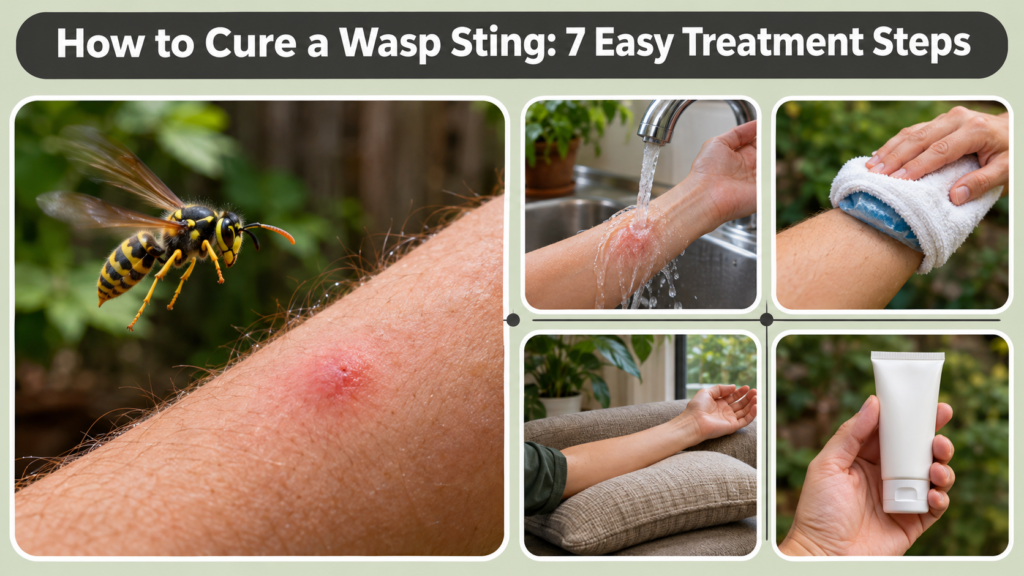
Learning how to treat a wasp sting correctly can reduce discomfort and support natural healing. There is no instant cure that removes all effects of wasp venom, but prompt first aid can help control pain, swelling, and itching. The following seven steps are suitable for most mild, localized reactions.
1. Move Away From the Wasp Immediately
The first step is to calmly leave the area where the sting occurred. Wasps can sting repeatedly, particularly when they feel threatened or when someone approaches their nest.
Avoid swatting at nearby wasps or making sudden movements. Move to a safe location and check whether additional insects are nearby before beginning treatment.
2. Check the Sting Area for a Stinger
Wasps usually withdraw their stingers after attacking, but examining the affected skin is still helpful. A retained stinger is more commonly associated with a honeybee sting.
If a stinger is visible, remove it promptly using a fingernail or another suitable method. Avoid digging into the skin if nothing is visible, as this can create further irritation or introduce bacteria.
3. Wash the Area With Soap and Water
Cleaning the affected skin is an essential part of wasp sting first aid. Use mild soap and clean running water to remove dirt and reduce the possibility of infection.
Gently pat the area dry with a clean towel rather than rubbing it. Avoid using harsh cleaning chemicals or repeatedly scrubbing the puncture because damaged skin may become more irritated.
4. Apply a Cold Compress
A cold compress is one of the simplest ways to relieve wasp sting pain and swelling. Cold temperatures can temporarily numb the area and help limit inflammation.
Wrap ice or a cold pack in a clean towel and apply it for approximately 10–20 minutes at a time. Never place ice directly against the skin, and repeat as needed after allowing the skin to return to its normal temperature.
5. Reduce Swelling by Elevating the Area
If the sting occurs on an arm, hand, leg, or foot, elevating the affected area may help limit swelling. Keeping the limb comfortably raised can reduce fluid accumulation around inflamed tissues.
Remove tight rings, bracelets, or other accessories early if swelling is developing. Avoid tight bandages or squeezing the affected area because these measures can increase discomfort.
6. Use Appropriate Pain and Itching Relief
Over-the-counter medications can provide additional relief when cleaning and cold compresses are insufficient. Paracetamol (acetaminophen) or ibuprofen may help reduce pain when appropriate for the individual.
An oral antihistamine, such as cetirizine or loratadine, may ease itching, while a mild hydrocortisone cream may help reduce localized irritation. Follow product instructions and ask a pharmacist about suitability for children, pregnancy, existing health conditions, or other medications.
7. Monitor Symptoms and Allow Healing
After completing basic first aid, monitor the affected area for changes in pain, swelling, and redness. Mild symptoms commonly improve over the following hours or days, although larger local reactions can last longer.
Avoid scratching, squeezing, or repeatedly touching the sting. Seek medical advice if symptoms worsen significantly, signs of infection appear, or the reaction extends beyond what you would expect from a localized sting.
Best Home Remedies for Wasp Sting Pain and Swelling
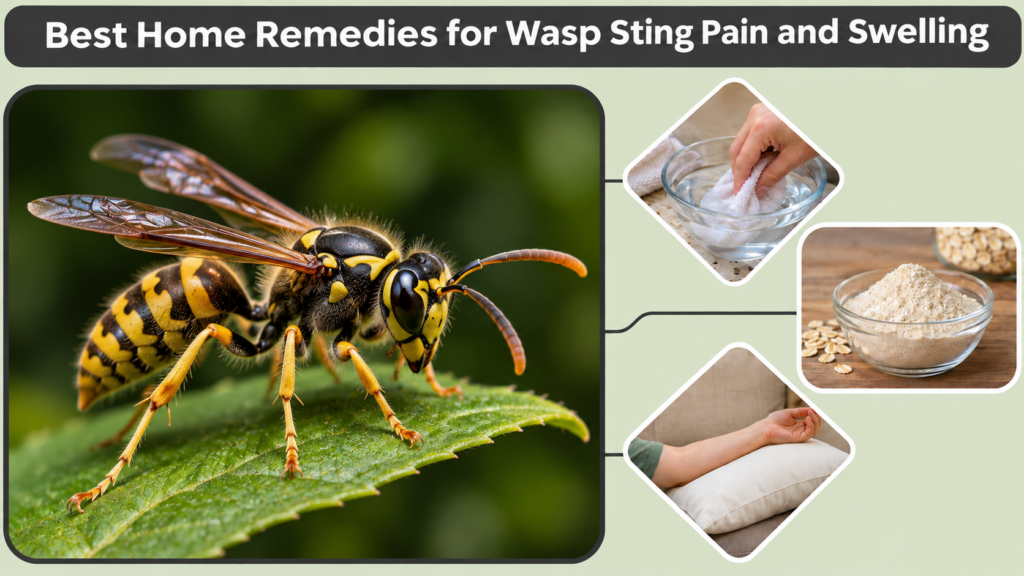
Several simple home care methods may make recovery more comfortable without requiring specialized equipment. The most useful remedies focus on cooling irritated skin, protecting the sting site, and reducing inflammation rather than trying to neutralize the venom.
Cold Water Compress
A clean cloth soaked in cool water can help relieve discomfort when an ice pack is unavailable. Place the damp cloth gently over the sting for several minutes and repeat whenever the area becomes uncomfortable.
This method is particularly convenient for sensitive skin because it avoids direct exposure to ice. Make sure the cloth is clean to prevent introducing dirt into the puncture.
Colloidal Oatmeal for Itching
Colloidal oatmeal preparations are sometimes used to soothe itchy or irritated skin. They may provide comfort around a wasp sting, although evidence specifically supporting their effectiveness for wasp venom reactions is limited.
Use a skin-safe preparation according to its instructions and avoid applying it to open or damaged skin unless the product is intended for that use. Stop using it if irritation increases.
Avoid Unproven Household Remedies
Baking soda paste, vinegar, toothpaste, and lemon juice are frequently suggested as natural wasp sting remedies. However, there is insufficient reliable evidence that these substances neutralize injected venom or improve recovery.
Acidic or abrasive household products can irritate already inflamed skin. Cold compresses, gentle cleaning, and proven anti-itch treatments are generally more dependable choices.
How to Reduce Wasp Sting Swelling Quickly
Swelling occurs because the body’s immune response increases fluid accumulation around the affected tissues. Mild swelling is expected, but a larger local reaction can spread beyond the immediate puncture and sometimes continue increasing for the first 24–48 hours.
The goal of treatment is to control discomfort while allowing the inflammation to resolve naturally. Larger reactions can occasionally take a week or longer to disappear completely.
Effective Ways to Manage Swelling
The following measures can help reduce discomfort associated with wasp sting swelling:
- Use Cold Compresses: Apply a wrapped cold pack periodically to reduce pain and inflammation.
- Elevate the Limb: Keep an affected arm or leg comfortably raised when possible.
- Avoid Scratching: Scratching damages the skin and increases irritation.
- Wear Loose Clothing: Prevent pressure or friction against swollen areas.
- Consider Antihistamines: Ask a pharmacist whether an oral antihistamine is appropriate for itching.
- Monitor Changes: Watch for swelling that becomes unusually painful, continues worsening, or is accompanied by fever.
Swelling around the eyes, lips, mouth, or throat deserves particular attention. A sting inside the mouth or throat requires urgent medical assessment because swelling may obstruct breathing.
How Long Does a Wasp Sting Take to Heal?
The healing time for a wasp sting varies according to the body’s response and the amount of local inflammation. Minor stings often become much less painful within hours, while redness and swelling may remain for several days.
People experiencing a large local reaction may notice considerable swelling that peaks after one or two days. This does not always indicate an infection, but persistent worsening or unusual symptoms should be evaluated.
Typical Wasp Sting Recovery Timeline
| Time After Sting | What May Happen |
|---|---|
| First few minutes | Sharp pain, burning, and localized redness |
| First 24 hours | Itching, tenderness, and swelling may develop |
| 24–48 hours | Mild reactions often improve; large local swelling may increase |
| 2–5 days | Pain and swelling generally begin resolving |
| Up to 7–10 days or longer | Some large local reactions may take longer to settle |
Recovery is not identical for everyone. A new fever, pus, increasing tenderness, or spreading redness after initial improvement may suggest infection and should prompt medical assessment.
Wasp Sting Allergic Reaction: When Is It Dangerous?
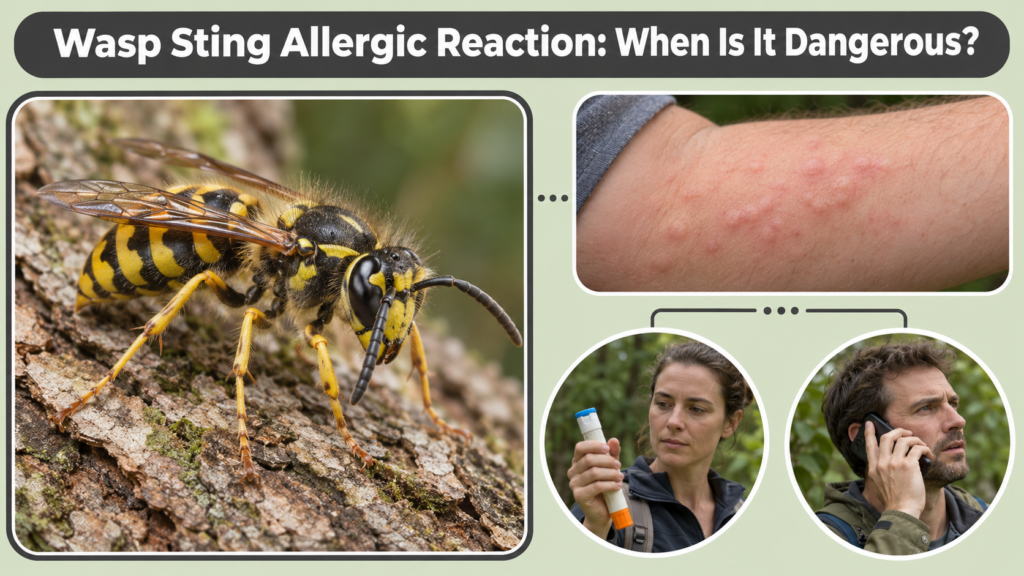
Although most wasp stings cause only local discomfort, some people develop a severe allergic reaction called anaphylaxis. This is a potentially life-threatening emergency that can affect breathing, blood pressure, and circulation within minutes of exposure.
A severe reaction can occur even after a previous sting caused only mild symptoms. Recognizing the warning signs is essential because ordinary home treatments cannot reverse anaphylaxis.
Warning Signs of a Severe Allergic Reaction
Seek emergency medical assistance immediately if any of the following symptoms occur after a wasp sting:
- Difficulty breathing, wheezing, or persistent coughing.
- Swelling of the tongue, throat, or mouth.
- Sudden dizziness, fainting, or collapse.
- Widespread hives accompanied by other allergic symptoms.
- Tightness in the throat or difficulty swallowing.
- Severe weakness, confusion, or signs of shock.
- Repeated vomiting or severe abdominal symptoms, especially alongside other allergic signs.
If anaphylaxis is suspected, call emergency services immediately. Use an epinephrine (adrenaline) auto-injector if one is available and prescribed, following its instructions, and seek emergency care even if symptoms improve. Antihistamines are not a substitute for epinephrine.
When to Contact a Healthcare Professional
Medical advice is also important when someone experiences numerous wasp stings, develops unusually severe local swelling, or has increasing pain and redness after the initial reaction. Stings near the eye or inside the mouth may require prompt assessment.
Anyone with a history of serious insect-sting allergy should discuss long-term protection with an allergy specialist. Depending on the circumstances, this may include carrying epinephrine and considering venom immunotherapy.
How to Prevent Wasp Stings in the Future
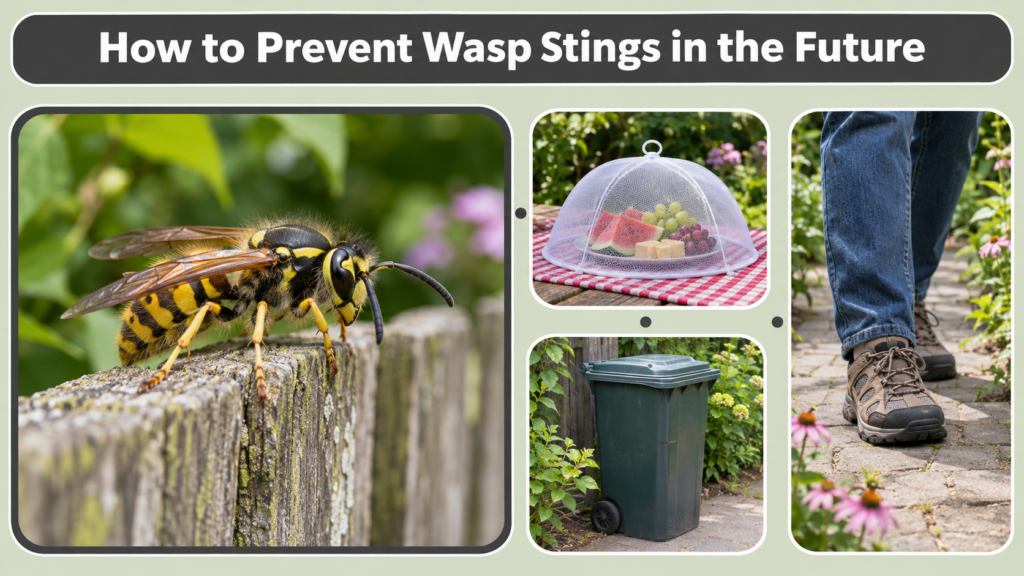
Preventing wasp stings is particularly important for people who spend considerable time gardening, camping, or eating outdoors. Wasps are often attracted to accessible food, sugary drinks, garbage, and areas that provide suitable nesting locations.
Understanding their behavior can help reduce unwanted encounters without provoking defensive attacks. Practical prevention should focus on avoiding nests and limiting common attractants.
Practical Wasp Sting Prevention Tips
- Cover Food and Drinks: Keep sweet beverages and uncovered meals protected outdoors.
- Seal Garbage Containers: Use tightly fitting lids and clean food residue regularly.
- Avoid Disturbing Nests: Never shake, strike, or attempt to handle an active wasp nest.
- Wear Protective Footwear: Avoid walking barefoot in areas where insects are active.
- Inspect Outdoor Spaces: Check sheds, roof edges, and garden structures for nesting activity.
- Stay Calm Around Wasps: Move away slowly rather than swinging your arms.
If a nest is located near doors, children’s play areas, or frequently used outdoor spaces, consider contacting a qualified pest-control professional. People with known severe sting allergies should take additional precautions when working outside.
Frequently Asked Questions About Wasp Stings
1. What is the fastest way to cure a wasp sting?
The quickest way to relieve a mild wasp sting is to wash the area, apply a wrapped cold compress, and use appropriate medication for pain or itching. These treatments reduce discomfort, but there is no proven instant cure for the effects of injected venom.
2. What should you put on a wasp sting to stop itching?
A wrapped cold compress or a suitable hydrocortisone cream may help soothe itching. Oral antihistamines can also provide relief for some people. Avoid scratching the sting or applying irritating household substances because they may worsen inflammation and damage the skin.
3. How long does swelling from a wasp sting last?
Mild swelling often improves within a few days, although larger local reactions may peak after 24–48 hours and last a week or longer. Seek medical advice if swelling becomes increasingly painful, is accompanied by fever, or appears infected.
4. Can a wasp sting heal without treatment?
Yes, most uncomplicated wasp stings heal naturally without specific medication. However, washing the area and applying a cold compress can make recovery more comfortable. Severe allergic reactions, numerous stings, or concerning symptoms require medical attention rather than home care alone.
5. How do you know if a wasp sting is infected?
An infected sting may become increasingly red, warm, swollen, and painful after the initial reaction, sometimes producing pus or causing fever. Ordinary inflammation can look similar, so contact a healthcare professional if symptoms progressively worsen or signs of infection develop.
