
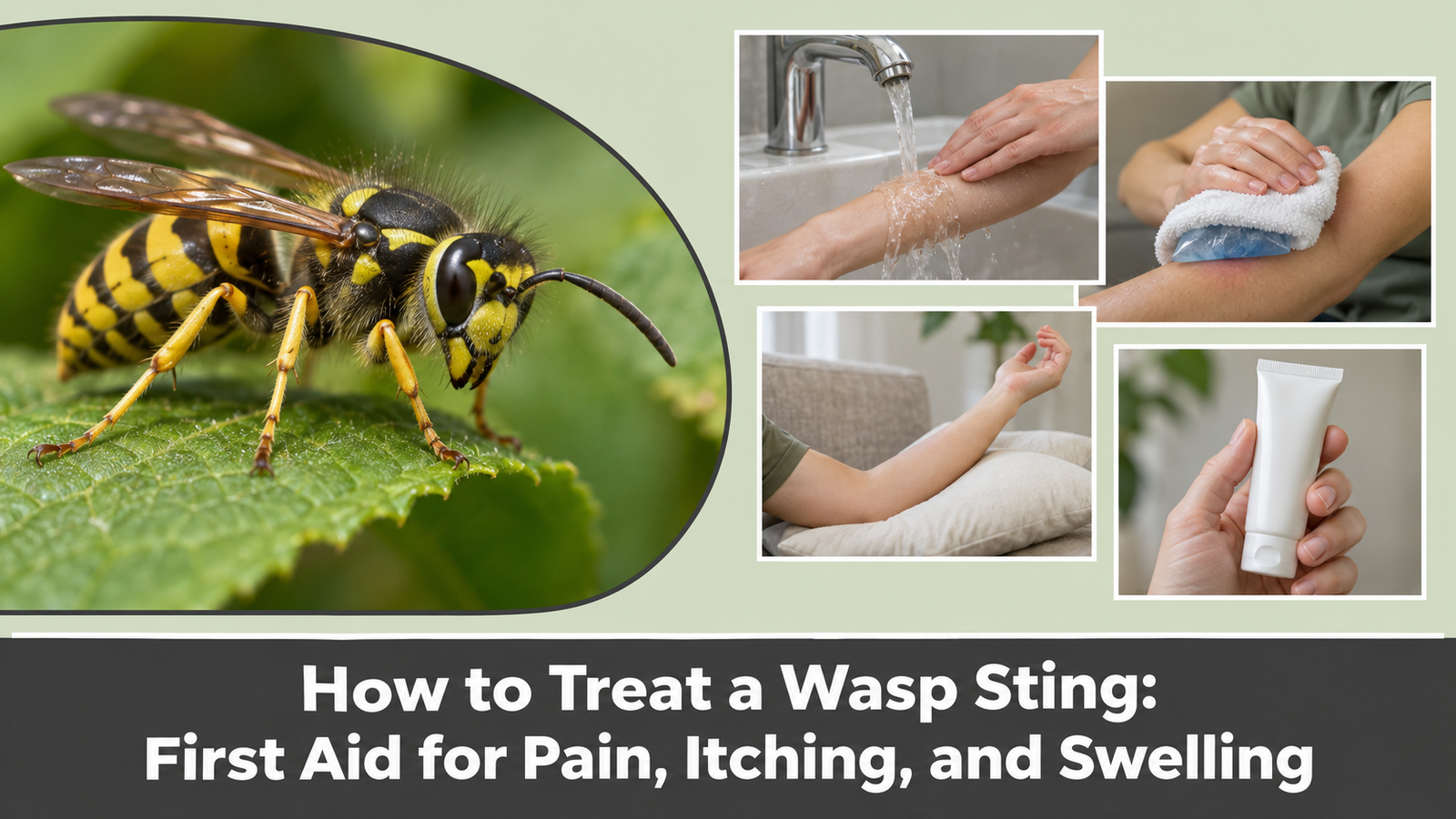
A wasp sting can cause sudden burning pain, followed by redness, swelling, and itching. If you’re wondering how to treat a wasp sting, start by moving away from the wasp, washing the area with soap and water, and applying a cold compress. Most mild stings improve with simple home care. The first priority, however, is checking for symptoms such as trouble breathing, throat swelling, or faintness. These can signal a severe allergic reaction that requires emergency care. Here’s what to do right after a sting, how to manage symptoms, and when to get medical help.
What Does a Wasp Sting Look and Feel Like?
A wasp sting often feels like a sudden, sharp burn. You may notice a small puncture mark, a raised bump, or a patch of red or discolored skin. The area may feel warm or tender, and itching can become more noticeable as the initial pain eases. On darker skin, swelling and tenderness may be easier to see or feel than redness.
Is It a Wasp Bite or a Wasp Sting?
People often call the injury a wasp bite, but the sharp pain and swelling people typically describe come from a sting. A wasp uses its stinger to inject venom. Wasps generally withdraw their stingers and can sting more than once. A honeybee is more likely to leave a stinger behind. Whether you saw the insect or only felt a sudden sting, you can start with the same basic first aid for mild symptoms.
How to Treat a Wasp Sting at Home
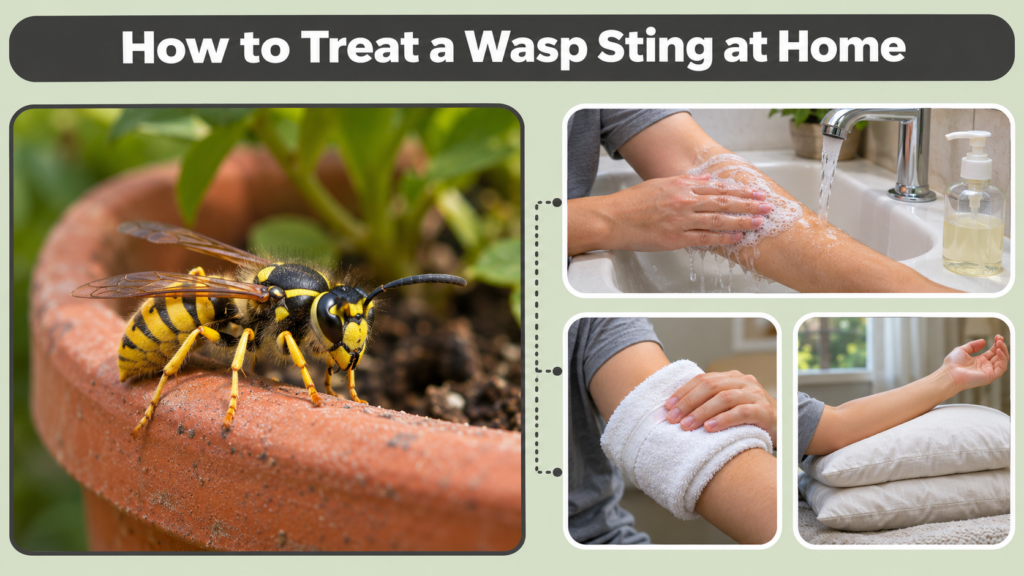
Home care is usually enough when pain, itching, and swelling stay around the sting site and you otherwise feel well. If you develop trouble breathing, swelling of the tongue or throat, severe dizziness, or faintness, use your prescribed epinephrine auto-injector if available and call emergency services immediately.
1. Move Away From the Wasp
Walk away from the spot where you were stung. If several wasps are nearby, get indoors or into a vehicle if you can do so safely. Once you’re away, check for additional stings and pay attention to how you feel. Seek urgent medical advice if you were stung multiple times.
2. Check for a Stinger and Wash the Skin
Wasps usually leave no stinger behind. If you see a stinger at the surface, remove it promptly. You can brush or scrape it sideways with a fingernail or the edge of a card. If you see only a puncture mark, leave it alone. Digging into the skin can make the injury worse.
Gently wash the area with mild soap and clean water, then pat it dry. If the sting is on a finger, hand, or wrist, take off rings or tight jewelry early, before swelling makes removal difficult.
3. Apply a Cold Compress
Wrap an ice pack in a thin towel, or soak a clean cloth in cold water. Hold it against the sting for up to 20 minutes at a time. You can repeat this as needed after letting the skin warm back up. Keep a layer of cloth between ice and your skin.
If the sting is on a hand, foot, arm, or leg, rest the limb on a pillow so it’s comfortably raised. This can help with swelling, especially if a sting on the hand or foot makes ordinary movement uncomfortable.
4. Relieve Pain or Itching if Needed
Acetaminophen, also called paracetamol, or ibuprofen may help with pain if you can take it safely. An oral antihistamine may help with itching, and a pharmacist can advise whether a low-strength hydrocortisone cream is suitable for you. Follow the product label and ask a pharmacist before choosing a medicine for a child, during pregnancy, or if you take other medications.
Try to avoid scratching. A cool cloth gives you a way to soothe the itch without breaking the skin. Skip baking soda, vinegar, and other household pastes or liquids. They can irritate the area, and there’s no proven home remedy that neutralizes venom already injected into the skin.
How Long Does Wasp Sting Swelling Last?
The sharp pain often settles first. Mild swelling, tenderness, and itching can linger for a few days. Some people develop a large local reaction, where swelling spreads well beyond the puncture. For example, a sting on a finger may cause much of the hand to swell. A large local reaction can keep growing for two or three days and take a week or longer to settle.
| Time after the sting | What you may notice |
|---|---|
| First few minutes | Sharp pain, burning, or a raised bump |
| First day | Tenderness, itching, and swelling around the sting |
| Days two to three | Mild reactions may start settling while larger local reactions can still swell |
| Around one week | Larger local reactions generally improve, though some take longer |
How Can You Tell if a Sting Is Infected?
Swelling, warmth, and redness can be part of the initial reaction to venom. An infection is more concerning when pain or redness starts increasing after the area had begun to improve, or when you notice pus, fever, or red streaks spreading away from the sting. Contact a healthcare professional if these symptoms appear or if the swelling is severe, keeps worsening, or makes it hard to use the affected hand or foot.
When Is a Wasp Sting an Emergency?
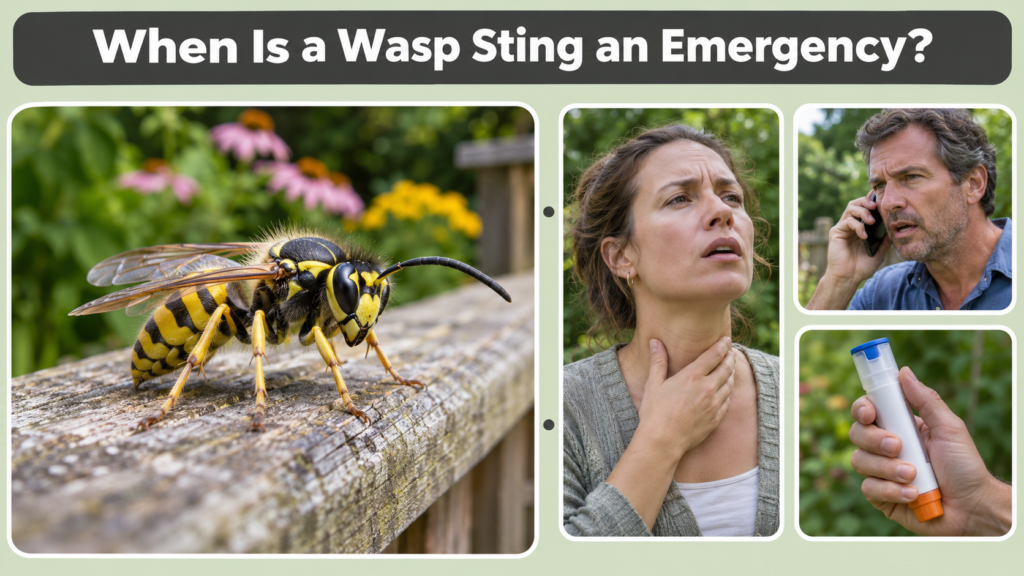
A wasp sting can trigger anaphylaxis, a severe allergic reaction that can develop quickly. While a local reaction affects the skin around the sting, anaphylaxis can affect breathing or circulation. It can happen even if earlier stings caused only mild symptoms, and a person can have anaphylaxis without a visible rash.
Warning Signs of a Severe Allergic Reaction
Call emergency services immediately if someone develops any of these symptoms after a wasp sting.
- Trouble breathing, wheezing, or sudden shortness of breath
- Swelling of the tongue or throat, a hoarse voice, or difficulty swallowing
- Severe dizziness, fainting, confusion, or collapse
Widespread hives or repeated vomiting can also be signs of a serious reaction, especially alongside breathing problems, throat swelling, or dizziness.
What to Do if You Suspect Anaphylaxis
Use the person’s prescribed epinephrine auto-injector immediately if available, following the device instructions, and call emergency services. If someone else is there, have them make the call while you give the epinephrine. Antihistamines may help with itching, but they cannot treat the breathing or circulation problems caused by anaphylaxis. The person needs emergency assessment even if they feel better after using epinephrine.
When to Get Urgent Medical Advice
Get urgent medical help for a sting inside the mouth or throat because swelling can affect the airway. If breathing or swallowing becomes difficult, call emergency services immediately. Stings on or near the eye and multiple stings also warrant prompt medical advice. If you’ve had a serious reaction to an insect sting before, an allergist can help you make an emergency plan and discuss whether venom immunotherapy is appropriate.
How to Prevent Wasp Stings Outdoors
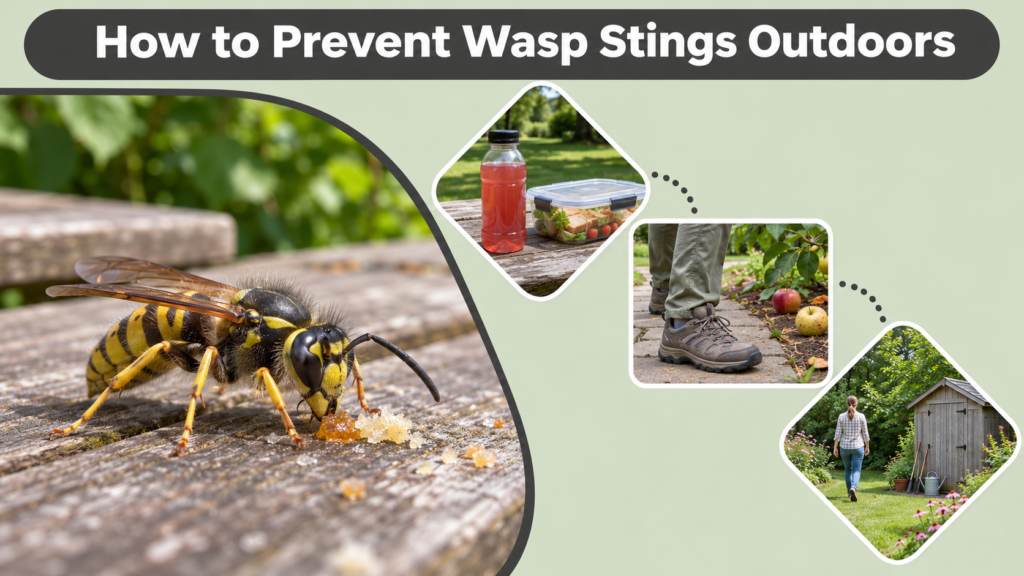
Keep food and sweet drinks covered when eating outside, and look before sipping from an open cup or can. Use a tight-fitting lid on outdoor garbage bins and clean up spills or food scraps after meals. Wear closed-toe shoes in the garden or around fallen fruit, where wasps may be hard to spot.
What to Do if You See a Wasp or Nest
If a wasp is flying nearby, avoid swatting at it and move away calmly. Give an active nest plenty of space, especially if wasps are entering and leaving a hole in the ground, wall, or roofline. If a nest is beside a doorway, path, or play area, keep people away from it and contact a pest control professional.
Frequently Asked Questions About Wasp Stings
1. What is the quickest way to ease wasp sting pain?
After getting away from the wasp, wash the area and apply a wrapped cold pack or a clean cloth soaked in cold water. Cooling the skin can ease the burning and help with swelling. If pain persists, a pharmacist can help you choose a suitable over-the-counter pain reliever.
2. Can a wasp sting swell the next day?
Yes. A large local reaction may look worse the next day and can peak two or three days after the sting. Seek medical advice if swelling is severe or accompanied by fever, pus, or increasing pain after initial improvement. Breathing trouble, throat swelling, or faintness requires emergency care.
3. What can I put on a wasp sting to stop itching?
Start with a cool, damp cloth. If itching continues, ask a pharmacist about hydrocortisone cream or an oral antihistamine. Follow the label, especially if you’re treating a child or applying a cream near sensitive skin.
4. Does a wasp leave its stinger in your skin?
Usually, a wasp pulls its stinger out and can sting again. If you can clearly see a stinger at the surface, remove it promptly. A small dark spot can also be the puncture itself, so avoid trying to dig anything out.
5. Can you have a severe reaction if previous wasp stings were mild?
Yes. A previous mild sting doesn’t predict how you’ll respond the next time. If you develop trouble breathing, tongue or throat swelling, sudden dizziness, or faintness after a sting, treat it as an emergency and use a prescribed epinephrine auto-injector if available.
