
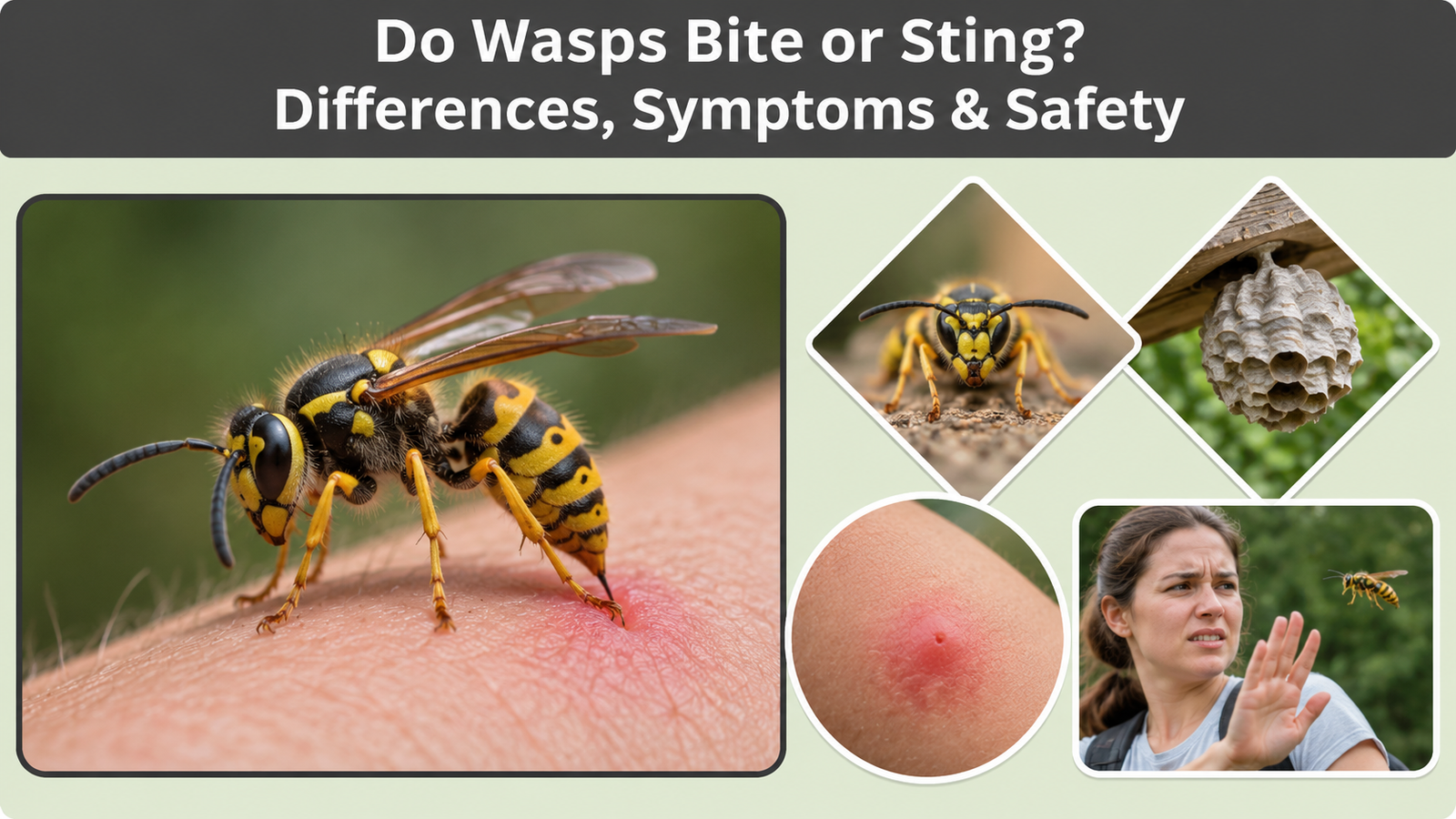
Wasps are common insects found in gardens, backyards, parks, and around homes. Their sharp stingers and defensive behavior often make people wonder, do wasps bite or sting? The answer is that wasps can do both, although stinging is their primary defense against humans.
Understanding the difference between a wasp bite and sting can help you recognize symptoms, respond to an encounter, and avoid unnecessary risks. This guide explains how wasps bite and sting, why they attack, which species are more defensive, and what to do if you get stung.
Do Wasps Bite or Sting Humans?
Wasps have strong mouthparts called mandibles that allow them to bite, as well as a stinger used for defense and hunting. However, these two structures serve different purposes, and wasps are much more likely to sting than bite when defending themselves against people.
A wasp bite generally involves gripping or pinching with its mandibles, while a sting involves injecting venom through a specialized stinger.
Do Wasps Bite?
Yes, wasps can bite using their mandibles, which are located near their mouths. These structures help them chew food, capture insects, collect nesting materials, and manipulate objects.
Some wasps may also use their mandibles defensively when handled or trapped. However, bites are relatively uncommon during encounters with humans, and they typically do not produce the same venom-related symptoms as stings.
Do Wasps Sting?
Yes, female wasps can sting using a specialized structure at the end of their abdomen. The stinger delivers venom that causes immediate pain, redness, and swelling in many people.
Unlike honey bees, many wasps can sting repeatedly without losing their stinger. This ability makes encounters near defensive wasp colonies particularly concerning.
Can Wasps Bite and Sting at the Same Time?
A wasp is physically capable of using its mandibles and stinger during a defensive encounter. However, this does not mean that every wasp will bite and sting simultaneously.
Stinging is generally the more important defensive response against humans. Biting is more commonly associated with capturing prey, gathering materials, or physical struggles.
Wasp Bite vs. Sting: What Is the Difference?
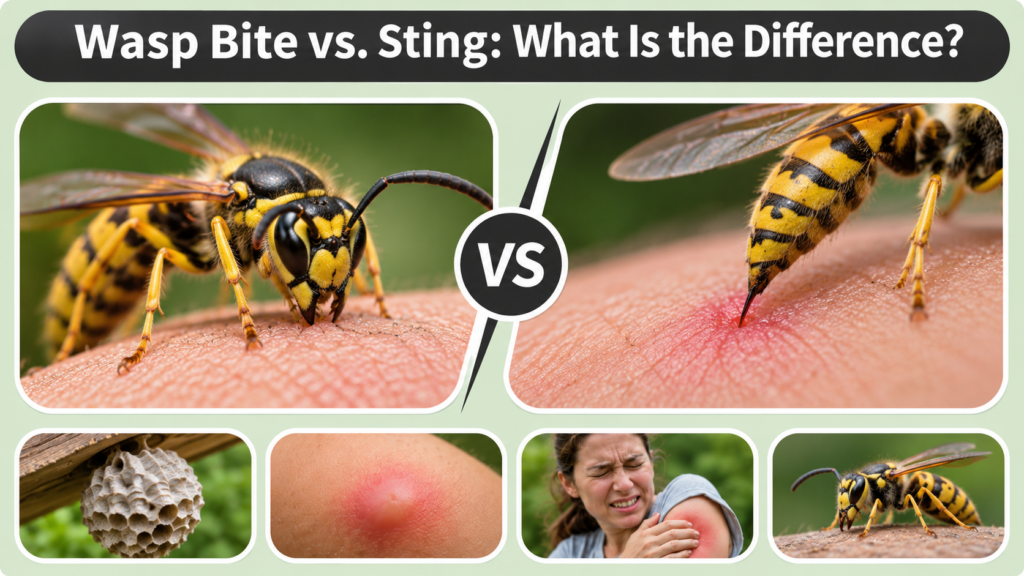
Although people sometimes use the words bite and sting interchangeably, they describe two different actions. Recognizing these differences can help explain why some wasp encounters produce mild discomfort while others cause immediate, intense pain and swelling.
| Feature | Wasp Bite | Wasp Sting |
|---|---|---|
| Body part | Mandibles | Stinger |
| Venom injected | No | Yes |
| Typical pain | Pinching or mild pain | Sharp, burning pain |
| Swelling | Usually limited | Common |
| Allergic reaction | Uncommon | Can be severe |
| Main purpose | Feeding, gripping, occasionally defense | Defense and prey capture |
What Does a Wasp Bite Feel Like?
A wasp bite may feel like a small pinch or brief pressure against the skin. Depending on the species and circumstances, it may cause minor irritation or superficial skin damage.
Because wasps generally rely on their stingers for defense, a painful encounter involving noticeable swelling is more likely to be a sting. However, symptoms alone cannot always confirm which action occurred.
What Does a Wasp Sting Feel Like?
A wasp sting usually produces a sudden, sharp, burning sensation at the affected location. Redness, tenderness, itching, and swelling may develop shortly afterward as the body reacts to the venom.
The intensity varies depending on the species, sting location, number of stings, and individual sensitivity. Most mild reactions improve with basic first aid, although swelling can temporarily increase before resolving.
Why Do Wasps Bite or Sting People?
Wasps generally do not seek out humans simply to attack them. Most defensive encounters happen when they feel threatened, become trapped, or believe their nests are in danger.
Understanding the causes of wasp stings can help you avoid actions that accidentally trigger defensive behavior.
1. Defending Their Nests
Social wasps protect their colonies from potential threats, including people and animals. Walking too close to a nest or disturbing its entrance may trigger defensive activity.
2. Feeling Trapped or Threatened
A wasp trapped inside clothing, caught against the skin, or accidentally grabbed may sting to escape. Even gentle pressure can cause a defensive reaction.
3. Responding to Sudden Movements
Swatting, striking, or attempting to crush a wasp can increase the likelihood of being stung. Sudden movements may be interpreted as threatening, particularly near a nest.
4. Protecting Themselves During Feeding
Wasps frequently visit outdoor food, sugary drinks, fallen fruit, and garbage. Accidental contact while they are feeding can cause them to sting defensively.
5. Reacting to Colony Disturbance
Vibrations, lawn equipment, and accidental damage to nesting structures may disturb social wasps. Multiple individuals can respond when a colony is threatened, increasing the risk of repeated stings.
Which Types of Wasps Bite or Sting?
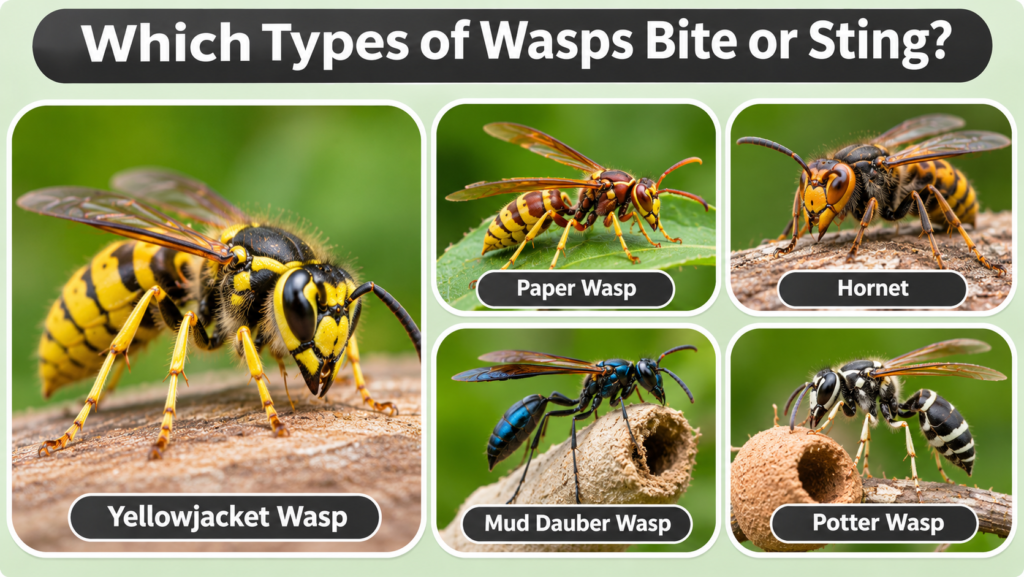
Different wasp species have different nesting habits, defensive behaviors, and interactions with humans. Some live in large social colonies, while others are solitary hunters that rarely cause problems around people.
Learning their general characteristics can help you respond appropriately when wasps appear around your property.
Yellowjackets
Yellowjackets are social wasps known for defending their nests vigorously when disturbed. They frequently appear around picnic areas, garbage containers, and outdoor food.
Female yellowjackets can sting repeatedly, and several colony members may respond to a threatened nest. Maintaining distance from suspected nests is particularly important.
Paper Wasps
Paper wasps often construct exposed, umbrella-shaped nests beneath roof edges, porch ceilings, and other sheltered structures. They are generally less confrontational away from their nests.
However, female paper wasps can sting when handled or when their colonies are disturbed. Their stings can cause significant local discomfort.
Hornets
Hornets are a group of social wasps with strong mandibles and venomous stingers. They use their mouthparts for feeding and capturing prey but generally rely on stinging for defense against humans.
Some hornet species defend their colonies aggressively. Avoid approaching or attempting to remove an active hornet nest without appropriate expertise.
Mud Dauber Wasps
Mud daubers are solitary wasps that build nests from mud and capture spiders to provision their young. They are generally nonaggressive toward people and rarely sting unless physically handled or trapped.
Although female mud daubers possess stingers, they usually do not defend their nests in the same way social wasps do.
How Many Times Can a Wasp Sting?
Many wasps can sting multiple times during a single encounter. Unlike worker honey bees, which commonly leave their barbed stingers embedded in human skin, most wasps can withdraw their stingers and use them again.
This ability is particularly important when dealing with yellowjackets, hornets, and other social species. Repeated stings can increase the amount of venom delivered, potentially making the reaction more serious.
Do Wasps Die After Stinging?
No, wasps generally do not die after stinging a person. Their stingers typically allow them to inject venom, withdraw the stinger, and continue flying.
This is one of the major differences between wasps and honey bees. Therefore, assuming a wasp can sting only once may lead to unnecessary exposure.
Can Male Wasps Sting?
Male wasps cannot sting because they do not possess the specialized stinging structure found in females. A wasp’s stinger evolved from a female reproductive structure known as an ovipositor.
Male wasps still have mandibles and may display defensive movements, but they cannot inject venom through a stinger. In social colonies, the workers commonly encountered around nests are female.
What Happens When a Wasp Stings You?
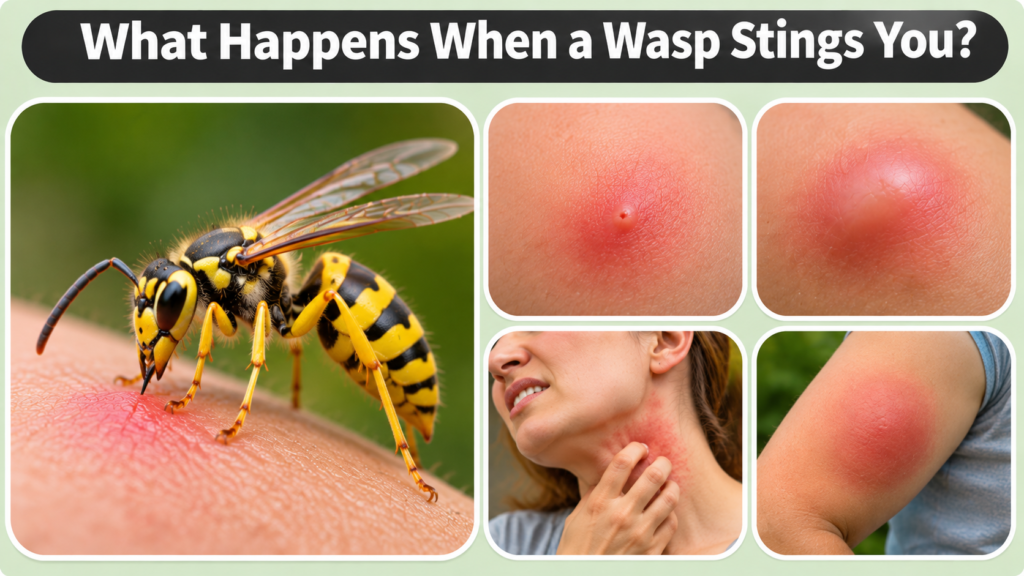
When a wasp stings, its venom enters the skin and triggers the body’s response to foreign substances. Most reactions are localized, but some people experience more extensive swelling or serious allergic symptoms.
Knowing the difference between an ordinary reaction and an emergency is essential for responding safely.
Common Wasp Sting Symptoms
Most wasp stings cause temporary discomfort around the affected area. Typical symptoms include:
- Immediate sharp or burning pain.
- Redness surrounding the sting site.
- Localized swelling or a raised bump.
- Itching and tenderness.
- Warmth or mild inflammation.
These symptoms usually begin shortly after the sting. While pain often improves relatively quickly, swelling and itching may persist for several days.
Signs of an Allergic Reaction
Some individuals are allergic to wasp venom and can develop anaphylaxis, a potentially life-threatening reaction. Warning signs include difficulty breathing, throat or tongue swelling, widespread hives, dizziness, fainting, or repeated vomiting.
Anaphylaxis requires immediate emergency medical treatment. Use a prescribed epinephrine auto-injector promptly if available, and contact emergency services. Do not rely on antihistamines or home remedies to treat a severe reaction.
How to Treat a Wasp Sting at Home
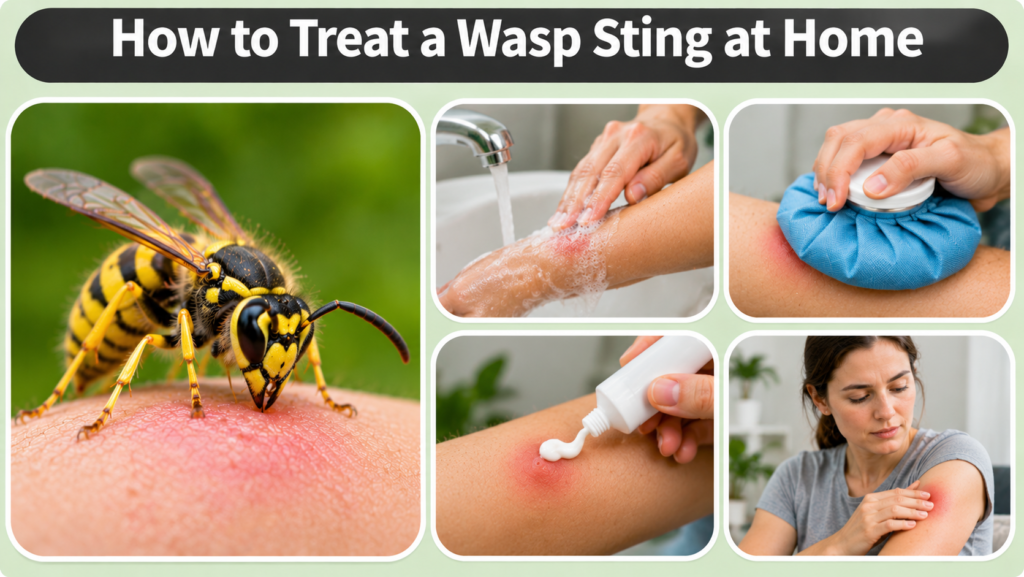
Most uncomplicated wasp stings can be managed with basic first aid. The main goals are reducing discomfort, limiting swelling, and monitoring for symptoms that require medical attention.
Follow these steps if the reaction is mild and there are no signs of anaphylaxis.
Step 1: Move Away From the Wasp
Leave the area calmly to prevent additional stings. If multiple wasps are attacking, move quickly toward a sheltered location without attempting to fight them.
Step 2: Clean the Affected Area
Wash the sting site gently with soap and clean water. This removes dirt and reduces the likelihood of introducing bacteria through irritated skin.
Step 3: Apply a Cold Compress
Place a cold pack wrapped in a cloth against the affected area for approximately 10–20 minutes. Cold therapy can help reduce pain and swelling without irritating the skin.
Step 4: Reduce Pain and Itching
An over-the-counter pain reliever may help manage discomfort when used according to its instructions. Calamine lotion, an appropriate hydrocortisone cream, or an oral antihistamine may provide relief from itching.
Step 5: Monitor Symptoms
Observe the affected area for increasing swelling, worsening pain, or signs of infection. Seek medical advice if symptoms become unusually severe, worsen after initial improvement, or involve several stings.
A sting inside the mouth or throat needs urgent medical assessment because swelling can interfere with breathing. Multiple stings also warrant prompt medical evaluation, particularly in children.
How to Prevent Wasp Bites and Stings
Preventing unwanted encounters is usually easier than managing the consequences of a sting. Wasps are important predators of garden pests, so avoiding unnecessary disturbance is often the safest approach.
The following precautions can reduce the likelihood of wasps approaching or responding defensively.
Keep Outdoor Food Covered
Store sugary drinks, fruit, and other food in covered containers when eating outdoors. Clean spills promptly and check open drink containers before taking a sip.
Avoid Disturbing Wasp Nests
Inspect roof edges, sheds, outdoor furniture, and garden structures carefully before maintenance activities. If an active nest is near a regularly used area, contact a qualified pest-control professional rather than disturbing it yourself.
Secure Garbage Containers
Keep garbage bins tightly closed and remove food waste regularly. Rinse containers when necessary to reduce attractive odors and food residues.
Stay Calm Around Wasps
Avoid swatting or grabbing wasps that approach you. Move away slowly when encountering an individual wasp, and avoid sudden interference with its activity.
Wear Protective Clothing During Outdoor Work
Long sleeves, trousers, closed shoes, and gloves can reduce exposed skin during gardening or yard maintenance. Check tools, stored equipment, and surrounding structures for wasp activity before beginning work.
Are Wasp Bites or Stings Dangerous?
A wasp bite usually causes limited mechanical irritation, whereas a sting introduces venom and may produce a stronger reaction. For most healthy individuals, a single sting causes temporary discomfort without serious complications.
However, venom allergies and multiple stings can create dangerous situations. People with previous systemic reactions should speak with an allergy specialist about prevention, emergency medication, and whether venom immunotherapy is appropriate.
Frequently Asked Questions
1. Do wasps bite or sting more often?
Wasps sting humans much more commonly than they bite them. Their mandibles are mainly used for feeding, hunting, and building nests, while female wasps use their stingers to defend themselves and their colonies against perceived threats.
2. Can a wasp bite you without stinging?
Yes, a wasp can use its mandibles to bite without injecting venom. However, defensive bites against humans are uncommon compared with stings. Most painful encounters involving immediate burning and noticeable swelling are more consistent with a sting.
3. Do wasps sting for no reason?
Wasps generally sting when they perceive danger or experience physical contact. A person may not notice a nearby nest or accidentally trap a wasp against their skin, making the sting appear unprovoked even though the insect is responding defensively.
4. How long does a wasp sting hurt?
The sharp pain from a wasp sting often improves within several hours, although tenderness, redness, and itching can last longer. Swelling may persist for several days, especially with larger local reactions. Worsening symptoms or systemic reactions require medical attention.
5. Can a wasp sting you multiple times?
Yes, many female wasps can sting repeatedly because their stingers usually do not become lodged in human skin. This makes repeated encounters potentially dangerous, especially near social wasp colonies where multiple individuals may respond to a disturbed nest.
