
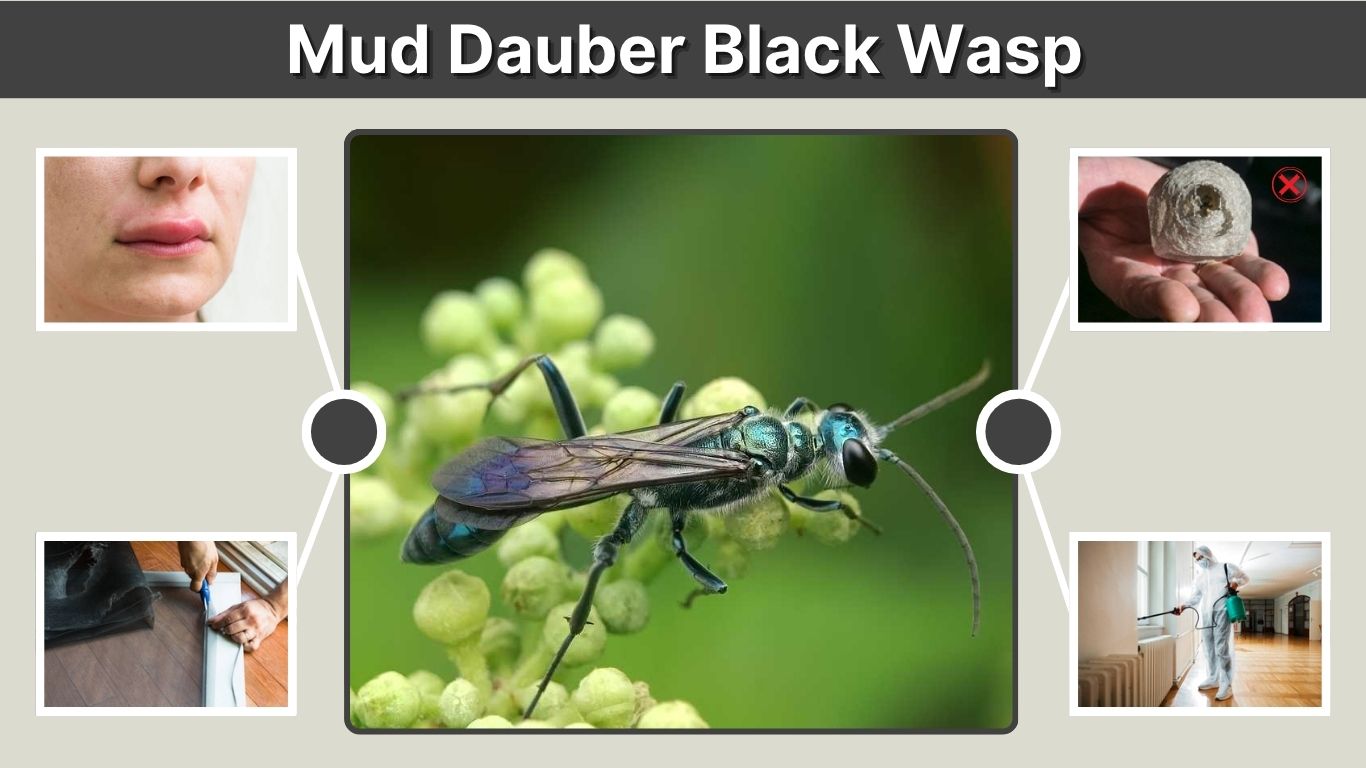
A mud dauber black wasp is usually a solitary, thread-waisted wasp associated with mud nests around homes, garages, sheds, and other sheltered structures. Depending on the species and lighting, mud daubers may appear dull black, black and yellow, or metallic blue-black. Despite their intimidating appearance, they are generally not aggressive toward people. Learning their body shape, nest style, sting behavior, and spider-hunting habits makes it easier to distinguish a black mud dauber from a great black wasp, paper wasp, or hornet.
What Is a Mud Dauber Black Wasp?
The term black mud dauber wasp can describe several dark-colored solitary wasps that construct or reuse mud nests. Mud daubers are especially recognizable by their extremely narrow waist connecting the thorax and abdomen. Depending on species, their bodies may be black with yellow markings, dull black, or shiny metallic blue-black. Adults commonly measure about 3/4 to 1 inch long.
Common Black Mud Dauber Types
Some of the dark mud daubers people commonly encounter include:
- Black-and-yellow mud dauber (Sceliphron caementarium) – Mostly black with conspicuous yellow markings and yellow areas on the legs.
- Blue mud dauber (Chalybion californicum) – Metallic blue to blue-black and sometimes appears almost completely black in poor lighting.
- Organ-pipe mud daubers (Trypoxylon spp.) – Dark, slender wasps associated with distinctive tubular mud nests.
- Other thread-waisted wasps – Some dark solitary wasps resemble mud daubers closely but use different nesting materials.
The black-and-yellow species builds its own mud cells, while the blue mud dauber commonly renovates abandoned mud nests made by other species.
Are All-Black Mud Daubers Real?
Yes, some mud-dauber-type wasps can appear nearly black. Color is affected by species, lighting, wing position, and iridescence. A blue mud dauber, for example, has a metallic blue-black body and iridescent wings that can appear black from certain angles.
Color alone therefore should not be used for identification. The very slender waist and association with mud nests provide stronger clues.
How to Identify a Black Mud Dauber Wasp
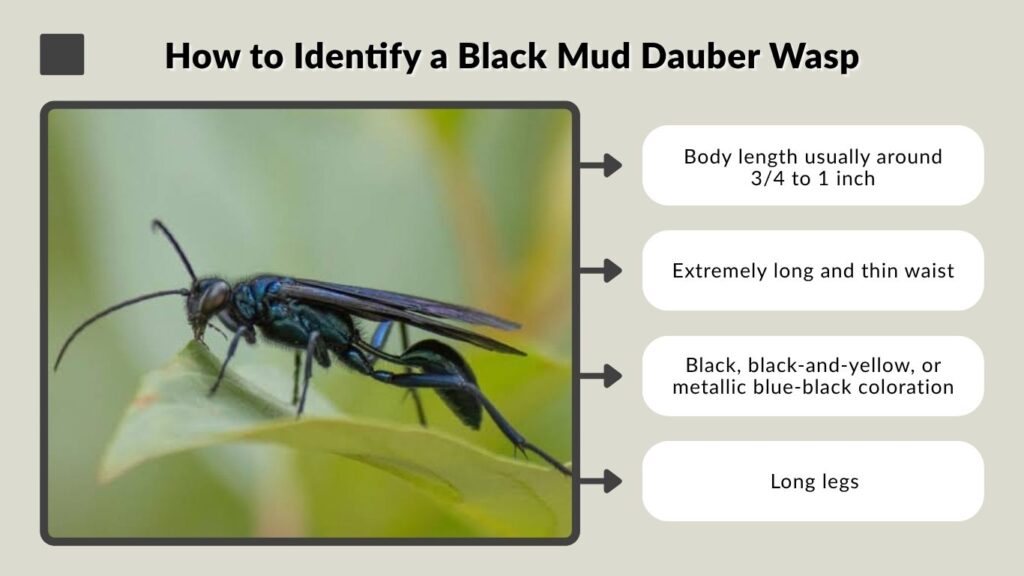
Black mud daubers have a distinctive appearance once you know what to examine. Their unusually long, narrow connection between the thorax and abdomen separates them from many stockier wasps. Nest location provides another excellent clue because females repeatedly travel between wet soil and protected structures while constructing nests and provisioning them with captured spiders.
Key Identification Features
Look for the following characteristics:
- Body length usually around 3/4 to 1 inch
- Extremely long and thin waist
- Black, black-and-yellow, or metallic blue-black coloration
- Long legs
- Smoky, brownish, orange-tinted, or dark wings depending on species
- Solitary rather than colony-forming behavior
- Frequent visits to mud puddles or damp soil
- Mud nests attached to protected walls or structures
The black-and-yellow mud dauber specifically has a black head, thorax, and abdomen with yellow markings and mostly yellow portions on its legs.
Why Is a Black Mud Dauber on My Wall?
A mud dauber walking repeatedly across a wall may be selecting a nest location, collecting material, maintaining an existing nest, or returning with prey.
They favor sheltered areas where rain cannot easily destroy their mud cells. Exterior walls beneath roofs, porch ceilings, sheds, barns, garages, bridges, and other protected surfaces can provide suitable nesting locations.
What Does a Black Mud Dauber Wasp Nest Look Like?
A black mud dauber wasp nest looks quite different from the papery combs made by many social wasps. Female mud daubers collect wet soil and shape it into individual brood cells. Each cell receives prey and an egg before being sealed. Different species produce somewhat different structures, so nest architecture can help identify the wasp even when no adult is present.
Common Mud Dauber Nest Signs
You may notice:
- Hardened brown or gray mud attached to walls
- Rounded clusters composed of several mud cells
- Long parallel mud tubes resembling organ pipes
- Small circular emergence holes in older nests
- Nests beneath eaves or inside garages and sheds
- Wasps carrying small balls of wet mud
- Spiders stored inside opened brood cells
The black-and-yellow mud dauber often creates adjoining cells that eventually resemble a rounded lump, while organ-pipe species construct long parallel tubes.
Why Are Spiders Inside Mud Dauber Nests?
Female mud daubers hunt spiders, paralyze them, and carry them into brood cells. An egg is laid with the stored prey, providing food for the developing larva.
This makes mud daubers beneficial predators. They are not collecting spiders for an adult meal in the same way humans might imagine; the immobilized prey primarily supplies food to their offspring.
Mud Dauber Wasp vs Great Black Wasp
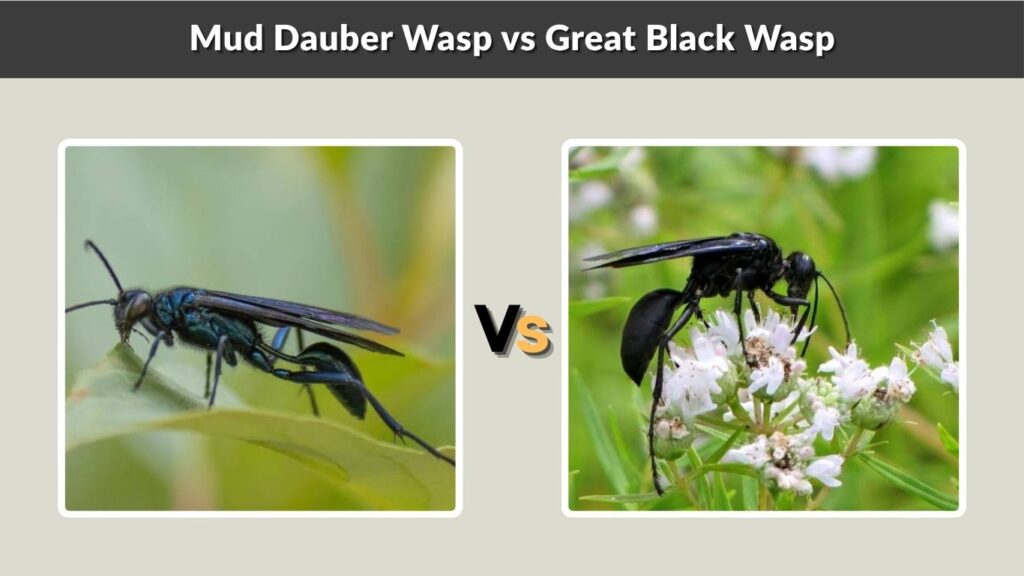
A great black wasp vs mud dauber comparison can be confusing because both may be large, black, solitary, and thread-waisted. Their nesting behavior is one of the easiest ways to separate them. Great black wasps use underground burrows, whereas typical mud daubers construct or renovate mud cells attached to sheltered surfaces.
Great Black Wasp vs Blue Mud Dauber
The great black wasp (Sphex pensylvanicus) is generally around 1 to 1¼ inches long and has a violet-black body with smoky dark wings. Great black wasps nest in soil and provision underground cells with paralyzed katydids or related insects.
A blue mud dauber (Chalybion californicum) is metallic blue-black, has an especially thin waist, and commonly uses existing mud nests. It provisions its brood cells with spiders. These differences in color, prey, and nesting location provide much better identification clues than body size alone.
Mud Dauber vs Black Wasp Behavior
Both groups are solitary and generally much less defensive than colony-forming yellowjackets. Seeing one flying close to you does not necessarily indicate aggression.
A mud dauber is often focused on collecting mud or spiders. A great black wasp may be searching vegetation for katydids or visiting flowers. Neither maintains a large worker colony requiring communal nest defense.
Do Black Mud Dauber Wasps Sting?
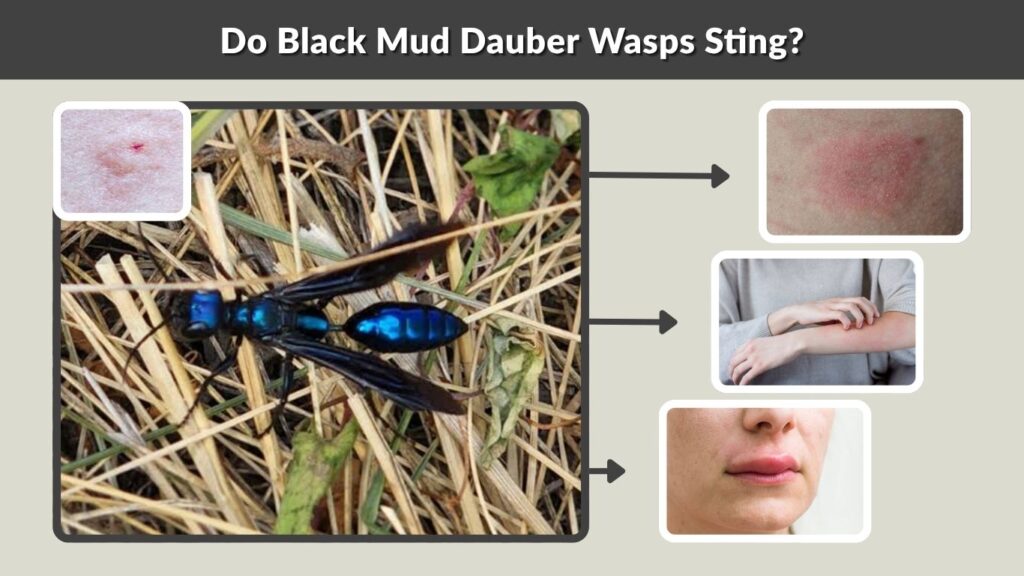
A mud dauber black wasp sting is possible because females possess functional stingers. However, mud daubers are considered nonaggressive, and stings are uncommon unless a wasp is handled, squeezed, trapped against skin, or otherwise directly threatened. University extension guidance consistently describes black-and-yellow mud daubers as rarely stinging people.
What Happens If a Black Mud Dauber Stings You?
A sting may cause immediate pain followed by localized redness, tenderness, itching, or swelling. Reactions vary between individuals, and someone allergic to wasp venom may experience more serious symptoms.
If difficulty breathing, swelling of the tongue or throat, faintness, widespread hives, or other signs of anaphylaxis develop, emergency medical care is necessary.
Are Black-and-Yellow Mud Daubers Dangerous?
For most people, they present relatively little danger when left alone. Their appearance is much more intimidating than their typical behavior.
Because mud daubers do not maintain large defensive colonies, they usually do not swarm around a person disturbing the general area. Directly handling an occupied nest or attempting to catch a female can still provoke a sting.
Mud Dauber Wasps and Black Widow Spiders
One of the most interesting searches in this keyword cluster is mud dauber wasp vs black widow. Mud daubers are predators of spiders, and the blue mud dauber is particularly notable because females provision their brood cells with spiders, including black widows.
Do Mud Daubers Kill Black Widows?
Blue mud daubers can capture and paralyze black widow spiders before carrying them to nest cells. Texas A&M specifically notes that the blue mud dauber provisions its nests largely with black widow spiders.
The spider remains available as food for the developing wasp larva. Because of this predatory behavior, mud daubers can contribute to natural spider control around suitable habitats.
Can a Black Widow Kill a Mud Dauber?
Predator-prey encounters are not always risk-free, but mud daubers are specialized spider hunters. A hunting female uses her sting to immobilize the spider before transporting it.
Finding dead or paralyzed spiders inside a mud nest is therefore normal mud dauber biology rather than evidence that spiders have invaded the nest.
What to Do With Black Mud Daubers Around Your Home
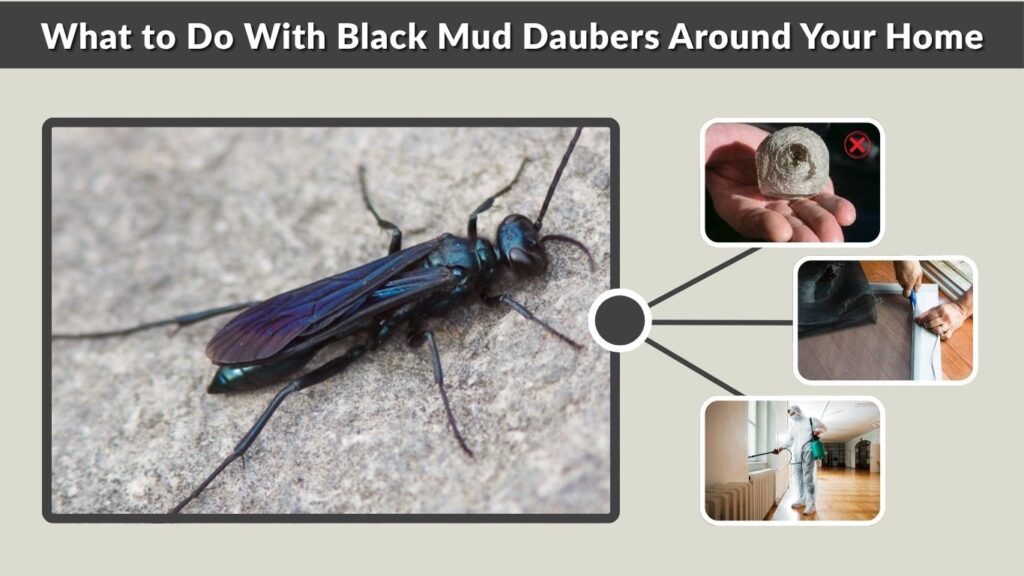
Mud daubers are beneficial predators, so an outdoor nest in an unused location does not automatically require removal. Problems are more likely when nests accumulate near entrances, inside garages, on frequently used structures, or in locations where people repeatedly come into close contact with the wasps.
Simple Management Tips
- Leave low-risk nests undisturbed when practical.
- Avoid handling active nests with bare hands.
- Repair screens and gaps if wasps enter indoors.
- Remove abandoned mud after confirming the nest is inactive.
- Reduce persistent muddy areas close to problem nesting sites.
- Inspect eaves, garages, porches, and sheds periodically.
- Seek professional help when identification or safe removal is uncertain.
Mud daubers do not generally damage buildings structurally, although their dried mud nests can become an aesthetic nuisance.
FAQs
1. Is a black mud dauber wasp dangerous?
Black mud daubers are capable of stinging, but they are solitary and generally nonaggressive. Most encounters occur while a female is collecting mud, hunting spiders, or tending a nest. Stings are uncommon unless the insect is physically handled or trapped against the skin.
2. What does a black mud dauber nest look like?
The nest consists of hardened mud cells attached to a sheltered surface. Black-and-yellow mud daubers may create rounded masses of adjoining cells, while organ-pipe mud daubers construct long parallel tubes. Old nests sometimes have round exit holes where adult wasps emerged.
3. What is the difference between a great black wasp and a mud dauber?
Great black wasps generally nest underground and provision their offspring with katydids or related insects. Mud daubers use mud cells on sheltered structures and primarily hunt spiders. Blue mud daubers also have a more metallic blue-black appearance and an exceptionally slender waist.
4. Do blue mud daubers eat black widow spiders?
Blue mud daubers hunt black widow spiders and other spiders, paralyzing them and placing them inside brood cells. Their larvae later feed on the stored spiders. Texas A&M notes that the blue mud dauber provisions its nests mostly with black widows.
5. Should I remove a black mud dauber nest?
Removal is not always necessary because mud daubers are beneficial spider predators and rarely aggressive. A nest away from doors or busy areas can often remain. Removal is more reasonable when nests repeatedly appear indoors, interfere with normal use of a structure, or create an avoidable sting risk.
