
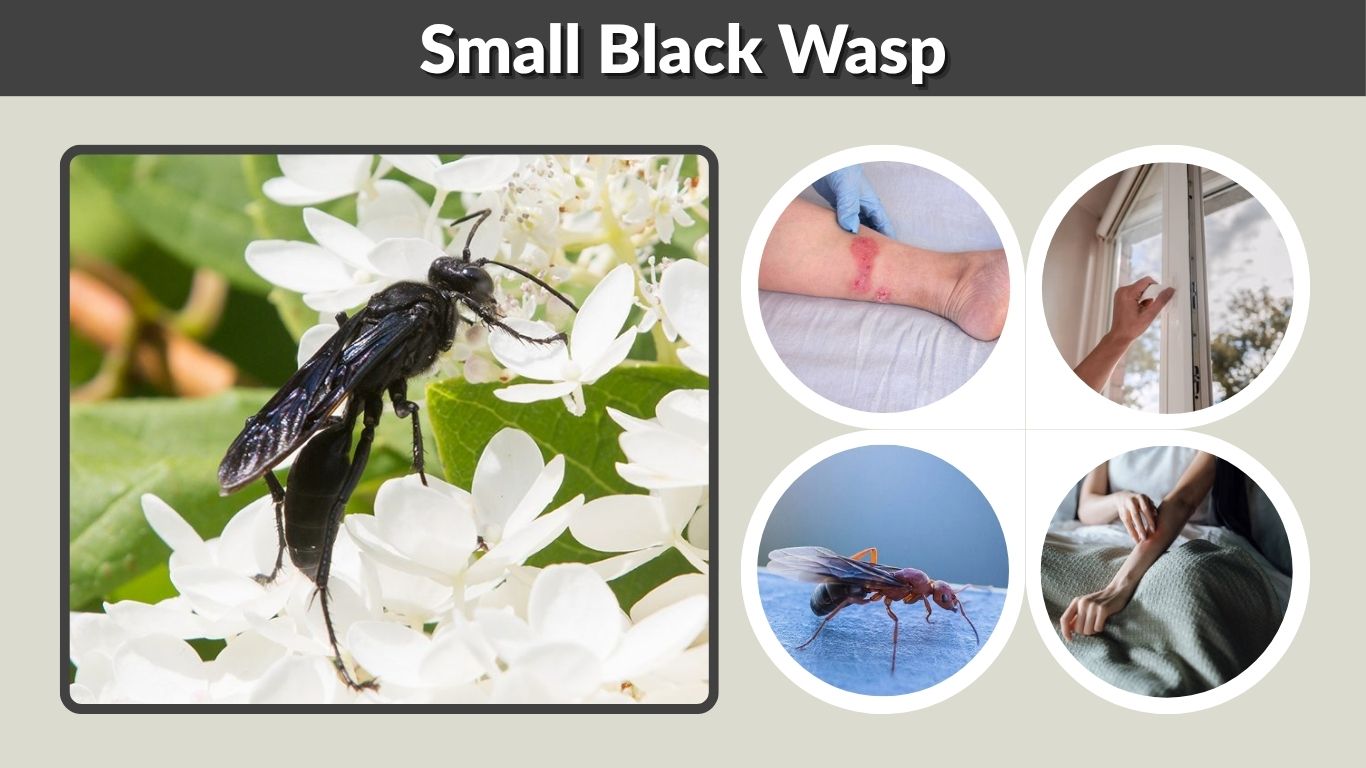
A small black wasp flying around your home, garden, or lawn can be difficult to identify because many wasp species share a dark, slender appearance. Some are completely black, while others have yellow, white, orange, or red markings. Most small black wasps are solitary insects that rarely bother people and may even help control pest populations. However, certain species can sting when threatened. Learning their appearance, nesting habits, behavior, and common look-alikes can help you determine what kind of wasp you have encountered.
What Is a Small Black Wasp?
The term small black wasp does not describe one particular species. Instead, it can refer to several groups of dark-colored solitary or parasitic wasps. Some measure less than half an inch, while others are noticeably larger. They may appear around flowers, lawns, windows, sheds, wall gaps, or other places where insects and nesting materials are available.
Common Identification Features
Look for these characteristics when trying to identify a small black wasp:
- Predominantly black or very dark body
- Narrow waist between the thorax and abdomen
- Two pairs of transparent or smoky wings
- Long or moderately long antennae
- Six slender legs
- Smooth or lightly hairy body
- Usually less than one inch long
- Fast walking or short, direct flights
Color patterns are also useful. Some species have yellow legs, white stripes, red abdomens, orange markings, or thin yellow bands.
Size and Body Shape
A very small black wasp may measure only a few millimeters, especially if it belongs to a parasitic wasp group. Other solitary wasps can approach an inch long.
Unlike many bees, wasps usually have relatively smooth bodies and clearly defined waists. Their streamlined shape can make them appear thinner than similarly sized bees.
Black Wasps With Colored Markings
Not every small black wasp is completely black. A small black and yellow wasp may have yellow stripes across its abdomen or yellow markings on its face and legs.
Black-and-white, black-and-orange, and black-and-red combinations also occur. Because several unrelated species can share similar coloration, color should be combined with body shape, size, nesting behavior, and location for identification.
Common Types of Small Black Wasps
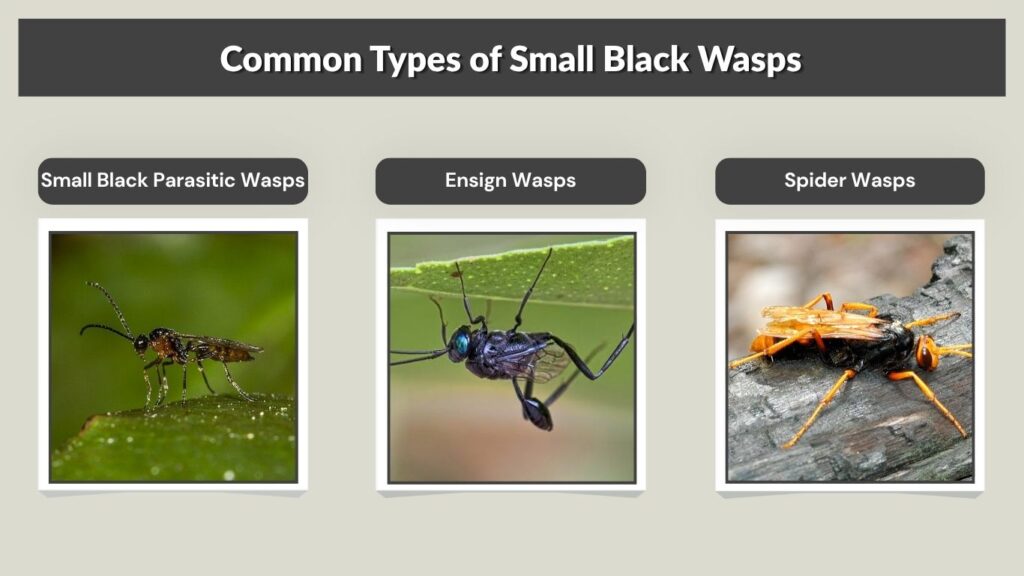
Several families contain species that could be described as small black wasps. Many are beneficial predators or parasitoids that help reduce populations of spiders, cockroaches, caterpillars, aphids, beetles, and other insects. Their behavior often provides better identification clues than color alone.
Small Black Parasitic Wasps
Parasitic wasps are among the smallest wasps people encounter. Many are dark brown or black and may be mistaken for tiny flies.
Females usually lay eggs on or inside another insect. Their developing larvae then use the host as food. Because of this behavior, parasitic wasps can naturally help control agricultural and garden pests.
Ensign Wasps
Ensign wasps are small dark wasps with an unusual triangular abdomen attached high on the body. The abdomen may move up and down while the insect walks.
They are sometimes discovered indoors because their larvae develop in cockroach egg cases. Seeing occasional ensign wasps can therefore indicate that cockroaches or their egg cases are somewhere nearby.
Spider Wasps
Some spider wasps are almost entirely black and have long legs. They actively hunt spiders, which are paralyzed and transported to nests as food for developing larvae.
A small black spider wasp is normally more interested in finding spiders than interacting with people. Most are solitary and do not aggressively defend large colonies.
Small Mud and Thread-Waisted Wasps
Several mud-nesting and thread-waisted wasps can also look like little black wasps. They frequently have extremely narrow waists and long legs.
Depending on the species, females may build nests using mud or create underground burrows before stocking them with paralyzed insects or spiders for their offspring.
Small Black Wasp in the House
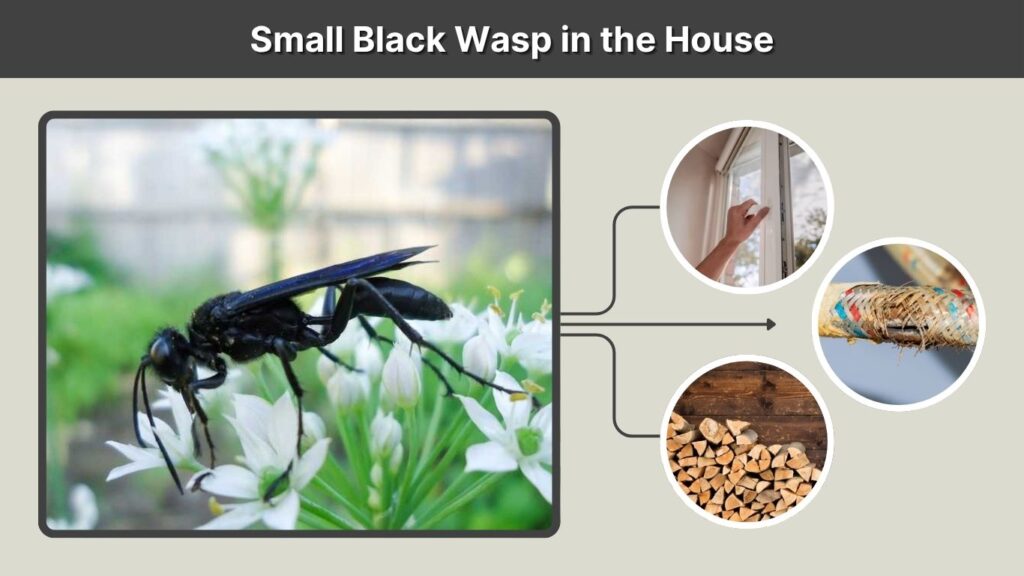
Finding a small black wasp in the house does not automatically mean there is a colony inside your walls. Solitary wasps frequently enter through open doors, windows, vents, damaged screens, and other small openings. They may also follow prey insects indoors or emerge from materials where they previously developed.
Why Small Black Wasps Come Indoors
Common reasons include:
- Open windows or doors
- Torn window screens
- Gaps around pipes and vents
- Cracks around siding or foundations
- Indoor cockroach populations
- Insects attracted to indoor lights
- Firewood or outdoor items brought indoors
One isolated wasp is generally less concerning than repeated sightings in the same area.
What to Do When You Find One
If only one wasp is present, avoid swatting or grabbing it. Open a nearby door or window and give the insect an opportunity to escape.
Repeated appearances deserve closer attention. Check window frames, attic spaces, wall gaps, vents, and other openings. You should also look for possible pest insects because some parasitic wasps appear indoors while searching for hosts.
Preventing Future Indoor Wasps
Repair damaged screens and seal noticeable cracks around windows, doors, utility openings, and siding. Outdoor lights can also attract insects that subsequently draw predatory wasps toward buildings.
Keeping food waste covered and reducing other household insects makes the property less attractive to many wasp species.
Do Small Black Wasps Sting?
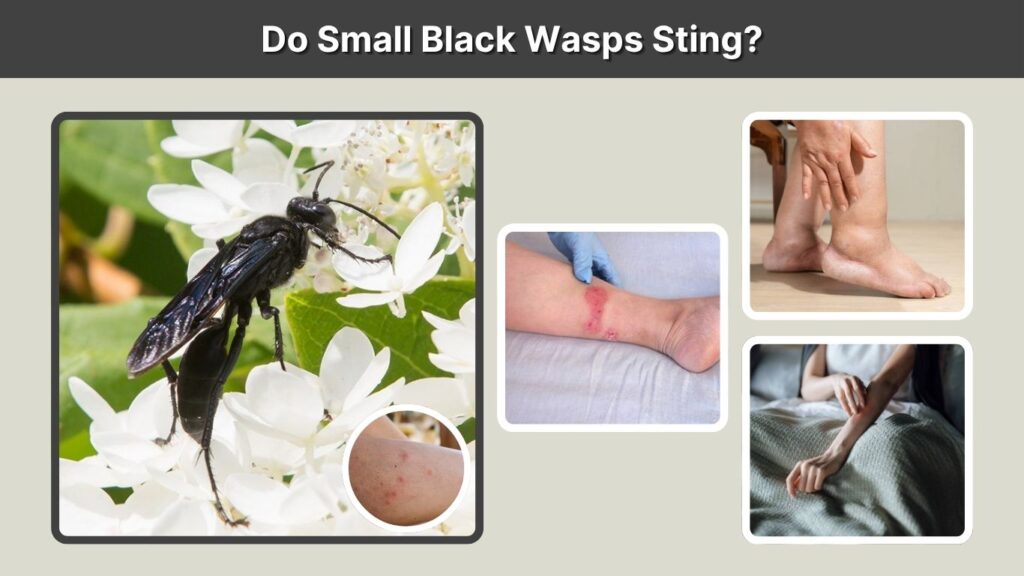
Many people worry about a small black wasp sting, but the actual risk depends strongly on the species. Numerous small solitary and parasitic wasps rarely sting humans. Some parasitoid species are so small that they pose little practical stinging concern. Larger solitary hunting wasps can sting, although they typically do so only when trapped, handled, or threatened.
What a Sting May Feel Like
A typical wasp sting can cause:
- Immediate sharp or burning pain
- Local redness
- Mild swelling
- Itching or tenderness
- Warmth around the affected area
Most uncomplicated reactions remain concentrated around the sting site and improve gradually.
Basic Sting Care
Wash the area with soap and water and apply a cold compress for short periods to reduce swelling and discomfort. Avoid scratching the area because damaged skin can increase the possibility of infection.
Anyone developing difficulty breathing, swelling of the face or throat, widespread hives, dizziness, or other signs of a serious allergic reaction should seek emergency medical care promptly.
Small Black Wasp Nest and Behavior
Nest construction differs significantly between species. Unlike yellowjackets and many paper wasps, numerous small black wasps live solitary lives. One female may prepare her own nest rather than living within a large social colony. This makes their nests smaller and usually less aggressively defended.
Where They Build Nests
Ground-nesting species may use loose soil, gardens, lawns, sandy areas, or cracks between paving stones. Other species occupy hollow plant stems, small cavities, abandoned insect tunnels, or holes in wood.
Mud-building species may attach small mud cells to sheltered walls, sheds, porches, or similar structures.
Are They Aggressive?
Most solitary small black wasps are not naturally aggressive toward humans. Their primary activities involve hunting prey, collecting nectar, finding mates, and preparing nests.
Aggressive defensive behavior becomes more likely with social species protecting an established colony. Therefore, correctly identifying the wasp and nest type is important before attempting removal.
Small Black Wasp in Texas, Florida, and Other States
Searches for small black wasp Texas, Florida, Arizona, California, Georgia, Ohio, North Carolina, and other states often refer to different species. Climate, habitat, prey availability, and season all influence which wasps are active in a particular region.
Small Black Wasps in Texas
Texas supports a particularly diverse wasp population because of its warm climate and varied habitats. Residents may encounter spider wasps, mud daubers, thread-waisted wasps, parasitic species, and small dark solitary wasps.
Warm weather allows many species to remain active for extended periods.
Small Black Wasps in Florida
Florida’s long warm season also supports numerous wasp species. Small wasps may appear around flowering plants, gardens, patios, sheds, and homes where prey insects are plentiful.
Indoor sightings can sometimes involve parasitoid species associated with household insects.
Wasps in Cooler Regions
States such as Michigan, Wisconsin, Massachusetts, Pennsylvania, Illinois, and Washington also contain small black wasps, although activity typically becomes much more seasonal.
Most species are especially noticeable during warm spring and summer months when adults are feeding, hunting, mating, or nesting.
Small Black Wasp-Like Insects
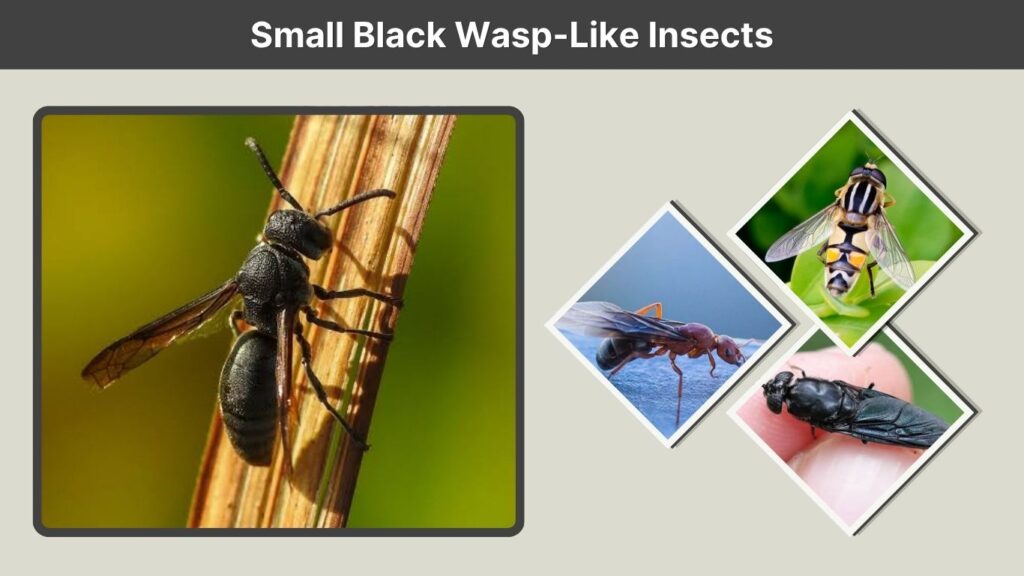
A small black wasp-like insect is not necessarily a wasp. Many insects have evolved narrow bodies, dark coloration, or wasp-like markings that discourage predators. Looking closely at antennae, wings, body shape, and behavior can prevent mistaken identification.
Common Wasp Look-Alikes
Possible look-alikes include:
- Winged ants
- Hoverflies
- Soldier flies
- Certain beetles
- Robber flies
- Sawflies
- Wasp-mimicking moths
Flies have only one functional pair of wings, while true wasps have two pairs. Winged ants usually have elbowed antennae and a distinctly shaped waist.
Black and Yellow Look-Alikes
A small black and yellow wasp-like insect might be a hoverfly rather than a wasp. Hoverflies often imitate yellow-and-black warning coloration but cannot sting.
Their large eyes, short antennae, and ability to hover almost motionlessly in the air can help distinguish them from many true wasps.
Should Small Black Wasps Be Removed?
An outdoor small black wasp usually does not require control. Many species provide valuable natural pest management by hunting spiders or insects and can also visit flowers for nectar. Problems are more likely when wasps repeatedly enter living spaces or establish nests directly beside frequently used areas.
When Removal May Be Necessary
Consider professional identification or control when:
- Numerous wasps repeatedly appear indoors
- A nest is beside a doorway or walkway
- Wasps are displaying defensive behavior
- Someone nearby has a serious sting allergy
- The species cannot be confidently identified
Avoid disturbing an unknown nest until you know whether it belongs to a solitary or social species.
FAQs
What are the tiny black wasps around my house?
Tiny black wasps may be parasitic wasps, ensign wasps, spider wasps, or other solitary species. Their exact identity depends on size, body shape, markings, location, and behavior. Many are beneficial insects that prey on or parasitize household and garden pests rather than attacking people.
Are small black wasps dangerous?
Most small black wasps are not considered highly dangerous to people. Solitary and parasitic species generally avoid confrontation and rarely sting unless handled or trapped. However, any capable wasp may defend itself. People with known insect-sting allergies should be particularly cautious around unidentified wasps.
Why do I keep finding small black wasps in my house?
Repeated indoor sightings may occur because wasps are entering through cracks, windows, vents, or damaged screens. Some parasitoid species may also emerge indoors when their host insects are present. Inspect entry points and watch for other pests, particularly if wasps continually appear in the same room.
What is a small black wasp with yellow stripes?
Several wasps can have black bodies decorated with yellow bands or spots, so coloration alone cannot reliably identify the species. Look at size, leg color, antennae, nest location, and behavior. Some flies also mimic black-and-yellow wasps and can easily be mistaken for stinging insects.
Can a small black wasp sting you?
Yes, some small black wasps can sting, particularly solitary hunting species. However, many are reluctant to sting people and primarily use their venom for capturing prey. Avoid grabbing or crushing unidentified wasps. Seek urgent medical attention if a sting causes breathing problems, facial swelling, dizziness, or widespread hives.
