
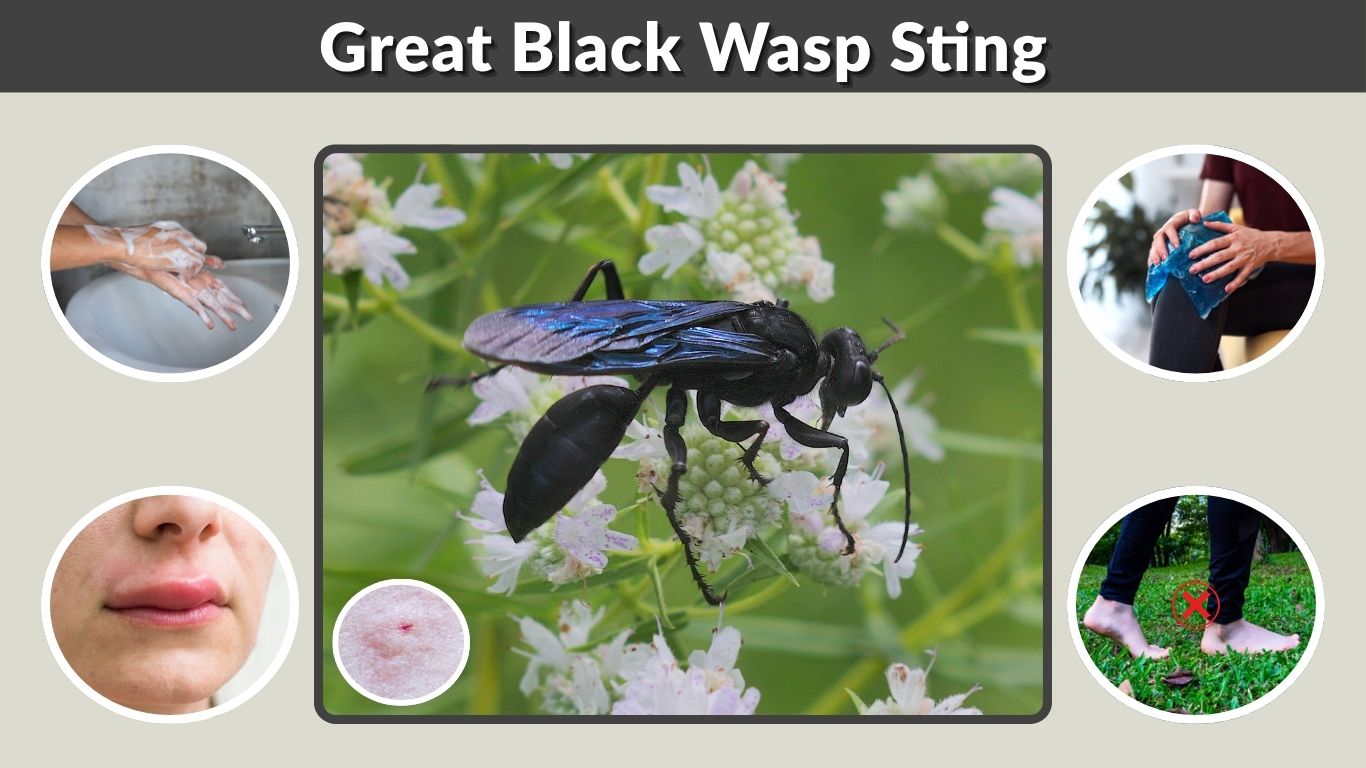
A great black wasp sting can look frightening because the insect itself is large, glossy black, and equipped with a noticeable stinger. However, the great black wasp (Sphex pensylvanicus) is not considered an aggressive wasp toward people. Females can sting when handled, trapped, or seriously disturbed, while males cannot sting. Most stings cause temporary pain, redness, itching, or swelling. Understanding the sting pain index, normal reactions, treatment, and warning signs can help you respond appropriately after an encounter.
Do Great Black Wasps Sting?
Great black wasps do have the ability to sting, but their intimidating size can make them seem more dangerous than they normally are. University of Minnesota Extension describes the species as having a stinger but being nonaggressive and rarely stinging unless disturbed. The wasp is also commonly seen feeding on nectar around flowers rather than seeking interactions with people.
Female Great Black Wasps Can Sting
Only female great black wasps can deliver a true sting. A wasp’s stinger evolved from the ovipositor, an egg-laying structure found only in females. Male wasps lack this organ and therefore cannot sting.
Female great black wasps use venom primarily in their natural hunting behavior. They capture and paralyze katydids, place them in underground burrows, and provide them as food for developing offspring. BugGuide lists katydids such as Microcentrum and Scudderia among their typical prey.
Do Great Black Wasps Sting Humans?
They can, but human stings are uncommon compared with defensive social wasps. A great black wasp is most likely to sting when it is physically restrained, stepped on, caught against clothing, or otherwise feels directly threatened.
Its large body does not mean it routinely attacks people. Giving the insect space is usually enough to prevent an encounter.
How Painful Is a Great Black Wasp Sting?
The great black wasp sting pain is generally considered relatively mild compared with the stings of highly painful species such as tarantula hawks. Individual experiences still vary. Sting location, sensitivity to venom, number of stings, and allergic response can all influence how uncomfortable the sting feels.
Great Black Wasp Sting Pain Index
The great black wasp sting pain index is about 1 on the Schmidt scale, which ranges from relatively mild pain at the lower end to extremely painful stings around level 4. A published analysis of insect sting pain ratings lists Sphex pensylvanicus at level 1.
Therefore, the wasp’s large appearance should not be interpreted as evidence of an exceptionally painful sting.
Does a Great Black Wasp Sting Hurt?
Yes. Even a relatively low pain-index rating does not mean the sting is painless. A person may initially experience a sharp or burning sensation followed by tenderness, itching, redness, or swelling.
Pain ratings are subjective, so one person’s experience can be noticeably different from another’s.
What Does a Great Black Wasp Sting Look Like?
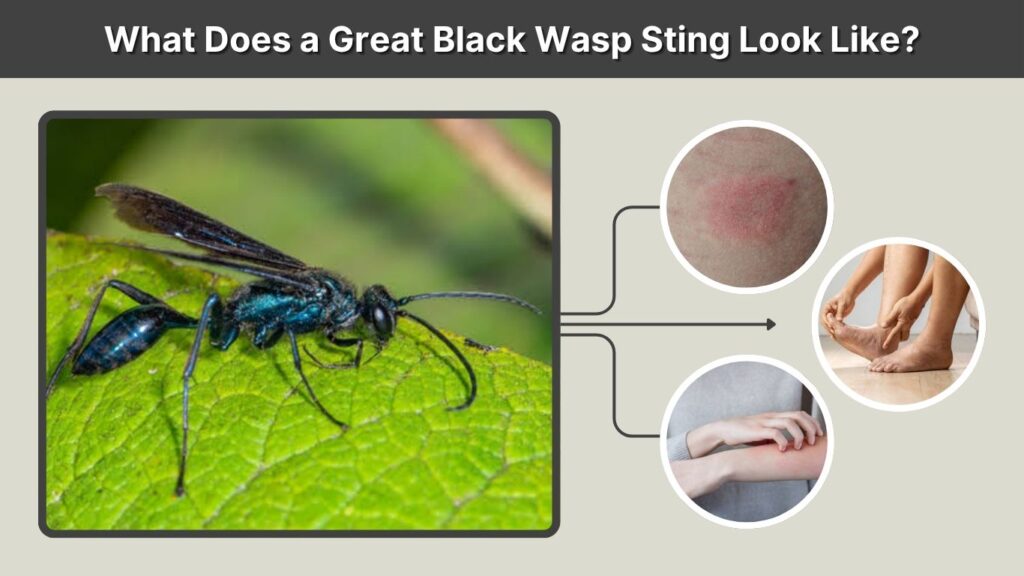
There is no unique skin mark that conclusively identifies a great black wasp sting. Like other wasp stings, it may produce a small irritated area at the point where venom enters the skin. The appearance can change over the next several hours depending on the person’s inflammatory response.
Common Sting Symptoms
A typical localized reaction may include:
- Sudden pain or burning at the sting site
- A small red or raised mark
- Mild swelling around the area
- Itching or tenderness
- Warmth around the sting
- Temporary soreness
These symptoms are broadly consistent with reactions produced by wasp venom. Most uncomplicated insect stings can be managed at home and improve within a short period.
Great Black Wasp Sting Swelling
Some people experience more swelling than others. The affected area may become noticeably larger several hours after the sting before gradually improving.
A photograph of a red or swollen area alone cannot reliably determine whether a great black wasp caused it. Many bees, hornets, wasps, and other insects produce similar skin reactions.
How to Treat a Great Black Wasp Sting
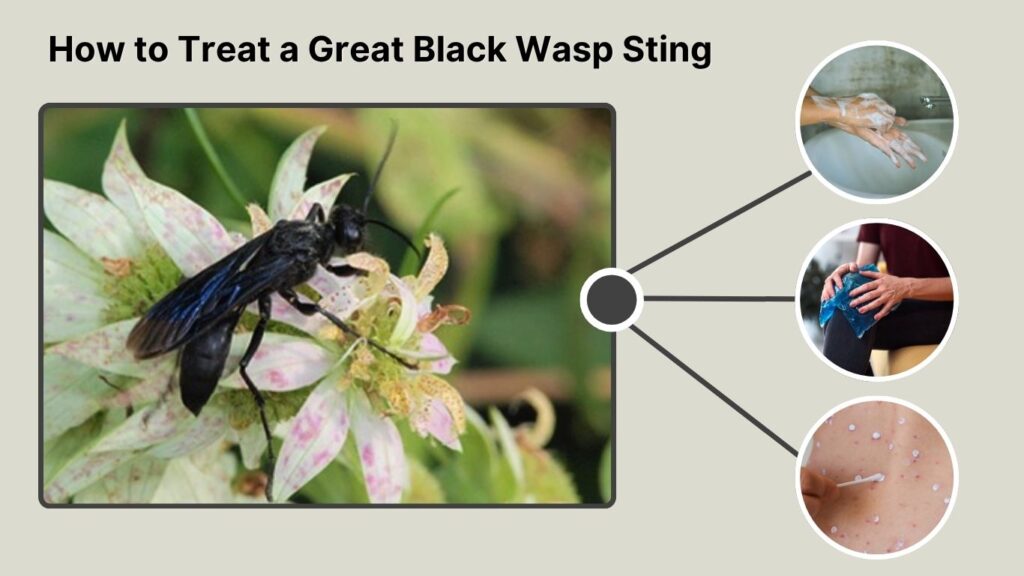
Most mild great black wasp sting reactions can be treated with ordinary first-aid measures. The aim is to clean the skin, limit swelling, and control pain or itching while monitoring for signs of a more serious allergic reaction. Mayo Clinic recommends simple supportive care for uncomplicated insect stings.
Great Black Wasp Sting Treatment
For a mild reaction:
- Move away from the wasp to prevent another sting.
- Wash the affected skin with soap and water.
- Apply a cold pack wrapped in cloth for about 10–20 minutes.
- Elevate an affected arm or leg if swelling develops.
- Consider an appropriate over-the-counter pain reliever if needed.
- Calamine lotion or hydrocortisone may help with itching.
- Continue watching for worsening symptoms.
Unlike honeybees, wasps generally do not leave a barbed stinger embedded in the skin.
What to Avoid After a Sting
Try not to:
- Scratch the sting repeatedly.
- Apply ice directly to bare skin for prolonged periods.
- Squeeze or aggressively manipulate the sting site.
- Ignore rapidly increasing symptoms.
- Approach the wasp again to identify it.
- Assume severe symptoms will disappear without treatment.
The insect’s exact identity becomes less important if signs of a serious allergic reaction appear.
Can a Great Black Wasp Sting Be Dangerous?
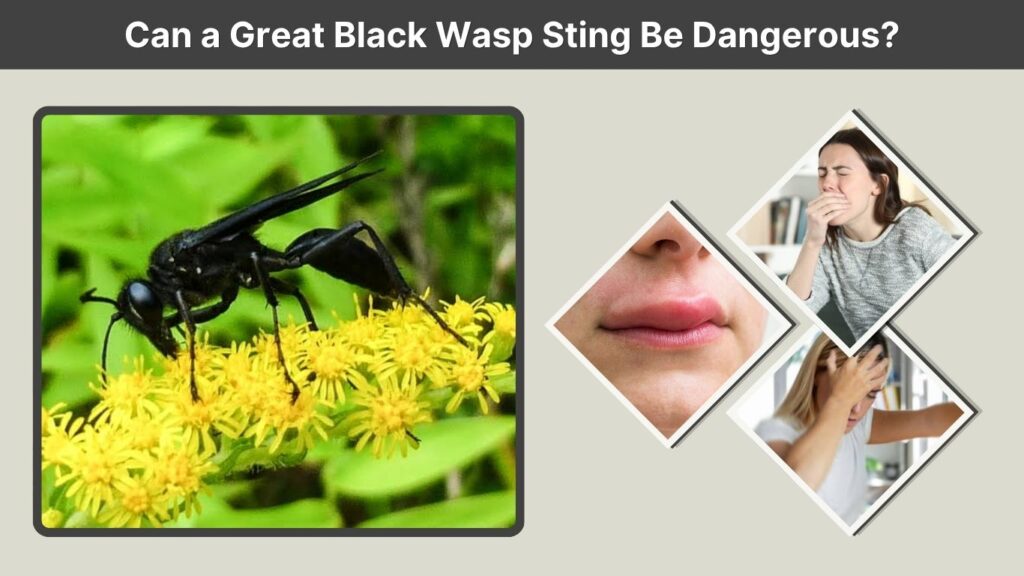
For most people, a single sting is expected to cause a localized reaction rather than a medical emergency. However, any wasp venom can trigger a serious allergic reaction in a susceptible person. The severity of allergy is not determined by the wasp’s Schmidt pain rating.
Warning Signs of a Serious Reaction
Seek emergency medical assistance for symptoms such as:
- Trouble breathing or wheezing
- Swelling of the tongue, throat, lips, or face
- Difficulty swallowing
- Widespread hives away from the sting
- Dizziness, fainting, or severe weakness
- Rapid or weak pulse
- Vomiting, diarrhea, or severe abdominal symptoms
These can indicate anaphylaxis, a potentially life-threatening reaction that requires immediate treatment.
Local Reaction vs Allergic Reaction
Redness, soreness, itching, and swelling immediately around the sting generally represent a localized response. A more extensive reaction may spread beyond the immediate sting area.
Body-wide symptoms involving breathing, circulation, widespread skin changes, or gastrointestinal symptoms are more concerning and should not be treated as an ordinary sting reaction.
Do Great Black Wasps Die After Stinging?
Great black wasps are different from honeybees. Their stingers are not designed to remain embedded in human skin, so a female great black wasp does not normally die after stinging. Wasps can retain their sting apparatus and potentially sting again.
Can Great Black Wasps Sting More Than Once?
Yes. Because the stinger is retained, a female wasp can potentially deliver multiple stings. This is another reason to move calmly away from a wasp rather than attempting to grab or crush it against your skin.
However, great black wasps are solitary and are not known for mass defensive attacks associated with some social wasps.
Great Black Wasp Bite or Sting?
The medically relevant defensive action is the sting, which delivers venom. Wasps also possess mandibles for manipulating food and prey, but searches for a “great black wasp bite” usually refer to a sting.
Also, there is no “queen great black wasp” guarding a large social colony in the way people may imagine with yellow jackets. Great black wasps are solitary nesting wasps.
How to Avoid a Great Black Wasp Sting
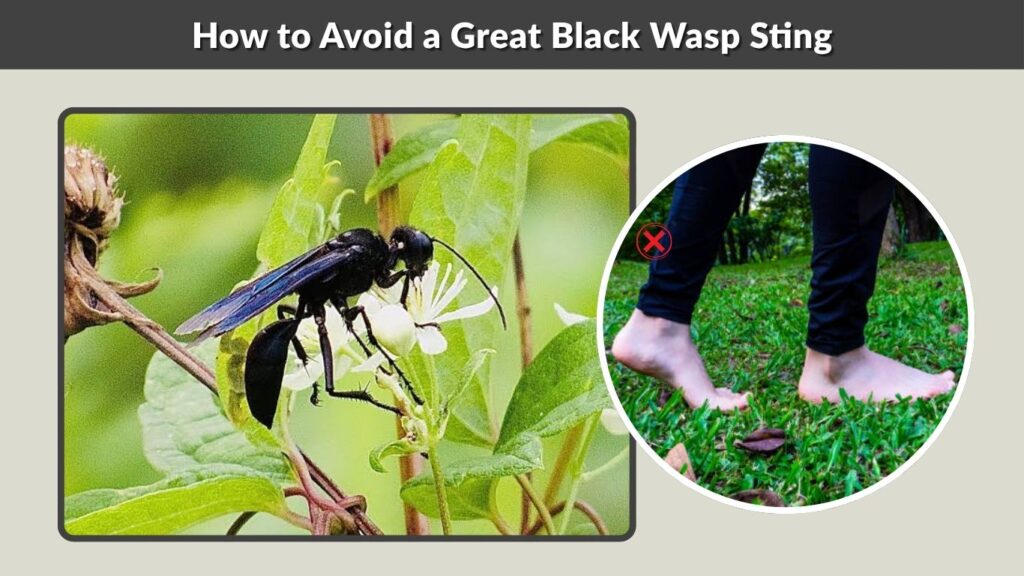
A great black wasp usually has little reason to interact aggressively with a person. Adults commonly visit flowers, while females also search for prey and nesting locations. Avoiding unnecessary contact dramatically reduces the chance of being stung.
Simple Sting-Prevention Tips
- Do not catch great black wasps with bare hands.
- Avoid stepping barefoot near active ground burrows.
- Give feeding wasps space around flowers.
- Do not deliberately disturb nesting areas.
- Shake out outdoor clothing or gloves before wearing them.
- Teach children not to grab large wasps.
- Allow an isolated wasp to leave whenever possible.
The species averages roughly 22 mm for males and 28 mm for females, making it conspicuous despite its generally low threat to people.
FAQs
1. Do great black wasps sting humans?
Yes. Female great black wasps can sting humans, but they are generally considered nonaggressive and rarely sting unless disturbed, trapped, or handled. Males cannot sting because they do not possess the modified ovipositor that forms the female wasp’s stinger.
2. How bad is a great black wasp sting?
The great black wasp is rated around 1 on the Schmidt Sting Pain Index, so its sting is relatively mild compared with many famously painful insects. Nevertheless, the actual sensation varies between people, and even a level-one sting can cause sharp pain, redness, itching, and localized swelling.
3. What does a great black wasp sting look like?
It may look like a small red, swollen, or raised spot accompanied by tenderness or itching. There is no distinctive mark that proves a great black wasp caused the sting. Many other stinging insects produce nearly identical skin reactions, so identification should rely on the insect rather than the wound alone.
4. Do great black wasps die after they sting?
No. Unlike a honeybee, a great black wasp does not normally leave its stinger behind and die after stinging. A female can retain the stinger and potentially use it more than once. Even so, the species generally avoids stinging people unless it is directly threatened.
5. When should I worry about a great black wasp sting?
Seek emergency help if the sting is followed by difficulty breathing, throat or tongue swelling, faintness, widespread hives, trouble swallowing, or other body-wide symptoms. These can signal anaphylaxis. A severe allergic reaction can occur after a wasp sting regardless of how low the species ranks on a pain scale.
