
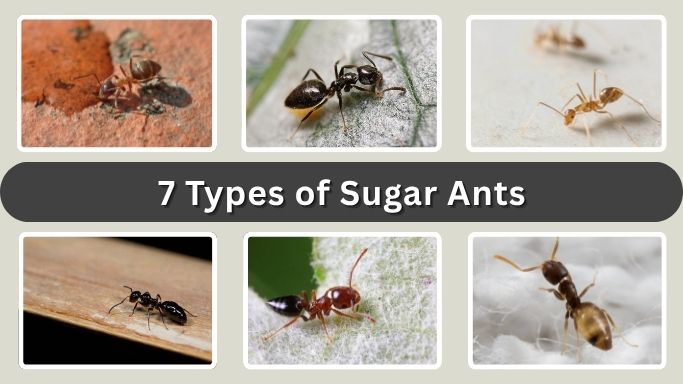
Sugar ants are not always one exact species. The name is often used for small household ants that enter kitchens, bathrooms, pantries, and food areas in search of sweets, crumbs, grease, and moisture. Some of the most common sugar ants include odorous house ants, pavement ants, pharaoh ants, Argentine ants, ghost ants, acrobat ants, and little black ants. These ants may look similar at first, but they differ in size, color, nesting habits, and behavior. Learning the common types helps you identify the ants indoors and choose the right control method.
1. Odorous House Ant
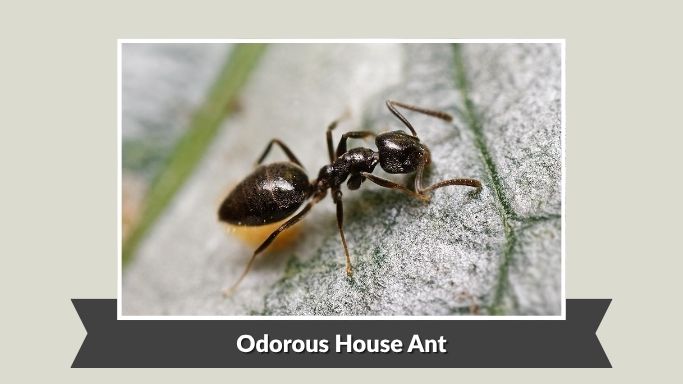
The Odorous House Ant is one of the most common ants people call “sugar ants.” It often enters homes in search of sweet food, crumbs, grease, and moisture. This ant gets its name from the strong rotten coconut-like smell it releases when crushed. It is small, fast-moving, and often forms long trails in kitchens, bathrooms, and pantry areas.
Identification
- Small ant, usually about 2.4–3.3 mm long.
- Body color is dark brown to black.
- Gives off a bad, rotten coconut-like odor when crushed.
- Has one hidden node on the waist area.
- Workers are similar in size.
- Often travels in clear indoor trails.
- Attracted to sugar, syrup, fruit, honey, and sweet spills.
- May also feed on grease, dead insects, and pet food.
- Commonly seen around sinks, counters, cabinets, and trash bins.
- Does not sting and is not dangerous to humans.
Habitat and Distribution
Odorous House Ants are widely found across many parts of North America. They can live outdoors under mulch, stones, logs, soil, leaf litter, and plant debris. Indoors, they nest in wall voids, under floors, around pipes, near insulation, and close to moisture sources.
They are very adaptable and can move nests when disturbed. This makes them difficult to control if food, water, and entry points remain available inside the home.
Behavior and Diet
Odorous House Ants are strong foragers and often enter homes in large numbers. They follow scent trails to food and quickly recruit other workers when they find a good source. Sweet foods are their favorite, but they can also eat oily or protein-rich materials.
Indoors, they are often found near kitchens, bathrooms, and pet feeding areas. Cleaning trails and using bait is usually more effective than spraying visible ants.
Life Cycle
The colony has queens, workers, eggs, larvae, and pupae. Queens lay eggs, and workers care for the young, gather food, and protect the nest. Colonies can contain many workers and sometimes multiple queens.
Eggs hatch into larvae, then develop into pupae before becoming adult ants. In warm indoor conditions, colonies may stay active for much of the year.
2. Pavement Ant
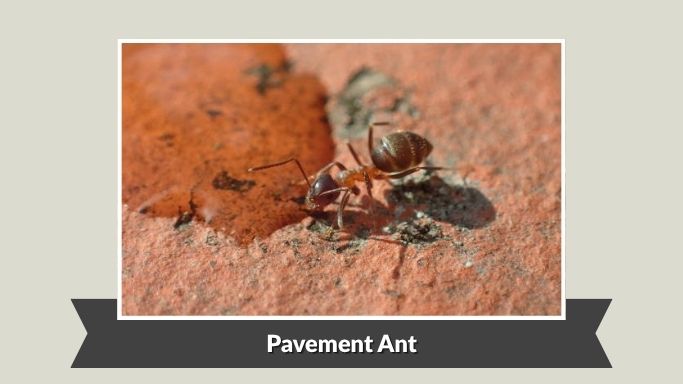
The Pavement Ant is a small dark ant that often enters homes for sweet food, grease, crumbs, and pet food. It is called a pavement ant because it commonly nests under sidewalks, driveways, patios, stones, and building foundations. Indoors, it may appear in kitchens, bathrooms, basements, and near cracks in floors or walls.
Identification
- Small ant, usually about 2.5–4 mm long.
- Body color is dark brown to black.
- Has two small nodes between the thorax and abdomen.
- Body may have fine grooves on the head and thorax.
- Workers are usually similar in size.
- Often forms visible trails indoors.
- Attracted to sugar, grease, crumbs, seeds, meat, and pet food.
- May enter through cracks in floors, walls, windows, and foundations.
- Commonly seen near kitchens, basements, and ground-level rooms.
- Does not usually sting, but can bite if disturbed.
Habitat and Distribution
Pavement Ants are common in many urban and suburban areas. Outdoors, they usually nest under pavement, sidewalks, stones, driveways, patios, bricks, and building slabs. Small piles of soil or sand near cracks may show where they are nesting.
Inside homes, they may nest in wall voids, under floors, near foundations, or close to heat and moisture. They are especially common in buildings where outdoor nests are close to entry points.
Behavior and Diet
Pavement Ants are active foragers and often enter homes when they find food. They eat many things, including sweet liquids, crumbs, grease, meat, seeds, insects, and pet food. This flexible diet makes them a common indoor pest.
They follow scent trails from the nest to food. Slow-acting bait is often useful because workers carry it back to the colony. Spraying trails may kill visible ants but may not solve the nest problem.
Life Cycle
A Pavement Ant colony has queens, workers, eggs, larvae, and pupae. The queen lays eggs, while workers collect food, care for young ants, and maintain the nest.
Eggs hatch into larvae, then become pupae before turning into adult workers. Colonies can grow large over time, especially when food and shelter are easy to find.
3. Pharaoh Ant
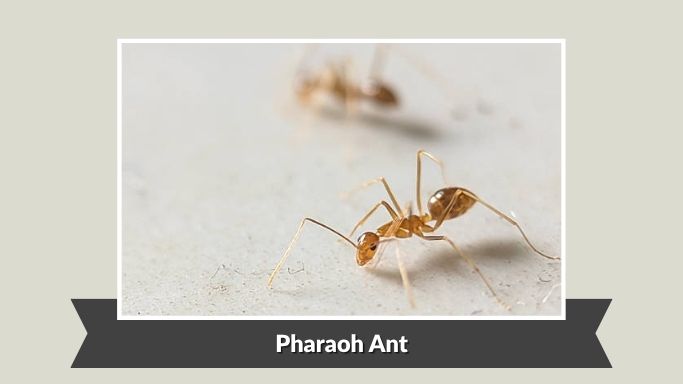
The Pharaoh Ant is a tiny indoor ant that is often grouped with “sugar ants” because it feeds on sweet foods, syrups, fruit, and other kitchen scraps. It is also attracted to grease, protein, and moisture. This ant is difficult to control because colonies may split into smaller groups when disturbed, especially if the wrong spray treatment is used.
Identification
- Very small ant, usually about 1.5–2 mm long.
- Body color is yellow, light brown, or reddish-yellow.
- Abdomen is often darker than the rest of the body.
- Has two small nodes between the thorax and abdomen.
- Workers are all similar in size.
- Often forms trails near food, water, and warm areas.
- Attracted to sweets, grease, meat, pet food, and dead insects.
- Common in kitchens, bathrooms, hospitals, apartments, and food areas.
- Does not sting, but can be a serious indoor nuisance.
- Colonies may spread quickly if disturbed.
Habitat and Distribution
Pharaoh Ants are found in many parts of the world, especially inside heated buildings. They prefer warm, humid, protected spaces. Indoors, they may nest in wall voids, cabinet cracks, behind baseboards, near pipes, inside appliances, under floors, or around bathrooms and kitchens.
Because they are tiny, they can hide in very small spaces. They are common in apartments, restaurants, hospitals, offices, and homes where food and moisture are available.
Behavior and Diet
Pharaoh Ants are strong indoor foragers. They feed on sweet liquids, sugar, syrup, fruit, grease, meat, oils, and protein-rich foods. They often travel in narrow trails from hidden nests to food sources.
Spraying visible ants can make the problem worse because colonies may scatter and form new nests. Slow-acting bait is usually the better control method, as workers carry it back to the colony.
Life Cycle
A Pharaoh Ant colony can have many queens, workers, eggs, larvae, and pupae. Queens lay eggs, while workers care for the young and collect food.
Eggs hatch into larvae, then develop into pupae before becoming adult ants. In warm indoor spaces, colonies can stay active all year and expand quickly.
4. Argentine Ant
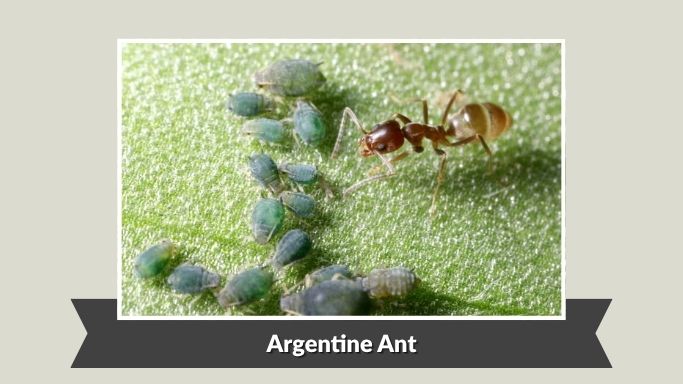
The Argentine Ant is a small brown ant that often enters homes in search of sugar, moisture, grease, and crumbs. It is one of the most troublesome indoor ants because colonies can grow very large and may have many queens. These ants often form long trails and can quickly spread through kitchens, bathrooms, and other warm indoor areas.
Identification
- Small ant, usually about 2.2–2.8 mm long.
- Body color is light brown to dark brown.
- Workers are usually similar in size.
- Has one node between the thorax and abdomen.
- Body looks smooth and slender.
- Often travels in strong, busy trails.
- Attracted to sugar, syrup, fruit, honey, grease, and pet food.
- Commonly found near sinks, counters, floors, and trash areas.
- Does not sting, but may bite lightly if disturbed.
- Often appears in large numbers indoors.
Habitat and Distribution
Argentine Ants are common in many warm and mild regions. They often live outdoors in soil, mulch, leaf litter, under stones, under logs, around plants, and near building foundations. They prefer moist places and may move indoors when outdoor conditions become too dry, wet, hot, or cold.
Inside homes, they may nest in wall voids, around pipes, under floors, near sinks, or in other protected spaces. Their ability to move nests easily makes them difficult to control without proper baiting and sanitation.
Behavior and Diet
Argentine Ants are highly active foragers. They follow strong scent trails and can recruit many workers quickly when food is found. They prefer sweet foods but also feed on grease, oils, insects, and protein-rich scraps.
Because colonies can have many queens, spraying visible ants may not solve the problem. Slow-acting bait and food cleanup usually work better because workers carry bait back to hidden nest sites.
Life Cycle
The colony includes queens, workers, eggs, larvae, and pupae. Queens lay eggs, while workers care for the young, collect food, and expand the colony.
Eggs hatch into larvae, then become pupae before turning into adult ants. In warm climates or heated buildings, Argentine Ant colonies may remain active for most of the year.
5. Ghost Ant
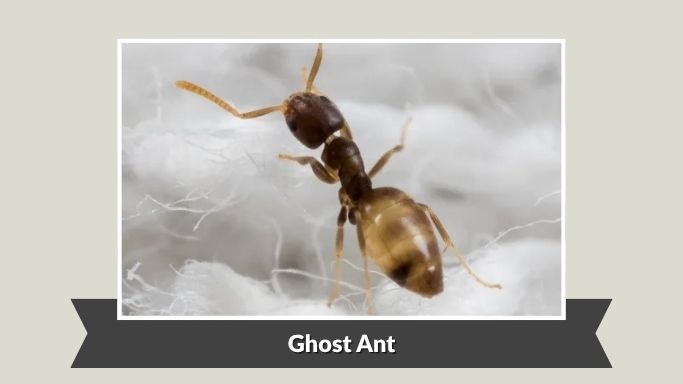
The Ghost Ant is a tiny indoor ant often linked with sugar ant problems because it loves sweet foods, syrups, fruit, and sticky spills. It gets its name from its pale legs and almost translucent abdomen, which can make it hard to see on light surfaces. Indoors, ghost ants often appear in kitchens, bathrooms, sinks, and areas with moisture.
Identification
- Very small ant, usually about 1.3–1.5 mm long.
- Head and thorax are dark brown to black.
- Legs and abdomen are pale, yellowish, or almost translucent.
- Body may look two-toned.
- Workers are all similar in size.
- Often forms trails near sinks, counters, and food areas.
- Strongly attracted to sugar, syrup, honey, fruit, and sweet drinks.
- Also feeds on grease, dead insects, and small food scraps.
- Commonly found in kitchens, bathrooms, and humid indoor spaces.
- Does not sting and is not dangerous to humans.
Habitat and Distribution
Ghost Ants are common in warm and tropical regions. In cooler areas, they mostly survive inside heated buildings. Outdoors, they may nest in soil, mulch, plant pots, leaf litter, under stones, and around moist garden areas.
Indoors, they often nest in wall voids, behind baseboards, inside cabinets, near pipes, under sinks, and around potted plants. Because they are so tiny, they can enter through very small cracks and gaps.
Behavior and Diet
Ghost Ants are active foragers and often move in clear trails. They prefer sweet foods but can also feed on grease and protein sources. They are strongly attracted to moisture, so bathrooms and kitchen sinks are common problem areas.
Baiting is usually better than spraying. Sprays may kill visible ants, but hidden colonies can remain active or move to another area.
Life Cycle
A Ghost Ant colony may have several queens, workers, eggs, larvae, and pupae. Queens lay eggs, while workers collect food and care for the young.
Eggs hatch into larvae, then develop into pupae before becoming adult ants. In warm indoor areas, colonies can stay active throughout the year.
6. Acrobat Ant
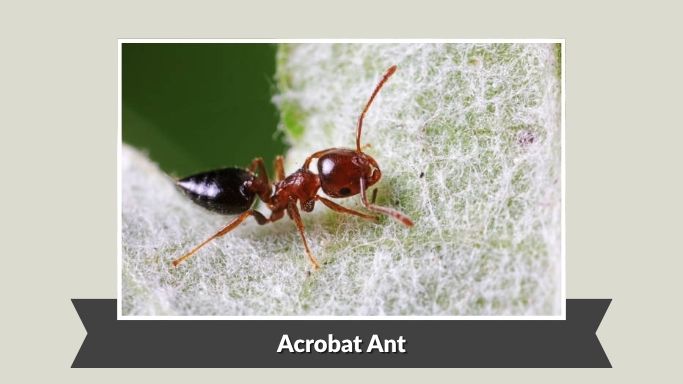
The Acrobat Ant is a small ant often included in “sugar ant” groups because it may enter homes for sweet foods, honeydew, crumbs, grease, and moisture. It gets its name from its habit of raising its heart-shaped abdomen over its body when disturbed. Indoors, it may appear near kitchens, bathrooms, windows, wall voids, and damp wood areas.
Identification
- Small ant, usually about 2.5–3.5 mm long.
- Body color may be light brown, dark brown, black, or reddish-brown.
- Abdomen is often heart-shaped when viewed from above.
- Raises its abdomen over the body when disturbed.
- Has two nodes between the thorax and abdomen.
- Workers may vary slightly in size.
- Often attracted to sweets, honeydew, grease, meat, and crumbs.
- May enter homes through cracks, wires, pipes, and tree branches.
- Can give off an unpleasant odor when disturbed.
- May bite, but it is not usually dangerous to humans.
Habitat and Distribution
Acrobat Ants are found in many parts of North America and other regions. Outdoors, they often nest in dead wood, tree cavities, stumps, logs, branches, and under bark. They may also nest in soil, mulch, and around structures.
Indoors, they are sometimes linked with damp or damaged wood. They may use old galleries made by termites or carpenter ants. Their presence inside can sometimes suggest moisture problems, wood decay, or hidden nesting spaces near walls and windows.
Behavior and Diet
Acrobat Ants feed on many food sources. Outdoors, they often collect honeydew from aphids and scale insects. Indoors, they may search for sugar, syrup, fruit, grease, meat, pet food, and crumbs.
They can form trails along walls, wires, pipes, tree limbs, and foundation edges. Baiting, sanitation, and sealing entry points are helpful control steps.
Life Cycle
The colony includes queens, workers, eggs, larvae, and pupae. The queen lays eggs, while workers gather food, care for larvae, and protect the nest.
Eggs hatch into larvae, then develop into pupae before becoming adult ants. Colonies grow faster when food, moisture, and nesting sites are easy to find.
7. Little Black Ant
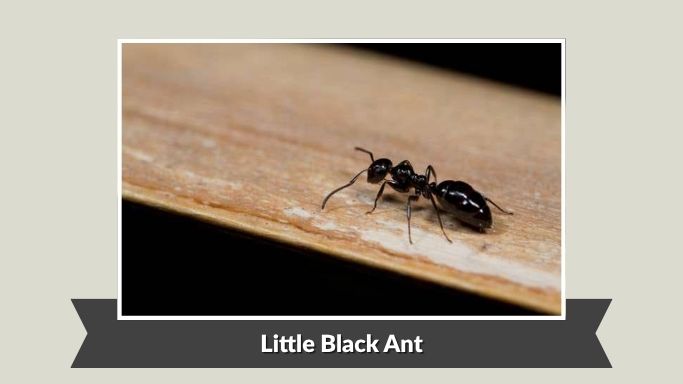
The Little Black Ant is a tiny dark ant that often enters homes for sweet food, crumbs, grease, and moisture. It is commonly grouped with “sugar ants” because it may trail toward syrup, fruit, honey, spilled drinks, and kitchen scraps. These ants are small but can appear in large numbers when they find a reliable food source indoors.
Identification
- Very small ant, usually about 1.5–2 mm long.
- Body color is dark brown to shiny black.
- Workers are usually similar in size.
- Has two small nodes between the thorax and abdomen.
- Often forms long trails to food and water.
- Attracted to sugar, honey, fruit, grease, crumbs, and pet food.
- Commonly seen in kitchens, bathrooms, pantries, and near trash bins.
- May enter through cracks, windows, doors, and foundation gaps.
- Does not sting and is not usually harmful to humans.
- Can become a nuisance when colonies grow near the home.
Habitat and Distribution
Little Black Ants are common in many parts of North America. Outdoors, they often nest in soil, lawns, mulch, rotting wood, under stones, under logs, and near sidewalks or foundations. They may also nest in wall voids or behind baseboards when conditions indoors are suitable.
They prefer places with food, moisture, and shelter. Homes with crumbs, sticky spills, leaking pipes, or easy entry points may attract them. Outdoor colonies near the foundation can also send workers indoors.
Behavior and Diet
Little Black Ants are active foragers and often travel in visible trails. They eat many foods, including sweets, grease, seeds, dead insects, and household scraps. When workers find food, they leave a scent trail that helps other ants follow.
Cleaning food sources and wiping trails can reduce activity. Slow-acting bait is often helpful because workers carry it back to the colony.
Life Cycle
A Little Black Ant colony has queens, workers, eggs, larvae, and pupae. Queens lay eggs, while workers care for the young, gather food, and maintain the nest.
Eggs hatch into larvae, then develop into pupae before becoming adult ants. Colonies can expand when food and nesting spaces are available.
FAQs
What are sugar ants?
Sugar ants are a common name for small ants that enter homes looking for sweet food. They may include odorous house ants, pavement ants, pharaoh ants, Argentine ants, ghost ants, acrobat ants, and little black ants. Most are attracted to sugar, crumbs, syrup, fruit, and moisture.
Which sugar ants are most common indoors?
Odorous House Ants, Pharaoh Ants, Ghost Ants, Pavement Ants, and Little Black Ants are commonly found indoors. They usually appear in kitchens, bathrooms, pantries, and near sinks. These ants follow scent trails to food and may return if food, water, and entry points remain.
Are sugar ants harmful to humans?
Most sugar ants are not directly dangerous to humans. They usually do not sting and are mainly a nuisance pest. However, they can contaminate food and spread through kitchens or bathrooms. Pharaoh ants can be more concerning in sensitive places because they may move through unsanitary areas.
Why do sugar ants come inside the house?
Sugar ants come inside for food, water, and shelter. Sweet spills, crumbs, open food containers, pet food, trash, and leaking pipes can attract them. Weather changes may also push ants indoors. Once workers find food, they leave scent trails for other ants to follow.
How can you prevent sugar ants from coming back?
Keep food sealed, wipe spills quickly, clean crumbs, empty trash, and fix leaks. Store sweets, cereal, pet food, and snacks in airtight containers. Wipe ant trails with soapy water, seal cracks around doors and windows, and use bait if ants continue entering.
