
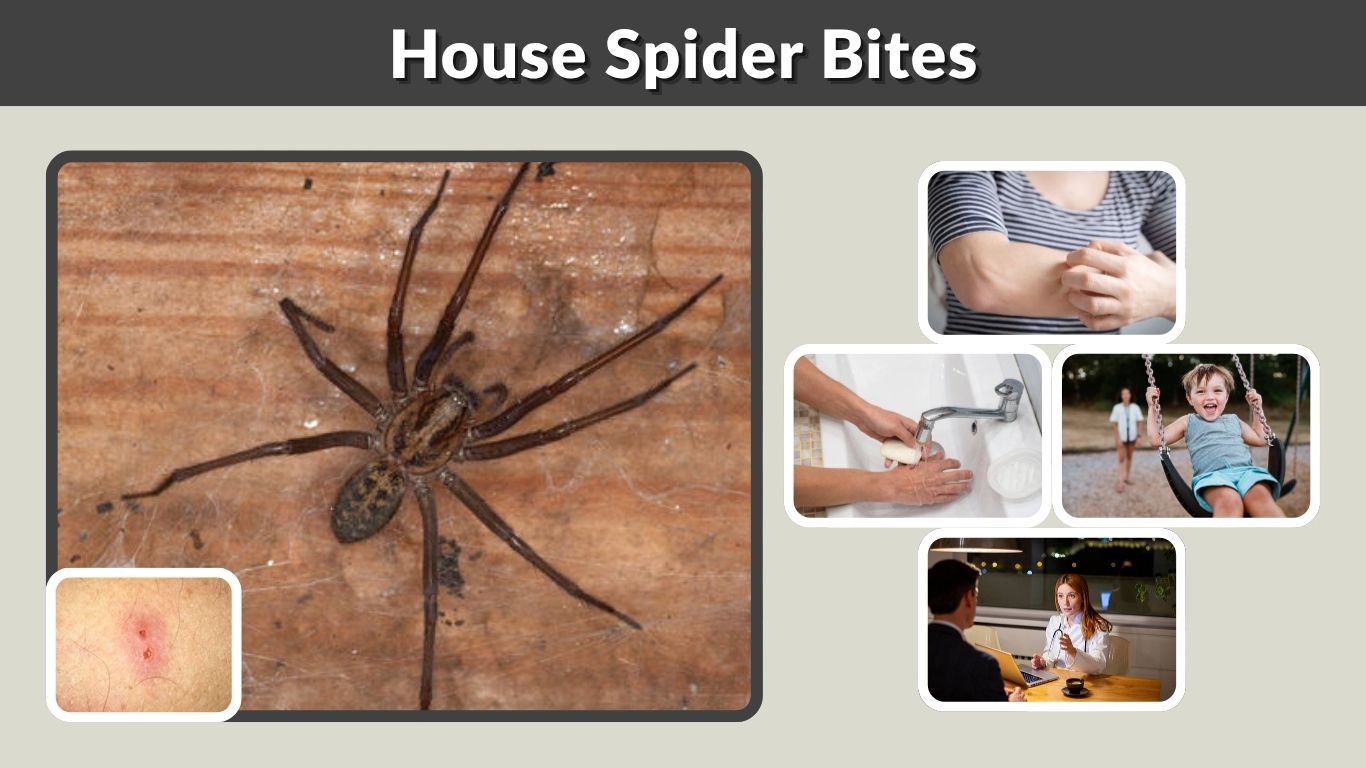
House spider bites are uncommon and usually cause only mild, temporary symptoms. The common house spider (Parasteatoda tepidariorum) lives in corners, garages, basements, sheds, and other sheltered areas around buildings. Although it has venom for subduing small insects, it is not considered medically important to humans. A bite may cause redness, mild pain, itching, or swelling. However, identifying a bite from appearance alone can be difficult, so worsening symptoms or severe reactions should always be taken seriously.
What Is a House Spider?
The term “house spider” can describe several spider species that commonly live in or around buildings. One of the best-known is the common or American house spider (Parasteatoda tepidariorum), a small cobweb spider found in many parts of the world. It builds irregular webs in quiet locations where flying or crawling insects are available.
House Spider Identification
Common house spiders are relatively small and can vary considerably in appearance.
Typical identification features include:
- Tan, brown, gray, or nearly black coloration
- Rounded or bulb-shaped abdomen
- Thin legs
- Mottled or irregular markings
- Females generally larger than males
- Messy, tangled cobwebs
- Webs commonly found in corners and sheltered locations
They often establish webs around windows, garages, basements, sheds, ceilings, and other places where insects are likely to become trapped.
Are House Spiders Venomous?
Like most spiders, common house spiders possess venom that helps them immobilize prey. However, calling them “poisonous” is technically inaccurate because spiders typically deliver venom through their fangs rather than harming someone through ingestion or touch.
Most importantly, the common house spider is not regarded as medically significant to humans. It belongs to the same family as widow spiders, but its bite is not considered comparable in danger.
Do House Spiders Bite Humans?
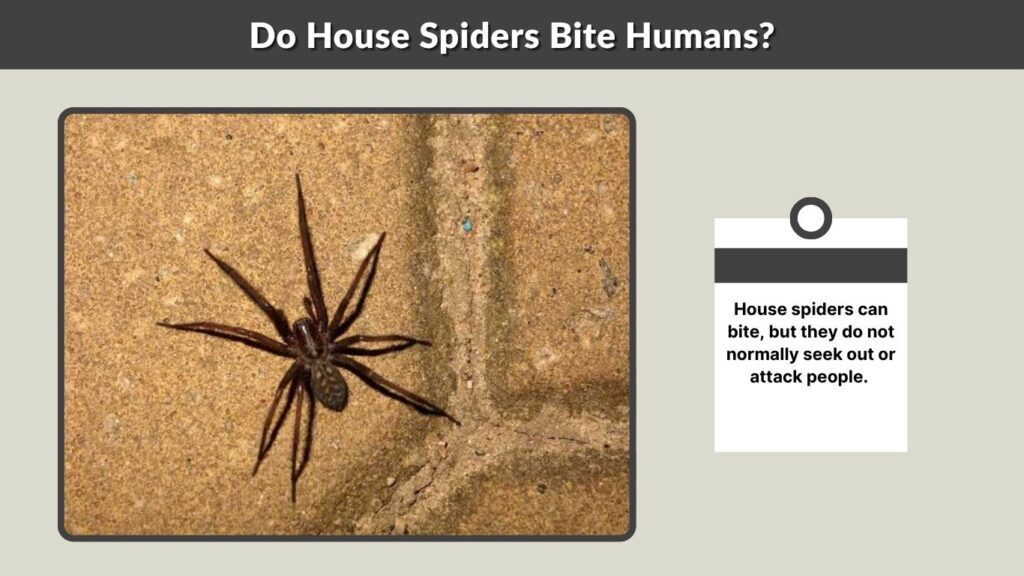
House spiders can bite, but they do not normally seek out or attack people. Biting is primarily defensive and is more likely when a spider is trapped against the skin, squeezed, or handled.
Because house spiders routinely live close to people yet reported bites are uncommon, simply finding one in a bedroom or living area does not mean anyone has been bitten.
Why Would a House Spider Bite?
A bite could occur when a spider is accidentally:
- Trapped inside clothing
- Pressed against the skin
- Grabbed by hand
- Squeezed while cleaning
- Disturbed inside stored objects
- Caught between bedding and the body
In most encounters, the spider is more likely to retreat or remain hidden than bite.
House Spider Bite Symptoms
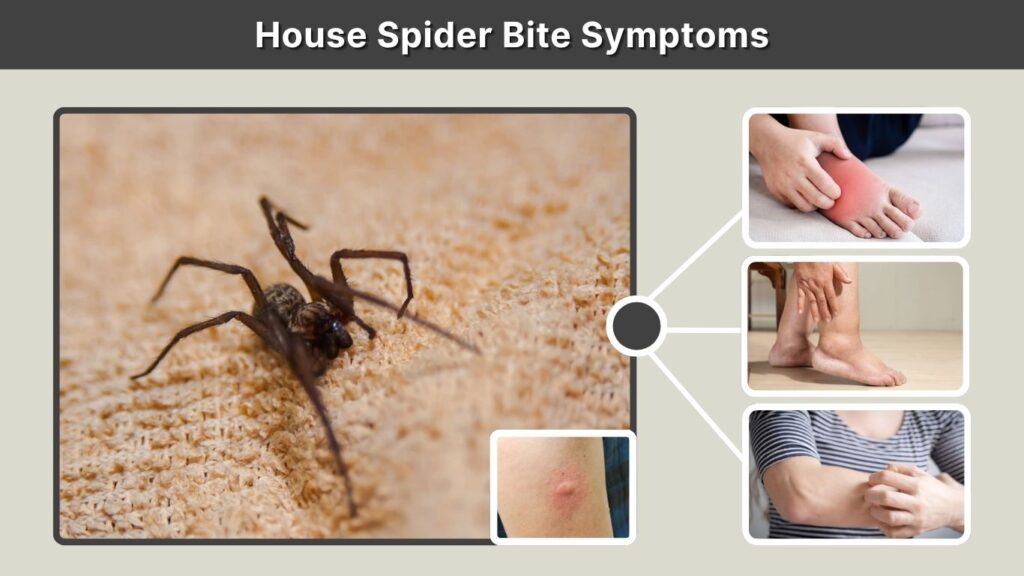
If a common house spider does bite, symptoms are generally mild and remain around the bite site. Many reactions resemble minor insect bites, making it difficult to determine the exact cause based solely on appearance. Pain, redness, swelling, itching, and a small bump are common general reactions to insect and spider bites.
Common Symptoms
A mild house spider bite may cause:
- Small red bump
- Mild redness
- Slight swelling
- Itching
- Tenderness
- Brief stinging or burning
- Minor pain around the bite
Symptoms can vary between individuals. A rare serious allergic reaction to a common house spider bite has been reported, although this is not considered typical for the species.
What Does a House Spider Bite Look Like?
A house spider bite may look like a small red or slightly swollen spot. Occasionally, tiny puncture marks may be visible, but they are often too small to notice.
The appearance alone cannot reliably prove that a spider caused the mark. Mosquito bites, flea bites, bed bug bites, bacterial infections, irritated hair follicles, allergic reactions, and other skin problems can produce similar-looking lesions.
Are House Spider Bites Painful?
Pain from a typical common house spider bite is expected to be mild. A person may notice a quick pinching or stinging sensation followed by localized tenderness.
How Long Does the Pain Last?
Minor discomfort should generally improve rather than become progressively more severe. Mild redness, itching, and swelling may remain temporarily while the skin recovers.
A bite that becomes increasingly painful, develops extensive swelling, or produces symptoms elsewhere in the body should not automatically be assumed to be an ordinary house spider bite. Medical assessment may be needed to determine the actual cause.
Are House Spider Bites Dangerous to Humans?
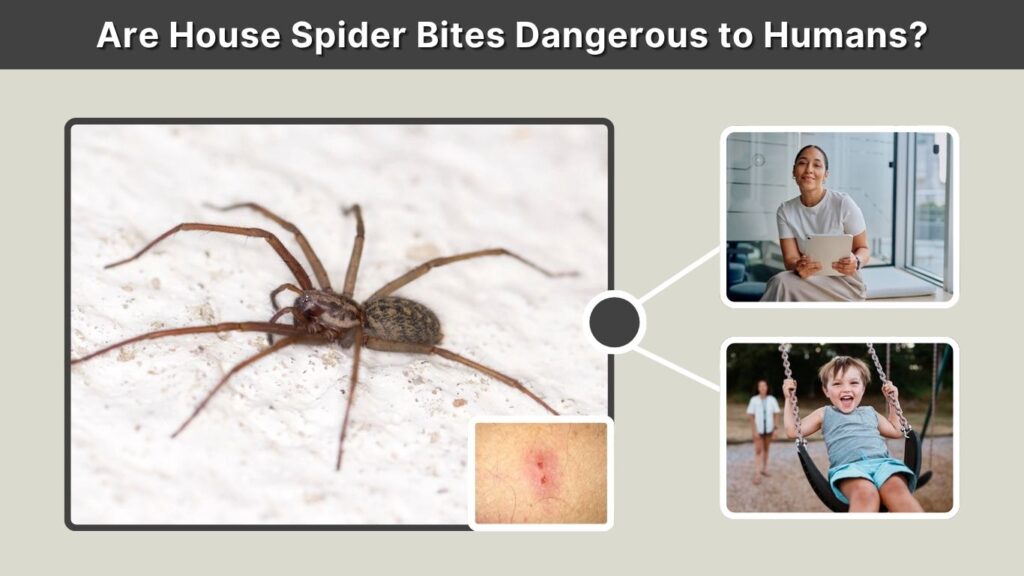
For the common house spider, the overall risk to humans is very low. Penn State Extension specifically describes Parasteatoda tepidariorum as not medically important, while the University of Florida notes that it is not known to be dangerous to people.
Risk to Adults
A healthy adult bitten by a common house spider would generally be expected to experience only localized symptoms, if any. Severe neurological symptoms or major tissue destruction are not characteristic of this species.
However, reactions to bites can vary, and unusually severe symptoms deserve professional evaluation.
Risk to Children
Children should be monitored carefully after any suspected bite because they may have difficulty explaining symptoms or may scratch an itchy wound. MedlinePlus recommends medical treatment for small children with severe spider-bite symptoms.
Risk of an Allergic Reaction
Although uncommon, allergic reactions to bites and stings can be serious. Warning signs can include widespread hives, wheezing, difficulty breathing, or significant swelling away from the bite site.
Difficulty breathing or swelling involving the mouth, tongue, or throat requires emergency medical attention.
House Spider Bite vs. Dangerous Spider Bite
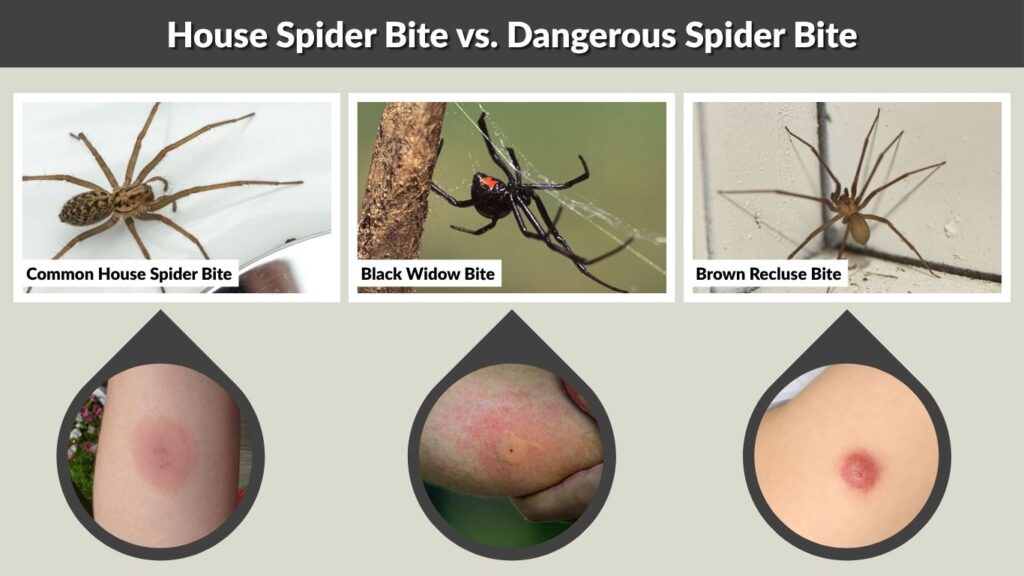
Finding a spider indoors does not necessarily mean it is a harmless common house spider. Medically important species such as widow or recluse spiders can also enter or live around buildings in regions where they occur.
| Feature | Common House Spider Bite | Black Widow Bite | Brown Recluse Bite |
|---|---|---|---|
| Local redness | Possible | Possible | Common |
| Mild swelling | Possible | Possible | Possible |
| Severe muscle cramps | Not typical | Characteristic in serious bites | Not typical |
| Increasing tissue damage | Not typical | Not typical | Possible |
| Severe whole-body symptoms | Very unusual | Possible | Rare but possible |
| Typical medical risk | Low | Potentially serious | Potentially serious |
Black widow bites can produce severe pain and muscle cramps, while brown recluse bites may occasionally produce progressive skin and tissue injury.
What to Do After a House Spider Bite
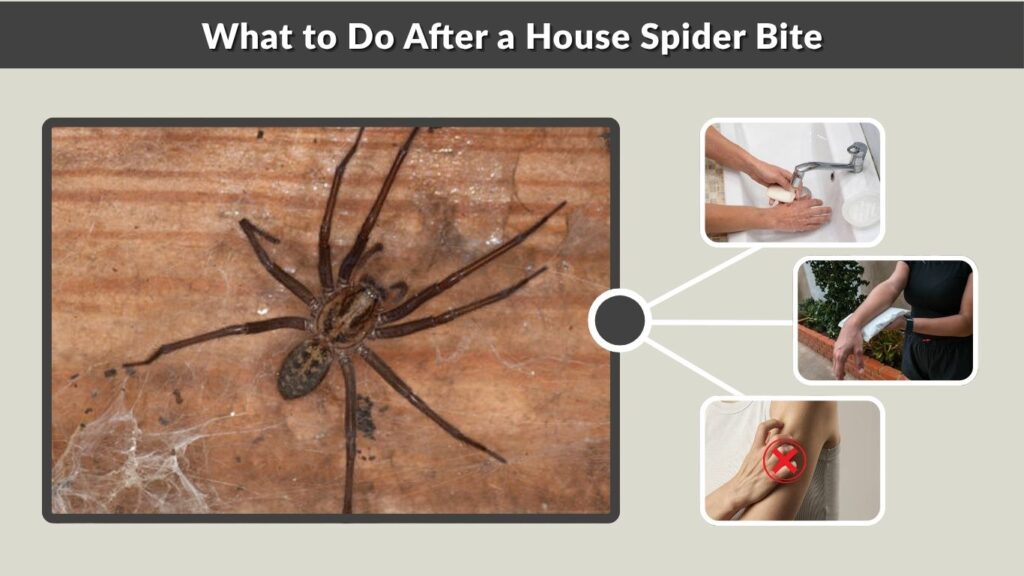
Most minor suspected spider bites can be managed initially with simple wound care. The goal is to keep the area clean, control swelling, and monitor for changes.
Basic First Aid
For a mild suspected house spider bite:
- Wash the area thoroughly with soap and water.
- Apply a cold pack or cool wet compress.
- Wrap ice rather than placing it directly against the skin.
- Elevate the affected area when practical.
- Avoid scratching the bite.
- Monitor the area for worsening redness, swelling, or pain.
Over-the-counter pain medicines may sometimes be used for discomfort when appropriate for the individual. MedlinePlus also notes that antihistamines may be considered for significant swelling.
What Should You Avoid?
Do not:
- Cut the bite open
- Attempt to suck out venom
- Burn or cauterize the skin
- Squeeze the wound repeatedly
- Apply harsh chemicals
- Try to capture an unknown spider with bare hands
CDC guidance specifically advises against attempting to remove venom from a spider bite.
When Should You See a Doctor?
A typical mild bite should not cause rapidly worsening or severe whole-body symptoms. Seek medical advice if the wound continues to become more painful, swollen, or abnormal.
Warning Signs to Watch For
Seek prompt medical attention for:
- Severe or increasing pain
- Rapidly spreading redness or swelling
- Significant blistering
- Dark or blackening skin
- Muscle cramps or spasms
- Repeated vomiting
- Fever or severe weakness
- Heavy sweating
- Dizziness or fainting
- Difficulty breathing
- Swelling of the face, tongue, or throat
Black widow envenomation can cause severe muscle cramps, while recluse bites may occasionally become progressively darker, blistered, or ulcerated. These symptoms are not typical of an ordinary common house spider bite.
How to Prevent House Spider Bites
House spiders generally help reduce insect populations, so occasional spiders do not necessarily need to be killed. Preventing accidental contact is usually enough to reduce bite risk.
Prevention Around the Home
You can reduce encounters by:
- Shaking out shoes before wearing them
- Checking stored clothing and gloves
- Wearing gloves when moving boxes
- Removing clutter from basements and garages
- Vacuuming abandoned webs
- Sealing gaps around windows and doors
- Moving stored items away from walls
- Reducing insects that provide spiders with food
Avoid picking up unfamiliar spiders with bare hands. A container and piece of cardboard can be used to relocate a harmless spider when necessary.
Frequently Asked Questions
Can a House Spider Bite You?
Yes. Common house spiders are physically capable of biting, but bites are uncommon and usually occur only when the spider is trapped, squeezed, or handled. The species is not considered medically important to humans.
What Are the Symptoms of a House Spider Bite?
Possible symptoms include a small red bump, mild pain, itching, tenderness, and localized swelling. These signs can also occur with many other insect bites and skin conditions.
Can a House Spider Bite Be Dangerous?
A bite from the common house spider is generally considered low risk. Severe reactions are unusual, although allergic reactions or misidentification of a more medically significant spider are possible.
How Long Does a House Spider Bite Last?
There is no single exact duration because reactions vary. Minor irritation should generally improve with basic care. A wound that becomes progressively worse, increasingly painful, blistered, or infected-looking should be evaluated rather than assumed to be a normal house spider bite.
Should I Go to the Hospital for a House Spider Bite?
Most mild common house spider bites do not require hospital treatment. Emergency care is appropriate if there is difficulty breathing, fainting, severe muscle cramping, rapidly worsening symptoms, or another serious reaction.
