
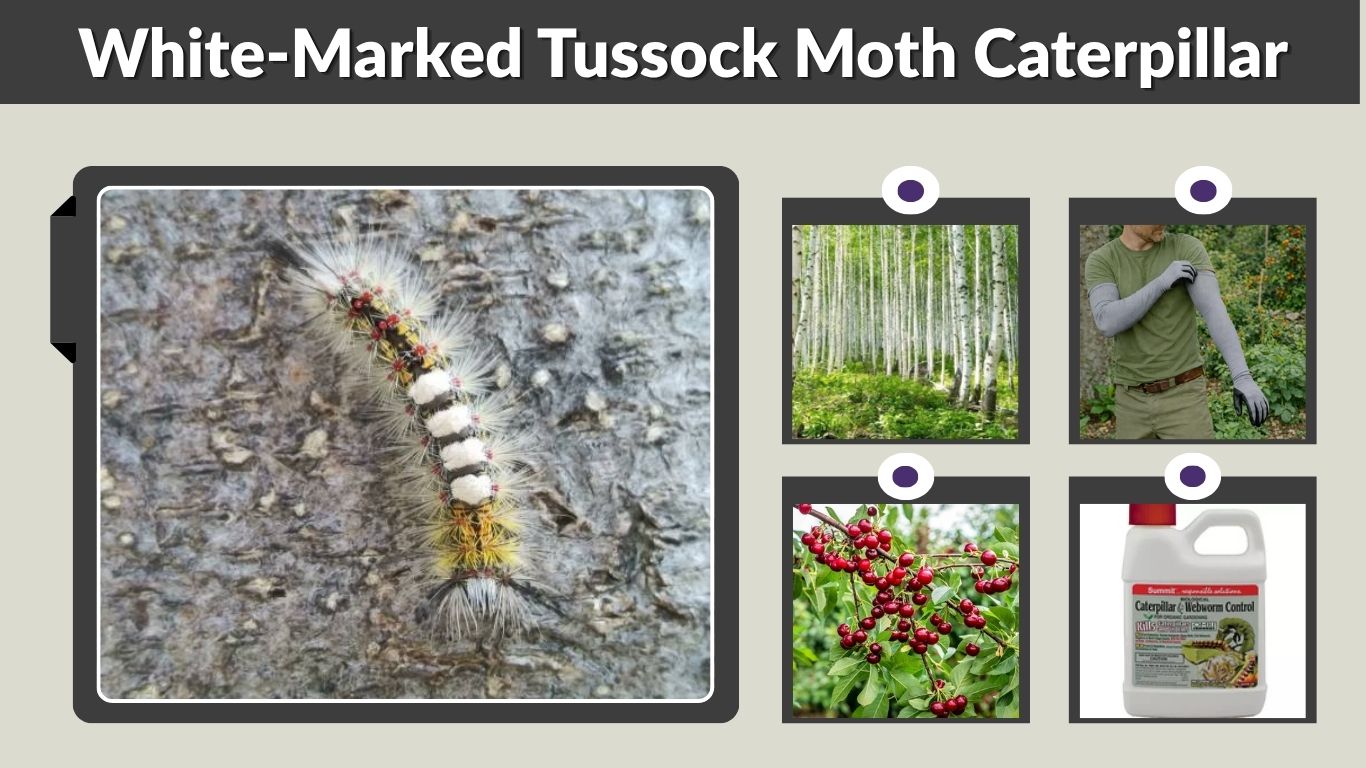
The white-marked tussock moth caterpillar is one of the most noticeable hairy caterpillars found on trees, shrubs, decks, and garden plants. Its bright red head, white brush-like tufts, black markings, and long hair pencils make it easy to recognize. Many people worry about its sting, rash, and danger to pets. This guide explains how to identify it, what it eats, where it lives, and how to handle it safely.
What Is a White-Marked Tussock Moth Caterpillar?
The white-marked tussock moth caterpillar is the larval stage of the white-marked tussock moth, scientifically known as Orgyia leucostigma. It is a native moth in North America and is often seen during warm months, especially on trees and outdoor surfaces near host plants.
This caterpillar is not a butterfly larva. It becomes a moth. The adult moth is much less colorful than the caterpillar, so most people notice the insect during its fuzzy larval stage.
1. Identification
You can identify a white-marked tussock moth caterpillar by these features:
- Bright red or orange-red head
- Four white or pale toothbrush-like tufts on the back
- Black stripe along the middle of the body
- Yellow, white, gray, or dark body markings
- Long black hair pencils near the front
- Longer gray or brown hair pencil near the rear
- Fuzzy body covered with irritating hairs
- Usually found crawling on leaves, bark, walls, decks, or outdoor furniture
Young caterpillars may look smaller and less dramatic, but mature ones have clear tufts and a bold color pattern. Their unusual shape is the main reason they are often mistaken for dangerous insects.
Is the White-Marked Tussock Moth Caterpillar Poisonous?
This caterpillar is better described as irritating rather than truly poisonous. It does not bite like an ant, and it does not inject venom like a bee. The problem comes from its tiny hairs, which can break off and irritate the skin.
Some people only feel mild itching. Others may develop redness, a rash, burning, or small bumps after touching the hairs. Sensitive people may react more strongly, especially if the hairs touch the neck, face, arms, or eyes.
2. Sting, Rash, and Skin Reaction
The “sting” is usually a reaction to the caterpillar’s hairs. The hairs can stick in the skin and cause discomfort. Symptoms may appear quickly or after a short time.
Common reactions include itching, redness, swelling, burning, small bumps, or a prickly feeling. Children may react more because they are more likely to touch fuzzy caterpillars. People with sensitive skin may also have stronger irritation.
Avoid rubbing the area, because rubbing can push hairs deeper into the skin. Wash the area with soap and water. Sticky tape may help lift loose hairs from the skin. A cold compress can reduce itching and swelling. If a serious reaction, eye exposure, breathing issue, or spreading rash happens, medical advice is the safest choice.
White-Marked Tussock Moth Caterpillar vs Hickory Tussock Moth Caterpillar
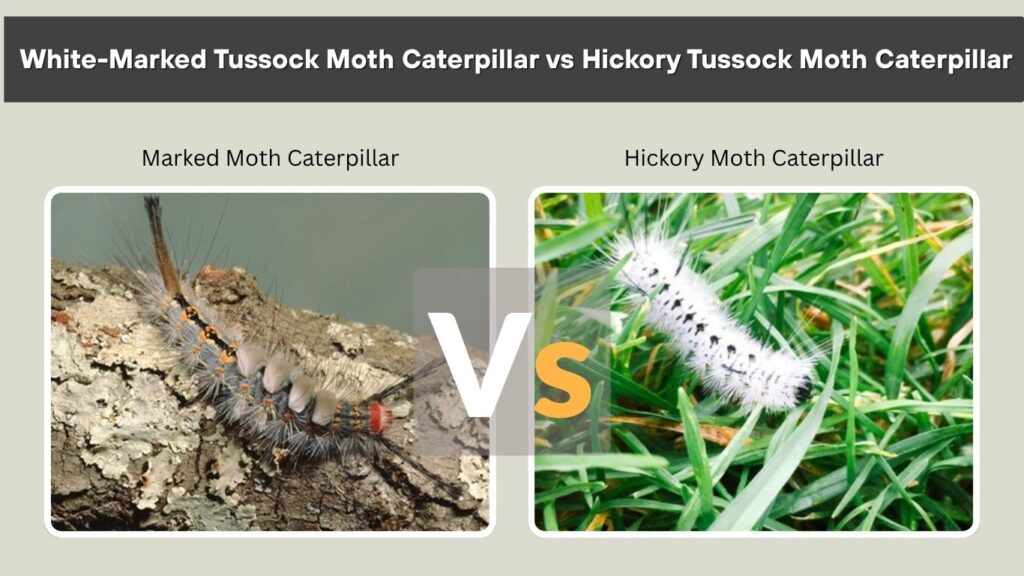
Many people confuse the white-marked tussock moth caterpillar with the hickory tussock moth caterpillar because both can look white, black, and fuzzy. However, they are different species.
| Feature | White-Marked Tussock Moth Caterpillar | Hickory Tussock Moth Caterpillar |
|---|---|---|
| Scientific name | Orgyia leucostigma | Lophocampa caryae |
| Head color | Often red or orange-red | Usually dark or less noticeable |
| Body look | Has four brush-like tufts on the back | Mostly white and fuzzy with black markings |
| Hair pencils | Long front and rear hair pencils | Black hair clusters near ends |
| Skin risk | Irritating hairs may cause rash | Irritating hairs may cause rash |
| Common season | Spring to late summer, depending on area | Often late summer to fall |
Both should be left alone. Even if one looks soft, touching it with bare hands can cause irritation.
Where Do White-Marked Tussock Moth Caterpillars Live?
White-marked tussock moth caterpillars are common in many parts of North America. They are especially associated with eastern regions but may appear in other areas where suitable host plants grow.
They are often found in woodlands, parks, yards, orchards, gardens, and tree-lined streets. They may also crawl onto decks, fences, siding, patio chairs, and sidewalks after dropping from trees.
3. Common Places to Find Them
White-marked tussock moth caterpillars may appear in:
- Oak, maple, elm, birch, apple, willow, poplar, and other trees
- Shrubs and ornamental plants
- Garden edges and wooded yards
- Decks, porches, fences, and outdoor furniture
- Tree trunks and low branches
- Sidewalks under heavily infested trees
- Cocoons attached to bark, walls, or outdoor objects
They may seem to appear suddenly when local populations rise. In some years, you may see only a few. In outbreak years, many caterpillars can be found in the same yard or neighborhood.
What Does a White-Marked Tussock Moth Caterpillar Eat?
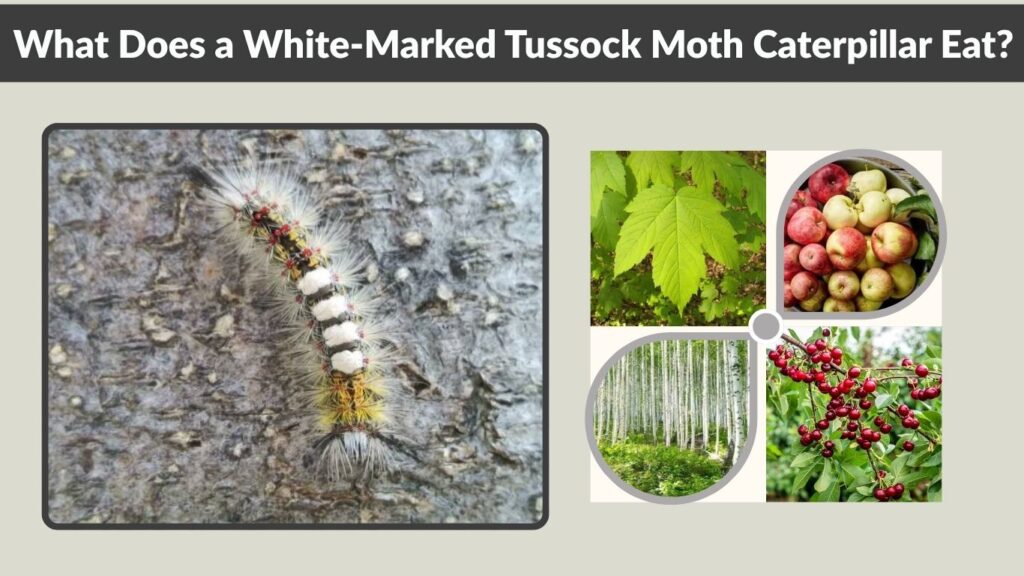
White-marked tussock moth caterpillars feed on leaves. They are not picky and can use many deciduous and some coniferous trees. This wide diet helps them survive in many habitats.
Young larvae may scrape leaf surfaces. Older caterpillars chew larger holes and may leave only veins behind when feeding is heavy. A few caterpillars usually do not harm a healthy tree, but large numbers can cause noticeable leaf damage.
4. Diet and Host Plants
Their diet may include oak, maple, apple, elm, birch, willow, poplar, cherry, rose, linden, and other woody plants. They may also feed on ornamental shrubs in yards and landscapes.
Because they feed on many plants, control is usually only needed when they appear in large numbers or create problems near people, pets, or valuable trees.
White-Marked Tussock Moth Caterpillar Life Cycle
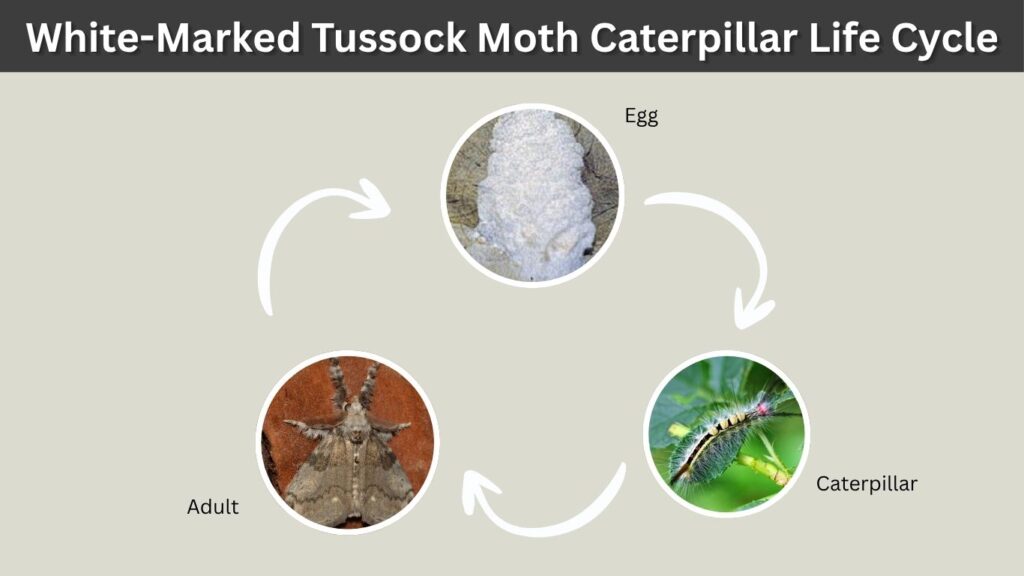
The life cycle starts with eggs. Females lay eggs on or near their cocoons, often in a foamy-looking egg mass. These eggs can survive through winter in many areas.
In spring, tiny caterpillars hatch and begin feeding. Some young caterpillars hang from silk threads and may be carried by wind to nearby plants. As they grow, they molt several times and become more colorful and hairy.
5. From Caterpillar to Moth
After feeding, the caterpillar spins a cocoon. The cocoon is often attached to bark, fences, siding, outdoor furniture, or other protected surfaces. Inside, the caterpillar pupates and later becomes an adult moth.
Adult males usually have wings and can fly. Females are wingless or nearly wingless and stay close to the cocoon. After mating, the female lays eggs on the cocoon, and the cycle begins again.
In warmer areas, there may be more than one generation each year. In colder areas, the insect commonly overwinters as eggs.
Are White-Marked Tussock Moth Caterpillars Dangerous to Dogs?
Dogs may sniff, lick, or eat caterpillars out of curiosity. The main risk is irritation from the hairs. A dog that touches one may drool, paw at the mouth, vomit, cough, or show swelling around the lips or tongue.
Most mild contact may only cause temporary discomfort, but mouth or eye contact is more concerning. If a dog eats or chews a hairy caterpillar and shows swelling, breathing trouble, repeated vomiting, or strong discomfort, contact a veterinarian.
Do not let pets play with fuzzy caterpillars. Remove caterpillars from patios or decks with gloves, a tool, or a dustpan instead of bare hands.
How to Get Rid of White-Marked Tussock Moth Caterpillars
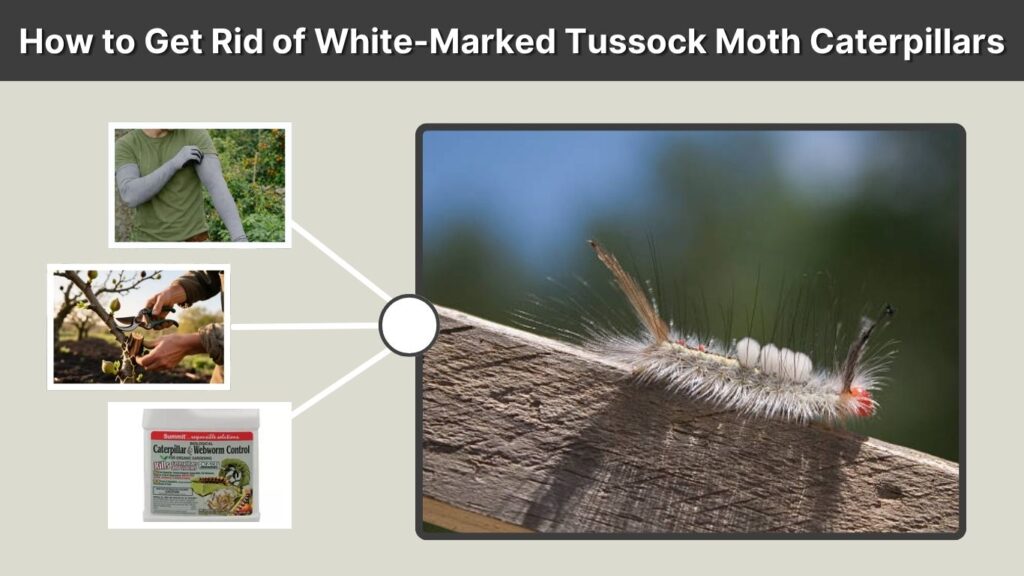
Control is not always needed. These caterpillars are part of the local ecosystem and provide food for birds, predators, and parasites. However, you may want to reduce them if they are causing heavy leaf damage or spreading across areas where people and pets walk.
6. Safe Control Methods
Use these steps to manage them safely:
- Wear gloves, long sleeves, and eye protection before handling infested branches.
- Remove small numbers with a stick, paper towel, or dustpan.
- Drop caterpillars into soapy water if control is necessary.
- Prune small, heavily infested branches when practical.
- Remove egg masses and cocoons from outdoor furniture, fences, and siding.
- Keep children and pets away from infested trees.
- Avoid brushing caterpillars off with bare hands.
- Use insecticidal soap or labeled caterpillar control products only when needed.
For large outbreaks on tall trees, a local arborist or pest control professional may be safer than trying to spray the tree yourself.
Should You Kill White-Marked Tussock Moth Caterpillars?
You do not need to kill every white-marked tussock moth caterpillar you see. If it is on a tree away from people, it is usually best to leave it alone. Natural predators often reduce the population over time.
Control makes more sense when caterpillars are falling onto decks, crawling near children, irritating pets, or damaging young ornamental trees. The goal should be practical management, not complete removal from the environment.
FAQs
Are white-marked tussock moth caterpillars poisonous?
They are not poisonous in the same way as a venomous insect, but their hairs can irritate skin. Touching them may cause itching, redness, burning, or a rash. It is best to avoid direct contact and teach children not to handle fuzzy caterpillars.
What happens if a white-marked tussock moth caterpillar stings you?
The sting-like feeling usually comes from irritating hairs. Wash the area with soap and water, avoid rubbing, and use tape to lift loose hairs if needed. A cold compress may help. Seek medical advice if the reaction is severe, spreads, or affects the eyes.
What does a white-marked tussock moth caterpillar turn into?
It turns into a white-marked tussock moth. The male moth has wings and can fly, while the female is wingless or nearly wingless. The adult stage is less colorful than the caterpillar, so many people recognize the species mainly from the larval stage.
Are white-marked tussock moth caterpillars harmful to dogs?
They can irritate a dog’s mouth, nose, or skin if touched, licked, or eaten. Watch for drooling, pawing at the mouth, swelling, vomiting, or breathing difficulty. If symptoms are strong or the dog chewed the caterpillar, contact a veterinarian.
How do I remove white-marked tussock moth caterpillars from my yard?
Wear gloves and remove small numbers with a tool, dustpan, or soapy water. Check fences, decks, tree trunks, and outdoor furniture for cocoons or egg masses. For heavy outbreaks in tall trees, contact a professional instead of spraying without proper equipment.
