
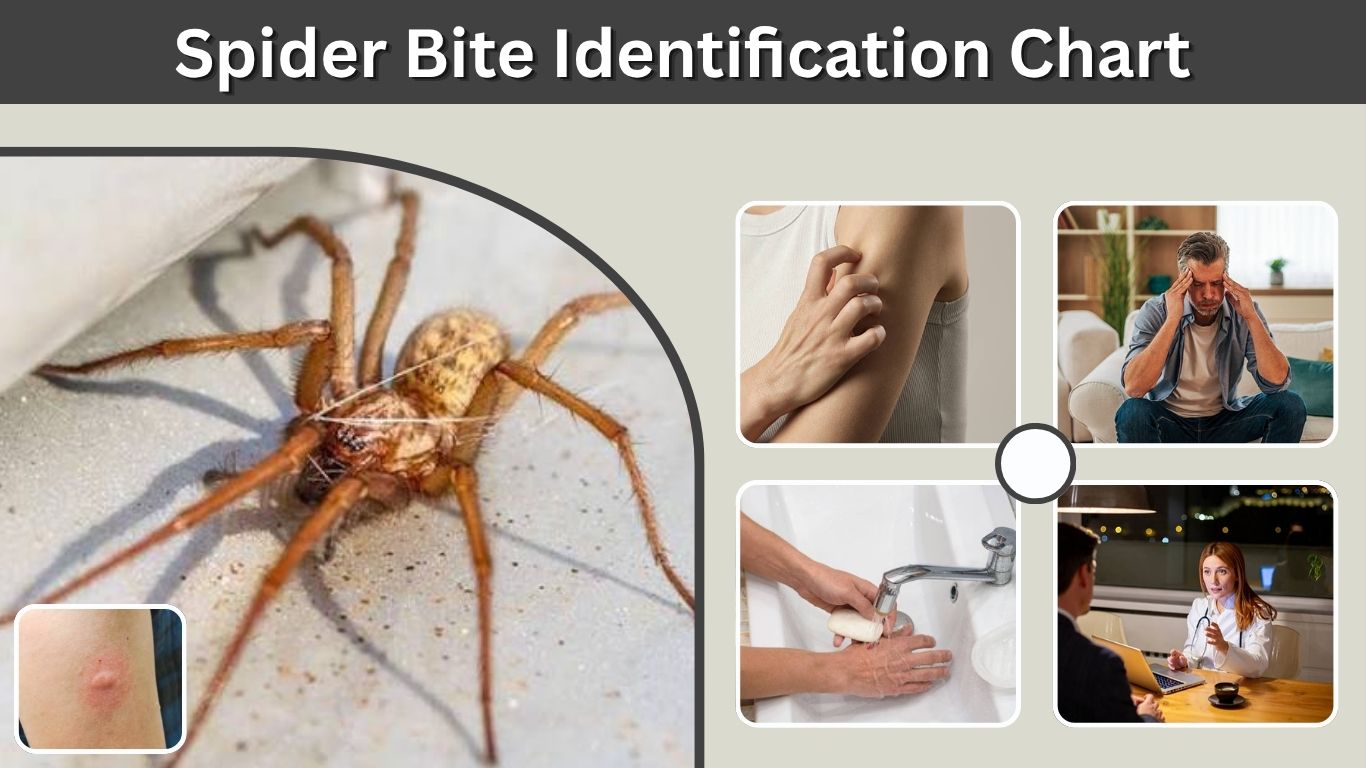
Spider bites can look very different depending on the spider, the amount of venom delivered, and the individual reaction. Most bites cause only mild redness, itching, swelling, or temporary pain, while a small number of spider species can cause severe muscle cramps, tissue injury, neurological symptoms, or other serious effects. Because many insect bites and skin conditions resemble spider bites, appearance alone cannot reliably identify the culprit. This spider bite identification chart compares common bite patterns, symptoms, pain levels, risks, and warning signs that may require medical attention.
Spider Bite Identification Chart
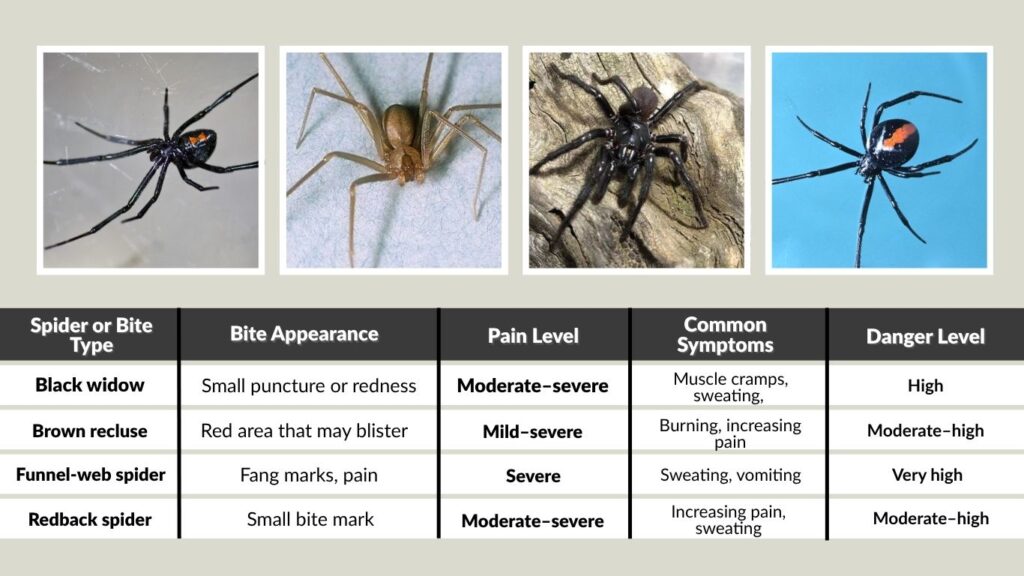
The chart below provides general clues for recognizing different spider bite patterns. Symptoms can overlap, and a definite identification is usually much easier when the spider was actually seen at the time of the bite.
| Spider or Bite Type | Bite Appearance | Pain Level | Common Symptoms | Danger Level |
| Common harmless spider | Small red bump, mild swelling | Mild | Itching, tenderness | Low |
| Black widow | Small puncture or redness; skin changes may be minor | Moderate–severe | Muscle cramps, sweating, abdominal or back pain | High |
| Brown recluse | Red area that may blister and darken over time | Mild–severe | Burning, increasing pain, possible tissue damage | Moderate–high |
| Funnel-web spider | Fang marks, pain, possible swelling | Severe | Sweating, vomiting, drooling, twitching, breathing difficulty | Very high |
| Redback spider | Small bite mark, localized redness | Moderate–severe | Increasing pain, sweating, weakness, muscle spasms | Moderate–high |
| Mouse spider | Fang marks with localized pain | Moderate–severe | Tingling, nausea, sweating, possible neurological symptoms | Potentially high |
| Brazilian wandering spider | Redness and swelling around fang marks | Often severe | Intense pain, sweating, vomiting, rapid heartbeat | High |
| Jumping spider | Small red bump | Mild | Local irritation, itching, slight swelling | Low |
| Wolf spider | Small puncture marks or red bump | Mild–moderate | Temporary pain and swelling | Low |
| Orb-weaver | Small localized red area | Mild | Brief pain, itching, tenderness | Low |
Funnel-web bites are medical emergencies, while widow and recluse bites can also produce significant symptoms requiring professional assessment. Most other spider bites produce localized irritation rather than severe systemic illness.
What Does a Spider Bite Look Like?
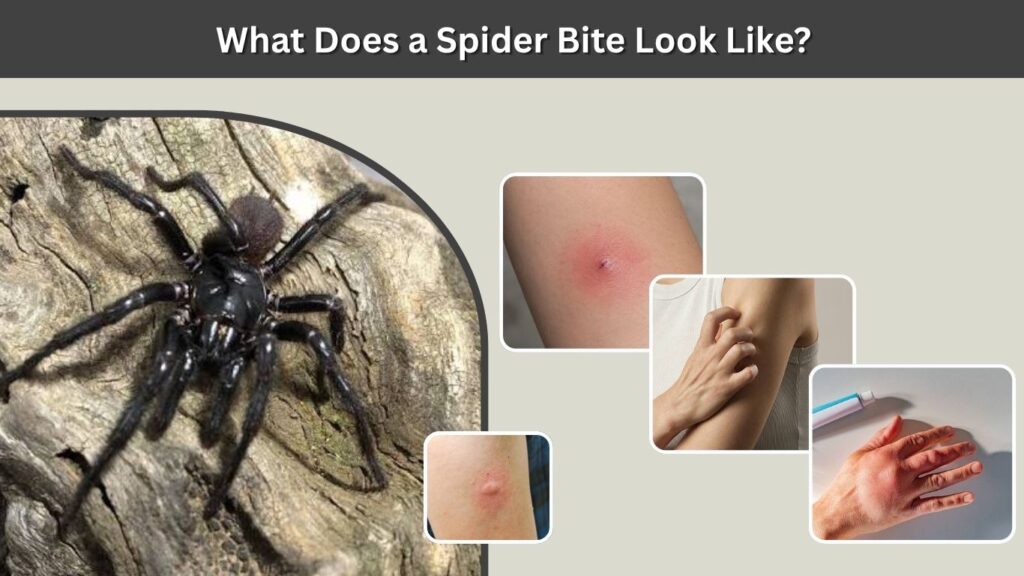
There is no single appearance that confirms a spider bite. A mild bite may resemble a mosquito bite, flea bite, pimple, or other small skin irritation. Common local reactions include redness, slight swelling, tenderness, itching, and a small raised bump.
Common Early Signs
Minor spider bites commonly produce:
- One small red or pink bump
- Mild swelling around the area
- Itching or burning
- Local tenderness
- Small puncture marks in some cases
- Temporary warmth around the bite
Two visible fang marks are sometimes associated with spider bites, but their presence or absence does not reliably determine whether a spider was responsible.
Can You Identify a Spider by the Bite Mark?
Usually, no. The appearance of the skin alone is rarely enough to identify a particular species. Many suspected spider bites are never confirmed because the spider was not seen or collected.
Conditions such as bacterial skin infections, allergic reactions, bites from other arthropods, and irritated hair follicles can resemble spider bites. Brown recluse bites in particular are frequently suspected based only on a developing skin lesion, even though several other conditions can produce similar wounds.
Black Widow Spider Bite Identification
Black widow bites are important to recognize because the venom affects the nervous system. The skin around the bite may not look dramatic even when significant symptoms develop.
Appearance and Pain
A person may initially feel a pinprick or stinging sensation. Mild redness or swelling may appear around the bite.
Within the following hours, pain can become considerably more intense and spread beyond the bite location.
Typical Symptoms
Black widow envenomation may cause:
- Severe muscle cramping
- Abdominal tightening
- Back or chest pain
- Muscle twitching
- Heavy sweating
- Nausea
- Restlessness
- Weakness
Muscle cramps can begin close to the bite and later involve the abdomen, chest, or back. Severe symptoms warrant prompt medical attention.
Brown Recluse Spider Bite Identification
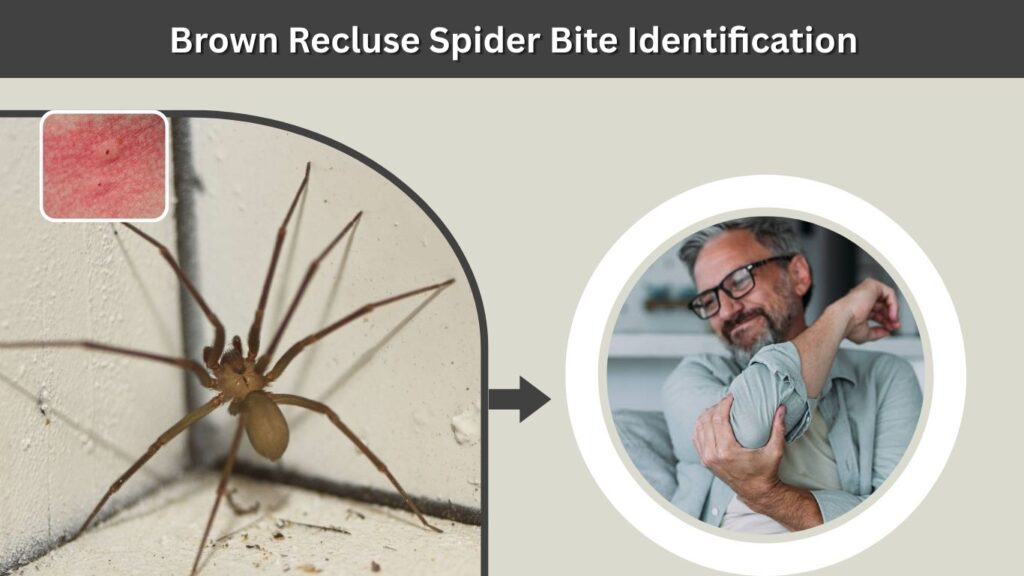
Brown recluse bites are different from widow bites because their major concern is potential damage to skin and surrounding tissue rather than primarily muscle cramping.
Early Bite Appearance
A brown recluse bite may initially go unnoticed. During the first several hours, the area may become:
- Red
- Itchy
- Tender
- Slightly swollen
- Painful or burning
A blister can later develop.
Changes Over the Following Days
In more significant cases, the affected area may become increasingly painful and darker. Tissue damage can occasionally result in an ulcer or necrotic wound.
However, severe tissue destruction does not occur after every brown recluse bite. Any enlarging, darkening, blistering, or ulcerating wound should be evaluated by a healthcare professional rather than assumed to be a spider bite.
Funnel-Web Spider Bite Identification
Australian funnel-web spiders produce one of the most dangerous types of spider envenomation. A suspected funnel-web bite should be treated as a medical emergency rather than waiting for symptoms to appear.
Bite and Immediate Reaction
The bite itself can be very painful, and fang marks may be visible. Serious symptoms can develop rapidly.
Signs may include:
- Severe bite-site pain
- Heavy sweating
- Nausea or vomiting
- Abdominal pain
- Drooling
- Tingling around the lips or tongue
- Muscle twitching
- Difficulty breathing
- Confusion or loss of consciousness
What to Do
Keep the person lying down and as still as possible. For a bite on an arm or leg, Australian health guidance recommends a firm pressure-immobilization bandage followed by immobilization of the limb with a splint. Emergency medical assistance should be requested immediately.
Redback Spider Bite Identification
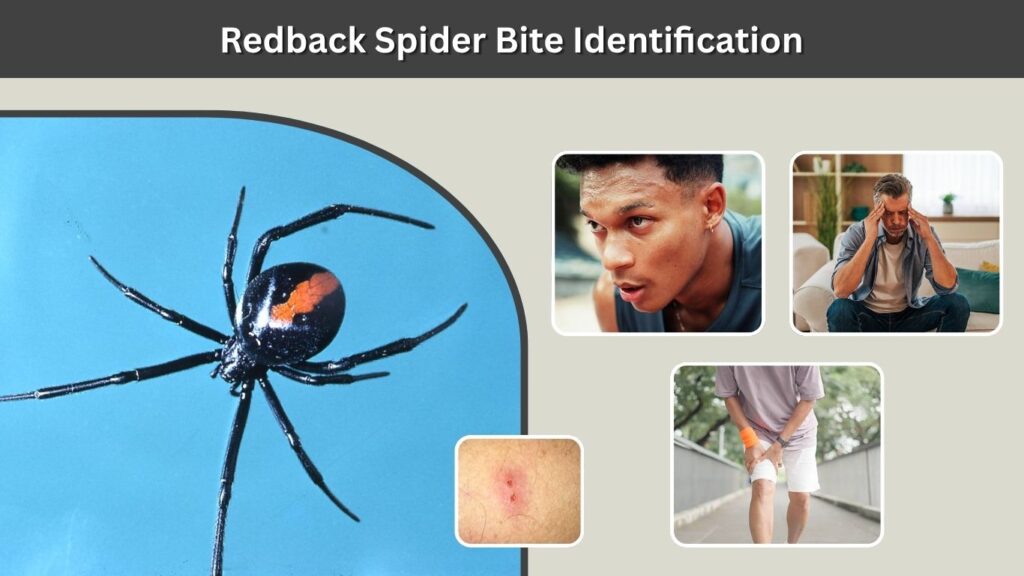
The Australian redback spider is related to widow spiders. Its bite commonly produces significant localized pain and sweating, although its recommended first aid differs from that for funnel-web spiders.
Common Symptoms
A redback bite may cause:
- Increasing pain around the bite
- Local sweating
- Headache
- Muscle weakness
- Muscle spasms
- Nausea in some cases
Unlike funnel-web bites, pressure immobilization is not recommended for redback bites. Australian guidance recommends washing the area and using a cold pack for pain while seeking medical advice if symptoms are severe or persistent.
Brazilian Wandering Spider Bite Identification
Brazilian wandering spiders, or Phoneutria spiders, can deliver medically important bites. Severe local pain is one of the most characteristic features.
Symptoms to Watch For
A bite may produce:
- Immediate intense pain
- Redness
- Swelling
- Heavy sweating
- Nausea or vomiting
- Trembling
- Rapid heartbeat
- Blood-pressure changes
- Excessive saliva
- Breathing problems in severe cases
A confirmed or strongly suspected bite should receive prompt medical assessment, particularly when whole-body symptoms develop. The CDC notes that Phoneutria is among the medically important spiders travelers may encounter in parts of Central and South America.
Harmless Spider Bite Identification
The majority of spider species do not cause medically serious bites in humans. Jumping spiders, many house spiders, orb-weavers, grass spiders, and wolf spiders may occasionally bite if trapped against the skin, but reactions are usually localized.
Typical Mild Reaction
A minor bite may produce a small red bump with mild pain, itching, warmth, or swelling. These symptoms often resemble other minor arthropod bites and generally improve rather than progressively worsening.
For uncomplicated bites, cleaning the skin and applying a cloth-wrapped cold pack can help reduce discomfort and swelling.
Spider Bite vs Other Bites
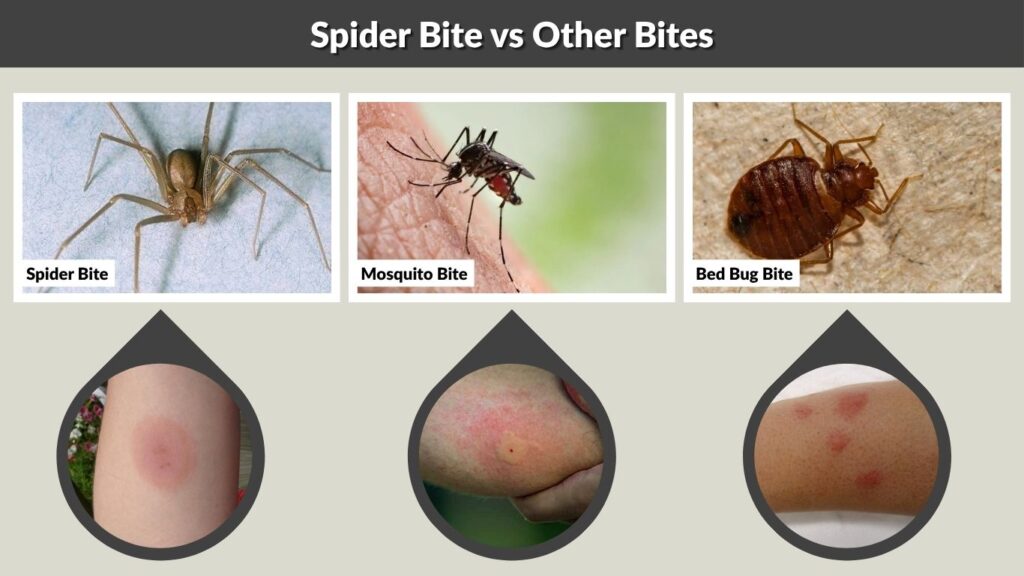
Spider bites can easily be mistaken for other common skin reactions.
| Feature | Spider Bite | Mosquito Bite | Flea Bite | Bed Bug Bite |
| Number | Often single | One or several | Often multiple | Often multiple |
| Itching | Mild to moderate | Usually strong | Strong | Strong |
| Pain | Possible | Usually minimal | Usually minimal | Usually minimal |
| Pattern | Usually isolated | Random | Clusters, often lower body | Clusters or lines |
| Swelling | Variable | Small raised bump | Small red bumps | Raised red bumps |
| Severe systemic effects | Rare, species-dependent | Uncommon | Uncommon | Uncommon |
This comparison can provide clues, but bite patterns alone cannot confirm the cause.
Signs a Spider Bite May Be Dangerous
Most minor bites improve with simple care. Certain symptoms, however, should not be ignored.
Seek Urgent Medical Care If You Notice
- Difficulty breathing
- Swelling of the lips, mouth, tongue, or throat
- Loss of consciousness
- Severe or rapidly increasing pain
- Repeated vomiting
- Severe muscle cramps
- Heavy sweating with weakness
- Confusion
- Rapidly spreading swelling
- A wound becoming significantly darker or ulcerated
- Fever or signs of infection
Severe allergic reactions can occur after bites and stings, and difficulty breathing or major facial or throat swelling should be treated as an emergency.
What to Do After a Suspected Spider Bite
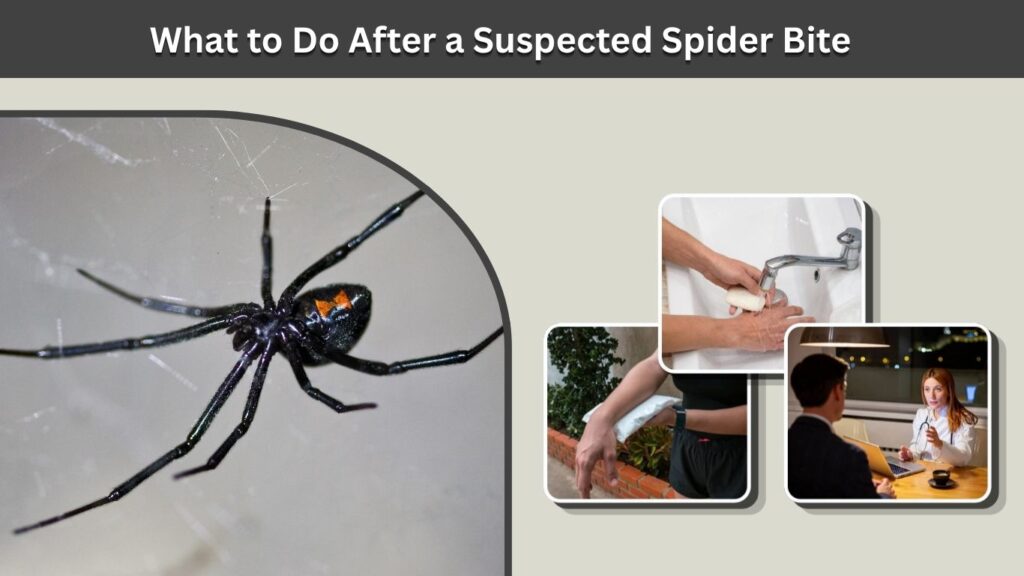
For an ordinary unidentified bite without severe symptoms, wash the area gently with soap and water. A cold pack wrapped in cloth can be applied to reduce swelling and discomfort. Avoid scratching the area because damaged skin can become infected.
Basic First Aid
- Wash the bite with soap and water.
- Keep the area clean.
- Apply a wrapped cold pack if swollen or painful.
- Elevate the affected limb when practical.
- Monitor the bite for changes.
- Photograph the bite periodically if it is worsening.
- Seek medical advice if symptoms become severe or continue to worsen.
Exception: A suspected Australian funnel-web or mouse spider bite requires pressure immobilization and immediate emergency care. Do not use the same technique automatically for every spider bite.
What Not to Do After a Spider Bite
Avoid aggressive home treatments that can injure the skin or delay appropriate medical care.
Do not:
- Cut the bite open
- Attempt to suck out venom
- Burn or cauterize the wound
- Apply harsh chemicals
- Place ice directly against bare skin
- Use a tourniquet
- Attempt to catch a dangerous spider by hand
Taking a clear photograph of the spider from a safe distance may be useful if identification is possible without risking another bite.
Frequently Asked Questions
What Does a Poisonous Spider Bite Look Like?
The more accurate term is venomous spider bite because spiders inject venom through their fangs. A medically significant bite may initially look like a small red area, but symptoms vary considerably by species.
How Soon Do Spider Bite Symptoms Appear?
Some symptoms, such as pain from widow or funnel-web bites, can develop quickly. Tissue changes associated with a brown recluse bite may evolve over hours or days.
Do Spider Bites Always Have Two Fang Marks?
No. Fang marks may be visible in some bites but can be too small to see. Two punctures alone do not confirm a spider bite.
What Spider Bite Causes Muscle Cramps?
Black widow and related widow spider bites are particularly associated with painful muscle cramping and spasms.
What Spider Bite Causes Skin Necrosis?
Brown recluse venom can occasionally damage surrounding tissue and produce a necrotic lesion. However, not every brown recluse bite develops necrosis, and many other medical conditions can produce similar wounds.
