
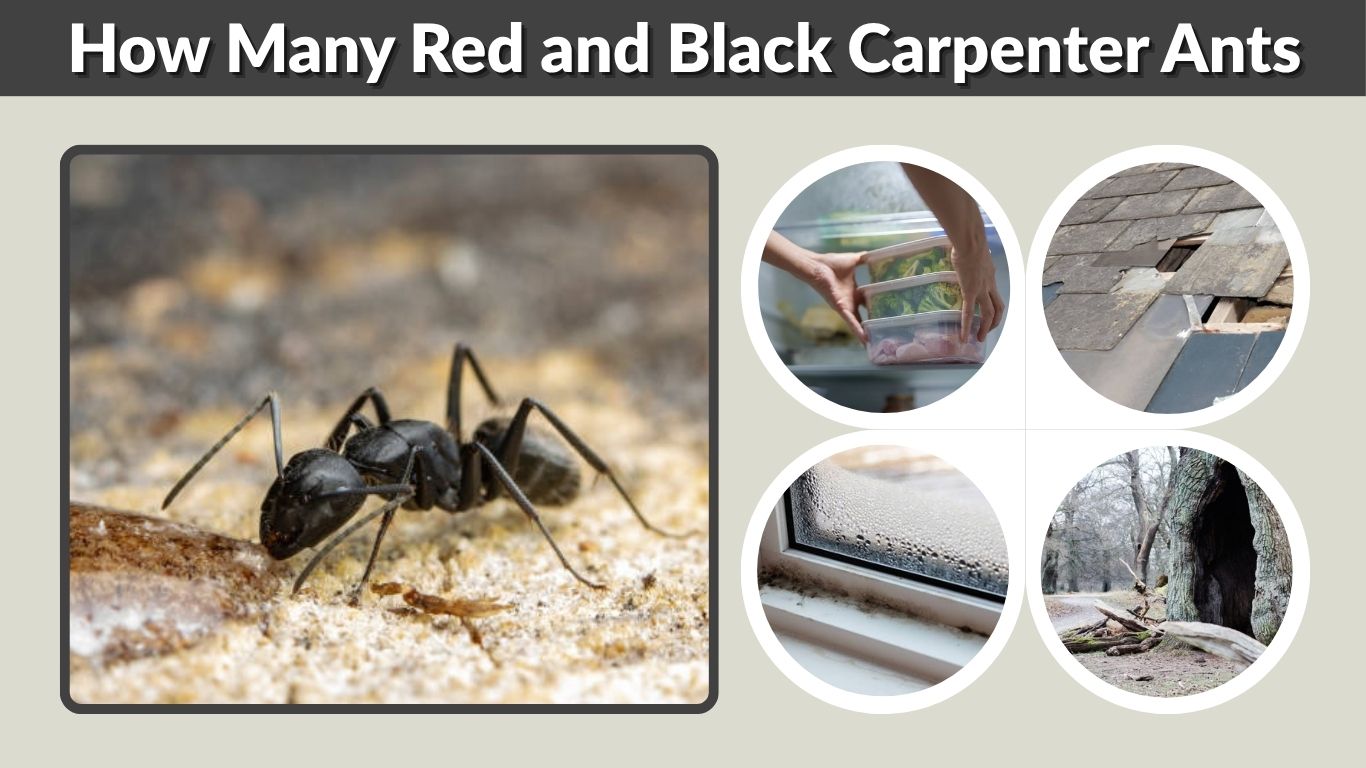
A red and black carpenter ant colony can contain a few thousand ants when it is young, but a mature colony may have 10,000 to 50,000 workers or more. Some large carpenter ant colonies can reach up to 100,000 workers in ideal conditions. The exact number depends on the species, age of the colony, nesting space, food supply, and moisture level.
Red and Black Carpenter Ant Colony Size
Red and black carpenter ants belong to the genus Camponotus. These ants are known for building nests in wood, especially damp or decaying wood. A colony may start small, but it can grow steadily over several years if the queen survives and the environment supports it.
A new colony begins with one fertilized queen. At first, the colony may have only a small group of workers. These early workers care for the queen, collect food, and expand the nest. As the colony grows, more workers are produced each season.
A mature red and black carpenter ant colony may contain thousands of workers. In some cases, large colonies can have tens of thousands of ants. The colony may also produce winged males and winged females once it becomes mature.
Average Colony Numbers
- Young colony: 10 to 500 ants
- Growing colony: 500 to 3,000 ants
- Established colony: 3,000 to 10,000 ants
- Mature colony: 10,000 to 50,000 ants
- Very large colony: Up to 100,000 workers in some species
- Reproductive ants: Produced when the colony is mature
- Queens: Usually one main queen, but some species may have more
Why Colony Size Can Be Different
Not every carpenter ant colony reaches the same size. Some colonies stay small because food is limited, the nest is disturbed, or the queen dies early. Other colonies become very large when they have moisture, safe nesting sites, and steady food sources.
Red and black carpenter ants often nest in wood that is already soft from moisture or decay. They do not eat the wood like termites. Instead, they chew galleries through it to create space for the colony. If the wood is large, protected, and damp, the colony can expand for years.
Outdoor nests are often found in logs, tree stumps, dead branches, fence posts, and old landscape timbers. Indoor nests may develop in wall voids, window frames, roof areas, crawl spaces, or wood damaged by leaks.
Factors That Affect Colony Size
- Age of the colony
- Health of the queen
- Amount of available food
- Moisture around the nest
- Size of the wood or nesting space
- Protection from predators
- Weather and seasonal conditions
- Whether satellite nests are present
- Human treatment or disturbance
How a Carpenter Ant Colony Starts
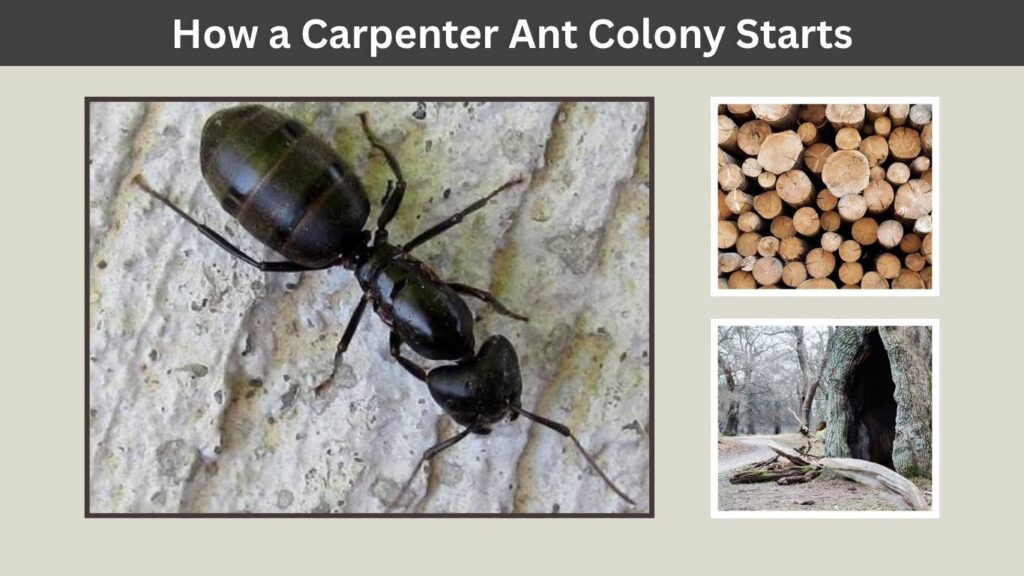
A carpenter ant colony starts when a winged female mates and becomes a queen. After mating, she loses her wings and searches for a protected nesting place. She often chooses damp wood, a hollow tree, a stump, or a hidden crack.
The queen lays her first eggs and cares for them until they become adult workers. These first workers are usually small because the queen has limited food at the beginning. Once workers appear, they take over the daily tasks of the colony.
The workers feed the queen, care for larvae, search for food, and expand the nest. As more workers are produced, the colony grows faster. After several years, the colony may become large enough to produce winged reproductive ants.
Workers, Queens, and Winged Ants
A carpenter ant colony has different types of ants. Workers are the ants most people see. They are wingless females that collect food, maintain the nest, and protect the colony. They can vary in size, with smaller and larger workers living in the same nest.
The queen is the main egg-layer. She usually stays hidden inside the nest and does not leave to forage. Her job is to produce eggs so the colony can continue growing.
Winged carpenter ants are reproductive ants. They appear when a colony is mature enough to produce males and future queens. Seeing winged ants inside a house can be a serious warning sign because it may mean a mature colony is nearby.
| Colony Member | Main Role | Seen by Homeowners? |
| Queen | Lays eggs and grows the colony | Rarely seen |
| Workers | Collect food and care for the nest | Commonly seen |
| Major workers | Defend and help expand the colony | Sometimes seen |
| Winged males | Mate with future queens | Seen during swarming |
| Winged females | Become new queens | Seen during swarming |
Red and Black Carpenter Ants vs Black Carpenter Ants
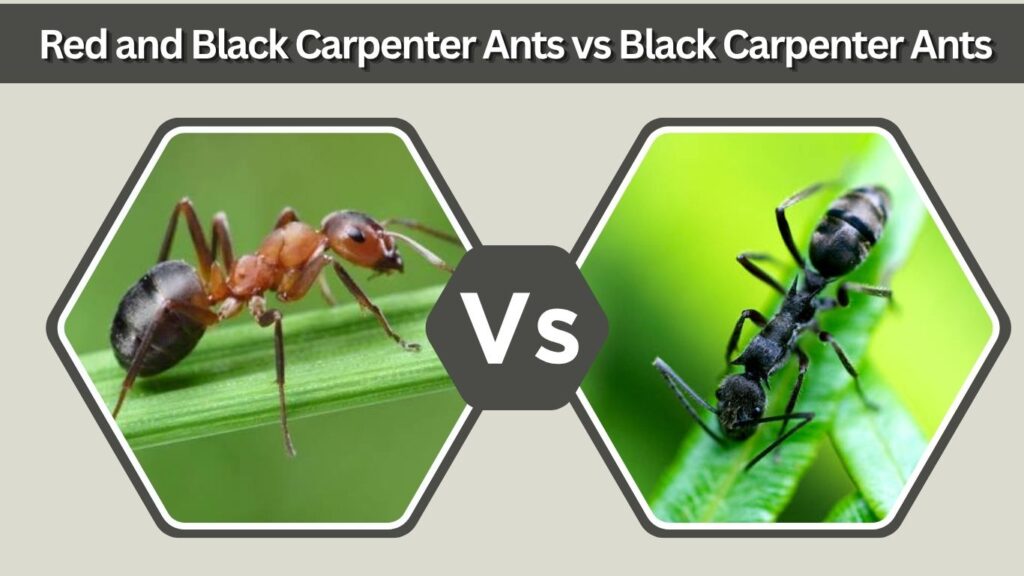
Red and black carpenter ants are often confused with black carpenter ants. Both can belong to the same general group, but they may be different species. Some red and black carpenter ants have a reddish head or thorax with a darker abdomen. Black carpenter ants are usually dark black or mostly black.
Both types can build colonies in wood and may become household pests. The color does not always tell you how large the colony is. A red and black colony and a black carpenter ant colony can both grow large if conditions are right.
The most important signs are not only color. Size, nesting behavior, wood debris, trails, and winged ants are better clues when judging whether you have an active colony.
Main Differences to Notice
- Red and black carpenter ants may have reddish body sections.
- Black carpenter ants are usually mostly black.
- Both types can have large workers.
- Both can nest in damp or damaged wood.
- Both may form satellite nests.
- Both can produce winged ants when mature.
- Both can damage wood by tunneling.
How Many Carpenter Ants Mean an Infestation?
Seeing one or two carpenter ants does not always mean there is an infestation. They may have entered the home while searching for food. However, seeing ants repeatedly, especially in the same area, can mean a colony is nearby.
If you see dozens of carpenter ants indoors, the risk is higher. If you see winged red and black carpenter ants inside, the concern is even greater. Winged ants usually come from a mature colony, not a new one.
A strong infestation may include regular trails, ants near sinks or windows, small piles of wood shavings, and activity at night. Carpenter ants are often more active after dark, so nighttime sightings can be important.
Satellite Nests and Large Colonies
Large carpenter ant colonies may create satellite nests. A satellite nest is a secondary nest that is connected to the main colony. These nests may not always contain the queen, but they can contain many workers and developing young.
This is one reason carpenter ants can be hard to control. The main colony may be outside in a stump or tree, while satellite nests may be inside the house. Killing visible ants indoors may not remove the full colony.
Satellite nests often appear when the colony becomes large and needs more space. Homes near trees, firewood, mulch, or damp wood are more likely to have this problem.
Signs of Satellite Nests
- Ants appear in more than one room.
- Ant trails lead between indoor and outdoor areas.
- Ants return after spraying.
- Winged ants appear indoors.
- Activity is stronger near walls or ceilings.
- Frass appears near trim or baseboards.
- Ants are seen during cold months indoors.
Why Red and Black Carpenter Ant Colonies Grow Indoors
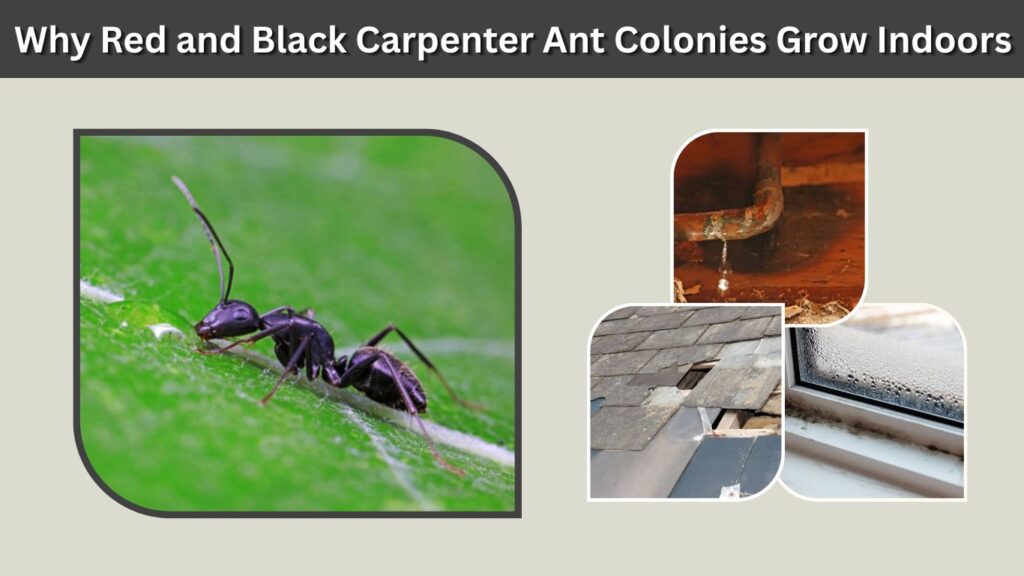
Carpenter ants do not usually choose dry, solid wood first. They prefer wood that has moisture damage. Leaky pipes, roof leaks, poor ventilation, and damp window frames can create ideal conditions.
Inside a house, carpenter ants may nest in bathrooms, kitchens, attics, basements, crawl spaces, and wall voids. They may also enter through cracks, vents, utility lines, or tree branches touching the roof.
Food also helps colonies grow. Carpenter ants eat sweets, proteins, grease, dead insects, honeydew from aphids, and household scraps. If food and water are easy to find, workers can support a larger colony.
Does Colony Size Mean More Damage?
In general, a larger colony can cause more damage than a small one. Carpenter ants remove wood to make tunnels, so more workers can mean more excavation. However, the amount of damage also depends on where the nest is located and how long it has been active.
A small colony in a weak structural area can still be a problem. A large outdoor colony may cause less direct house damage if it is not nesting inside. The biggest concern is when carpenter ants are nesting in walls, beams, floors, or roof structures.
Damage may develop slowly, but it should not be ignored. Carpenter ants often point to a moisture problem, so the house may need both pest control and repair work.
How to Estimate Colony Size at Home
It is difficult to count the exact number of ants in a carpenter ant colony. Most of the ants stay hidden inside wood, soil, or wall spaces. Homeowners usually see only a small percentage of the workers.
Still, you can estimate the seriousness of the problem by watching activity. A few ants near food may be minor. Many ants every day, ants in several rooms, or winged ants indoors may suggest a larger colony.
Try watching trails at night with a flashlight. Follow ants to entry points, cracks, windows, pipes, or exterior walls. This can help you understand whether they are coming from outside or from a hidden indoor nest.
Warning Signs of a Large Colony
- Many ants seen daily
- Ants active at night
- Winged ants indoors
- Ants in multiple rooms
- Wood shavings near walls
- Rustling sounds in walls
- Ant trails leading outdoors
- Activity near damp wood
- Ants returning after treatment
How to Control a Large Carpenter Ant Colony
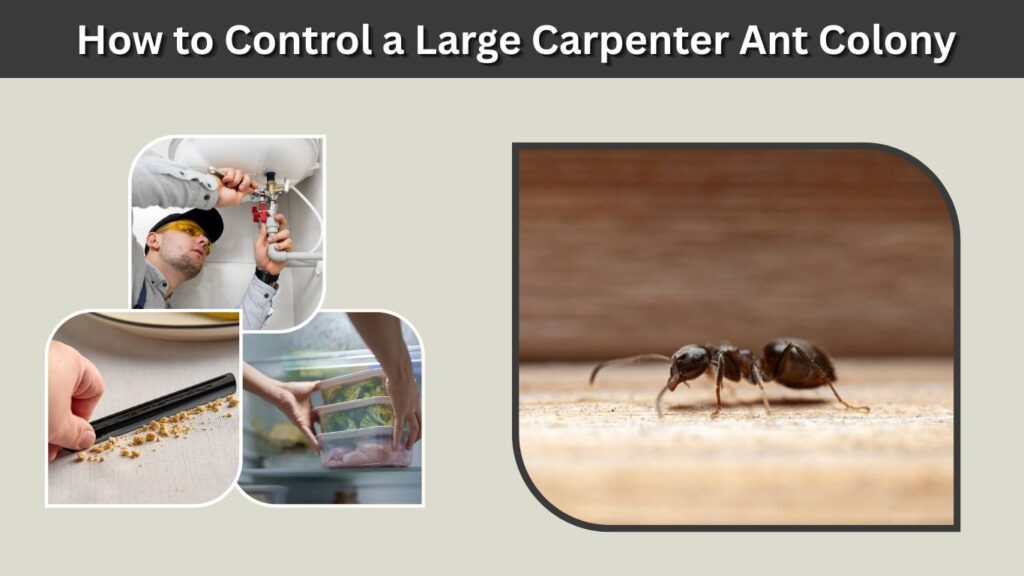
To control a carpenter ant colony, the nest must be found and treated. Killing only the ants you see will not solve the full problem. The queen and hidden workers may survive and continue producing more ants.
Start by removing food and water sources. Clean crumbs, store food tightly, and repair leaks. Then look for trails and possible nests. Baits may help because workers carry the poison back to the colony. However, carpenter ants may switch between sweet and protein foods, so bait choice matters.
For large colonies, professional pest control is often the best option. A professional can inspect wall voids, crawl spaces, attics, and outdoor nesting areas. They can also treat satellite nests and help prevent the colony from returning.
How to Prevent New Colonies
Prevention is easier than removing a mature colony. Keep wood dry, repair leaks quickly, and remove rotting wood around the home. Store firewood away from the house and keep mulch from touching siding.
Trim tree branches that touch the roof or walls. Seal cracks around windows, doors, pipes, vents, and foundations. Check bathrooms, kitchens, and basements often because these areas commonly provide moisture.
Outdoor maintenance is also important. Old stumps, logs, and wooden borders near the house can support carpenter ant colonies. Removing these nesting sites lowers the chance of ants moving indoors.
FAQs
How many red and black carpenter ants are in a colony?
A young red and black carpenter ant colony may have only a few hundred ants, but a mature colony can contain thousands. Many established colonies have 10,000 to 50,000 workers. Some very large carpenter ant colonies may reach around 100,000 workers when conditions are ideal.
How many carpenter ants do you usually see from a colony?
Homeowners usually see only a small number of workers. Most ants remain hidden in the nest. Seeing a few ants may mean they are foraging, but seeing many ants daily, winged ants, or ants in several rooms can suggest a larger hidden colony.
Do red and black carpenter ants have one queen?
Many carpenter ant colonies start with one queen. Some species and large colonies may have more than one queen, depending on the ant species and colony structure. The queen usually stays hidden inside the main nest and produces eggs for the colony.
Are red and black carpenter ants worse than black carpenter ants?
Not always. The color does not decide how serious the infestation is. Both red and black carpenter ants and black carpenter ants can damage wood if they nest inside a structure. The size of the colony, nest location, and moisture level matter more than color.
What does it mean if I see winged red and black carpenter ants?
Winged carpenter ants usually mean a mature colony is nearby. If they appear inside the house, there may be a nest indoors or close to the structure. This is a strong reason to inspect damp wood, wall voids, windows, and roof areas.
