
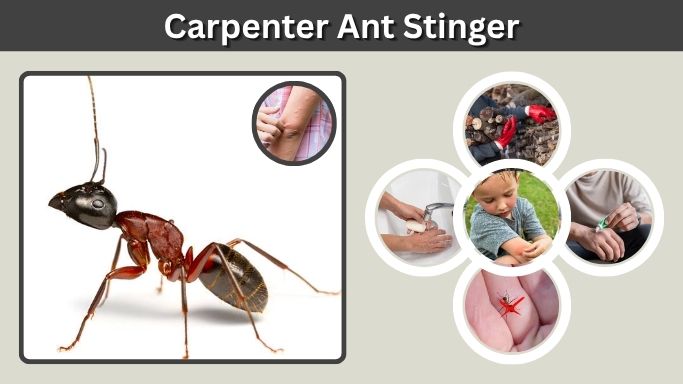
Carpenter ants may look intimidating because of their large black or reddish bodies, strong jaws, and sometimes wings. This often leads people to wonder whether they have a stinger. The clear answer is that carpenter ants do not sting like bees, wasps, or fire ants. However, they can bite with their strong mandibles, and the bite may feel sharp or burning because they can release formic acid into the wound.
Do Carpenter Ants Have a Stinger?
Carpenter ants do not have a true stinger. Their main defense is biting, especially when they are handled, trapped against skin, or protecting a nest. The confusion comes from the pain some people feel after contact, which may feel similar to a mild sting.
Carpenter Ants Bite Instead of Sting
Carpenter ants use their jaws, called mandibles, to bite. These mandibles are strong because the ants use them to chew through softened, damp, or decaying wood while building tunnels. They do not eat wood like termites, but they excavate it to create nesting galleries.
A carpenter ant bite may feel like a quick pinch. In some cases, the ant may spray or release formic acid, which can create a burning sensation. This is why some people describe the reaction as a “sting,” even though no stinger is involved. Orkin notes that carpenter ants can bite defensively and may spray formic acid into the bite wound, increasing pain.
Why People Think Carpenter Ants Sting
Carpenter ants are larger than many common household ants, so their bite can be more noticeable. Winged carpenter ants can also be mistaken for stinging insects when they fly indoors during swarm season.
People may think carpenter ants sting because:
- The bite can feel sharp.
- Formic acid may cause burning.
- Redness or swelling may appear.
- Winged ants look more alarming indoors.
- Black carpenter ants are often mistaken for wasps or other stinging insects.
Even with these symptoms, carpenter ants are not stinging insects. They defend themselves by biting, not by injecting venom through a stinger.
Carpenter Ant Bite vs Sting: Key Differences
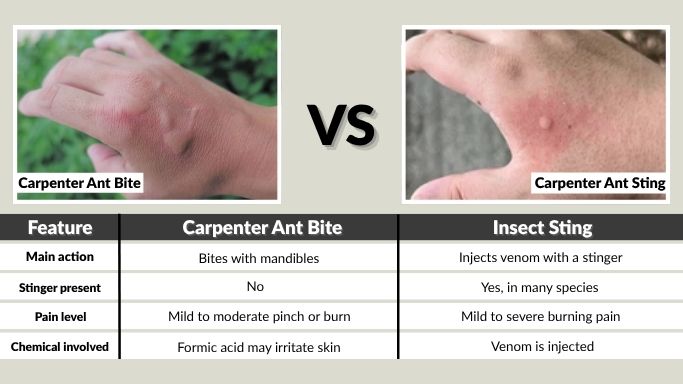
Understanding the difference between a bite and a sting helps you treat the skin reaction properly. A carpenter ant bite is usually minor, while true stings from insects such as fire ants, bees, or wasps may involve venom and stronger allergic reactions.
Quick Comparison Table
| Feature | Carpenter Ant Bite | Insect Sting |
| Main action | Bites with mandibles | Injects venom with a stinger |
| Stinger present | No | Yes, in many species |
| Pain level | Mild to moderate pinch or burn | Mild to severe burning pain |
| Chemical involved | Formic acid may irritate skin | Venom is injected |
| Common reaction | Red bump, itching, slight swelling | Swelling, pain, welts, or allergic reaction |
| Risk level | Usually low | Can be higher depending on insect and allergy |
Are Carpenter Ant Bites Dangerous?
For most people, carpenter ant bites are not dangerous. They may cause temporary pain, redness, itching, or mild swelling. The reaction usually stays around the bite area and improves with basic care.
The main concern is irritation from scratching or a rare allergic reaction. If the skin breaks, bacteria can enter and cause infection. If swelling spreads, pain increases, pus appears, or the area becomes warm and tender, medical advice is safer.
Healthline also describes carpenter ant bites as usually minor but notes that they can cause pain, irritation, and possible skin reactions in some people.
Carpenter Ant Sting Symptoms: What People Usually Mean
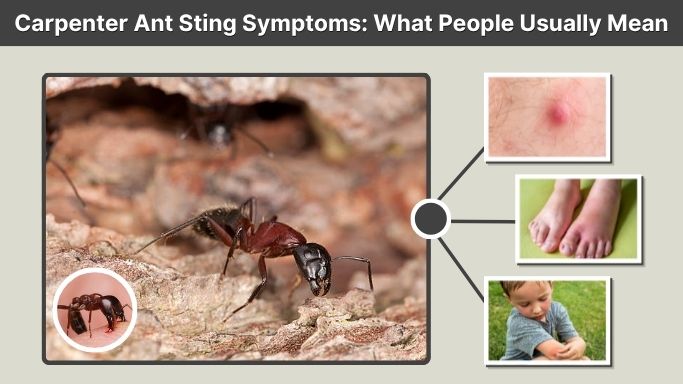
When someone says “carpenter ant sting symptoms,” they usually mean symptoms from a carpenter ant bite. The symptoms are often local and mild, but they can still be uncomfortable.
Common Symptoms After a Carpenter Ant Bite
A carpenter ant bite can look similar to other minor insect bites. It may not always leave a clear mark, especially if the ant did not break the skin.
Common symptoms include:
- A quick pinching pain
- Burning or stinging feeling
- Small red bump
- Mild swelling
- Itching around the bite
- Skin tenderness
- Slight irritation for a day or two
The burning feeling may happen because of formic acid. Carpenter ants use this chemical as a defense, and it can irritate the skin if it reaches a small bite wound.
How Long Does a Carpenter Ant Bite Last?
Most carpenter ant bites improve within a few hours to a couple of days. Mild redness or itching may last longer if the area is scratched. If the bite breaks the skin, healing may take a little more time.
A bite may last longer if:
- You scratch the area repeatedly.
- The skin becomes infected.
- You are sensitive to formic acid.
- The bite occurs on thin or sensitive skin.
- Multiple ants bite at once.
If symptoms continue to worsen after 48 hours, it may not be a simple carpenter ant bite. Other insects, skin allergies, or infection can look similar.
Carpenter Ant Sting Treatment
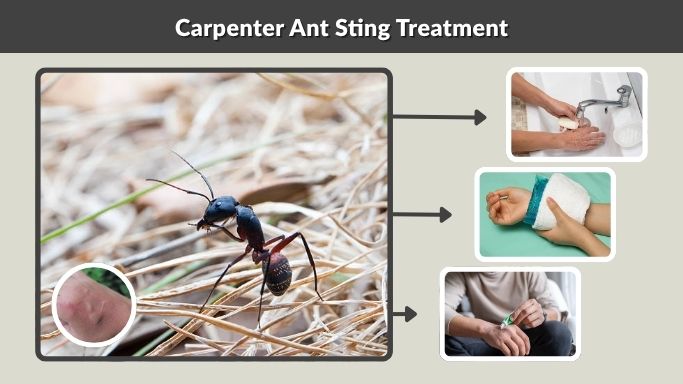
Since carpenter ants do not actually sting, treatment focuses on cleaning and calming the bite area. Most bites can be handled at home with simple first aid.
How to Treat a Carpenter Ant Bite
Start by washing the area gently. This helps remove dirt and any irritating chemical left on the skin. Avoid scratching because it can make the reaction worse.
Basic treatment steps:
- Wash the bite with soap and water.
- Apply a cold compress for 10–15 minutes.
- Use an anti-itch cream if the area is itchy.
- Keep the area clean and dry.
- Avoid scratching or picking at the skin.
- Use an over-the-counter pain reliever if needed.
- Watch for signs of infection.
Verywell Health notes that insect bite reactions can usually be managed with basic care, but severe allergic symptoms such as breathing difficulty or major swelling need emergency attention.
When to See a Doctor
Most carpenter ant bites do not need medical care. However, you should take symptoms seriously if the reaction spreads or feels unusual.
Get medical help if you notice:
- Trouble breathing
- Dizziness or fainting
- Swelling of the lips, face, or throat
- Large spreading rash
- Severe pain
- Pus or drainage
- Fever
- Red streaks around the bite
- Swelling that keeps getting worse
These symptoms may suggest an allergic reaction, infection, or another insect bite that needs proper treatment.
Do Black Carpenter Ants Sting?
Black carpenter ants are among the most common carpenter ants found around homes. Their size and dark color make them look threatening, but they do not sting. Like other carpenter ants, they can bite if disturbed.
Black Carpenter Ant Bite Reaction
A black carpenter ant bite usually feels like a pinch. Some people may barely notice it, while others may feel a short burning sensation. The reaction depends on skin sensitivity, the size of the ant, and whether formic acid contacts the bite.
Black carpenter ant bites may cause:
- Small red spot
- Mild burning
- Slight swelling
- Temporary itching
- Tenderness around the bite
Black carpenter ants are more important as a home pest than as a medical concern. If you are seeing them often indoors, the bigger issue may be a hidden nest in damp or damaged wood.
Red Carpenter Ant Sting Confusion
Some carpenter ants have reddish or mixed red-and-black coloring. This can make people confuse them with fire ants. Fire ants are known for painful stings, but carpenter ants are different.
Red carpenter ants do not have a stinger. They may bite, but they do not sting like fire ants. If you develop painful pustules after an ant attack, fire ants or another stinging ant may be involved instead.
Do Flying Carpenter Ants Sting?
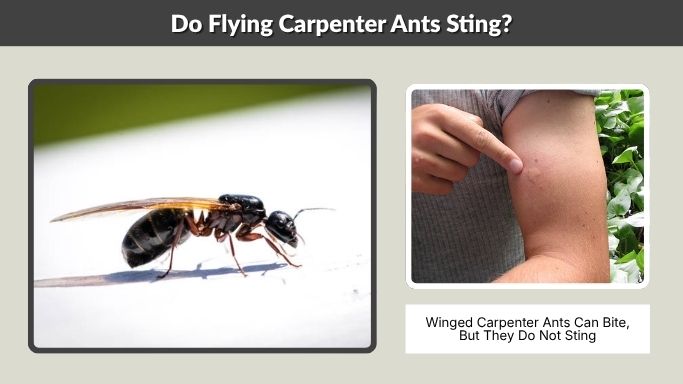
Flying carpenter ants are reproductive ants. They leave the colony to mate and start new nests. Seeing winged carpenter ants indoors can be alarming, especially when they appear near windows, lights, or walls.
Winged Carpenter Ants Can Bite, But They Do Not Sting
Flying carpenter ants do not sting. They have wings, but wings do not mean they are wasps or stinging insects. Like worker carpenter ants, winged carpenter ants may bite if handled, crushed, or trapped.
Winged carpenter ants are usually more interested in leaving the nest and mating than attacking people. They are not aggressive toward humans. Still, you should avoid picking them up with bare hands.
What Winged Carpenter Ants Mean in the House
A few winged ants near a door or window may have flown in from outside. However, repeated indoor sightings can signal a mature carpenter ant colony nearby. This is especially important if you see winged ants in winter or early spring inside the home.
Possible signs of a carpenter ant nest include:
- Large black or reddish ants indoors
- Winged ants near windows
- Small piles of wood shavings
- Rustling sounds in walls
- Ant trails at night
- Damaged damp wood
- Ants appearing around kitchens or bathrooms
Carpenter ants prefer moist or weakened wood. Leaky pipes, roof problems, wet window frames, and old deck boards can attract them.
Are Carpenter Ants Harmful to Humans?
Carpenter ants are not usually harmful to humans in a serious medical way. Their bites can hurt, but they are rarely dangerous. The greater concern is the damage they can cause to wooden structures over time.
Health Risk from Carpenter Ants
Carpenter ants do not spread disease in the same way some pests can. They are not known as a major disease-carrying insect. The health risk is mostly from occasional bites, skin irritation, or infection if a bite is scratched open.
For people with sensitive skin, the reaction may feel worse. Children may also scratch bites more, which can increase irritation. Pets can be bitten too, especially if they disturb a nest, but serious reactions are uncommon.
Home Damage Risk
Carpenter ants tunnel through wood to build nests. They do not consume wood, but their galleries can weaken wood if the colony grows and remains untreated. Damage is often linked to moisture problems.
Areas where carpenter ants may nest include:
- Wall voids
- Window frames
- Door frames
- Roof eaves
- Crawl spaces
- Decks and porches
- Tree stumps
- Hollow doors
- Damp insulation areas
Finding carpenter ants indoors should not be ignored. Even if bites are rare, the colony may point to a moisture or structural issue.
How to Prevent Carpenter Ant Bites
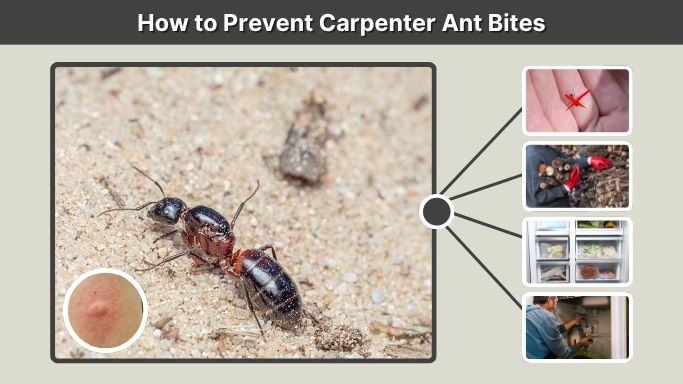
Preventing bites is mostly about avoiding direct contact and controlling infestations. Carpenter ants usually bite only when disturbed, trapped, or handled.
Personal Prevention Tips
If you see carpenter ants, avoid crushing them with your bare hand. Use gloves when moving old wood, logs, or outdoor debris. This is especially important around damp wood piles where carpenter ants may nest.
Helpful prevention steps include:
- Do not pick up carpenter ants by hand.
- Wear gloves when handling firewood.
- Shake out outdoor gear before use.
- Keep food sealed indoors.
- Clean sweet spills quickly.
- Avoid disturbing ant trails.
- Teach children not to touch large ants.
Carpenter ants are more active at night, so you may notice trails after dark. If you see many ants moving in one direction, follow the trail safely to understand where they are entering.
Home Prevention Tips
Reducing moisture and sealing entry points can make your home less attractive to carpenter ants.
Useful steps include:
- Fix leaking pipes.
- Repair roof leaks.
- Replace water-damaged wood.
- Keep gutters clean.
- Trim tree branches away from the roof.
- Store firewood away from the house.
- Seal cracks around doors and windows.
- Remove old stumps near the home.
- Improve ventilation in crawl spaces.
If carpenter ants keep returning, the visible ants may only be part of a larger colony. In that case, professional inspection may be needed.
Carpenter Ant Bite or Another Insect Bite?
Carpenter ant bites can be confused with mosquito bites, flea bites, spider bites, or fire ant stings. Identification depends on the situation, the insect seen, and the skin reaction.
How to Tell the Difference
A carpenter ant bite is more likely if you saw a large ant on your skin, handled wood, disturbed a nest, or noticed ants inside your home. The bite usually causes a quick pinch rather than a long-lasting intense burn.
It may not be a carpenter ant bite if:
- You see a blister or pustule.
- The pain is severe and spreading.
- Multiple stings appear in a cluster.
- The area becomes dark or ulcer-like.
- You never saw an ant nearby.
- Symptoms keep getting worse.
Fire ant stings often create burning pain and may develop pustules. Bee and wasp stings usually involve sharper pain and more swelling. Spider bites are often blamed for skin reactions, but many marks are caused by other insects or irritation.
FAQs
Do carpenter ants sting humans?
No, carpenter ants do not sting humans because they do not have a true stinger. They can bite with their strong mandibles if they feel threatened or are trapped against skin. The bite may burn because carpenter ants can release formic acid, which irritates the skin.
Do carpenter ants have a stinger?
Carpenter ants do not have a stinger like bees, wasps, or fire ants. Their defense comes from biting and using formic acid. This can make the bite feel like a sting, but it is not a true sting and usually causes only mild local irritation.
Can flying carpenter ants sting?
Flying carpenter ants cannot sting. Winged carpenter ants are reproductive ants, not wasps or bees. They may bite if handled, but they are not aggressive toward people. If many winged carpenter ants appear indoors, it may suggest a mature colony nearby.
What does a carpenter ant bite feel like?
A carpenter ant bite usually feels like a sharp pinch. Some people also feel burning, itching, redness, or mild swelling afterward. The burning sensation may come from formic acid. Most symptoms stay local and improve with simple cleaning, cold compresses, and anti-itch care.
Should I worry about a carpenter ant bite?
Most carpenter ant bites are not serious. You should clean the area and watch it for changes. Seek medical help if you have trouble breathing, facial swelling, severe pain, pus, fever, or spreading redness. These signs may point to allergy, infection, or another insect bite.
