
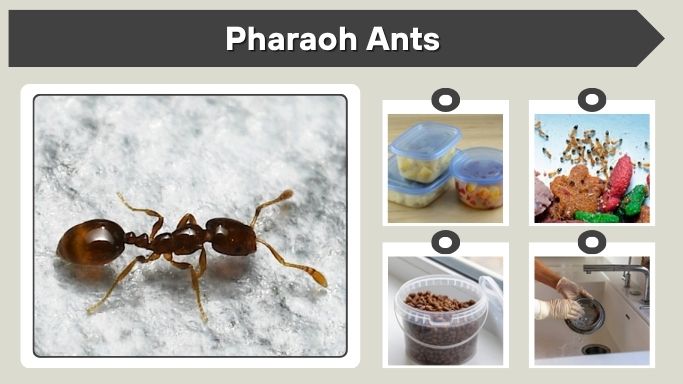
Pharaoh ants are tiny yellow to light brown ants that can be very difficult to remove from homes, kitchens, apartments, hospitals, and commercial buildings. The biggest mistake is spraying them too early. Pharaoh ants can split into multiple colonies when disturbed, making the infestation worse. The best way to get rid of pharaoh ants is to use slow-acting bait, improve sanitation, seal entry points, and monitor activity patiently.
What Are Pharaoh Ants?
Pharaoh ants are small indoor pest ants known for nesting in warm, hidden spaces. They often appear in kitchens, bathrooms, wall voids, cabinets, electrical outlets, baseboards, and apartment buildings. They are attracted to sweets, grease, protein, dead insects, pet food, and moisture.
Unlike many outdoor ants, pharaoh ants can live and reproduce indoors year-round. This makes them especially frustrating in heated buildings. A colony may have many queens, and it can spread through a process called budding. During budding, queens and workers separate from the main colony and form new satellite nests.
Pharaoh ants are usually more than a simple kitchen nuisance. In sensitive places such as hospitals and care facilities, they can be a concern because they may move through unsanitary areas and contaminate sterile spaces or food surfaces. Good control starts with correct identification and careful treatment.
Pharaoh Ant Identification
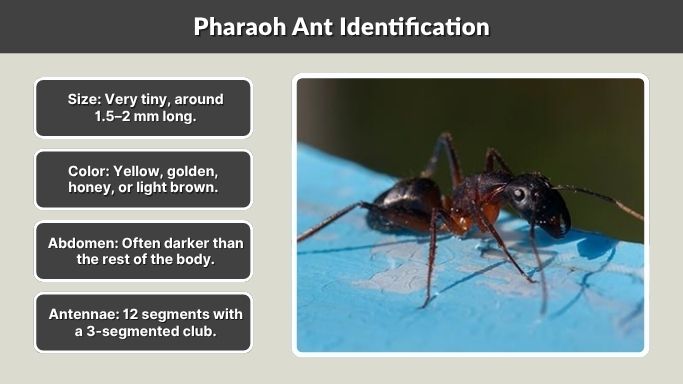
Pharaoh ants are very small, often about 1.5–2 mm long. Their color is usually yellow, honey, golden, or light brown, with a slightly darker abdomen. Because they are so tiny, they are often confused with thief ants, ghost ants, or other small household ants.
The University of California IPM warns that pharaoh ants should be distinguished from similar ants such as thief ants because the control approach can differ. Pharaoh ants are especially sensitive to disturbance and can spread when treated incorrectly.
Key Identification Signs
- Size: Very tiny, around 1.5–2 mm long.
- Color: Yellow, golden, honey, or light brown.
- Abdomen: Often darker than the rest of the body.
- Antennae: 12 segments with a 3-segmented club.
- Waist: Two small nodes between thorax and abdomen.
- Trails: Often seen along counters, sinks, baseboards, and cabinet edges.
- Nest sites: Warm hidden areas, wall voids, appliances, cracks, and electrical spaces.
If you are unsure, avoid spraying. Try to take a clear close-up photo or collect a sample for a pest expert or local extension service.
Why Pharaoh Ants Are Hard to Get Rid Of
Pharaoh ants are difficult because they do not always live in one simple nest. Their colonies can contain multiple queens and many hidden nesting sites. When they feel threatened by sprays, strong cleaners, repellents, or nest disturbance, they may split and move to new areas.
This behavior is why a small infestation can suddenly appear in several rooms after improper treatment. Killing visible workers does not solve the problem because the queens and brood remain hidden. UC IPM explains that killing workers does little to control the colony, and slow-acting bait is needed so workers carry the material back to the nest before dying.
Best Way to Get Rid of Pharaoh Ants
The best way to get rid of pharaoh ants is with a careful baiting plan. Bait works because worker ants feed on it and carry it back to the colony. A slow-acting bait gives workers enough time to share the bait with queens, larvae, and other workers.
Fast-killing sprays usually fail because they kill only the ants you see. Worse, sprays can cause the colony to scatter. UC IPM says an extensive baiting program, combined with sanitation and exclusion, is the best way to manage pharaoh ants, while insecticide sprays can make infestations worse by dispersing colonies.
| Control Method | Should You Use It? | Why |
|---|---|---|
| Slow-acting bait | Yes | Reaches hidden queens and colony members |
| Surface spray | No | Can cause budding and spread the colony |
| Cleaning food sources | Yes | Makes ants more likely to take bait |
| Sealing cracks | Yes | Reduces movement and reinvasion |
| Strong repellents | Avoid | May disturb colonies and split trails |
| Professional treatment | Yes, for large infestations | Helps locate nests and apply bait correctly |
Step-by-Step Pharaoh Ant Control
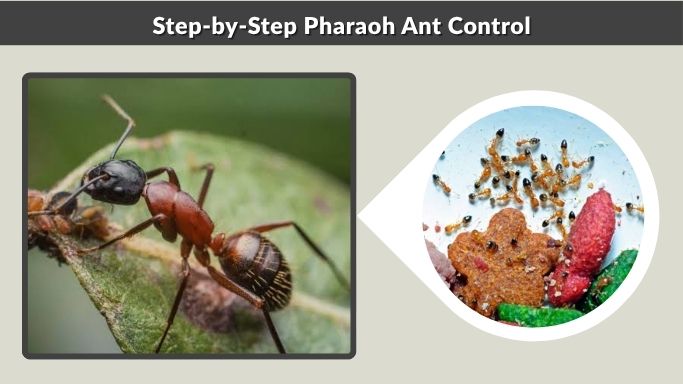
Getting rid of pharaoh ants takes patience. You may not see results immediately, and it can take several weeks for baiting to reduce the colony. The goal is not to kill every visible ant quickly; the goal is to let workers carry bait into hidden nests.
1. Confirm the Ant Species
Before treatment, make sure the ants are pharaoh ants. Tiny yellow ants can also be thief ants or ghost ants. Pharaoh ants are usually yellowish with a darker abdomen and are often found indoors near food, warmth, and moisture.
If you misidentify them, you may choose the wrong bait or control method. When the infestation is serious, professional identification is worth it.
2. Do Not Spray the Trail
This is the most important rule. Do not spray insecticide directly on pharaoh ant trails. Do not use strong repellents around their paths. Do not destroy trails before baiting.
Sprays may kill workers quickly, but they do not reach the queens. The surviving colony may split into several new nests. This can turn one kitchen trail into a whole-house or whole-apartment problem.
3. Place Slow-Acting Bait Near Trails
Place small bait stations or bait gel near active trails, but not directly on food preparation surfaces. Good locations include cabinet corners, under sinks, behind appliances, along baseboards, near plumbing gaps, and close to ant trails.
The bait should be slow-acting. If it kills too fast, workers die before they share it with the colony. UC IPM notes that results may not be visible for several weeks, so patience is important.
4. Use Different Food-Based Baits
Pharaoh ants may change food preferences. Sometimes they prefer sweets, while other times they prefer grease or protein. If they ignore one bait, try another type. Many successful control plans use both sweet and protein/grease-based options.
Do not place too much bait at once. Small fresh placements near active trails usually work better than large amounts that dry out or become contaminated.
5. Remove Competing Food
Bait works better when ants cannot easily find other food. Clean counters, floors, stoves, sinks, trash bins, and pet feeding areas. Store sugar, cereal, snacks, honey, oil, meat, and pet food in sealed containers.
Avoid using strong-smelling cleaners directly on the ant trail before baiting. Wiping everything heavily with repellent products may cause ants to move away from bait locations.
6. Monitor and Replace Bait
Check bait placements daily at first. If ants are feeding, leave the bait in place and avoid disturbing them. Replace bait when it dries out, becomes dirty, or is no longer attractive.
Do not stop too early. Pharaoh ant colonies can be large and hidden. Continue monitoring until trails stop and no new activity appears for a reasonable period.
How to Get Rid of Pharaoh Ants in the Kitchen
Kitchens are one of the most common places for pharaoh ants because they provide food, warmth, water, and hiding spaces. Ants may trail along counters, under sinks, behind refrigerators, around stoves, inside cabinets, and near trash bins.
Kitchen Control Tips
- Store food in airtight containers.
- Clean grease behind and beside the stove.
- Wipe crumbs from counters and cabinet shelves.
- Wash pet bowls after feeding.
- Empty trash regularly.
- Fix sink leaks and dry wet areas.
- Place bait near trails but away from open food.
- Do not spray cabinets or counters where ants are trailing.
If ants are coming from behind appliances or inside wall gaps, bait is usually more useful than trying to find and kill every visible ant.
How to Get Rid of Pharaoh Ants in an Apartment
Apartment infestations can be harder because pharaoh ants may move between units through walls, plumbing lines, electrical spaces, and shared voids. Treating only one apartment may not solve the problem if the colony is spread through the building.
Tell the landlord, property manager, or building maintenance team as soon as possible. A coordinated baiting program across affected units is often better than individual spraying. If one tenant sprays, ants may scatter into nearby rooms or apartments.
For renters, avoid using random sprays before management inspects the issue. Take photos, note where trails appear, and report repeated activity clearly.
How to Get Rid of Pharaoh Ants Naturally
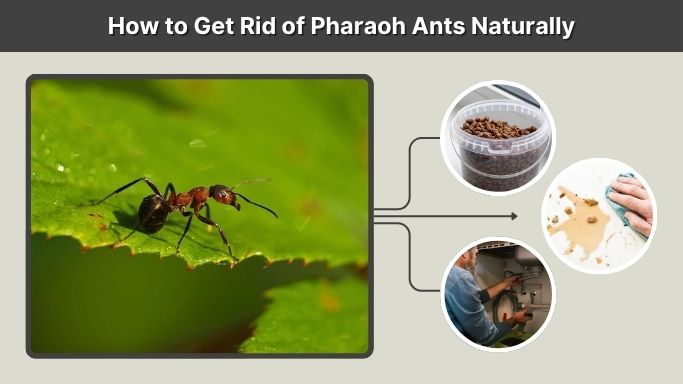
Natural methods can reduce food sources and slow activity, but they usually do not eliminate hidden pharaoh ant colonies by themselves. Cleaning, sealing, and moisture control are still useful, but bait is usually needed for full control.
You can naturally reduce attraction by cleaning grease, sealing food, fixing leaks, and closing cracks. Vinegar or soapy water may remove trail scent temporarily, but it does not kill the hidden queens. Essential oils, strong repellents, or harsh-smelling products may also disturb colonies and cause them to move, so use caution.
Natural Support Steps
- Seal food and pet food tightly.
- Clean grease and crumbs daily.
- Fix plumbing leaks.
- Seal cracks around pipes and baseboards.
- Reduce clutter where ants can hide.
- Use non-repellent bait instead of strong repellent sprays.
Natural cleaning is helpful, but for pharaoh ants, it works best as support for baiting, not as the only solution.
Can You Ever Get Rid of Pharaoh Ants Permanently?
Yes, pharaoh ants can be removed, but “permanently” depends on prevention and building conditions. If food, moisture, and cracks remain, new ants can return. In apartments or shared buildings, reinfestation can happen if neighboring units are not treated.
The most reliable approach is proper identification, baiting, sanitation, exclusion, and long-term monitoring. Large infestations may need a professional pest control company that understands pharaoh ant behavior and avoids repellent spraying.
Prevention After Control
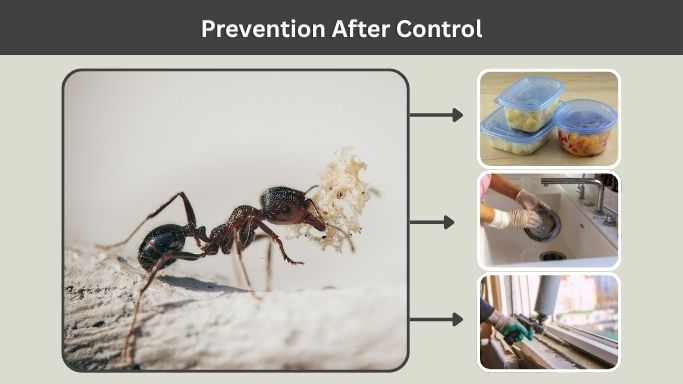
Once activity drops, keep prevention in place. Pharaoh ants can return if food and moisture are easy to find. Their tiny size allows them to enter through very small openings, so exclusion should be detailed.
Prevention Checklist
- Keep food in sealed containers.
- Clean counters, floors, and appliances often.
- Remove grease buildup around cooking areas.
- Wash pet bowls and avoid leaving food overnight.
- Fix leaks under sinks and around pipes.
- Seal cracks around baseboards, plumbing, windows, and cabinets.
- Keep trash bins clean and tightly closed.
- Monitor old trail areas for new activity.
- Avoid spraying if a few ants return; use bait and observation first.
FAQs
What is the fastest way to get rid of pharaoh ants?
The fastest safe method is usually a professional baiting program, not spraying. Sprays may kill visible ants quickly but can make the infestation spread. Slow-acting bait works better because workers carry it back to hidden queens and larvae, although full control may take several weeks.
Why should I not spray pharaoh ants?
You should avoid spraying pharaoh ants because sprays can cause the colony to split into new nests. This behavior is called budding. After spraying, the infestation may disappear briefly, then return in more rooms. Baiting is safer and more effective for colony-level control.
What bait works best for pharaoh ants?
The best bait depends on what the colony is feeding on. Pharaoh ants may accept sweet, grease-based, or protein-based bait. Try small amounts near active trails and watch what they take. The bait must be slow-acting so workers can carry it back to the hidden colony.
How do pharaoh ants get in the house?
Pharaoh ants enter through tiny cracks, gaps around pipes, wall voids, windows, doors, and shared building spaces. They may also spread through apartment buildings using plumbing and electrical pathways. Indoors, they look for warmth, moisture, sweets, grease, protein, and safe nesting spaces.
Can home remedies get rid of pharaoh ants?
Home remedies can help reduce food and moisture, but they usually do not eliminate hidden pharaoh ant colonies. Cleaning, sealing, and fixing leaks are useful support steps. However, baiting is usually needed because the queens and brood are hidden deep inside walls, cabinets, or voids.
