
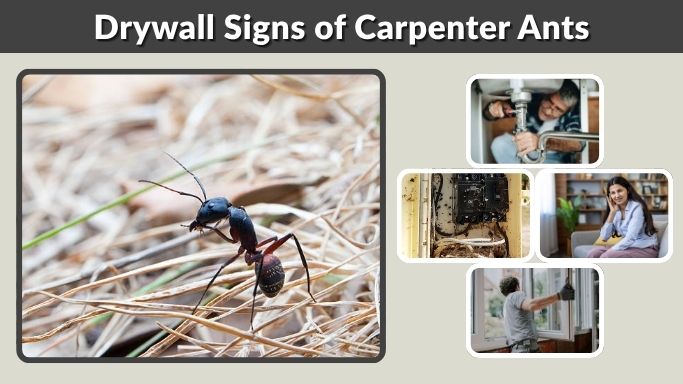
Carpenter ants inside drywall can be difficult to spot at first because they often stay hidden behind walls, ceilings, baseboards, and damp wood framing. Unlike termites, carpenter ants do not eat wood, but they tunnel through it to build nests. Early signs may include faint rustling sounds, small piles of debris, ant trails, moisture damage, or winged ants indoors. Knowing these signs early can help prevent bigger structural problems.
Why Carpenter Ants Hide Behind Drywall
Drywall itself is not the main food or nesting material for carpenter ants. They are usually attracted to the wood framing, studs, trim, insulation gaps, or damp areas behind drywall. If there is moisture from a leak, condensation, roof damage, or plumbing problem, carpenter ants may find the area suitable for nesting.
Moisture Makes Walls More Attractive
Carpenter ants prefer wood that is damp, softened, or already damaged. A wall with a plumbing leak, poor ventilation, or water intrusion gives them a better place to start a colony. They do not need the wood to be completely rotten, but moisture makes it easier for them to chew tunnels.
Common moisture sources include:
- Leaking pipes inside walls
- Roof leaks near ceilings
- Damaged gutters
- Wet window frames
- Bathroom wall moisture
- Kitchen sink leaks
- Poorly sealed exterior walls
- Condensation in wall voids
- Damp crawl spaces or basements
If carpenter ants are appearing near drywall, the wall may have a hidden moisture issue. Fixing the ants without fixing the moisture often leads to repeat infestations.
Drywall Can Hide the Real Nest
Carpenter ants may travel across drywall surfaces, but the main nest is usually behind it or near nearby wood. They can move through small cracks, electrical outlets, gaps around pipes, or baseboard openings. This makes them hard to detect until the colony becomes more active.
You may only see a few ants at first. However, those visible ants may be workers searching for food while the colony stays hidden behind the wall. Seeing carpenter ants indoors regularly is more serious than finding one or two ants that wandered inside.
Early Drywall Signs of Carpenter Ants
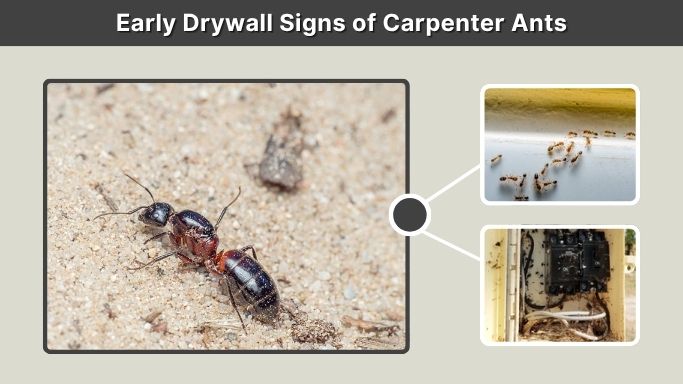
The early stage of a carpenter ant infestation can look minor. A few ants, faint sounds, or small debris may not seem important. However, these early clues can point to hidden activity inside the wall.
1. Large Black or Reddish Ants Near Walls
One of the most obvious signs is seeing large ants near drywall, baseboards, windows, doors, or ceilings. Carpenter ants are usually larger than many common household ants. They may be black, reddish, brown, or a mix of black and red depending on the species.
You may notice them:
- Walking along baseboards
- Coming out from wall gaps
- Moving near windows
- Traveling around sinks
- Appearing near electrical outlets
- Crawling on ceilings
- Gathering near damp areas
- Moving mostly at night
A single ant does not always mean there is a nest in the wall. But repeated sightings, especially in the same room, can suggest a hidden colony nearby.
2. Small Piles of Sawdust-Like Debris
Carpenter ants tunnel through wood and remove debris from their galleries. This debris is often called frass. It may look like fine sawdust, wood shavings, or small particles pushed out from wall gaps.
You may find debris near:
- Baseboards
- Window sills
- Door frames
- Wall cracks
- Ceiling corners
- Outlet covers
- Basement walls
- Garage drywall
- Trim or molding
This is one of the most important drywall-related warning signs. If you keep cleaning small piles and they return, carpenter ants may be actively excavating wood behind the wall.
3. Rustling or Crackling Sounds in Walls
A hidden carpenter ant colony may create faint rustling, clicking, or crackling sounds inside walls. These sounds may be easier to hear at night when the house is quiet and ants are more active.
The sound is usually not loud. It may seem like light movement inside the wall. You might hear it near damp wood, wall voids, or ceiling areas where ants are nesting.
To check, place your ear near the wall in a quiet room. Do not damage the wall while checking. If you hear repeated movement from the same area and also see ants nearby, it may be a strong sign of activity.
4. Ants Coming Out of Electrical Outlets or Cracks
Carpenter ants use small openings to move between hidden nests and food sources. If they are nesting behind drywall, you may see them emerging from tiny gaps.
Common exit points include:
- Electrical outlets
- Light switch plates
- Gaps under baseboards
- Cracks around trim
- Holes near pipes
- Ceiling edges
- Window frame gaps
- Door frame corners
Seeing ants come directly from a wall opening is more serious than seeing them randomly on a floor. It may mean the nest or satellite colony is nearby.
Carpenter Ants in Ceiling Drywall
Ceiling activity can be confusing because people often compare it to termites or roof pests. Carpenter ants may appear in ceilings when there is roof moisture, attic nesting, wet rafters, or damaged insulation areas above the drywall.
Ceiling Signs to Watch For
Carpenter ants can travel through wall voids and ceiling gaps. If the ceiling has water damage, they may nest in the wood above it. You may not see the ants at first, but small signs can appear.
Watch for:
- Ants crawling across the ceiling
- Debris falling from ceiling cracks
- Winged ants near ceiling lights
- Rustling sounds overhead
- Stains from moisture damage
- Ants near attic access points
- Soft or damaged ceiling areas
A ceiling problem often starts with moisture. Roof leaks, attic condensation, or damaged flashing can make the wood above drywall attractive to carpenter ants.
Early Stage Signs of Termites in Ceiling vs Carpenter Ants
Carpenter ants and termites are often confused because both can affect wood. However, their behavior and signs are different. Carpenter ants excavate wood to create tunnels, while termites eat cellulose from wood and other materials.
| Sign | Carpenter Ants | Termites |
| Wood behavior | Tunnel through wood | Eat wood |
| Debris | Sawdust-like frass may appear | Mud tubes or droppings may appear |
| Body shape | Narrow waist, bent antennae | Broad waist, straight antennae |
| Wings | Front wings longer than back wings | Wings usually equal size |
| Sound | May create rustling sounds | Usually quiet |
| Moisture link | Often linked to damp wood | Some species also need moisture |
| Visible insects | Workers may be seen indoors | Workers often stay hidden |
If you are unsure which pest is present, avoid guessing. The wrong treatment can allow the real problem to grow.
Carpenter Ant Damage Behind Drywall
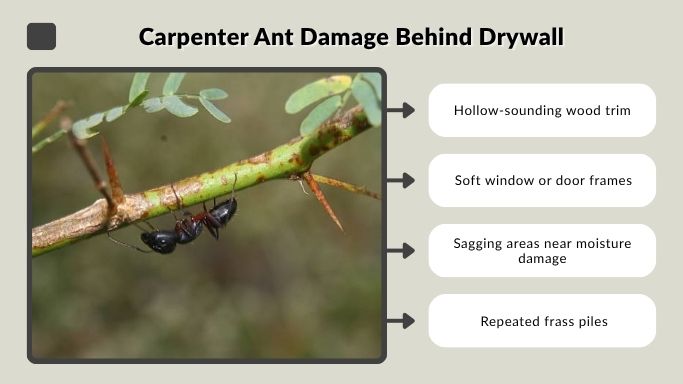
Carpenter ants do not eat drywall or wood for nutrition. They chew tunnels to create nesting space. Over time, a large colony can weaken wood, especially if the infestation continues for months or years.
What Hidden Damage May Look Like
Because the damage is behind drywall, you may not see it immediately. The wall surface may look normal while the wood behind it is being excavated. In advanced cases, signs become easier to notice.
Possible damage clues include:
- Hollow-sounding wood trim
- Soft window or door frames
- Sagging areas near moisture damage
- Repeated frass piles
- Ants active in one wall section
- Crumbling or weakened wood
- Small openings near trim
- Damp or stained drywall
Carpenter ant damage is usually slower than termite damage, but it can still become costly if the nest grows unnoticed.
Satellite Colonies Inside Walls
Carpenter ants often create satellite colonies. The main colony may be outdoors in a tree, stump, deck, or old woodpile, while a smaller colony develops inside the home. This is why indoor ants may continue even if you only treat the visible trail.
Satellite colonies may appear in:
- Wall voids
- Attic beams
- Bathroom walls
- Kitchen walls
- Around windows
- Behind insulation
- Garage framing
- Crawl space wood
Finding and removing the nest is more important than killing a few visible ants.
Where to Check for Carpenter Ants Around Drywall
A careful inspection can help you find the source. Focus on places where ants have moisture, shelter, and access to food.
Common Indoor Hiding Spots
Start with rooms where you see ants often. Kitchens, bathrooms, laundry rooms, basements, and areas near windows are common because they often have moisture or food sources.
Check these areas:
- Under sinks
- Behind dishwashers
- Around bathtubs
- Near shower walls
- Below windows
- Around door frames
- Behind baseboards
- Near water heaters
- Around washing machines
- Basement wall edges
Look for both ants and moisture signs. Carpenter ants often follow the path of a water problem.
Outdoor Sources Near the Wall
The indoor nest may be connected to an outdoor colony. Carpenter ants often enter homes from nearby wood, trees, or structural gaps.
Outdoor areas to inspect include:
- Tree branches touching the house
- Firewood stacked against walls
- Old stumps
- Dead tree limbs
- Rotten deck boards
- Fence posts
- Mulch touching siding
- Gaps around utility lines
- Cracks in foundation walls
Keeping outdoor wood and vegetation away from the house can reduce future carpenter ant problems.
How to Confirm Carpenter Ant Activity
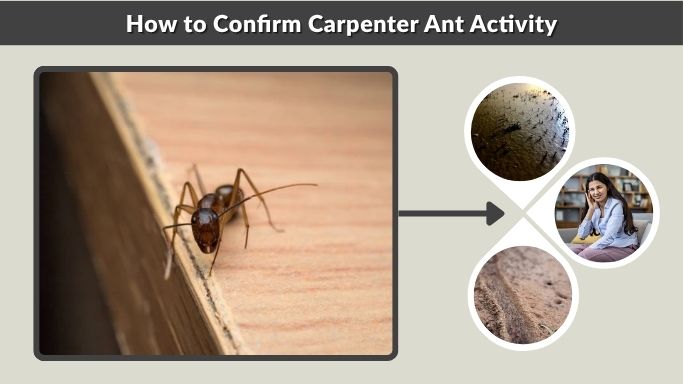
Before opening walls or using strong treatments, look for a pattern. Carpenter ants are often more active at night, so nighttime inspection can reveal trails you may not see during the day.
Simple Checks You Can Do
You can inspect safely without damaging the wall. Use a flashlight at night and watch where the ants travel. Place a small amount of sweet bait near the trail only for observation, not as a full treatment, and see where the ants carry food.
Useful checks include:
- Watch ant trails after dark.
- Look near baseboards with a flashlight.
- Check for fresh frass in the morning.
- Listen for sounds in quiet rooms.
- Inspect damp or stained areas.
- Look around outlets and switch plates.
- Track where ants enter and exit.
- Check outdoor wood near the same wall.
Avoid spraying visible ants too quickly. Sprays may scatter the colony and make it harder to locate the nest.
When Professional Inspection Is Better
A professional inspection is safer when ants are repeatedly coming from walls or ceilings. This is especially important if you see frass, winged ants indoors, or water-damaged wood.
Professional help may be needed when:
- Ants return after DIY treatment
- You hear sounds inside walls
- Frass keeps appearing
- Winged ants appear indoors
- The nest location is unknown
- Ceiling activity is present
- There is moisture damage
- Termites are also possible
An expert can identify whether the problem is carpenter ants, termites, or another pest.
How to Reduce Carpenter Ants in Drywall Areas
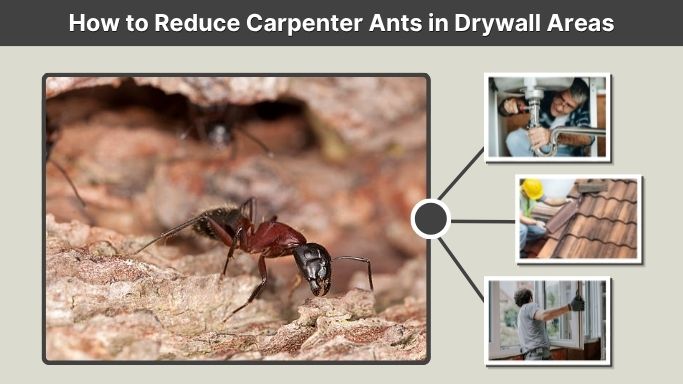
Getting rid of carpenter ants requires more than killing the ants you see. You need to remove moisture, seal entry points, and target the nest.
Fix Moisture First
Moisture control is one of the most important steps. If the wall remains damp, carpenter ants may return even after treatment.
Important moisture repairs include:
- Fix leaking pipes.
- Repair roof leaks.
- Replace damaged caulk.
- Improve bathroom ventilation.
- Clean clogged gutters.
- Dry damp basement areas.
- Repair window leaks.
- Replace rotten wood.
Dry wood is less attractive to carpenter ants and harder for them to excavate.
Seal Entry Points and Remove Attractants
After moisture is controlled, reduce access and nesting opportunities. Seal cracks where ants enter and remove outdoor materials that support colonies.
Helpful steps include:
- Seal cracks around windows and doors.
- Caulk gaps around utility lines.
- Keep firewood away from the house.
- Trim branches away from the roof.
- Remove old stumps near the home.
- Keep mulch below siding level.
- Store food in sealed containers.
- Clean sugar and grease spills quickly.
These steps do not replace nest treatment, but they make your home less inviting.
FAQs
What are the first signs of carpenter ants in drywall?
The first signs may include large ants near walls, faint rustling sounds, small sawdust-like debris, and ants coming from cracks, outlets, or baseboards. You may also notice activity near damp areas such as bathrooms, kitchens, windows, or ceilings with moisture stains.
Do carpenter ants eat drywall?
Carpenter ants do not eat drywall for food. They are more interested in wood behind or around drywall, especially if it is damp or softened. They may move through wall voids and cracks, but their nesting activity usually involves wooden framing, trim, or moisture-damaged structural areas.
How do I know if ants are inside my wall?
You may notice ants repeatedly appearing from the same wall area, small piles of debris, or quiet rustling sounds at night. Ants emerging from outlets, switch plates, baseboards, or ceiling cracks can also suggest hidden activity behind the drywall or nearby wood framing.
Are ceiling ants a sign of termites?
Ceiling ants are not always a sign of termites. They may be carpenter ants, especially if there is moisture above the ceiling or in the attic. Termites usually leave different signs, such as mud tubes, damaged wood, or discarded wings. Proper identification is important before treatment.
Should I open drywall to find carpenter ants?
Do not open drywall unless you are confident about the nest location or working with a professional. Randomly cutting walls can cause unnecessary damage and may not reveal the colony. First look for trails, frass, moisture problems, and entry points to narrow down the active area.
