
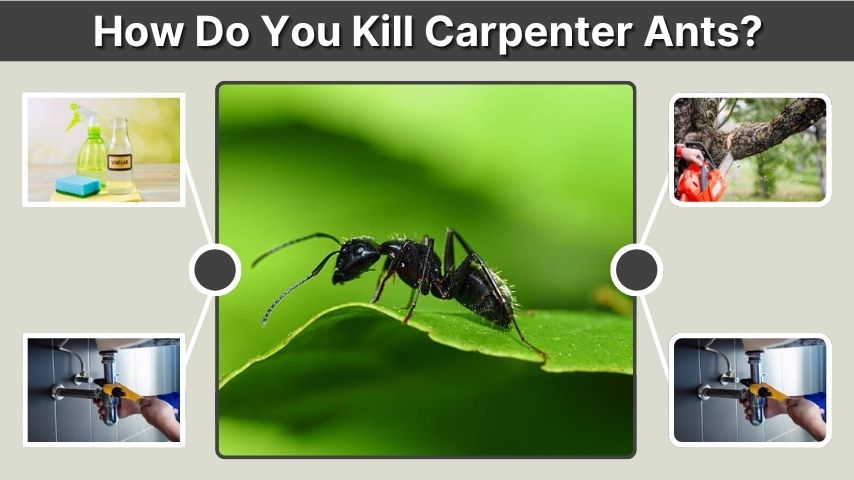
Carpenter ants can be frustrating because killing the ants you see does not always solve the problem. These large ants often nest inside damp, damaged, or decaying wood, which means the real goal is to find the colony and remove the conditions attracting them. This guide explains how to kill carpenter ants indoors, outdoors, in trees, and naturally while helping prevent them from coming back.
What Are Carpenter Ants?
Carpenter ants are large ants that usually appear black, reddish-black, or dark brown. They are often confused with termites, but they behave differently. Termites eat wood, while carpenter ants dig tunnels through wood to create nesting space.
Signs You Have Carpenter Ants
You may have carpenter ants if you notice:
- Large black or dark ants moving around your kitchen, bathroom, basement, attic, or windows
- Small piles of sawdust-like material called frass
- Rustling sounds inside walls, especially at night
- Winged ants indoors during spring or early summer
- Ant trails leading from trees, logs, decks, or fences toward your home
Seeing one or two ants does not always mean there is a serious infestation. However, repeated sightings inside the house, especially during colder months, can suggest a nest indoors.
Carpenter Ants vs Termites
Carpenter ants and termites both involve wood, but the damage pattern is different. Carpenter ants leave smooth galleries inside wood and push out debris. Termites usually leave mud tubes and consume wood from the inside.
| Feature | Carpenter Ants | Termites |
|---|---|---|
| Wood behavior | Tunnel through wood | Eat wood |
| Body shape | Narrow waist | Broad waist |
| Antennae | Bent antennae | Straight antennae |
| Signs | Sawdust-like frass | Mud tubes or hollow wood |
| Best control | Find nest and treat colony | Professional termite treatment |
How Do You Kill Carpenter Ants in Your House?
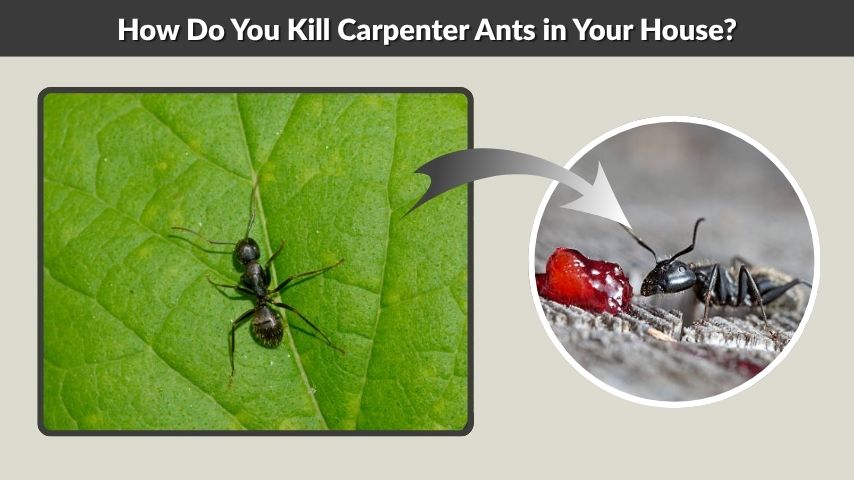
Killing carpenter ants inside your house starts with tracking where they are coming from. Spraying random ants may give temporary relief, but it can also scatter the colony or hide the problem.
Step 1: Follow the Ant Trail
Carpenter ants are most active at night. Use a flashlight to watch where they travel. Look near:
- Window frames
- Baseboards
- Plumbing areas
- Sinks and tubs
- Attics and crawl spaces
- Fireplaces
- Door frames
- Wall voids near moisture damage
If ants are carrying food back to one area, that path may lead to a nest or satellite colony.
Step 2: Find Moisture-Damaged Wood
Carpenter ants prefer damp or softened wood. Check for leaks, condensation, rotting trim, damaged siding, clogged gutters, and poorly ventilated crawl spaces. Killing ants without fixing moisture problems often leads to another infestation later.
Step 3: Use Carpenter Ant Bait
Bait is often more effective than contact spray because worker ants carry it back to the colony. Use bait labeled for carpenter ants and place it near trails, not directly on top of them.
Good bait placement areas include:
- Under sinks
- Near wall edges
- Behind appliances
- Along outdoor foundation trails
- Near decks, trees, or woodpiles
Avoid spraying insecticide around bait because sprays can repel ants and stop them from feeding on it.
Step 4: Treat the Nest Directly
If you locate the nest inside a wall or wooden area, a labeled insecticidal dust may be more effective than surface spray. Dust can move through the gallery and reach more ants. However, wall void treatment should be done carefully and according to product directions.
If the infestation is large, hidden, or connected to structural damage, it is better to contact a pest control professional.
How Do You Kill a Carpenter Ant Nest?
To kill a carpenter ant nest, you need to identify whether it is the main colony or a satellite nest. The main colony is often outdoors in a tree, stump, log, or rotting wood. Satellite colonies may appear inside homes where moisture and hollow wood are available.
Best Ways to Destroy the Nest
Use these methods depending on where the nest is located:
- Bait the colony: Slow-acting bait allows ants to spread the treatment.
- Apply dust into galleries: Best for wall voids, hollow doors, or damaged wood where the nest is confirmed.
- Remove damaged wood: If the nest is in a rotted board, trim piece, or stump, removing it can eliminate the colony.
- Fix moisture issues: Repair leaks and improve ventilation to make the area unattractive.
- Seal entry points: Close gaps around pipes, siding, doors, windows, and utility lines.
The most important rule is to avoid relying only on sprays. Sprays kill visible ants but may not reach the queen or hidden colony.
How Do You Kill Carpenter Ants Naturally?
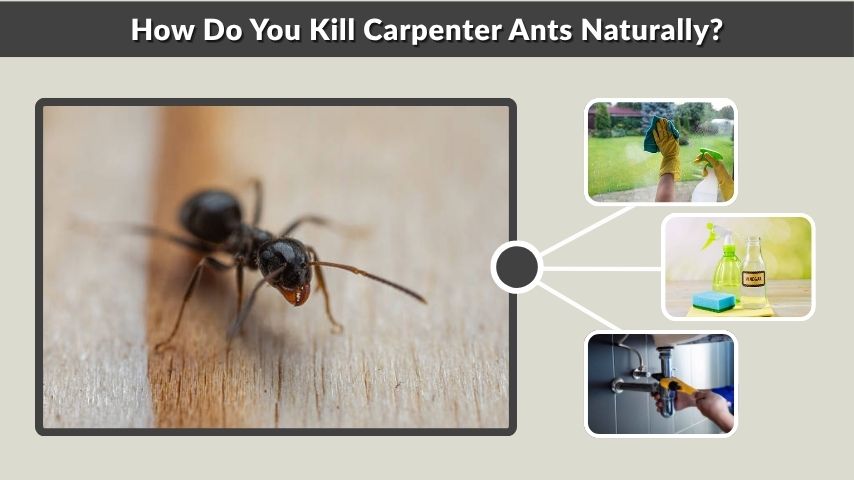
Natural methods can help reduce carpenter ant activity, but they work best for small problems or prevention. If there is a large hidden colony inside your walls, natural methods may not fully eliminate it.
Natural Control Options
Try these methods:
- Diatomaceous earth: Apply food-grade diatomaceous earth in dry cracks, crevices, and voids where ants travel. It must stay dry to work.
- Soap and water spray: This can kill ants on contact but will not destroy the colony.
- Vinegar cleaning: Wipe trails with vinegar and water to disrupt scent paths.
- Remove food sources: Store sugar, pet food, crumbs, and leftovers in sealed containers.
- Reduce moisture: Fix leaks, dry damp wood, and improve airflow.
Natural methods are useful, but they should be combined with nest location and moisture repair.
How Do You Kill Carpenter Ants With Borax or Boric Acid?
Borax and boric acid can kill carpenter ants when used correctly, but more is not better. If the mixture is too strong, ants may die before carrying it back to the colony.
Simple Borax Bait Method
A common DIY approach is to mix a small amount of borax with a sweet attractant. For example, you can mix sugar water with a small amount of borax and place it in a safe bait station near ant trails.
Keep these safety tips in mind:
- Keep borax bait away from children and pets.
- Do not place bait on food surfaces.
- Use small amounts.
- Do not spray around bait stations.
- Replace bait if it dries out or becomes contaminated.
Borax bait may take days or weeks to show results. If ants ignore sweet bait, they may be seeking protein instead. In that case, a commercial carpenter ant bait may work better.
How Do You Kill Carpenter Ants Outside?
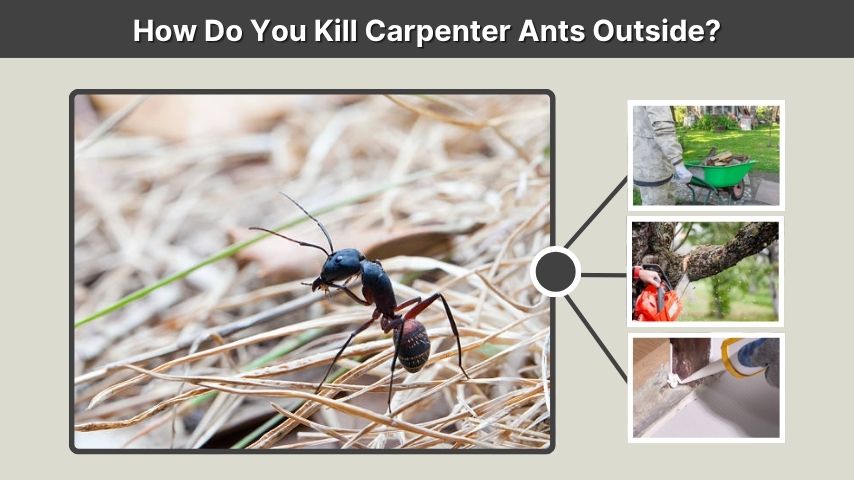
Outdoor carpenter ants often nest in stumps, logs, fence posts, firewood, mulch, or damaged trees. Outdoor control matters because ants may travel from these areas into your home.
Outdoor Treatment Steps
Start with inspection and cleanup:
- Move firewood away from the house.
- Remove rotting logs, stumps, and scrap lumber.
- Trim tree branches touching the roof or siding.
- Keep mulch away from direct contact with siding.
- Seal cracks around the foundation.
- Place outdoor carpenter ant bait near trails.
Outdoor baiting can be very effective because it targets ants before they enter your house. Always use products labeled for outdoor carpenter ant control and follow the label instructions.
How Do You Kill Carpenter Ants in a Tree?
Carpenter ants in a tree usually mean there is decayed or damaged wood inside the tree. The ants are often nesting in existing soft wood rather than attacking healthy wood directly.
What to Do About Carpenter Ants in Trees
First, inspect the tree carefully. Look for cavities, dead limbs, cracks, sawdust, or ants entering a hollow area. If the tree is near your home, driveway, sidewalk, or play area, consider having an arborist check whether the tree is structurally safe.
For treatment:
- Do not randomly spray the whole tree.
- Remove dead limbs when appropriate.
- Avoid damaging the bark further.
- Use outdoor bait near ant trails.
- Remove nearby rotting wood or stumps.
- Call an arborist if the tree may be unsafe.
If the tree is far from the house and not a safety risk, treatment may not be necessary. Carpenter ants are part of the natural breakdown process in dead or decaying wood.
How to Prevent Carpenter Ants From Coming Back
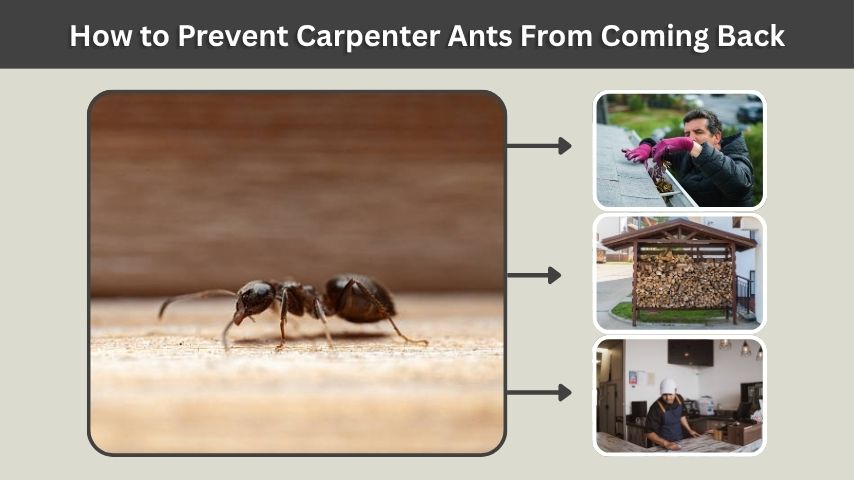
Prevention is just as important as treatment. Carpenter ants usually return when moisture, food, and nesting sites remain available.
Prevention Checklist
Use these steps around your home:
- Repair plumbing leaks quickly.
- Replace rotted trim, siding, or decking.
- Keep gutters clean.
- Improve crawl space and attic ventilation.
- Store firewood at least several feet away from the house.
- Trim branches away from the roof.
- Seal gaps around windows, doors, and utility openings.
- Keep kitchens clean and dry.
- Remove old stumps, logs, and wood debris.
A dry, sealed, well-maintained home is much less attractive to carpenter ants.
When Should You Call a Professional?
You should call a pest control professional if you see ants repeatedly indoors, find winged carpenter ants inside, hear activity in walls, or notice wood damage. Professional help is also smart if you cannot locate the nest after careful inspection.
Carpenter ants can cause damage over time, but the problem usually develops gradually. That means you have time to act carefully instead of panic-spraying. The best approach is to identify the nest, treat the colony, remove damaged wood, and correct the moisture issue.
FAQs
How do you kill carpenter ants fast?
The fastest way to kill visible carpenter ants is with a contact spray, but that usually does not eliminate the colony. For lasting control, use carpenter ant bait, locate the nest, and treat the colony directly. Also fix moisture problems so the ants do not return.
How do you kill carpenter ants in your house?
Track their trails at night, look for damp or damaged wood, and place carpenter ant bait near activity areas. If you find the nest in a wall or wooden void, use a labeled dust treatment or call a professional. Avoid only spraying the ants you see.
How do you kill carpenter ants naturally?
Natural methods include diatomaceous earth, soap-and-water spray, vinegar trail cleaning, moisture reduction, and removing food sources. These methods can reduce activity, but they may not eliminate a hidden colony. For serious infestations, baiting or professional treatment may be needed.
How do you kill carpenter ants with borax?
Mix a small amount of borax with a sweet bait and place it safely near ant trails. The goal is for worker ants to carry the bait back to the colony. Keep borax away from children, pets, and food surfaces, and avoid using too much.
How do you kill carpenter ants in a tree?
Use outdoor bait near ant trails and inspect the tree for decay, cavities, or dead limbs. Carpenter ants in trees often indicate existing wood decay. If the tree could fall on a house, car, walkway, or people, have a certified arborist inspect it.
