
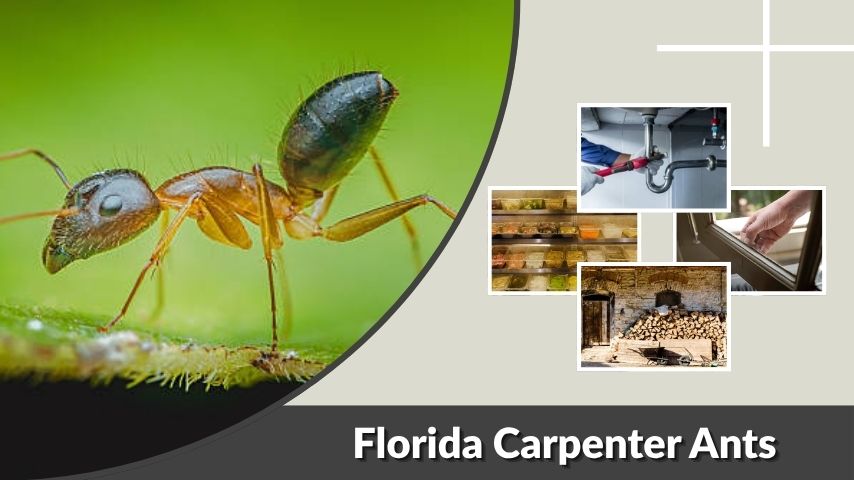
Florida carpenter ants are some of the most noticeable ants homeowners find indoors because they are large, active, and often appear around lights, windows, kitchens, bathrooms, and patios. Unlike termites, they do not eat wood, but they can still become a serious nuisance when colonies nest near or inside homes. Understanding their size, habits, nesting sites, and treatment options helps you control them before the problem grows.
What Are Florida Carpenter Ants?
Florida carpenter ants belong mainly to the Camponotus genus. The Florida carpenter ant complex includes species such as Camponotus floridanus and Camponotus tortuganus, both commonly associated with structures in Florida. UF/IFAS describes these ants as among the largest ants found in the state, which is why homeowners often notice them quickly when they forage or fly indoors.
These ants are social insects that live in colonies with workers, reproductives, and a queen. They are active foragers and may travel indoors looking for moisture, sweets, protein, or shelter. In many cases, seeing a few ants indoors does not automatically mean the main colony is inside the house, but repeated sightings can suggest a nearby nest or satellite colony.
Florida Carpenter Ant Size and Appearance
Florida carpenter ants are usually easy to recognize because of their size and color. Workers vary in size, and larger workers can look intimidating compared with small household ants. Many Florida carpenter ants have a reddish or orange-brown body section with a darker abdomen.
Common identification clues include:
- Large ant body compared with sugar ants or ghost ants
- Reddish, orange, brown, or black body coloring
- Narrow waist and elbowed antennae
- Workers of different sizes in the same colony
- Winged ants during swarming periods
Because several ant species in Florida can look similar, correct identification matters before applying treatment.
Florida Carpenter Ants in the House
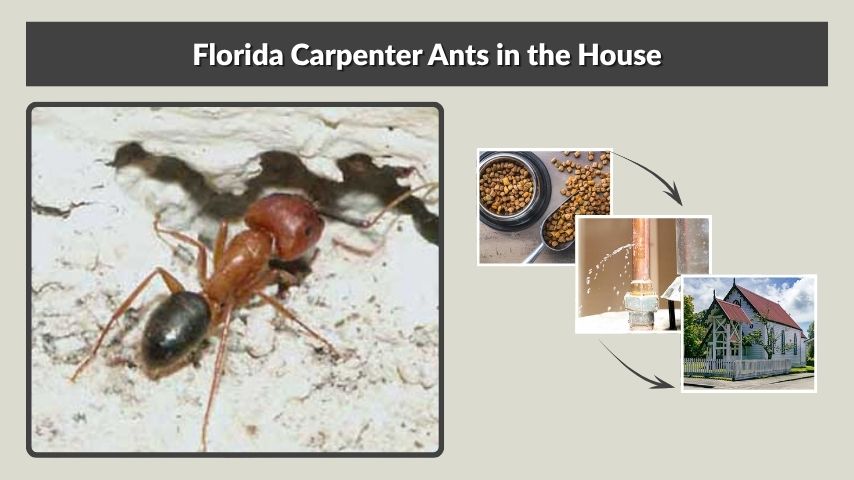
Finding Florida carpenter ants in the house usually means they are foraging for food, water, or nesting space. Kitchens, bathrooms, laundry rooms, window frames, wall voids, and areas with moisture problems are common places to see activity.
Florida carpenter ants are opportunistic nesters. UF/IFAS notes that carpenter ant colonies may be found in soil under objects, dead branches, rotting logs, stumps, and other suitable cavities. They can also become serious house-infesting ants, especially when conditions around the home support colony growth.
Why They Come Indoors
Florida carpenter ants may enter homes for several reasons:
- Food crumbs, sweets, grease, or pet food
- Water from leaks, condensation, or damp areas
- Tree branches touching the roof or walls
- Gaps around doors, windows, pipes, and utility lines
- Rotten wood, hollow spaces, or wall voids near moisture
They do not need to “eat” the structure to become a problem. Even if they are not causing termite-like damage, their presence may point to moisture, decay, or exterior nesting sites close to the home.
Do Florida Carpenter Ants Bite?
Yes, Florida carpenter ants can bite, especially if handled, crushed, or disturbed near a nest. Their bites can feel like a pinch and may cause minor redness or irritation. They are not usually considered medically dangerous for most people, but sensitive individuals may react more strongly.
If bitten, wash the area with soap and water, avoid scratching, and use a cold compress if there is swelling. Seek medical help if symptoms are severe, spreading, or involve signs of an allergic reaction.
Are They Dangerous?
Florida carpenter ants are more of a nuisance pest than a direct health threat. The bigger concern is what their presence may reveal: moisture problems, decaying wood, or hidden nesting areas. Indoors, frequent sightings should be taken seriously because a colony can become harder to control once it establishes multiple nesting points.
Florida Carpenter Ants With Wings
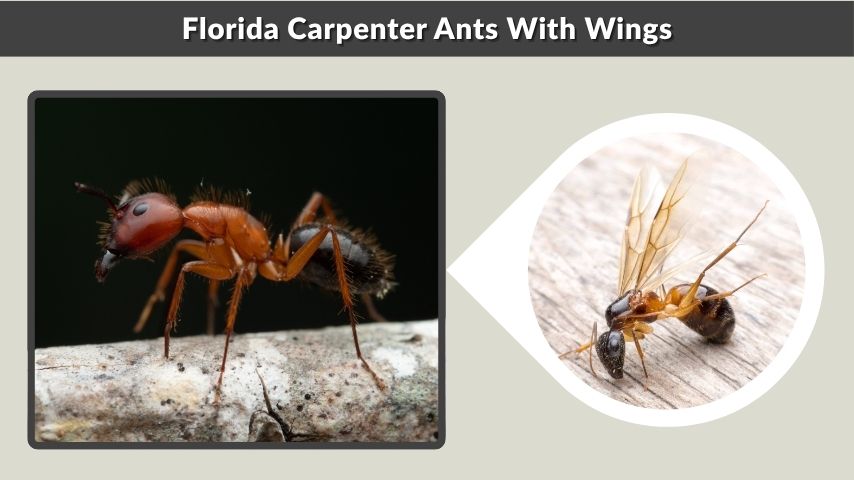
Winged Florida carpenter ants are reproductive ants, also called alates. They leave mature colonies during mating flights to start new colonies. UF/IFAS explains that carpenter ants develop through complete metamorphosis and that winged males and females emerge from nests and depart for mating flights, commonly in spring, triggered by environmental factors such as temperature and day length.
Seeing winged ants indoors can be alarming, especially near windows or lights. A few winged ants may have flown in from outside, but repeated indoor swarms can suggest that a colony is nesting in or very near the structure.
Carpenter Ants vs. Termites With Wings
Winged ants and termite swarmers are often confused. Carpenter ants have elbowed antennae, a narrow waist, and front wings that are usually longer than the hind wings. Termites have straight antennae, a broad waist, and wings of similar length.
If you are not sure which insect you have, identification is important. Treating ants like termites, or termites like ants, can waste money and allow the real problem to continue.
Do Florida Carpenter Ants Damage Wood?
Carpenter ants do not eat wood the way termites do. They may excavate or use cavities for nesting, especially in damp or decayed wood. In Florida, the carpenter ants commonly found around structures are often less destructive than some carpenter ant species in cooler regions, but they still should not be ignored.
Repeated activity around baseboards, window frames, soffits, bathrooms, or plumbing walls can indicate a moisture issue. Fixing leaks and removing damp wood is often just as important as killing visible ants.
Florida Carpenter Ant Treatment
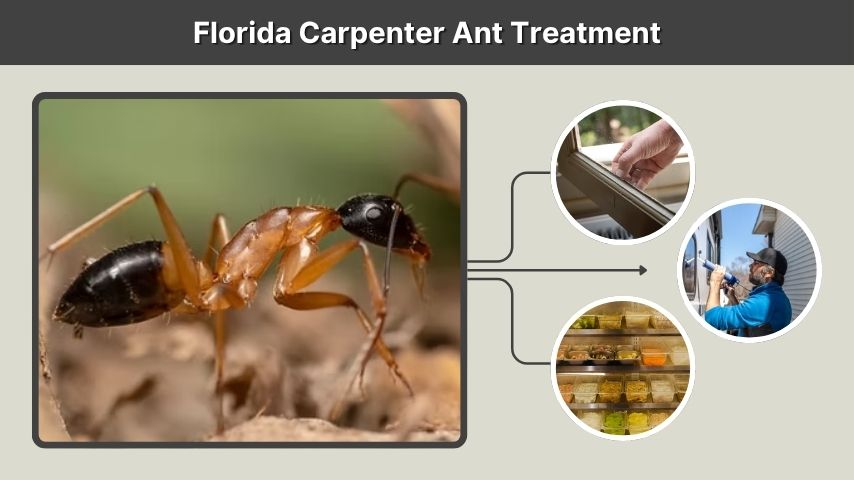
Effective treatment starts with inspection. Spraying random ants may kill a few workers, but it rarely eliminates the colony. The goal is to find where ants are nesting, how they are entering, and what is attracting them.
Step-by-Step Control Plan
Use this process before reaching for a spray:
- Follow ant trails at night when they are most active
- Check around windows, doors, rooflines, trees, mulch, and stumps
- Look for moisture problems, leaks, or soft wood
- Seal cracks, gaps, and utility openings
- Trim vegetation touching the house
- Store food tightly and clean sticky spills
- Use bait carefully where ants are actively foraging
Bait is often useful because foraging ants can carry it back toward the colony. However, bait must match what the ants are feeding on. Some colonies prefer sweets at certain times, while others may prefer protein or grease-based foods.
Florida Carpenter Ant Bait: Does It Work?
Bait can work, but only when the ants accept it and carry it back to the nest. Place bait near trails, not directly on top of the nest entrance unless the product label says to do so. Avoid spraying repellent insecticides around bait placements because sprays can cause ants to avoid the bait.
For best results, use small amounts in several active areas and monitor feeding. If ants ignore one type of bait, try a different formulation. Always follow the product label, especially indoors, around pets, and near children.
When DIY Treatment Is Not Enough
Professional help may be needed if:
- Winged ants repeatedly appear indoors
- Ants return after multiple treatments
- Trails lead into walls or ceilings
- You suspect a hidden nest
- There is moisture-damaged wood
- You cannot tell ants from termites
A pest professional can identify the species, locate nesting sites, and choose treatments that target the colony rather than only the visible workers.
Florida Carpenter Ants and “Surgery”
One unusual keyword in the search suggestions is “Florida carpenter ants surgery.” This comes from scientific research, not home pest control. A study published in Current Biology reported that Florida carpenter ants can treat injured nestmates by cleaning wounds or, in some cases, amputating damaged legs depending on the wound location.
This behavior is fascinating because it shows complex social wound care in ants. It does not mean carpenter ants are dangerous to humans, and it does not change how homeowners should treat infestations. It simply explains why this pest has recently attracted attention beyond normal household pest searches.
How to Prevent Florida Carpenter Ants
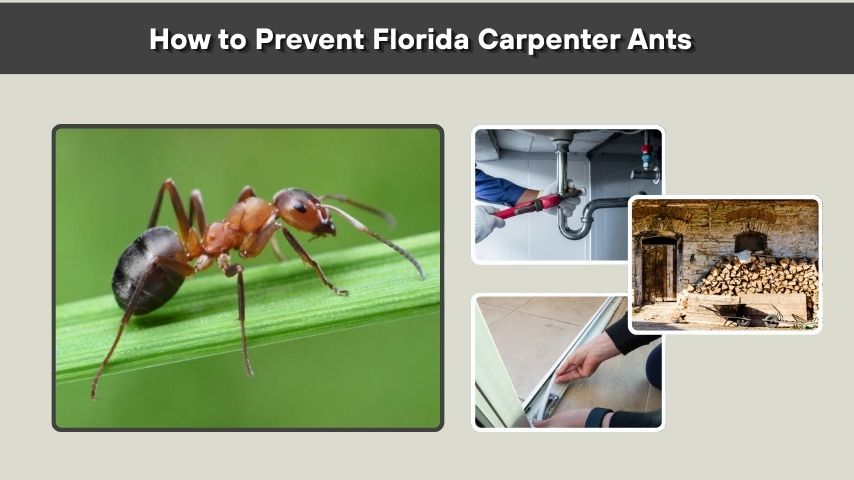
Prevention focuses on making your home less attractive to ants and less accessible from the outside. Because Florida’s warm, humid climate supports year-round pest activity, routine maintenance matters.
Important prevention tips include:
- Fix plumbing leaks and roof leaks quickly
- Keep gutters clean and draining away from the home
- Remove rotting wood, logs, and old stumps near the house
- Store firewood away from exterior walls
- Trim tree limbs and shrubs away from the roof and siding
- Use door sweeps and weatherstripping
- Seal cracks around pipes, cables, and foundation gaps
- Reduce heavy mulch against the foundation
Moisture control is especially important. Even the best treatment may fail if the home still provides damp nesting areas and easy entry points.
FAQs
Are Florida carpenter ants the same as termites?
No. Florida carpenter ants and termites are different insects. Carpenter ants do not eat wood like termites. They may nest in cavities or damp wood, while termites consume cellulose and can cause more direct structural damage.
Why do I see Florida carpenter ants at night?
Carpenter ants often forage at night because conditions are cooler and safer. Night activity is common around kitchens, bathrooms, patios, trees, and exterior walls. Following trails at night can help locate where they are entering or nesting.
Should I spray Florida carpenter ants?
Spraying visible ants may provide short-term relief, but it usually does not eliminate the colony. Baiting, inspection, moisture repair, exclusion, and targeted nest treatment are usually more effective than random indoor spraying.
What attracts Florida carpenter ants indoors?
Food, water, damp wood, wall voids, and easy entry points attract them indoors. Sweet spills, pet food, leaking pipes, condensation, and tree branches touching the home can all increase ant activity.
Are winged Florida carpenter ants a bad sign?
Winged ants can be normal during mating flights, but repeated indoor sightings may indicate a nest inside or close to the home. If winged ants appear often near windows, lights, or walls, inspection is recommended.
