
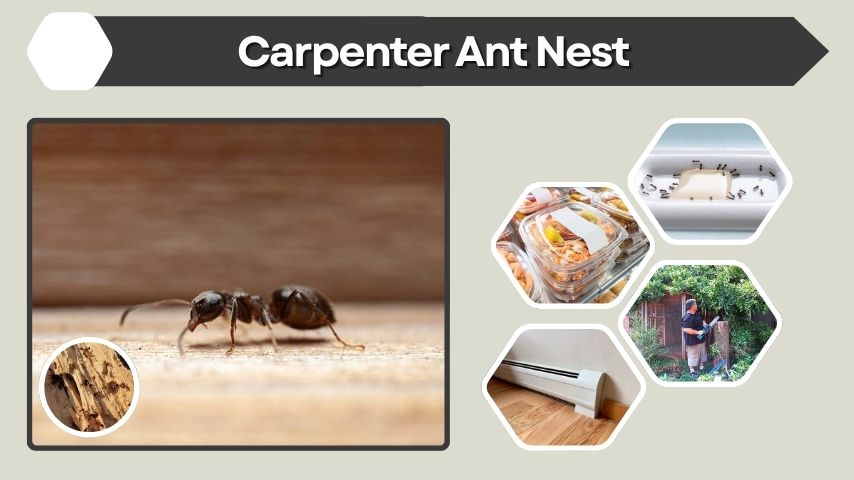
A carpenter ant nest can be difficult to find because these ants often hide inside walls, damp wood, trees, attics, crawl spaces, or outdoor structures. Unlike termites, carpenter ants do not eat wood. They tunnel through it to create nesting galleries, which can lead to damage over time. If you see large black ants, winged ants, or small piles of sawdust-like debris, there may be a nest nearby. Knowing what a carpenter ant nest looks like and where to search can help you stop the problem before it becomes more serious.
What Is a Carpenter Ant Nest?
A carpenter ant nest is a hidden colony space where carpenter ants live, reproduce, and care for their young. These nests are usually built inside wood, especially wood that has been softened by moisture, decay, or rot.
Carpenter ants create smooth tunnels and chambers inside wood. These spaces are called galleries. The ants remove wood as they dig, leaving behind sawdust-like material known as frass.
Why Carpenter Ants Build Nests in Wood
Carpenter ants build nests in wood because it gives them protection and space to expand. Damp or decaying wood is easier for them to excavate, which is why nests are often linked to water leaks, poor drainage, roof damage, plumbing problems, or rotting outdoor wood.
They may also nest in dry wood once a colony is already established. This is why early detection is important. A small carpenter ant issue can grow into a larger infestation if the main nest and satellite nests are not found.
Main Nests vs Satellite Nests
Carpenter ants often have more than one nest. The main nest usually contains the queen, eggs, and young ants. It is often located outdoors in a tree, stump, log, or moist wood.
Satellite nests may form inside a house. These nests often contain worker ants, older larvae, or pupae. Satellite nests do not always need as much moisture as the main nest, so they may be found in wall voids, insulation, attics, or dry structural wood.
What Does a Carpenter Ant Nest Look Like?
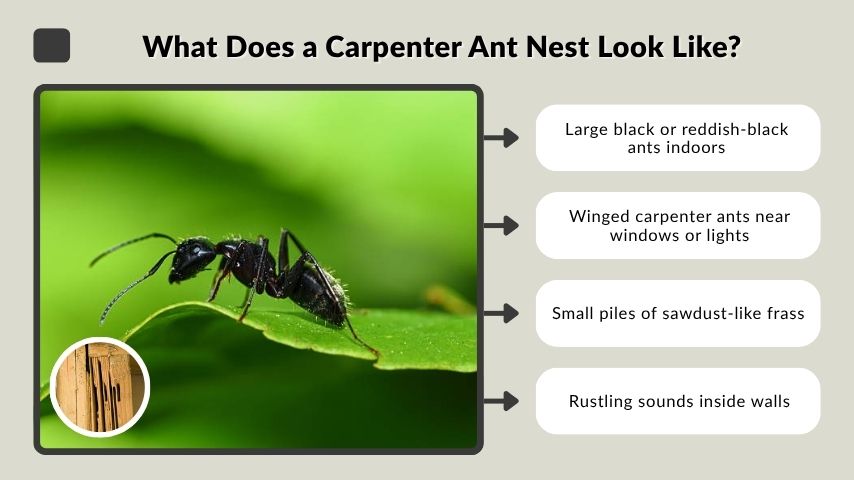
A carpenter ant nest does not usually look like a mound of dirt. Instead, it is often hidden inside wood or another protected space. You may not see the actual nest unless wood is opened or damaged material is removed.
The most visible clue is usually frass. This looks like fine sawdust or wood shavings. It may appear near baseboards, window frames, door frames, deck boards, tree trunks, or wall openings.
Common Signs of a Carpenter Ant Nest
You may have a carpenter ant nest nearby if you notice:
- Large black or reddish-black ants indoors
- Winged carpenter ants near windows or lights
- Small piles of sawdust-like frass
- Rustling sounds inside walls
- Ant trails at night
- Hollow-sounding wood
- Soft, damp, or damaged wood
- Ants entering cracks, gaps, or holes
A single ant may not always mean there is a nest inside your home. However, repeated sightings, especially in the same area, should be taken seriously.
Carpenter Ant Nest Images and Photos: What to Look For
Many people search for carpenter ant nest images or pictures because they expect to see a visible structure. In reality, carpenter ant nests are often internal. Photos usually show hollowed wood, smooth tunnels, frass, or ants moving through damaged wood.
If you are inspecting your home, focus less on finding a visible “nest” and more on finding the signs around it.
Where Do Carpenter Ants Nest?
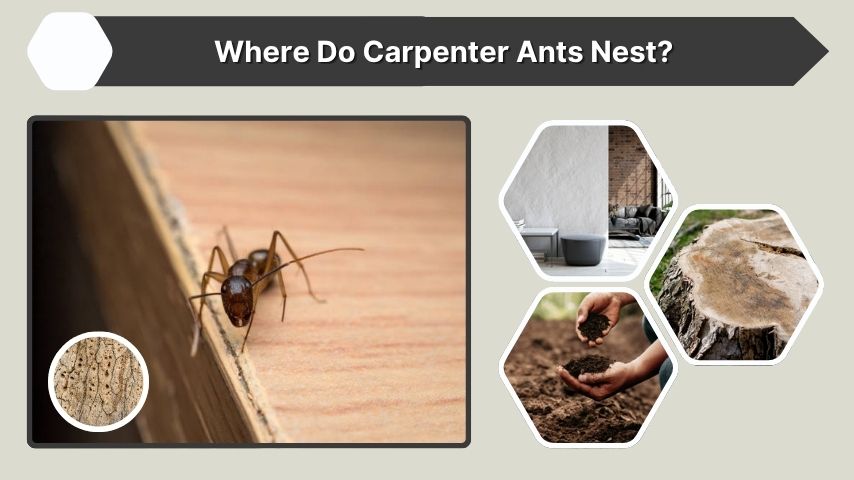
Carpenter ants nest in places that offer shelter, moisture, and access to food. They can build nests indoors or outdoors. Outdoor nests are common, but ants may move into houses when they find suitable conditions.
The location of the nest depends on moisture, wood condition, colony size, and access points.
| Nest Location | Common Signs | Risk Level |
| Inside walls | Frass, rustling sounds, ants near baseboards | High |
| Attic | Ants near roof framing, leaks, insulation activity | High |
| Tree or stump | Ant trails, sawdust, decay, cavities | Medium |
| Ground or soil | Ant activity near roots, logs, buried wood | Medium |
| Deck or porch | Soft boards, frass, ants near posts | High |
| Yard | Ant trails near logs, mulch, or firewood | Medium |
Carpenter Ant Nest in House
A carpenter ant nest in a house is a serious warning sign. Indoor nests are often found near moisture-damaged wood, but they can also exist in wall voids, ceilings, insulation, or structural spaces.
Common indoor areas include kitchens, bathrooms, laundry rooms, basements, crawl spaces, attics, and around windows. These areas often have plumbing, humidity, or wood that has been exposed to moisture.
Carpenter Ant Nest in Wall
A carpenter ant nest in a wall can be hard to detect because the ants may stay hidden most of the day. You may see ants entering or leaving small gaps near baseboards, outlets, pipe openings, or window trim.
Sometimes, you may hear faint rustling inside the wall. If frass appears below a small opening or crack, the nest may be close.
Carpenter Ant Nest in Attic
Attics can attract carpenter ants when there are roof leaks, poor ventilation, wet insulation, or damaged rafters. Ants may nest in roof framing or travel through insulation.
If you notice ants upstairs, near ceiling lights, or around roofline areas, inspect the attic carefully for moisture and damaged wood.
Carpenter Ant Nest in Tree
A carpenter ant nest in a tree often means the tree has decay or internal damage. Carpenter ants usually do not start by attacking healthy wood. They prefer areas that are already softened by rot, injury, or moisture.
Look for ants moving in and out of holes, cracks, cavities, or dead limbs. A tree with a large carpenter ant nest may need to be inspected if it is close to a house, driveway, or walkway.
Carpenter Ant Nest in Ground
Carpenter ants can nest in the ground when there is buried wood, decaying roots, logs, stumps, or wood debris under the soil. A carpenter ant ground nest may not look like a typical ant hill.
You may see ants entering small openings near roots, mulch beds, landscaping timbers, or rotting wood. If the ground nest is close to the house, ants may eventually move indoors.
Carpenter Ant Nest in Yard
A carpenter ant nest in the yard may be found in old stumps, logs, firewood piles, fence posts, mulch, or landscape timbers. Yard nests can become a problem when ants use branches, wires, or exterior cracks to enter the home.
Keeping the yard clear of rotting wood is one of the best ways to reduce carpenter ant pressure around your home.
How to Find a Carpenter Ant Nest
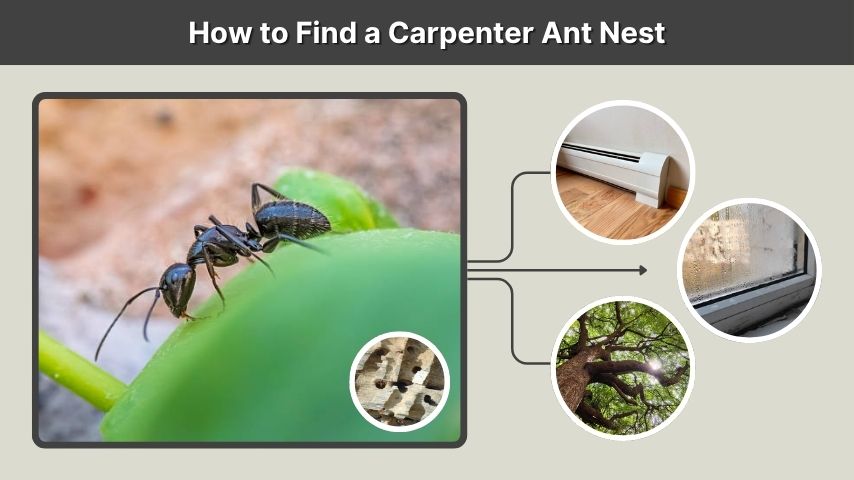
Finding a carpenter ant nest takes patience because the nest may be hidden. The goal is to follow ant activity back to the source.
Start by identifying where you see ants most often. Then inspect nearby wood, moisture sources, and entry points.
Follow Ant Trails at Night
Carpenter ants are often more active at night. Use a flashlight to watch where they travel. Worker ants may move between food sources and the nest.
Look for trails along:
- Baseboards
- Countertops
- Window frames
- Plumbing openings
- Exterior siding
- Deck rails
- Tree branches
- Foundation cracks
If ants disappear into a crack or hole, the nest may be nearby.
Look for Frass
Frass is one of the strongest clues when locating a carpenter ant nest. It may appear as small piles of wood shavings, dust, or debris.
Check around window sills, door frames, baseboards, crawl spaces, attics, decks, and wooden beams. If you clean up frass and it returns, carpenter ants may still be actively tunneling.
Inspect Moisture-Damaged Areas
Moisture is a major clue. Carpenter ants often nest near damp wood. Check for leaks, stains, peeling paint, mold, soft wood, or musty smells.
Important places to inspect include:
- Under sinks
- Around tubs and showers
- Behind dishwashers
- Near washing machines
- Around roof leaks
- Window and door frames
- Basement rim joists
- Crawl space beams
- Deck posts and boards
Fixing moisture problems is essential because carpenter ants may return if the wood stays damp.
Tap on Wood
Tap suspicious wood with a screwdriver handle or small tool. Damaged wood may sound hollow. You can also gently probe soft areas, but avoid damaging structural wood if you are unsure.
If the wood breaks easily or reveals smooth tunnels, you may have found carpenter ant damage near a nest.
What to Do When You Find a Carpenter Ant Nest
Finding a carpenter ant nest is only the first step. The nest must be treated properly, and the conditions that attracted the ants must be corrected.
Do not rely only on killing the ants you see. Visible ants are usually just a small part of the colony.
Confirm It Is Carpenter Ant Activity
Before treatment, make sure the insects are carpenter ants. Carpenter ants have bent antennae, a narrow waist, and large dark bodies. Winged carpenter ants have front wings that are longer than their back wings.
Termites look different. They have straight antennae, a broad waist, and wings of equal length. Correct identification matters because termite and carpenter ant treatments are different.
Avoid Disturbing the Nest Too Much
If you open or disturb a nest without a plan, ants may scatter and move to another location. This can make the infestation harder to control.
If the nest is inside a wall, attic, or structural wood, consider professional help before cutting into the area.
Remove Moisture and Damaged Wood
Treatment will not work well if moisture problems remain. Repair leaks, improve ventilation, clean gutters, and replace rotted wood.
For outdoor nests, remove old stumps, logs, and wood debris. Store firewood away from the house and keep it raised off the ground.
Carpenter Ant Nest Removal
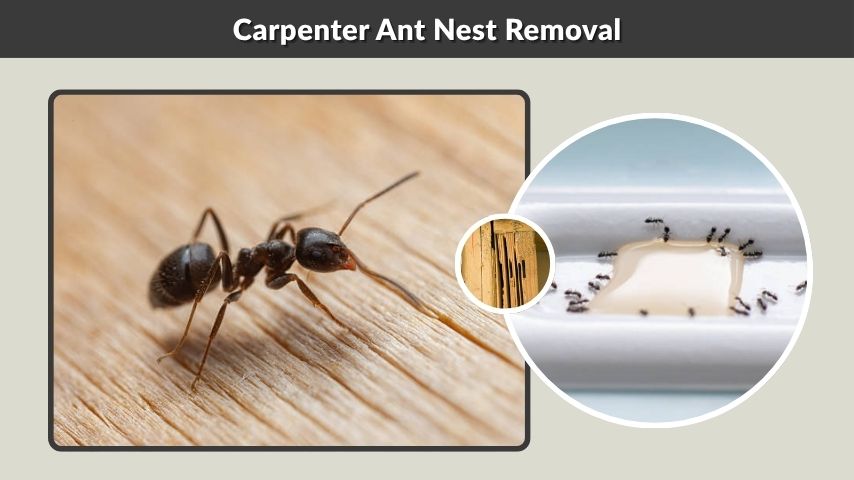
Carpenter ant nest removal depends on where the nest is located. Outdoor nests may be easier to access, while indoor nests in walls or attics can be more difficult.
The key is to eliminate the colony, not just the visible ants.
Baiting Carpenter Ants
Bait can work because worker ants carry it back to the nest. This can help reach ants hidden inside walls or outdoor wood. However, bait must be placed where ants are actively foraging.
Avoid spraying repellents near bait. Repellent sprays can cause ants to avoid the bait and may scatter the colony.
Treating the Nest Directly
If the nest location is known, direct treatment may be effective. This may involve applying a labeled carpenter ant treatment into wall voids, cracks, or damaged wood.
Always follow product label directions. If the nest is in a sensitive area, such as near electrical wiring, plumbing, insulation, or structural beams, professional service is usually safer.
Removing Outdoor Nests
Outdoor carpenter ant nests may be found in trees, stumps, logs, mulch, or ground-level wood. Removing the source is often necessary.
For example, a rotting stump may need to be removed. Firewood should be moved away from the home. Tree branches touching the house should be trimmed back.
Professional Carpenter Ant Nest Removal
Professional pest control may be needed when you cannot find the nest, when ants keep returning, or when the nest is inside a wall, attic, or structural wood.
A professional can inspect for main nests and satellite nests, identify moisture issues, and apply targeted treatment. This is especially helpful for large or recurring infestations.
How to Destroy a Carpenter Ant Nest Safely
Destroying a carpenter ant nest should be done carefully. The wrong approach may only kill a few ants and leave the colony active.
For small outdoor nests, removing the damaged wood source may solve the issue. For indoor nests, the nest location must be treated and the moisture problem must be corrected.
Best Way to Kill a Carpenter Ant Nest
The best way to kill a carpenter ant nest depends on its location. Bait may be best when the nest is hidden. Direct treatment may be best when the nest is clearly located.
For serious infestations, professional treatment is often the most reliable option.
Can Carpenter Ants Move Their Nests?
Yes, carpenter ants may move or create new satellite nests if conditions change or if the colony is disturbed. This is why partial treatment can fail.
If ants disappear after spraying but return later, the colony may have relocated or survived in another hidden space.
Do Carpenter Ants Take Bait Back to the Nest?
Yes, worker ants can carry bait back to the nest. This is why baiting is often recommended for hidden nests. However, bait must match what the ants are currently feeding on.
Sometimes carpenter ants prefer sweet food. Other times, they may prefer protein or fat-based food. If one bait does not work, another type may be needed.
How to Prevent Carpenter Ant Nests
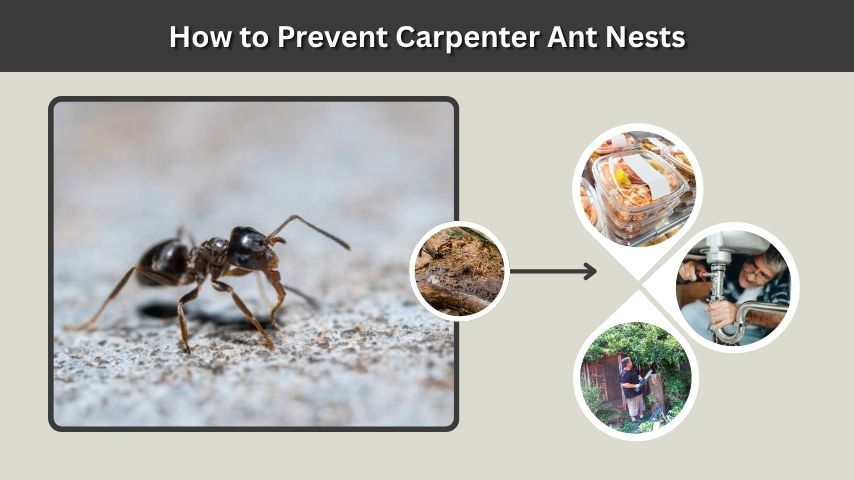
Prevention focuses on removing the conditions carpenter ants need: moisture, wood decay, and easy access to the house.
Carpenter ants are much less likely to nest in a dry, well-maintained home.
Indoor Prevention Tips
To reduce the risk of an indoor carpenter ant nest:
- Fix plumbing leaks quickly
- Repair roof leaks and water stains
- Keep bathrooms and kitchens dry
- Improve basement and crawl space ventilation
- Replace rotting wood
- Seal gaps around pipes and wires
- Keep food sealed and surfaces clean
Regular inspections are especially important in older homes or homes with past moisture problems.
Outdoor Prevention Tips
To prevent outdoor nests from moving closer to your home:
- Remove dead stumps and logs
- Store firewood away from the house
- Keep mulch away from siding
- Trim branches touching the roof
- Repair damaged deck boards
- Seal cracks in the foundation
- Keep gutters clean and draining properly
Outdoor maintenance can greatly reduce the chance of carpenter ants entering the home.
FAQs
What does a carpenter ant nest look like?
A carpenter ant nest is usually hidden inside wood, walls, trees, or other protected spaces. You may not see a visible mound. The most common signs are smooth tunnels in wood, sawdust-like frass, large ants, and activity near cracks or moisture-damaged areas.
How do you find a carpenter ant nest?
Follow ant trails at night, look for frass, inspect damp wood, and check areas near leaks or decay. Carpenter ants often nest near windows, walls, bathrooms, kitchens, attics, crawl spaces, trees, stumps, decks, and firewood piles.
Where do carpenter ants nest in a house?
In a house, carpenter ants may nest inside walls, attics, crawl spaces, basements, window frames, door frames, insulation, or moisture-damaged wood. They are especially common near plumbing leaks, roof leaks, and damp structural areas.
Can carpenter ants nest in the ground?
Yes, carpenter ants can nest in the ground when there is buried wood, decaying roots, stumps, logs, or wood debris. Ground nests may be found near trees, mulch beds, landscaping timbers, or old wood close to the home.
What should I do if I find a carpenter ant nest?
Confirm the insect is a carpenter ant, avoid disturbing the nest too much, and look for moisture problems. Use bait or targeted treatment when appropriate. If the nest is inside walls, attics, or structural wood, professional pest control is often the safest option.
