
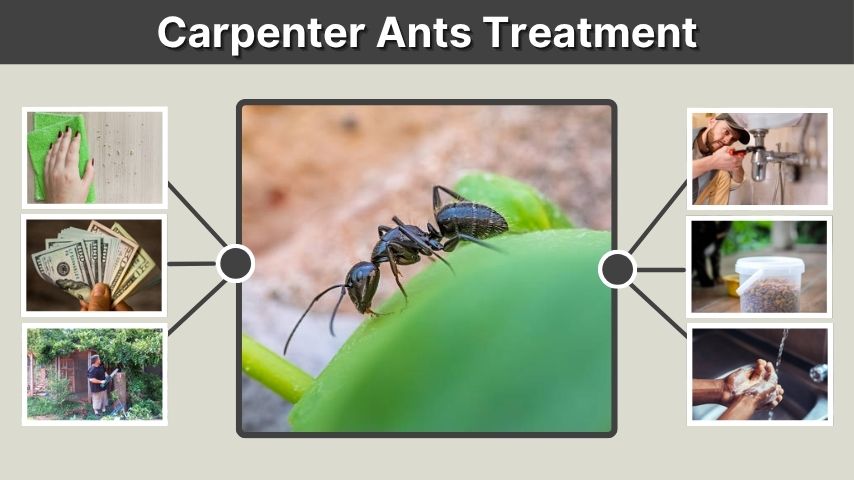
Carpenter ants treatment is important because these ants can damage wood, spread through hidden nesting areas, and return if the main colony is not handled correctly. Unlike termites, carpenter ants do not eat wood. They tunnel through it to build nests, especially in damp or decaying areas. Seeing large black ants indoors, winged ants near windows, or sawdust-like debris can mean there is a nest nearby. The best treatment for carpenter ants depends on where the colony is located, how large the infestation is, and whether the problem is inside the house, outside, or in trees.
Understanding Carpenter Ant Infestation Treatment
Carpenter ant infestation treatment starts with identifying the source of the problem. Killing the ants you see may reduce activity for a short time, but it usually does not eliminate the colony. Carpenter ants often have a main nest and one or more satellite nests. If treatment misses these nests, the ants may continue spreading.
A complete treatment plan should focus on inspection, moisture repair, baiting, nest treatment, exterior control, and long-term prevention.
Why Carpenter Ants Are Hard to Treat
Carpenter ants are difficult to treat because they often hide inside walls, attics, crawl spaces, decks, trees, and damp wood. The visible ants are usually workers searching for food. The queen and colony may be hidden far away from where ants are seen.
Carpenter ants can also travel long distances from the nest to a food source. This means the ants in your kitchen may actually be nesting in a wall, tree, stump, porch, or roof structure.
Signs You Need Carpenter Ant Treatment
You may need carpenter ant treatment if you notice:
- Large black or reddish-black ants inside the home
- Winged carpenter ants near windows or lights
- Sawdust-like frass near wood, baseboards, or doors
- Ant trails at night
- Hollow-sounding wood
- Rustling sounds inside walls
- Ants coming from cracks, outlets, or trim
- Moisture-damaged wood around the home
If you see winged carpenter ants indoors, the colony may already be mature. This is a stronger warning sign than seeing one or two worker ants.
Best Treatment for Carpenter Ants
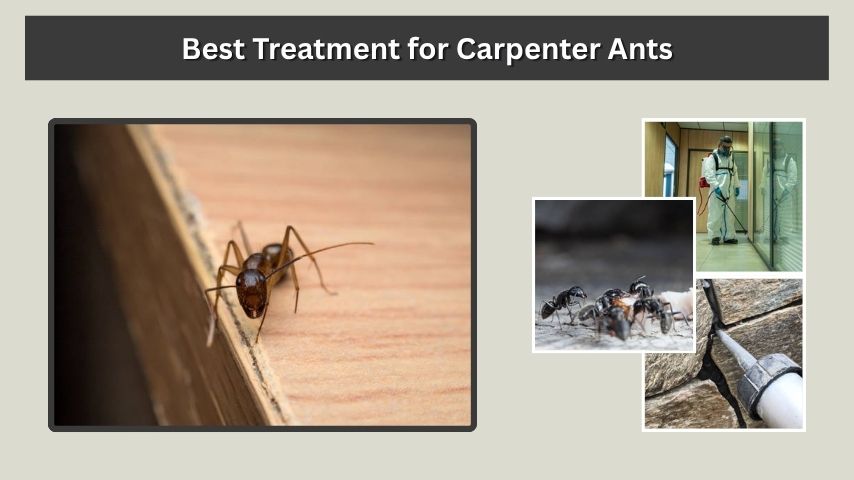
The best treatment for carpenter ants is not a single spray or product. It is a combination of finding the nest, using the right bait or treatment, fixing moisture issues, and sealing entry points.
For small outdoor activity, DIY treatment may work. For repeated indoor activity or hidden nests, professional treatment is usually more effective.
Carpenter Ant Treatment Options
| Treatment Option | Best For | Main Benefit | Limitation |
| Carpenter ant bait | Hidden nests and foraging trails | Workers carry bait back to colony | Can be slow and requires proper placement |
| Direct nest treatment | Known nest location | Targets the colony directly | Nest must be found first |
| Exterior perimeter treatment | Outdoor entry prevention | Reduces ants entering the house | May not kill indoor nests |
| Moisture repair | Long-term prevention | Removes conditions ants prefer | Does not kill existing colony |
| Professional treatment | Large or hidden infestations | More complete inspection and control | Costs more than DIY methods |
Bait Treatment for Carpenter Ants
Bait is often one of the most useful carpenter ant treatments because worker ants can carry it back to the colony. This helps reach ants that are hidden inside walls or outdoor nests.
Baits may be sweet, protein-based, or fat-based. Carpenter ants may prefer different foods depending on the season and colony needs. If one bait does not attract them, another type may work better.
Do not spray repellent insecticide near bait. Repellent sprays can cause ants to avoid the bait, which makes the treatment less effective.
Direct Nest Treatment
Direct nest treatment works when you know exactly where the carpenter ant nest is located. This may involve applying a labeled dust, foam, or liquid treatment into cracks, wall voids, or damaged wood.
This method can be effective, but it should be done carefully. If the nest is inside a wall, attic, or structural area, professional help may be safer and more reliable.
Home Treatment for Carpenter Ants
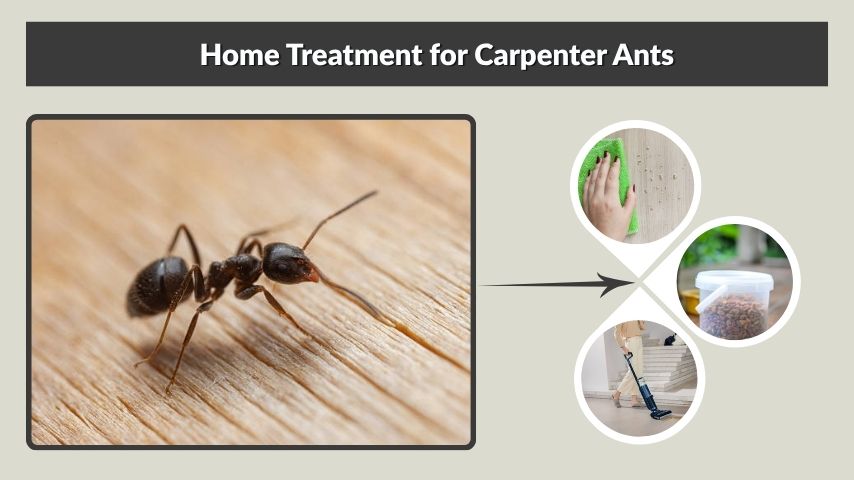
Home treatment for carpenter ants can help when the infestation is small or when ants are entering from outside. However, home treatment must be done correctly. Spraying visible ants without treating the source usually fails.
The goal is to make your home less attractive and interrupt the colony’s access to food, moisture, and nesting sites.
Step-by-Step Home Treatment
Start with inspection. Look for ant trails, frass, soft wood, leaks, and entry points. Carpenter ants are often more active at night, so check with a flashlight after dark.
Then remove food sources. Clean crumbs, wipe spills, seal pantry items, and keep pet food covered. Carpenter ants feed on sweets, proteins, grease, and other household food sources.
Next, remove moisture. Repair leaks under sinks, around tubs, near windows, and in basements. Use ventilation or dehumidifiers in damp areas.
Finally, use bait where ants are active. Place bait near trails but away from children, pets, and food surfaces.
Indoor Carpenter Ant Treatment
Indoor carpenter ant treatment should focus on locating the nest or the entry point. Check kitchens, bathrooms, laundry rooms, basements, crawl spaces, attics, window frames, and wall voids.
Common indoor treatment steps include:
- Vacuum visible ants instead of spraying randomly
- Place bait near ant trails
- Seal cracks after activity is controlled
- Repair water leaks and damp wood
- Check baseboards, outlets, and plumbing openings
- Watch for returning frass after cleaning
If ants are coming from walls or ceilings, avoid cutting into the area unless you know what you are doing. Disturbing the nest may cause ants to scatter.
Outdoor Carpenter Ant Treatment
Outdoor carpenter ant treatment is important because many infestations begin outside. Carpenter ants often nest in trees, logs, stumps, firewood, mulch, landscape timbers, fences, and decks.
Remove rotting wood and keep firewood away from the house. Trim branches that touch the roof or siding. Seal exterior cracks around the foundation, doors, windows, pipes, and utility lines.
Exterior bait stations or targeted treatments may help reduce outdoor colonies. However, outdoor treatment should be placed where ants are actively traveling.
DIY Carpenter Ant Treatment
DIY carpenter ant treatment can work for light activity, especially when the nest is outdoors or easy to locate. The main mistake homeowners make is relying only on contact sprays. Contact sprays kill ants on sight but may not reach the colony.
A better DIY approach is to inspect, bait, monitor, and correct moisture problems.
DIY Treatment Tips
For better results, follow these tips:
- Use bait near active trails, not random areas
- Do not mix repellent sprays with bait
- Check activity at night when ants are most active
- Look for frass near wood and wall openings
- Repair leaks before and after treatment
- Remove old stumps, logs, and wood debris
- Keep mulch and firewood away from siding
DIY treatment takes patience. It may take days or weeks to see results from bait because ants need time to carry it back to the colony.
When DIY Treatment Is Not Enough
DIY treatment may not be enough if ants keep returning, if you see winged ants indoors, or if the nest is hidden in walls, ceilings, or structural wood.
You should also consider professional help if there is visible wood damage, repeated frass, or activity in multiple rooms. These signs may mean there are satellite nests or a large established colony.
Natural Carpenter Ant Treatment
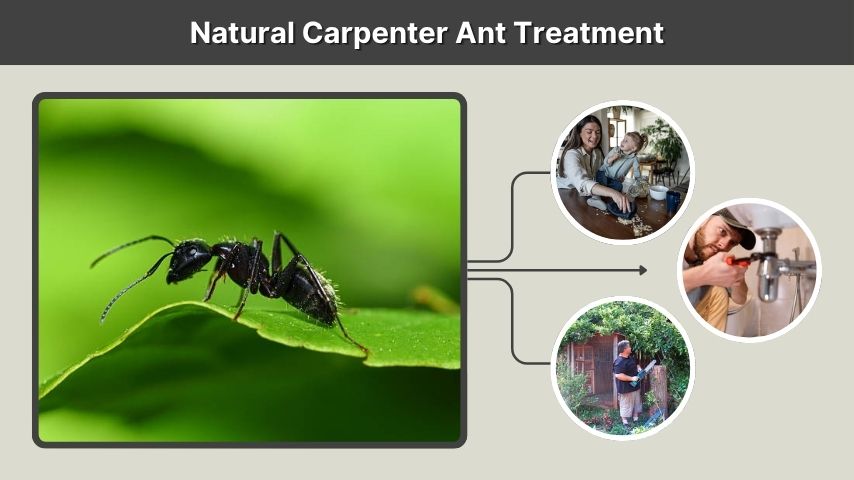
Natural carpenter ant treatment can help reduce activity, but it is usually better for prevention than full colony elimination. Natural methods may repel ants, remove attractants, or reduce moisture, but they may not kill a hidden colony.
Still, natural steps can be useful as part of a larger plan.
Natural Ways to Reduce Carpenter Ants
Some natural prevention methods include:
- Fixing leaks and drying damp wood
- Removing rotting wood from the yard
- Cleaning food spills and grease
- Storing food in sealed containers
- Using a dehumidifier in damp areas
- Trimming branches away from the house
- Sealing cracks and entry points
- Vacuuming visible ants indoors
Some homeowners use vinegar, soap solutions, or essential oil sprays to disrupt ant trails. These may reduce visible activity temporarily, but they usually do not reach the nest.
Non-Toxic and Pet-Safe Carpenter Ant Treatment
If you need non-toxic or pet-safe carpenter ant treatment, focus first on sanitation, exclusion, moisture repair, and physical removal. Baits and insecticides should always be used according to the label and placed where pets and children cannot reach them.
For serious infestations, ask a pest control professional about lower-toxicity options, bait-based strategies, and targeted applications that reduce broad pesticide use.
Carpenter Ant Treatment in Trees and Yards
Carpenter ants in trees treatment is different from indoor treatment. Carpenter ants often nest in trees that already have decay, cavities, or dead wood. Their presence may indicate that the tree is weakened.
The goal is not always to kill every ant in the tree. The bigger concern is whether the tree is structurally safe and whether ants are moving from the tree into the house.
Carpenter Ant Tree Treatment
If carpenter ants are nesting in a tree, inspect for holes, dead limbs, soft wood, and cavities. If the tree is close to your home, driveway, or walkway, consider having it checked by an arborist.
Treatment may involve removing dead limbs, improving tree health, or removing severely decayed trees. If ants are using the tree as a bridge to the house, trim branches away from the roof and siding.
Carpenter Ant Lawn and Yard Treatment
Carpenter ant yard treatment may be needed if ants are nesting in stumps, logs, landscape timbers, mulch, or buried wood. Remove decaying wood wherever possible.
Avoid stacking firewood against the house. Keep it elevated and away from exterior walls. Replace rotting fence posts, deck boards, and landscape timbers.
Carpenter Ant Treatment Cost
Carpenter ant treatment cost can vary depending on the size of the infestation, location of the nest, treatment method, and whether repairs are needed. A small outdoor treatment may cost less than a large indoor infestation with multiple nests.
Professional carpenter ant treatment usually costs more when the technician must inspect wall voids, attics, crawl spaces, or damaged wood.
What Affects Carpenter Ant Treatment Cost?
Several factors can affect the cost:
- Size of the infestation
- Number of nests
- Indoor vs outdoor nest location
- Difficulty finding the nest
- Amount of wood damage
- Need for follow-up visits
- Local service rates
- Type of treatment used
Treatment cost and repair cost are different. Pest control may remove the colony, but damaged wood may require a contractor.
Is Professional Treatment Worth It?
Professional carpenter ant treatment can be worth it when the infestation is hidden, recurring, or damaging the home. Professionals can identify ant species, locate nests, choose proper treatment, and reduce the chance of colony relocation.
If you have tried DIY products and ants keep coming back, a professional inspection may save money in the long run.
Carpenter Ant Bite Treatment
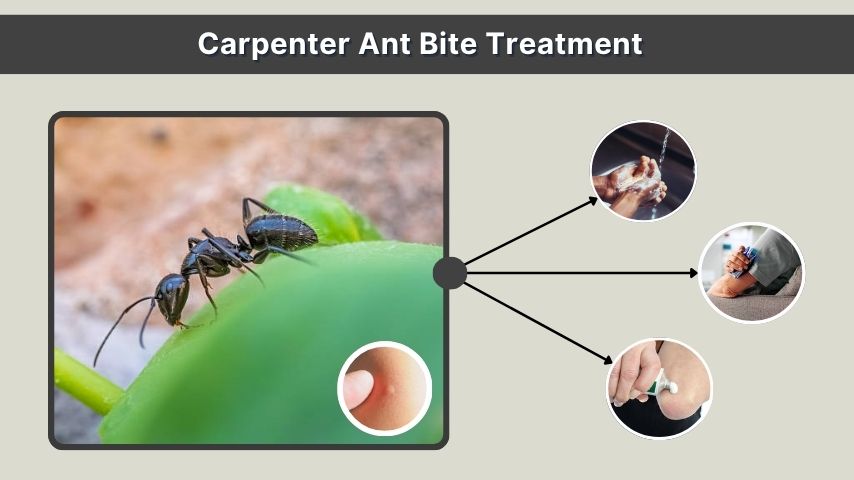
Carpenter ants can bite, but they do not sting like wasps or fire ants. A carpenter ant bite may feel like a sharp pinch and may cause mild redness, swelling, or irritation.
Most bites can be treated at home, but watch for allergic reactions or signs of infection.
How to Treat Carpenter Ant Bites
For basic carpenter ant bite treatment:
- Wash the area with soap and water
- Apply a cold compress
- Avoid scratching
- Use an over-the-counter anti-itch cream if needed
- Monitor for swelling, pus, or increasing redness
Seek medical advice if you have severe swelling, trouble breathing, dizziness, spreading redness, or signs of infection.
Does Termite Treatment Kill Carpenter Ants?
Some termite treatments may also affect carpenter ants, but termite treatment is not always the right solution for carpenter ants. These pests behave differently and require different strategies.
Termites eat wood, while carpenter ants tunnel through wood to nest. Carpenter ants often need baiting, nest treatment, moisture correction, and exterior prevention.
If you are unsure whether you have termites or carpenter ants, get a proper identification before treatment.
How Long Does Carpenter Ant Treatment Take?
Carpenter ant treatment may take a few days to several weeks, depending on the method. Contact sprays may kill visible ants quickly, but they may not solve the infestation. Baiting takes longer because ants must carry the bait back to the colony.
A professional treatment may reduce activity quickly, but follow-up monitoring is often needed.
Do Carpenter Ants Come Back After Treatment?
Carpenter ants can come back after treatment if the nest was not eliminated or if moisture problems remain. They may also return from outdoor nests if entry points are not sealed.
To prevent return activity, repair leaks, remove rotting wood, seal gaps, and monitor areas where ants were previously active.
FAQs
What is the best treatment for carpenter ants?
The best treatment for carpenter ants usually combines baiting, direct nest treatment, moisture repair, and entry-point sealing. Bait works well for hidden nests, while direct treatment works when the nest is found. Serious indoor infestations often need professional pest control.
Can I treat carpenter ants myself?
Yes, you can treat a small carpenter ant problem yourself with inspection, bait, cleaning, moisture repair, and outdoor wood removal. However, DIY treatment may fail if the colony is hidden inside walls, attics, crawl spaces, or structural wood.
How much does carpenter ant treatment cost?
Carpenter ant treatment cost varies based on infestation size, nest location, treatment type, and local service rates. Indoor or recurring infestations usually cost more than small outdoor problems. Repairing damaged wood is usually a separate cost from pest treatment.
Are natural carpenter ant treatments effective?
Natural carpenter ant treatments can help with prevention and minor activity, especially by removing food, moisture, and entry points. However, natural sprays or repellents usually do not eliminate a hidden colony. For active nests, baiting or professional treatment may be needed.
How long does it take for carpenter ants to die after treatment?
It depends on the treatment. Contact sprays may kill visible ants quickly, but bait can take days or weeks because workers must carry it back to the nest. If ants remain active after several weeks, the nest may not have been fully treated.
