
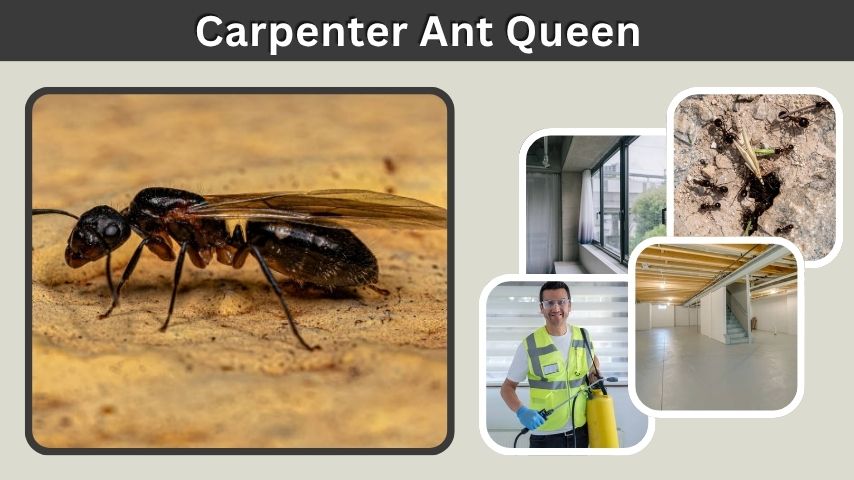
A carpenter ant queen is the most important ant in a carpenter ant colony because she lays eggs and helps the colony grow. Many homeowners notice a large black ant, a winged ant, or an unusually big ant indoors and wonder if it is a queen. Identifying her correctly can help you understand whether you found a harmless wandering ant or a possible sign of a nearby carpenter ant colony. This guide explains her size, wings, appearance, and role.
What Is a Carpenter Ant Queen?
A carpenter ant queen is the reproductive female of the colony. Her main job is to lay eggs and support colony growth over time. Unlike worker ants, she usually stays hidden inside the nest after mating. Because she is rarely seen, finding a possible queen carpenter ant indoors can feel confusing and may raise concerns about infestation.
Role of the Queen in the Colony
The queen is responsible for producing eggs that become workers, males, or new reproductive ants. Worker ants care for the young, search for food, and maintain the nest. The queen does not usually leave the nest once the colony is established. Her survival is important because the colony depends on her egg-laying ability.
Do Carpenter Ants Have a Queen?
Yes, carpenter ants have a queen. In many colonies, one main queen produces most of the eggs. Some carpenter ant species or colony situations may involve more than one queen, but homeowners are more likely to see workers than queens. The queen is usually protected deep inside the nest.
What Does a Carpenter Ant Queen Look Like?
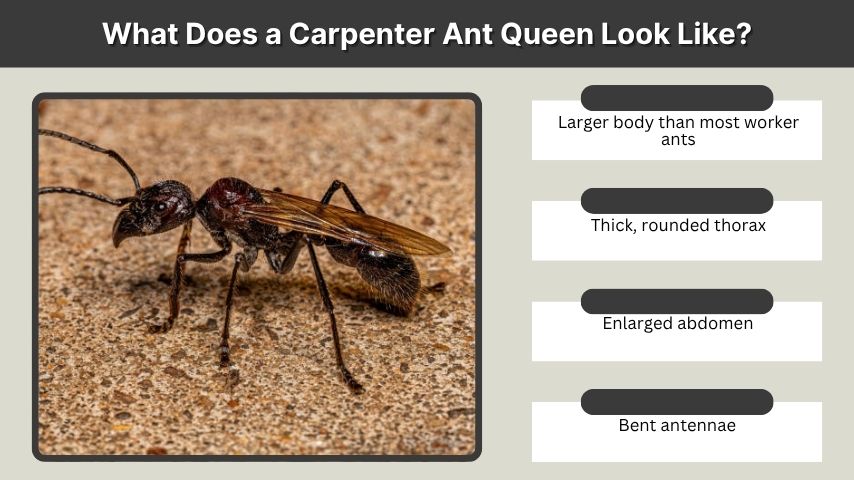
A carpenter ant queen is usually larger, heavier, and more noticeable than a worker ant. She has a broad thorax, a larger abdomen, bent antennae, and a narrow waist. Her color depends on the species, so she may be black, reddish-black, brown, chestnut, or even orange-toned. Shape and size are more useful than color alone.
Carpenter Ant Queen Identification
A queen carpenter ant can be identified by several physical features. These details are helpful when comparing her with workers or other large ants.
- Larger body than most worker ants
- Thick, rounded thorax
- Enlarged abdomen
- Bent antennae
- Narrow waist
- Wings or visible wing scars
- Slow, heavy movement compared with workers
Black Carpenter Ant Queen
A black carpenter ant queen is usually dark brown to black and noticeably larger than regular black ants. She may be seen during mating season or after entering a home while searching for a nesting place. If she has wings or wing scars, a thick thorax, and a large abdomen, she may be a queen rather than a worker.
Red or Brown Carpenter Ant Queens
Not every carpenter ant queen is fully black. Some species have red, brown, orange, or chestnut coloring. A red carpenter ant queen may still have the same queen-like body shape: large thorax, full abdomen, narrow waist, and bent antennae. Color can help, but it should not be the only way to identify her.
Carpenter Ant Queen Size
Carpenter ant queen size is one of the easiest clues for identification. Queens are usually much larger than common household ants and often larger than worker carpenter ants. However, some worker ants, especially major workers, can also be large. This is why size should be checked along with body shape, wing status, and behavior.
How Big Is a Carpenter Ant Queen?
A carpenter ant queen is often about 12 to 20 mm long, depending on the species. She may look much larger than regular ants because her body is thicker and fuller. Her abdomen is usually more developed, and her thorax is larger because it once supported wings during the reproductive stage.
Carpenter Ant Queen vs Worker Size
Workers are smaller and more commonly seen moving around the home. Queens are larger and bulkier, with a stronger-looking body. Workers are built for activity, while queens are built for reproduction. If the ant is very large but does not have a big thorax or wing scars, it may be a major worker instead of a queen.
Do Queen Carpenter Ants Have Wings?
Queen carpenter ants can have wings during the reproductive stage of life. Winged queens leave mature colonies during mating flights, mate with males, and then search for a nesting site. After mating, the queen usually sheds her wings. This is why some queens are found with wings, while others are found without them.
Winged Carpenter Ant Queen
A winged carpenter ant queen is usually larger than winged male ants and has a strong body. Seeing winged carpenter ants indoors may be a warning sign, especially if there are many of them. It can suggest that a mature colony is nearby or possibly inside the structure.
Carpenter Ant Queen Without Wings
After mating, a carpenter ant queen breaks off or sheds her wings. A queen without wings is called a dealate queen. She may still have small wing scars on her thorax. A wingless queen found indoors may be searching for a nesting site or may have been disturbed from an existing colony.
Why Queens Lose Their Wings
Queens only need wings for mating flights. Once mating is complete, flying is no longer necessary. The queen removes her wings and begins looking for a safe place to start a colony. After that, her main role becomes laying eggs and staying protected inside the nest.
Carpenter Ant Queen vs Worker
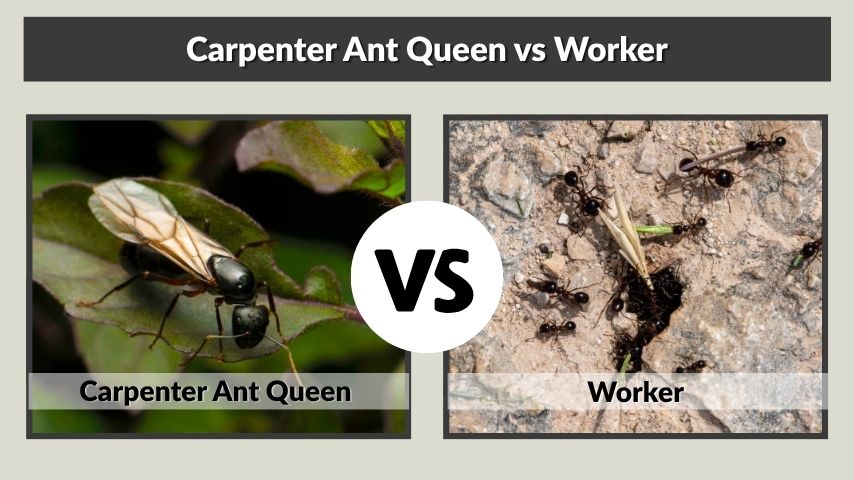
A carpenter ant queen and a worker ant may look similar at first because both have bent antennae, narrow waists, and carpenter ant body shapes. However, their size, role, and body structure are different. The queen is built for reproduction, while workers are built for foraging, nest care, and colony maintenance.
Main Differences
The queen is usually larger and heavier than workers. She has a bigger thorax, a fuller abdomen, and may have wings or wing scars. Workers are smaller, faster, and more commonly seen around food, walls, windows, or outdoor trails. A very large worker can be mistaken for a queen, but workers do not have the same reproductive body shape.
Which One Are You Most Likely to See?
You are much more likely to see worker carpenter ants than the queen. Workers leave the nest to search for food and water, while the queen usually stays hidden inside the colony. A queen may be seen during mating season, after a nest is disturbed, or when she is searching for a new nesting site.
Carpenter Ant Queen in the House
Finding a carpenter ant queen in the house can be worrying, but it does not always confirm a serious infestation. A single queen may enter by accident during swarming season. However, if you also see worker ants, winged ants, frass, or wood damage, there may be a nest inside or close to the home.
What to Do If You Find One
If you find a possible queen carpenter ant indoors, inspect the area carefully before assuming the problem is solved. A few simple steps can help you understand whether it is an isolated ant or part of a larger colony.
- Take a clear photo for identification
- Check if the ant has wings or wing scars
- Look for worker ants nearby
- Inspect damp wood around windows and doors
- Search for sawdust-like frass
- Watch for repeated ant activity in the same area
Does a Queen Indoors Mean Infestation?
One queen inside does not always mean there is an infestation. She may have flown in or entered through a gap while searching for a nesting place. Still, repeated sightings or other signs should not be ignored. If ants are coming from walls, baseboards, or damaged wood, a hidden colony may already be present.
Why Would a Queen Leave the Nest?
A queen carpenter ant usually leaves a colony during mating flights before starting her own nest. Once she establishes a colony, she rarely comes out. If an established queen appears outside the nest, it may be due to disturbance, stress, damage to the nest, or environmental changes.
What Happens If You Kill the Carpenter Ant Queen?
Killing a carpenter ant queen may eventually stop egg production, but it does not always remove the problem immediately. Existing workers may continue moving around for some time, and some colonies may have satellite nests. For pest control, the goal should be treating the colony and fixing the conditions that support it.
Does Killing the Queen End the Colony?
If the colony has only one queen, her death can lead to colony decline because no new workers will be produced. However, the remaining ants may survive for weeks or longer. If there are satellite nests or multiple queens, killing one queen may not solve the entire infestation.
Can Bait Kill the Queen?
Carpenter ant bait can help when worker ants carry it back to the colony. If the bait reaches the queen and developing ants, it may reduce or eliminate the colony. Bait works best when placed near active trails and when other food sources are removed. Spraying near bait should be avoided because it may repel ants.
How to Find a Carpenter Ant Queen
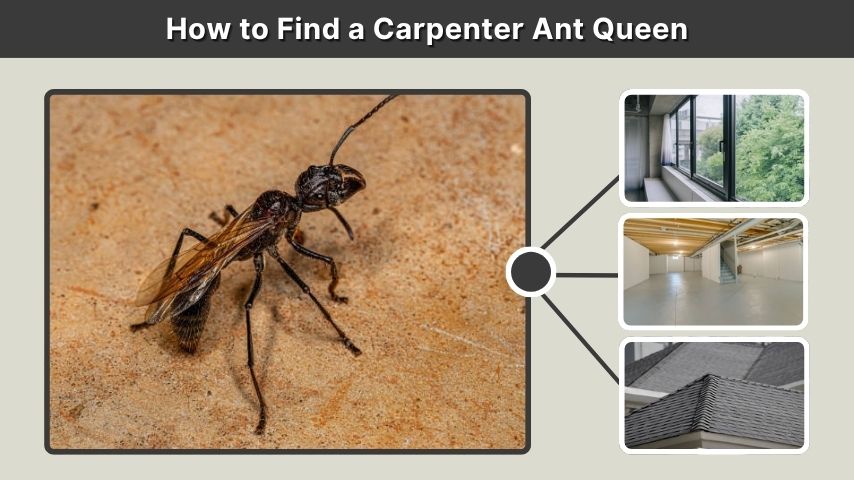
Finding the queen herself is difficult because she usually stays hidden deep inside the nest. Homeowners should focus more on finding colony signs and nesting areas rather than trying to capture the queen. Once the nest location is found, treatment becomes more effective and the chance of long-term control improves.
Look for Colony Signs
Signs around the home can point toward a carpenter ant nest. These clues are often easier to find than the queen.
- Large worker ants indoors
- Winged ants near windows or lights
- Sawdust-like frass
- Ant trails at night
- Rustling sounds inside walls
- Soft or hollow wood
- Activity near plumbing or moisture-damaged areas
Check Common Nesting Areas
Carpenter ants often nest in damp, soft, or decaying wood. Inspect areas where moisture and wood damage are likely.
- Window frames
- Door frames
- Wall voids
- Roof edges
- Basements
- Crawl spaces
- Attics
- Deck posts
- Porch supports
- Tree stumps and firewood piles
Carpenter Ant Queen Lifespan and Eggs
A carpenter ant queen can live much longer than worker ants when conditions are suitable. Her long life allows the colony to grow slowly over time. This is one reason carpenter ant problems may become more serious if ignored. A small colony can expand into a larger infestation as the queen continues laying eggs.
How Long Does a Carpenter Ant Queen Live?
A carpenter ant queen may live for several years, depending on the species, environment, and colony conditions. During that time, she can continue laying eggs and supporting colony growth. Workers usually live much shorter lives, but they help protect the queen and care for the young.
Queen Carpenter Ant Laying Eggs
After mating and finding a nesting site, the queen lays her first eggs. These develop into workers that help feed larvae, expand the nest, and search for food. As the colony matures, more workers are produced, and the nest may become harder to control if it is hidden inside wood.
When to Call Pest Control
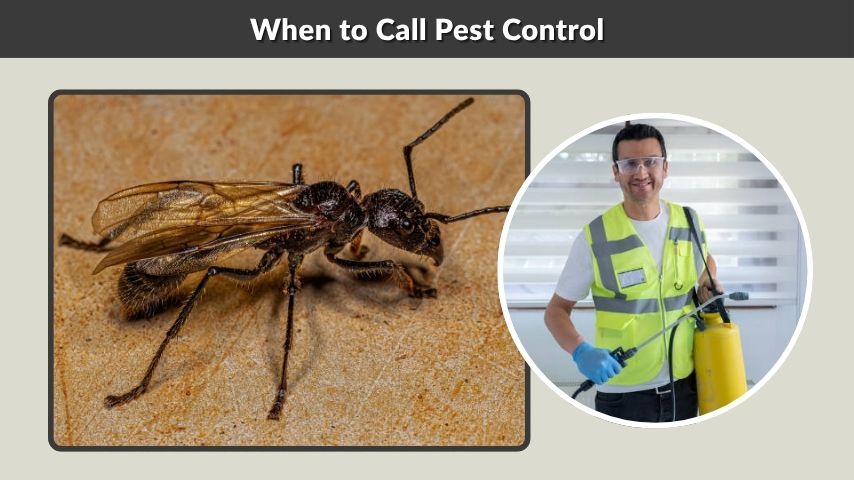
Professional pest control may be needed if you find a queen carpenter ant along with other signs of colony activity. Since the queen is usually hidden, visible ants are often only part of the problem. A pest control expert can inspect the home, locate nesting areas, and recommend treatment that targets the colony instead of only visible ants.
Signs You Need Professional Help
You should consider calling pest control when carpenter ant activity continues or signs suggest a hidden nest. Important warning signs include repeated indoor ants, winged ants, frass, hollow wood, and ants emerging from walls, outlets, ceilings, or baseboards. Professional help is also useful if DIY bait or sprays do not stop the activity.
Why Queen-Focused Treatment Is Not Enough
A good treatment plan should not focus only on finding the queen. Carpenter ant control also requires nest location, moisture repair, removal of damaged wood, sealing entry points, and targeted treatment. Even if the queen is affected, new problems can return if the conditions that attracted the ants remain.
FAQs
What does a carpenter ant queen look like?
A carpenter ant queen is larger and bulkier than workers, with a broad thorax, a larger abdomen, bent antennae, and a narrow waist. She may have wings during mating season or wing scars if she has shed them.
How big is a carpenter ant queen?
Carpenter ant queens typically range from 12 to 20 mm long, depending on species. They are noticeably larger than worker ants, with a fuller abdomen and a thicker thorax.
Do carpenter ant queens have wings?
Yes, queen carpenter ants have wings during mating flights. After mating, queens usually shed their wings and may display small wing scars on their thorax.
What happens if you kill a carpenter ant queen?
If a colony has only one queen, killing her can eventually stop egg production and lead to colony decline. However, workers may continue foraging for a period, and satellite nests may still exist.
How can I find a carpenter ant queen in my house?
Finding a queen directly is difficult because she stays hidden in the nest. Look for colony signs such as large worker ants, winged ants, sawdust-like frass, ant trails at night, and damp or hollow wood around windows, doors, basements, or crawl spaces.
