
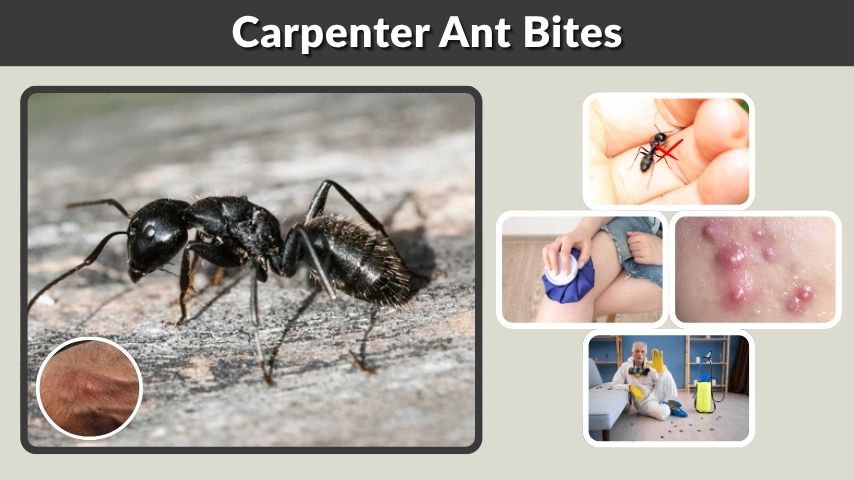
A carpenter ant bite can surprise you because these ants are better known for damaging wood than biting people. Still, carpenter ants can bite humans, dogs, and cats when they feel threatened, are handled, or their nest is disturbed. Most carpenter ant bites are mild, causing short pain, redness, itching, or slight swelling. This guide explains what carpenter ant bites look like, how to treat them, when to worry, and how they compare with fire ant bites.
Do Carpenter Ants Bite Humans?
Carpenter ants can bite humans, but they are not usually aggressive toward people. They bite mainly as a defense response when they are crushed, trapped against skin, picked up, or disturbed near a colony. Unlike mosquitoes or ticks, carpenter ants do not bite because they want blood. A bite is usually accidental or defensive, not a feeding behavior.
Can Carpenter Ants Bite You?
Yes, carpenter ants can bite you. They have strong jaws called mandibles, which they use to chew through wood and defend themselves. If one bites your skin, you may feel a sharp pinch or quick burning feeling. The bite may leave a small red mark, but serious symptoms are uncommon for most people.
Do Carpenter Ants Bite or Sting?
Carpenter ants bite; they do not sting like fire ants, bees, or wasps. Some people describe the bite as burning because the ant may irritate the skin after biting. However, it is still considered a bite, not a true sting. This difference matters because fire ant stings often cause more intense pain and pustules.
What Does a Carpenter Ant Bite Look Like?
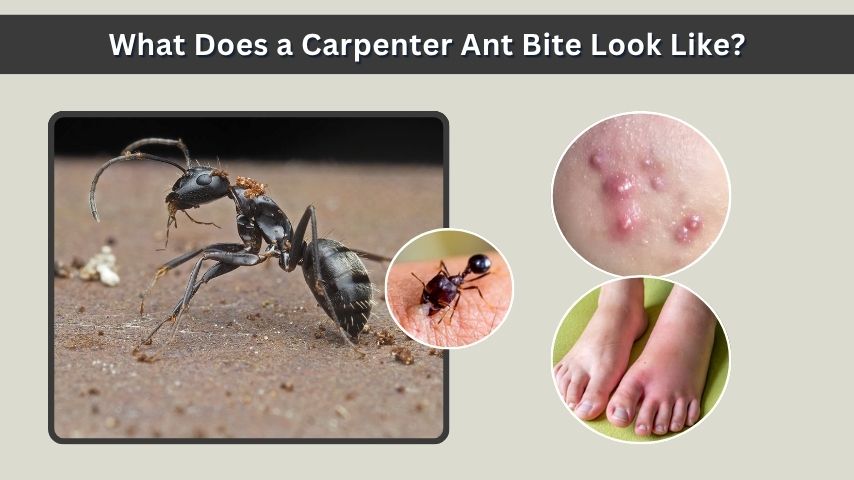
A carpenter ant bite can be hard to identify by appearance alone because many insect bites look similar. The best clue is often the situation: seeing large black, red, or winged ants nearby, disturbing damaged wood, or finding ants indoors. The bite usually appears as a small irritated spot rather than a large wound or blister.
Common Carpenter Ant Bite Signs
A mild carpenter ant bite may cause:
- A small red bump or mark
- Mild swelling around the bite
- Itching or skin irritation
- Tenderness when touched
- A short burning or pinching feeling
- A tiny puncture-like spot
- Slight rash in sensitive skin
Carpenter Ant Bite Pictures and Images
Many people search for carpenter ant bite pictures to compare skin marks. Pictures can help, but they should not be used as a final diagnosis. A carpenter ant bite may look like a minor red bump, while mosquito bites, flea bites, spider bites, and fire ant stings may look similar. If the skin reaction spreads, becomes painful, or looks infected, medical advice is safer than relying on images.
Carpenter Ant Bites on Skin
On human skin, carpenter ant bites usually stay local. You may notice redness, a raised bump, or mild swelling in one spot. Some people feel itching for a day or two. Scratching can make the area worse and may increase the chance of infection, especially if the skin breaks.
Carpenter Ant Bite Symptoms
Most carpenter ant bite symptoms are mild and temporary. The bite may hurt at first because carpenter ants have strong jaws. After the first pinch, the area may become itchy, red, or slightly swollen. People with sensitive skin may have a stronger local reaction, but severe allergic reactions are not common.
Do Carpenter Ant Bites Hurt?
Carpenter ant bites can hurt, but the pain is usually brief. Many people compare it to a sharp pinch. The pain level depends on the size of the ant, where it bites, and how sensitive your skin is. A bite on thinner skin may feel worse than a bite on a hand or foot.
Do Carpenter Ant Bites Itch?
Yes, carpenter ant bites can itch. Itching happens because the skin reacts to irritation from the bite. Mild itching is normal, but strong itching, spreading redness, hives, or swelling beyond the bite area may suggest a stronger reaction. Avoid scratching because broken skin can become infected.
How Long Do Carpenter Ant Bites Last?
A mild carpenter ant bite often improves within one to three days. Some itching or discoloration may last longer, especially if the bite was scratched. If redness grows, the skin feels hot, pus appears, or pain gets worse after a day or two, the issue may be infection rather than a normal bite reaction.
Carpenter Ant Bite Treatment
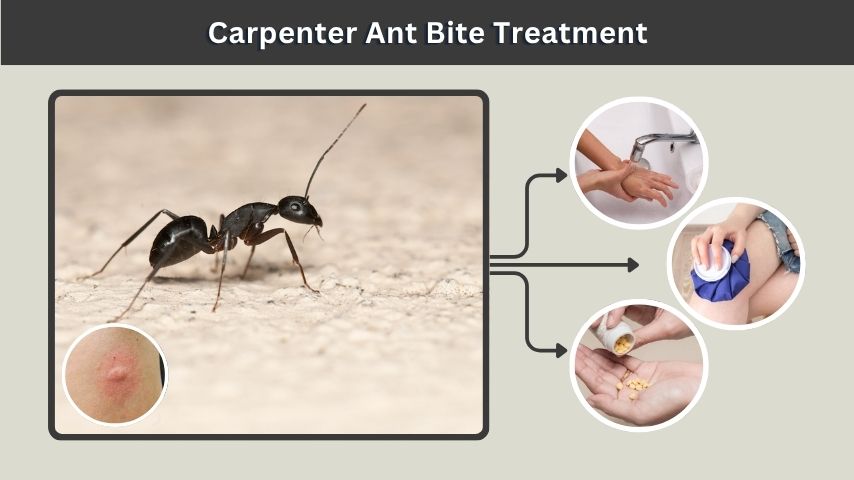
Most carpenter ant bites can be treated at home with simple first aid. The main goals are to clean the area, reduce swelling, calm itching, and prevent infection. Treatment is similar to care for many minor insect bites. However, severe allergic symptoms or signs of infection should be treated as urgent warning signs.
How to Treat a Carpenter Ant Bite
Follow these steps:
- Wash the bite with soap and water.
- Apply a cold compress for 10 to 15 minutes.
- Avoid scratching the bite.
- Use calamine lotion or hydrocortisone cream for itching.
- Take an oral antihistamine if itching is bothersome and safe for you.
- Keep the area clean and dry.
- Watch for spreading redness, warmth, pus, or fever.
Carpenter Ant Bite Remedy for Swelling
A cold compress is often the easiest remedy for swelling. Wrap ice or a cold pack in a cloth and place it on the bite. Do not put ice directly on skin for a long time. Keeping the area elevated may also help if the bite is on a hand, arm, foot, or leg.
When Home Treatment Is Enough
Home treatment is usually enough when the bite is small, the pain fades quickly, and symptoms improve within a few days. Mild redness, itching, or swelling can be normal. Continue to keep the area clean and avoid scratching until the skin returns to normal.
Are Carpenter Ant Bites Dangerous?
For most people, carpenter ant bites are not dangerous. They are usually less concerning than fire ant stings, bee stings, or bites from insects that can spread disease. The main risks are allergic reaction, skin infection from scratching, or mistaking another insect bite for a carpenter ant bite.
Allergic Reaction to Carpenter Ant Bites
An allergic reaction is possible with almost any insect bite. Mild reactions may include extra redness, swelling, or itching. More serious symptoms need urgent care. Watch for hives, swelling of the lips or face, wheezing, trouble breathing, dizziness, faintness, vomiting, or a rapidly spreading rash.
Can Carpenter Ant Bites Make You Sick?
A simple carpenter ant bite usually does not make a person sick. Feeling ill after a suspected bite may mean something else is happening, such as an infection, a stronger allergic reaction, or a different insect bite. Fever, chills, spreading redness, or severe pain should not be ignored.
Carpenter Ant Bite Warning Signs
Get medical help if you notice:
- Trouble breathing
- Swelling of the face, lips, tongue, or throat
- Dizziness or fainting
- Hives over the body
- Fever after the bite
- Pus or drainage
- Redness that keeps spreading
- Severe pain or swelling
Carpenter Ant Bite vs Fire Ant Bite
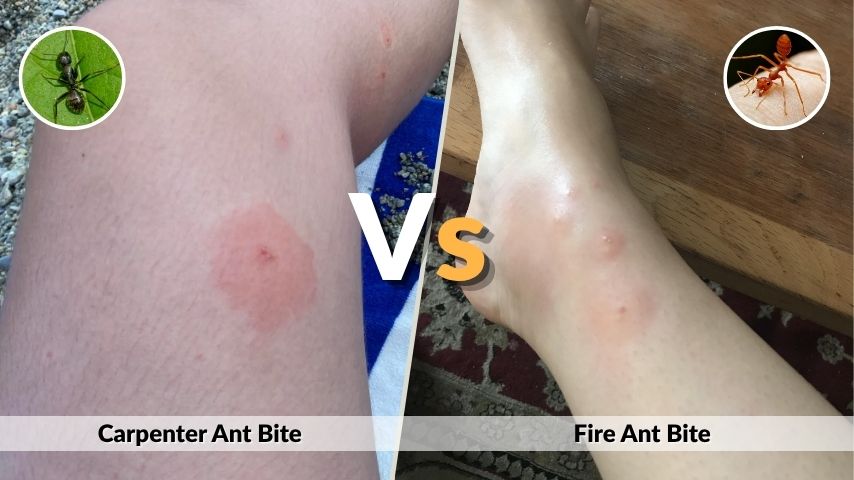
Carpenter ant bites and fire ant stings are often confused, but they are not the same. Carpenter ants mainly bite with their jaws and usually cause a small local reaction. Fire ants can bite and sting, often repeatedly, and their stings are more likely to cause burning pain, welts, and pus-filled bumps.
Key Differences
| Feature | Carpenter Ant Bite | Fire Ant Sting |
| Main action | Bites with jaws | Stings and may bite |
| Pain level | Usually mild to moderate | Often intense burning |
| Skin mark | Small red bump or swelling | Welts or white pustules |
| Number of marks | Often one or few | Often many |
| Risk level | Usually low | Higher allergy concern |
Which One Hurts More?
Fire ant stings usually hurt more than carpenter ant bites. Fire ants often attack in groups and sting repeatedly. Carpenter ants may bite if threatened, but they do not usually swarm people in the same way. If you see white pustules after an ant attack, fire ants are more likely than carpenter ants.
Carpenter Ant Bites on Dogs and Cats
Dogs and cats can also be bitten by carpenter ants, especially if they sniff, paw, or bite at ants near a nest. Most pet reactions are mild, but bites around the mouth, nose, paws, or eyes can be more uncomfortable. Watch your pet closely if you suspect an ant bite.
Carpenter Ant Bite on a Dog
A dog may lick, chew, or paw at the bite area. You may notice slight redness or swelling. If the bite is on the paw, the dog may limp briefly. Contact a veterinarian if your dog has facial swelling, vomiting, drooling, weakness, breathing trouble, or repeated scratching that damages the skin.
Do Carpenter Ants Bite Cats?
Yes, carpenter ants can bite cats if a cat plays with or disturbs them. A cat may suddenly jump, lick a paw, or avoid stepping on one foot. If swelling appears near the face or mouth, or your cat seems weak or distressed, contact a veterinarian.
How to Prevent Carpenter Ant Bites
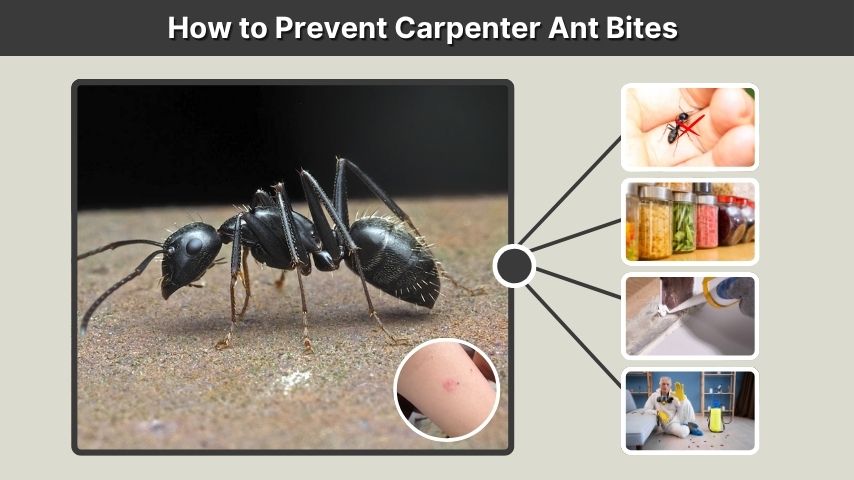
Preventing carpenter ant bites mostly means avoiding direct contact and reducing carpenter ant activity around the home. These ants are attracted to damp or damaged wood, and an indoor problem may point to moisture or structural issues. Bite prevention and pest prevention often go together.
Prevention Tips
Use these steps to lower the risk:
- Do not pick up carpenter ants with bare hands.
- Avoid disturbing nests or damaged wood.
- Seal cracks, gaps, and entry points.
- Fix leaks and moisture problems.
- Remove rotting wood near the home.
- Store firewood away from the house.
- Keep food sealed and counters clean.
- Call pest control for large infestations.
Why Carpenter Ant Control Matters
Carpenter ants are usually a bigger concern for homes than for human health. They tunnel through wood to build nests, especially in moist or damaged areas. They do not eat wood like termites, but their nesting can still weaken structures over time if the colony grows and remains untreated.
FAQs
Can carpenter ants bite humans?
Yes, carpenter ants can bite humans. They usually bite only when they feel threatened, are handled, crushed, or disturbed near their nest. The bite may feel like a sharp pinch and can leave a small red bump, but most carpenter ant bites are mild.
What does a carpenter ant bite look like?
A carpenter ant bite may look like a small red bump, tiny puncture mark, or mildly swollen irritated spot. Some people also notice itching, tenderness, or a burning feeling. It can look similar to other insect bites, so context is important.
Do carpenter ants sting or bite?
Carpenter ants bite; they do not sting like fire ants, bees, or wasps. They use their jaws to defend themselves. The bite may feel sharp or slightly burning, but it is not the same as a venomous fire ant sting.
How do you treat a carpenter ant bite?
Wash the bite with soap and water, apply a cold compress, avoid scratching, and use an anti-itch cream if needed. An oral antihistamine may help with itching. Get medical help for trouble breathing, facial swelling, hives, pus, fever, or spreading redness.
Are carpenter ant bites dangerous?
Carpenter ant bites are usually not dangerous for most people. The main concerns are allergic reactions, infection from scratching, or confusing the bite with a more serious insect bite or sting. Severe swelling, breathing problems, dizziness, or widespread hives need urgent care.
