
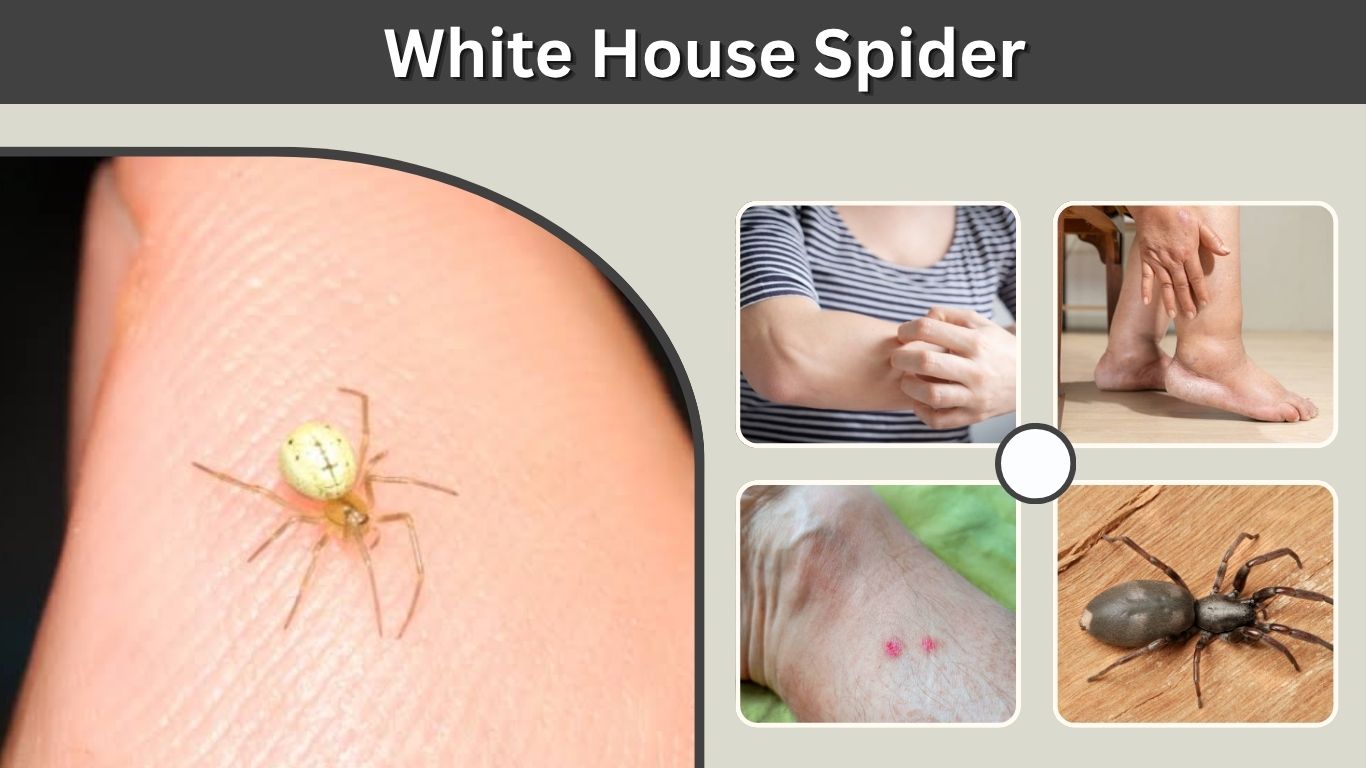
A white house spider is not one specific species. Several spiders found around homes can appear white, cream, clear, yellowish, or black with white markings. Common possibilities include yellow sac spiders, jumping spiders, crab spiders, newly molted spiders, and juveniles of darker species. Some white-looking arachnids may even be mites rather than true spiders. Correct identification depends on body shape, markings, movement, web type, and geographic location. This guide explains the most common white spiders found indoors, their bites, appearance, and whether they are dangerous.
What Is a White House Spider?
“White house spider” is a descriptive term rather than a recognized species name. A spider may naturally be pale, temporarily appear white after molting, or have contrasting white markings on a black or brown body.
White House Spider Identification
- Body may be white, cream, pale yellow, or translucent
- Some species have black bodies with white spots or stripes
- Juveniles are often paler than adults
- Recently molted spiders may temporarily look almost white
- Eight legs distinguish spiders from insects
- Jumping spiders have compact bodies and prominent front eyes
- Sac spiders have elongated bodies and longer front legs
- Crab spiders hold their front legs sideways in a crab-like position
Color alone is rarely enough to identify a spider accurately.
Small White Spider in the House
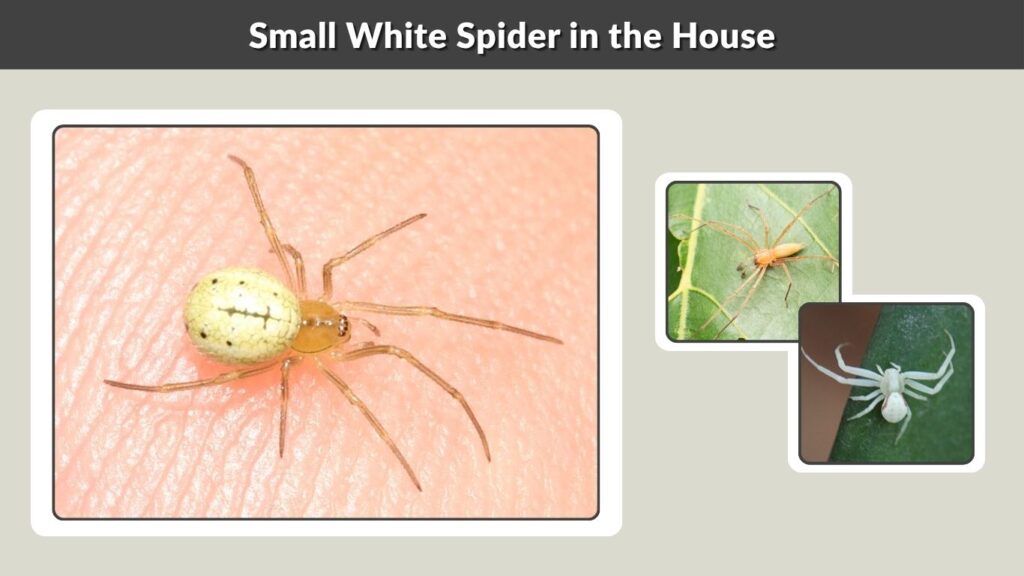
A small white or cream spider indoors is frequently a pale hunting spider rather than a permanent house-web species.
Yellow Sac Spider
Yellow sac spiders (Cheiracanthium species) are among the most likely pale spiders found indoors. They are generally yellow, cream, or greenish, with the front part of the body somewhat darker. Adults are roughly 1/5–2/5 inch long excluding the legs.
Rather than constructing a large capture web, they build small tube-like silk retreats, often where ceilings meet walls.
They may wander around houses at night while hunting insects.
White Crab Spider
Crab spiders can be completely white or creamy yellow. Their first two pairs of legs are usually longer and held outward, creating a distinctive crab-like posture.
Most crab spiders live outdoors on flowers and leaves, where they ambush pollinating insects. A white crab spider inside a house has usually wandered in accidentally.
Tiny White or Clear Spider in the House
Extremely pale spiders are often young individuals or spiders that recently molted.
Why Do Some Spiders Look Transparent?
A spider’s new exoskeleton is soft and poorly pigmented immediately after molting. It may therefore look white, clear, or almost translucent before gradually darkening.
Very young spiderlings can also have thin, lightly colored bodies.
Finding several tiny pale spiders together may indicate that an egg sac recently hatched nearby.
Black House Spider With White Spots
A black spider with bright white spots is often a jumping spider, particularly in North America.
Bold Jumping Spider
The Bold Jumping Spider (Phidippus audax) has a stout, hairy black body with one larger central abdominal spot and two smaller spots. These markings may be white, yellow, or orange, while the mouthparts often appear metallic green.
Identification
- Compact black body
- Three prominent abdominal spots
- Spots usually white in adults
- Large forward-facing eyes
- Hairy appearance
- Metallic green or blue mouthparts
- Moves in short bursts and jumps
Bold Jumpers are frequently found around windows, walls, decks, gardens, and buildings. They are beneficial insect predators and are not considered harmful to people.
Black House Spider With a White Stripe
A small black-and-white striped spider is frequently a Zebra Jumping Spider (Salticus scenicus).
Zebra Jumping Spider
Zebra Jumpers are recognized by contrasting black-and-white bands. They are small, active daytime hunters often seen on sunny walls, window frames, and house foundations. Individuals documented around houses may measure only a few millimeters.
They do not build prey-catching webs. Instead, they visually stalk insects before jumping onto them.
Brown Spider With White Spots
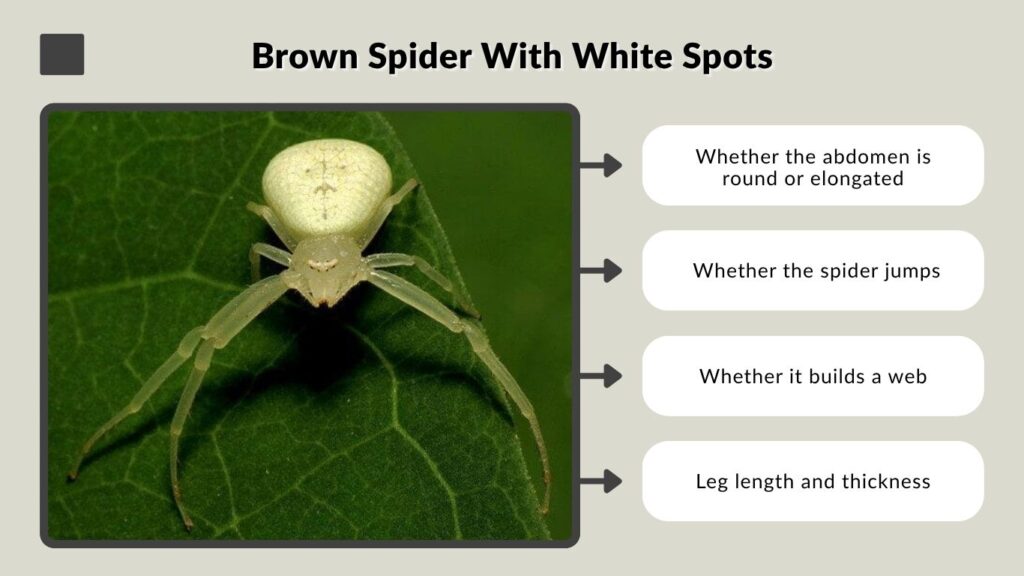
Brown house spiders with white markings can belong to numerous families. Cobweb spiders, orb-weavers, jumping spiders, and juvenile house spiders may all show pale spots.
How to Identify One
Look beyond the spots and consider:
- Whether the abdomen is round or elongated
- Whether the spider jumps
- Whether it builds a web
- Leg length and thickness
- Approximate body size
- Geographic location
- Whether markings are spots, stripes, or bands
A brown body with white markings is not enough to identify a species reliably.
White or Yellow Spider in the House
A yellowish-white spider is especially likely to be a yellow sac spider.
Yellow Sac Spider Behavior
Yellow sac spiders actively hunt instead of waiting in large webs. They are often encountered on walls and ceilings, and their silken resting sacs may be constructed high in rooms. They can occur indoors throughout the year.
They generally avoid people, although bites can occur if a spider becomes trapped against the skin.
White House Spider Bite
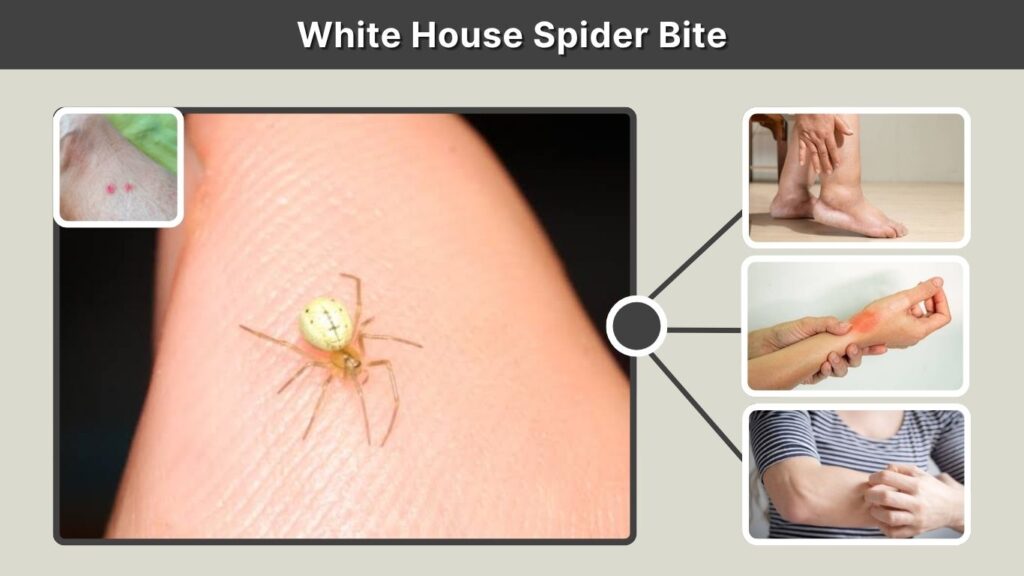
Most spiders that appear white inside homes are not medically dangerous.
A defensive bite from a small hunting spider may cause localized symptoms such as:
- Mild pain
- Redness
- Itching
- Small swelling
- Temporary tenderness
Because many skin problems resemble arthropod bites, a red mark without observing the spider biting does not reliably prove a spider was responsible.
Seek medical attention for severe pain, breathing difficulty, rapidly worsening swelling, serious systemic symptoms, or a suspected bite from a medically significant species.
Are White House Spiders Poisonous?
Most are not dangerous.
Spiders are technically venomous rather than poisonous because venom is delivered through their fangs. Almost all spiders use venom primarily to capture prey.
Jumping spiders commonly found on indoor walls and windows are considered beneficial insect predators and generally do not harm people.
White-Tailed Spider in the House
The White-Tailed Spider is different from a completely white spider.
White-tailed spiders (Lampona species) are Australian spiders with gray to dark bodies and a distinctive pale or white mark at the end of the abdomen. They often enter houses while hunting other spiders, including black house spiders.
White-Tailed Spider Identification
- Gray to nearly black body
- Elongated, cigar-shaped abdomen
- White spot at the abdominal tip
- Active mainly at night
- Does not build a prey-catching web
- Females may reach about 18 mm
Their bites can be painful, but Australian health authorities state there is little supporting evidence connecting white-tail bites with the severe skin necrosis sometimes attributed to them.
White-Tail Spider vs Black House Spider
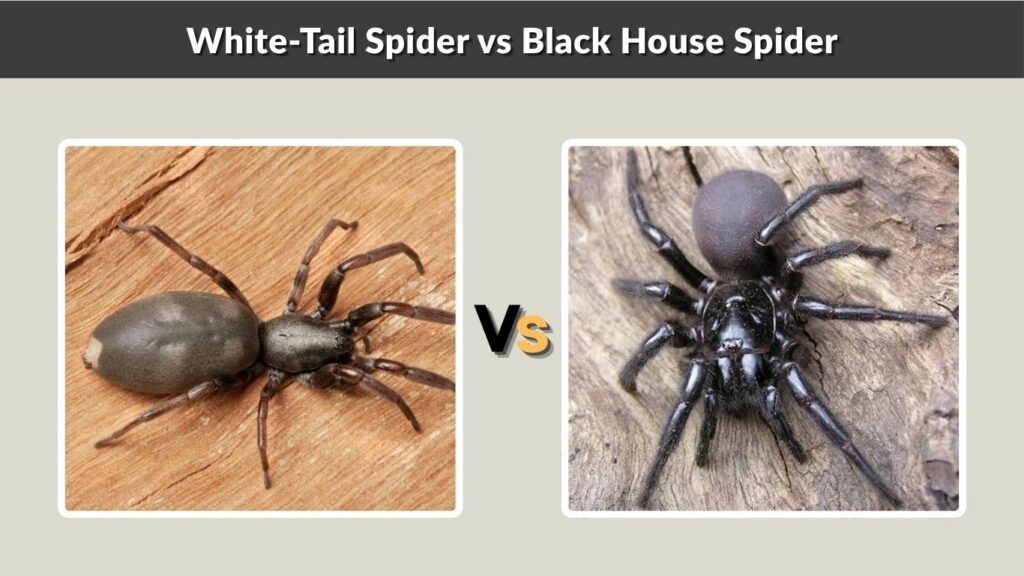
These Australian spiders are quite different.
| Feature | White-Tailed Spider | Black House Spider |
| Body shape | Long, cigar-shaped | More robust |
| Key marking | White abdominal tip | Dark patterned abdomen |
| Hunting | Active hunter | Web-based predator |
| Web | No capture web | Dense funnel-like web |
| Activity | Often nocturnal | Usually stays near web |
| Relationship | Hunts spiders | Can become white-tail prey |
Finding a dark spider with only one white spot at the very tip of its abdomen is therefore very different from finding a black jumping spider covered in white markings.
White House Spiders by Location
Location can dramatically change the likely identification.
United States and Canada
In Ohio, Michigan, Illinois, California, New York, and Canada, pale indoor spiders may include yellow sac spiders, jumping spiders, crab spiders, or recently molted individuals. Bold Jumpers and Zebra Jumpers are common explanations for black-and-white spiders around buildings.
United Kingdom
Britain has many indoor and garden spiders, but typical permanent house spiders in Tegenaria and Eratigena are normally brown rather than pure white. A white spider indoors may therefore be a wandering outdoor species, juvenile, or freshly molted spider.
Australia
White-tailed spiders are particularly relevant in Australia because they frequently enter houses while hunting other spiders.
Are Tiny White Bugs Spider Mites?
Not necessarily.
Spider mites are extremely small plant-feeding arachnids and are usually associated with houseplants rather than walls and floors. They may create very fine webbing around leaves.
A clearly visible animal walking independently across a wall with an obvious spider-shaped body is more likely to be a true spider.
Why Are White Spiders Coming Into My House?
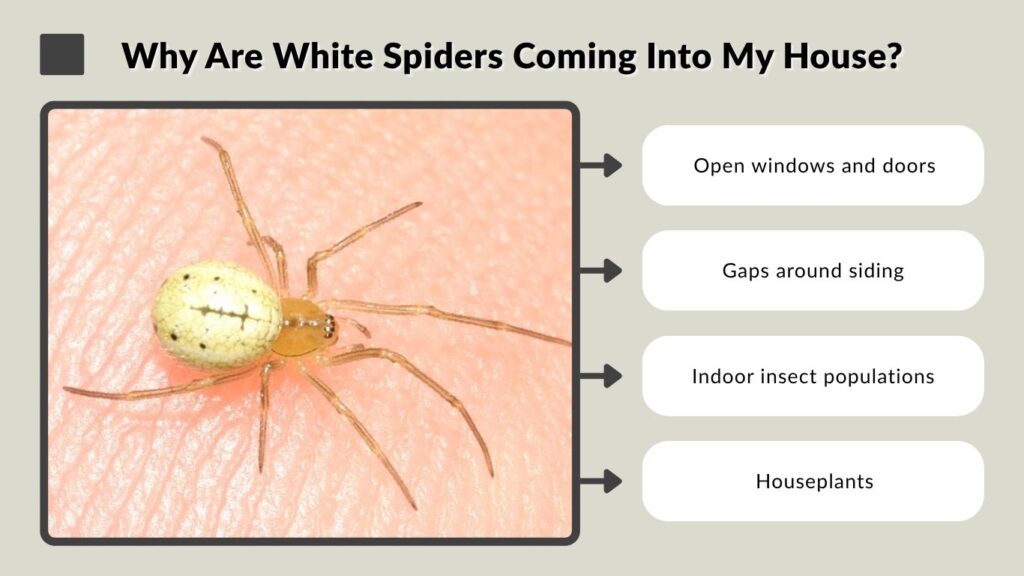
Spiders may enter homes because they are searching for insects, shelter, mates, or suitable temperatures.
Common Reasons
- Open windows and doors
- Gaps around siding
- Indoor insect populations
- Houseplants
- Seasonal temperature changes
- Outdoor vegetation touching the house
- Bright lights attracting insect prey
An occasional spider usually does not indicate an infestation.
Should You Remove a White Spider?
Most white or black-and-white house spiders can simply be left alone because they help control insects.
If you prefer removal, cover the spider with a cup, slide paper underneath, and relocate it without touching it directly.
Sealing gaps, repairing window screens, reducing clutter, and controlling indoor insects can reduce future sightings.
FAQs
1. What is the small white spider in my house?
It may be a yellow sac spider, crab spider, juvenile spider, or recently molted individual. Identification requires more than color alone.
2. Are white house spiders dangerous?
Most are harmless to humans and would rather escape than bite.
3. What is a black spider with white spots in my house?
In North America, a Bold Jumping Spider is a common possibility. Adults are black with prominent white abdominal spots.
4. What is a black spider with white stripes?
A Zebra Jumping Spider is one likely identification, especially when the spider is tiny, compact, active during daylight, and capable of jumping.
5. Why is a spider completely white?
It may naturally be pale, but spiders can also appear temporarily white or translucent immediately after molting.
