
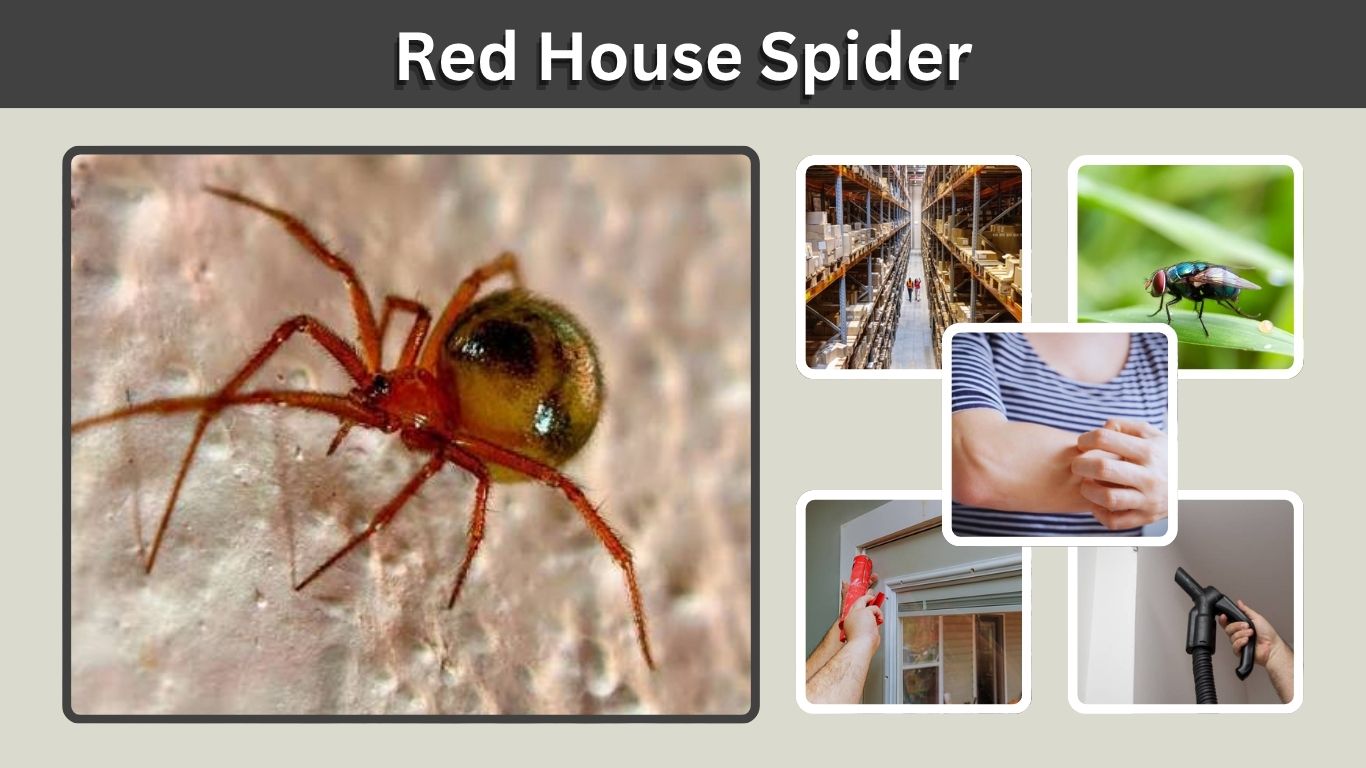
The Red House Spider (Nesticodes rufipes) is a small cobweb spider recognized by its reddish-orange legs and darker, rounded abdomen. It commonly lives around human structures in warm regions, hiding beneath furniture, in wall corners, garages, bathrooms, porches, and other sheltered places. Although its dark red coloration can make it look intimidating, the Red House Spider is not considered medically dangerous to humans. It is an insect predator that helps control flies, mosquitoes, ants, and other small household pests.
What Is a Red House Spider?
The Red House Spider is a small member of the cobweb-spider family Theridiidae. Its scientific name is Nesticodes rufipes, and Nesticodes contains only this one recognized species. It has spread widely through tropical and subtropical regions and is particularly associated with buildings and other human-made habitats.
Red House Spider Identification
- Scientific name: Nesticodes rufipes
- Female body length is commonly around 4–5 mm
- Males are generally about 3–4 mm
- Legs and cephalothorax may be reddish-orange or reddish-brown
- Abdomen is rounded, brown, grayish-brown, or nearly black
- Fine hairs may cover the abdomen and legs
- Females have a larger, rounder abdomen
- Web is irregular and tangled rather than circular
- Often found in dark indoor corners
The name rufipes refers to the spider’s reddish feet or legs, although coloration varies between individuals.
What Does a Red House Spider Look Like?
The typical Red House Spider has an orange-red or reddish-brown front body and legs combined with a much darker abdomen. Mature females can develop an almost spherical abdomen, giving them the general silhouette of other cobweb spiders.
Red Legs and Black Body
People searching for a house spider with red legs and a black body may sometimes be looking at Nesticodes rufipes. Mature females can have a dark brown to almost black abdomen contrasting strongly with reddish legs.
However, this color combination occurs in other spider species as well, so red legs alone should not be used for identification.
Male vs Female Red House Spider
Females are usually larger and have a noticeably swollen, rounded abdomen. Mature females may appear dark brown or almost black behind the reddish front of the body.
Males are smaller and more slender, often showing more obvious orange-brown coloration. Their abdomen is less rounded, and adult males may wander away from webs in search of females.
Red House Spider Size
This is a genuinely small spider despite close-up photographs sometimes making it appear large.
How Big Is a Red House Spider?
Adult females are generally around 4–5 mm in body length, while males are approximately 3–4 mm. Their legs increase their overall visible span but they remain much smaller than wolf spiders, giant house spiders, and many orb-weavers.
A “big red spider” found indoors is therefore not automatically a Red House Spider.
Where Do Red House Spiders Live?
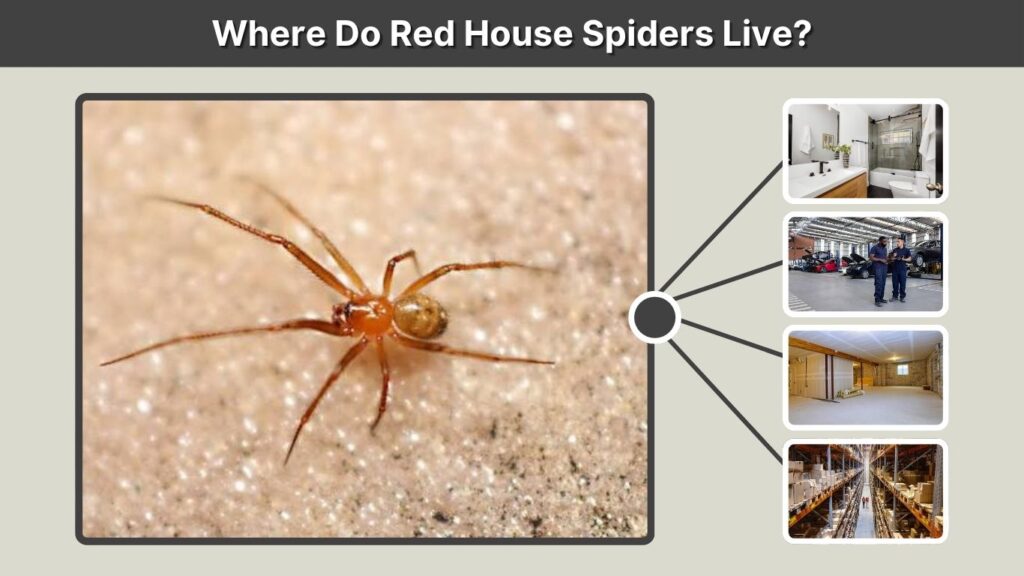
Red House Spiders are strongly associated with tropical and subtropical climates, but human transportation has helped them establish populations across a broad range.
Red House Spiders Inside Homes
Typical hiding places include:
- Under furniture
- Dark wall corners
- Bathrooms
- Garages
- Cupboards
- Basements
- Porches and verandas
- Window frames
- Storage areas
- Cracks around buildings
They usually construct messy tangle webs in sheltered places where insects regularly pass.
Red House Spiders in the United States
Red House Spiders are most expected in warmer areas. Reports from places such as Florida, Hawaii, Texas, and California are more consistent with their preference for warm climates.
A reddish spider found in Ohio, Michigan, Wisconsin, Pennsylvania, New York, Colorado, or Canada should not automatically be identified as Nesticodes rufipes. Several unrelated spiders can have reddish bodies or legs.
Red House Spider Web and Behavior
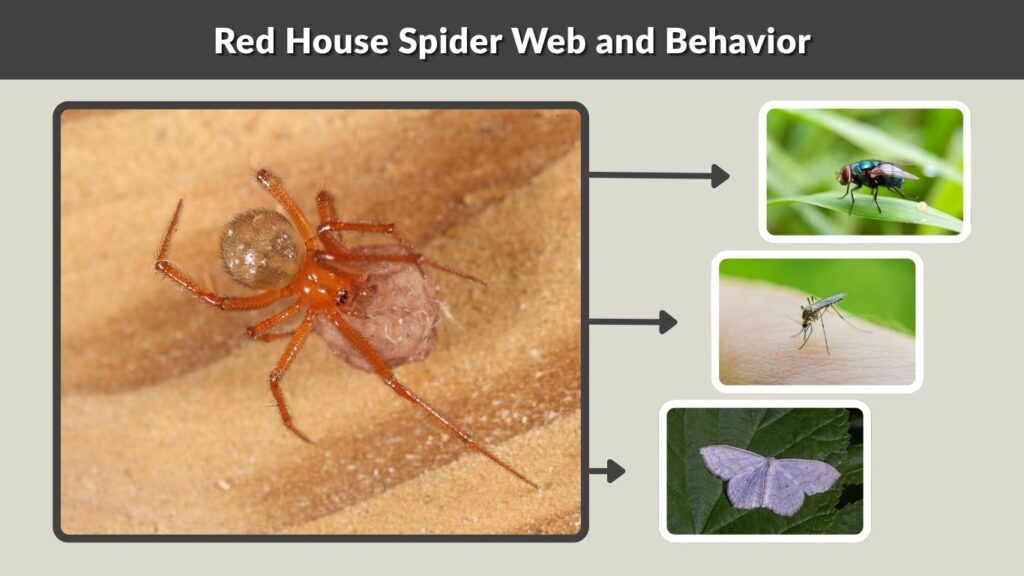
Like other cobweb spiders, Nesticodes rufipes does not construct a symmetrical orb web. Instead, it makes a loose, irregular network of silk.
How the Web Works
The spider usually remains hidden within or close to the web. When a small insect becomes tangled, vibrations alert the spider.
It approaches the prey, immobilizes it, and feeds on it. Red House Spiders have been documented feeding on household insects such as flies and ants.
What Do Red House Spiders Eat?
Their prey may include:
- Houseflies
- Mosquitoes
- Ants
- Small moths
- Gnats
- Small beetles
- Other tiny arthropods
For this reason, an occasional Red House Spider can provide natural indoor pest control.
Red House Spider Bite
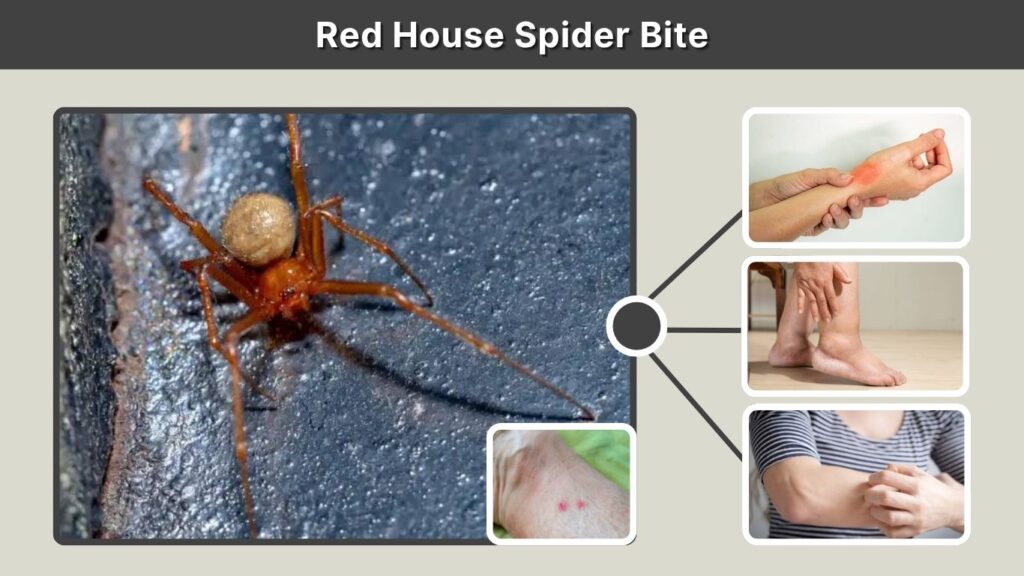
Red House Spiders possess venom because they need it to subdue their small prey. However, venomous does not mean medically dangerous.
Are Red House Spiders Poisonous?
They are better described as venomous, not poisonous. Venom is delivered through a bite, whereas poison generally causes harm when touched or consumed.
Available accounts do not consider Nesticodes rufipes harmful to humans.
Red House Spider Bite Symptoms
Confirmed bites appear to be uncommon. If a bite occurs, local effects could potentially include mild pain, redness, swelling, or irritation.
Many unexplained red skin marks are incorrectly blamed on spiders, so a skin lesion alone cannot confirm a Red House Spider bite.
Seek medical attention for severe pain, spreading swelling, breathing problems, significant illness, or other serious symptoms after any suspected bite.
Tiny Red Spider in the House: Is It Really a Spider?
Not every tiny red arachnid running around a house is a Red House Spider.
Very small bright-red dots around windows, walls, and doors are often clover mites or other mites.
Red House Spider vs Red Mite
| Feature | Red House Spider | Red Mite |
| Size | Several millimeters | Often extremely tiny |
| Shape | Clearly spider-like | Looks like a moving red dot |
| Legs | Eight noticeable legs | Legs difficult to see without magnification |
| Web | Makes tangled web | Does not make spider capture webs |
| Color | Red-brown with darker abdomen | Often bright red |
| Human danger | Generally harmless | Most household clover mites do not bite |
Clover mites may leave a reddish stain if crushed, so wiping or vacuuming is preferable to squashing them against pale walls.
Other Red Spiders Found Inside Houses
Color-based searches can include several completely different arachnids.
Dark Red or Brownish-Red Spider
Cobweb spiders, woodlouse hunters, male southern house spiders, and other species can appear reddish-brown depending on lighting and age.
Red Spider With a Black Body
A Red House Spider is one possibility, especially when the spider is tiny and has a round abdomen. Other cobweb-spider species can produce a similar appearance.
Red and Black Spider
Distinct red-and-black markings should not automatically be associated with Nesticodes rufipes. Jumping spiders, widows, ant-mimicking spiders, and several outdoor species can have contrasting red and black colors.
Bright Red Spider
A truly bright, tiny red arachnid is more likely to be a mite than an adult Red House Spider.
Red House Spider Lifespan and Reproduction
Females construct silk egg sacs near their webs. The spiderlings hatch as tiny versions of adults and gradually grow through repeated molts.
Egg Sacs and Baby Spiders
A female remains near suitable sheltered areas where prey is available. When spiderlings emerge, they eventually disperse to create their own webs.
Indoor environments can provide relatively stable temperatures, shelter, and continual insect prey, allowing populations to reproduce successfully around buildings.
Should You Get Rid of Red House Spiders?
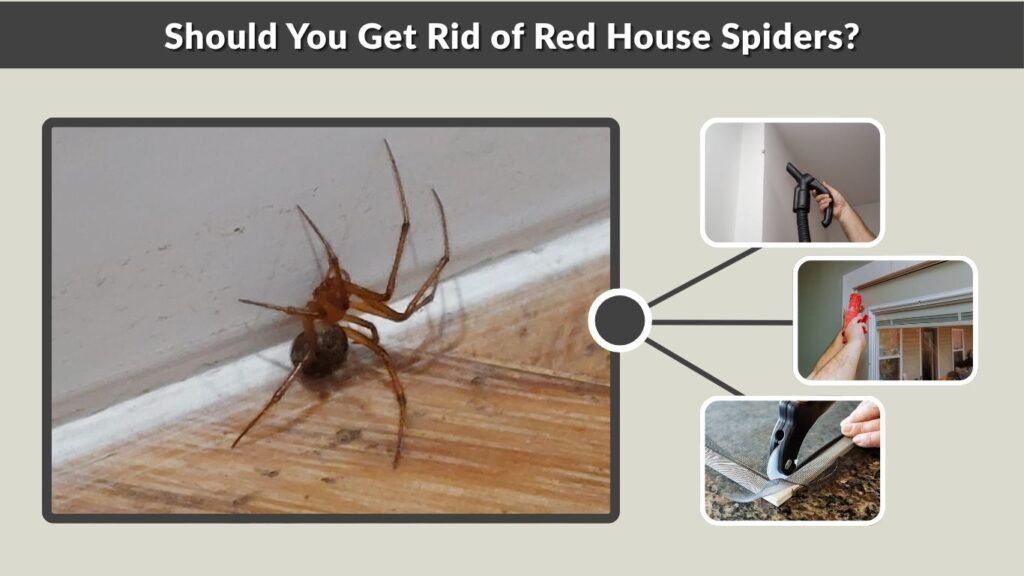
A single Red House Spider usually does not require control. It is small, generally harmless, and consumes household insects.
How to Reduce Them Indoors
If you have many spiders:
- Vacuum old webs and egg sacs
- Seal gaps around doors and windows
- Repair damaged screens
- Reduce clutter
- Remove insects that provide food
- Clean behind furniture regularly
- Reduce outdoor lighting that attracts insects near windows
Individual spiders can also be captured with a container and relocated without touching them directly.
FAQs
1. Is a Red House Spider dangerous?
No. Nesticodes rufipes has venom for capturing prey but is not considered medically dangerous to humans.
2. How big does a Red House Spider get?
Adult females are generally about 4–5 mm long, while males are around 3–4 mm, excluding the legs.
3. Why are there tiny red spiders in my house?
If they appear as extremely small bright-red moving dots, they may actually be clover mites rather than spiders.
4. What does a Red House Spider eat?
It feeds on small insects and arthropods, including flies, mosquitoes, ants, gnats, and other available prey.
5. Is a spider with red legs and a black abdomen a Red House Spider?
Possibly. Mature Red House Spiders can have reddish legs and a very dark rounded abdomen, but several other spiders share similar colors, so body shape, size, web type, and location should also be considered.
