
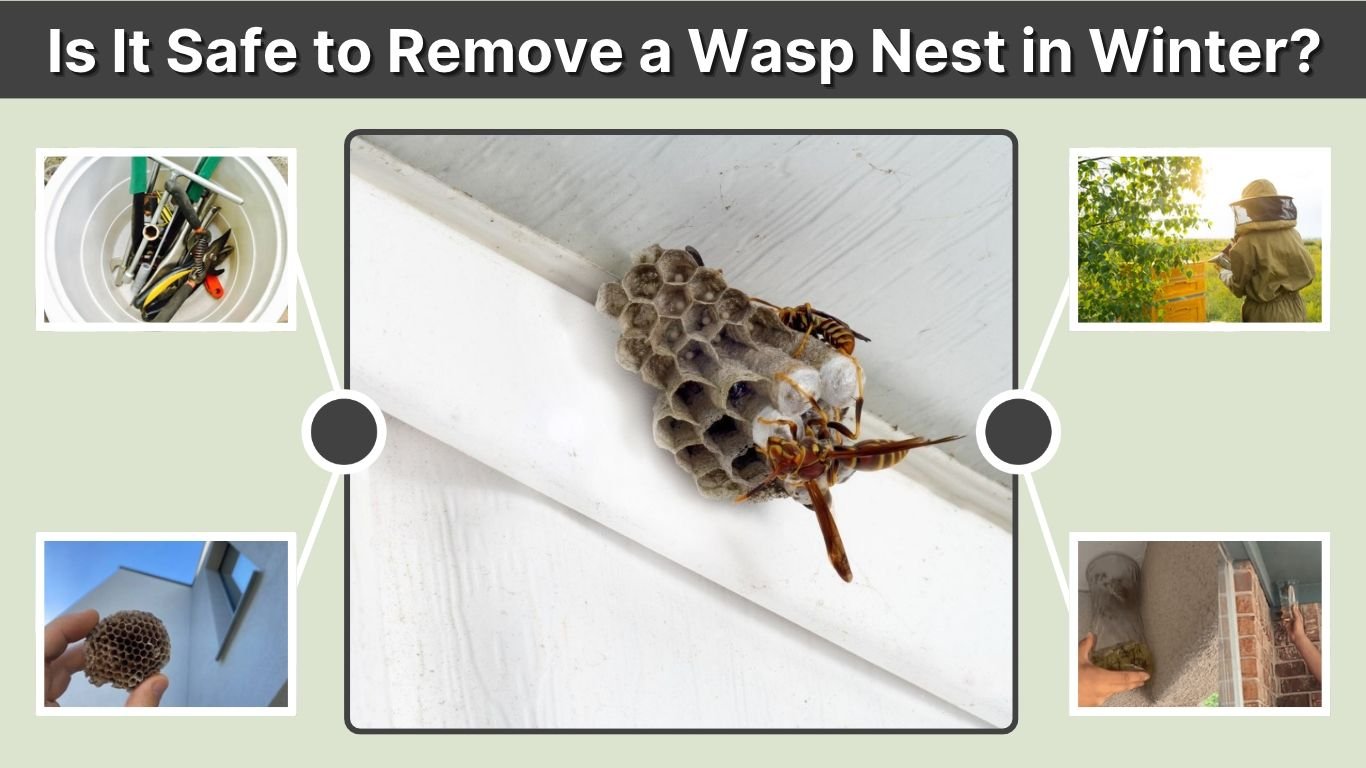
Finding a wasp nest around your home during winter may leave you wondering whether it is safe to remove. In colder regions, many wasp colonies die when freezing temperatures arrive, leaving their nests abandoned. However, not every nest becomes inactive during winter, especially in warmer climates or protected indoor spaces. Understanding seasonal wasp behavior can help you avoid unnecessary risks. This guide explains whether it is safe to remove a wasp nest in winter, how to identify an abandoned colony, the proper removal methods, and important safety precautions.
Is It Safe to Remove a Wasp Nest in Winter?
Yes, removing a wasp nest in winter is generally safer in regions that experience sustained freezing temperatures. Many social wasp colonies die naturally after hard frosts, leaving behind empty structures. However, cold weather alone does not guarantee that every nest is abandoned. Before attempting removal, consider the local climate, nesting species, and signs of activity.
Why Winter Is Often Safer for Removal
Paper wasps, yellowjackets, and bald-faced hornets usually establish seasonal colonies in temperate climates. As temperatures fall, their colonies decline, and most workers eventually die.
Once the nest becomes completely abandoned, removing it presents a much lower sting risk than disturbing an active summer colony.
Can Wasps Survive Inside Nests During Winter?
Some wasps can survive winter, but their behavior depends on the species and climate.
Newly mated queens of many temperate social wasps spend winter in protected places away from their original nests. However, colonies in mild climates or insulated structures may remain active longer, and occasionally survive throughout winter.
What Happens to Wasp Nests During Winter?
Understanding what happens to wasp nests during winter helps determine whether removal is necessary. In regions with freezing winters, social wasp colonies usually decline naturally as food becomes scarce and temperatures decrease. Their nests often remain attached to trees, walls, or roof structures even after the occupants disappear.
Do Wasps Die During Winter?
Most worker wasps and the original queen die when cold weather ends the colony’s activity. Newly mated queens typically survive by sheltering beneath bark, in soil cavities, or inside protected structures.
These surviving queens usually establish new colonies when warmer weather returns.
Do Wasps Reuse Old Nests After Winter?
Most social wasps build new nests rather than returning to their previous colonies. Old paper nests generally remain empty and gradually deteriorate.
However, some species, including European paper wasps, may reuse existing nest structures. Therefore, confirming inactivity remains important before handling an older nest.
How to Remove a Wasp Nest in Winter Safely
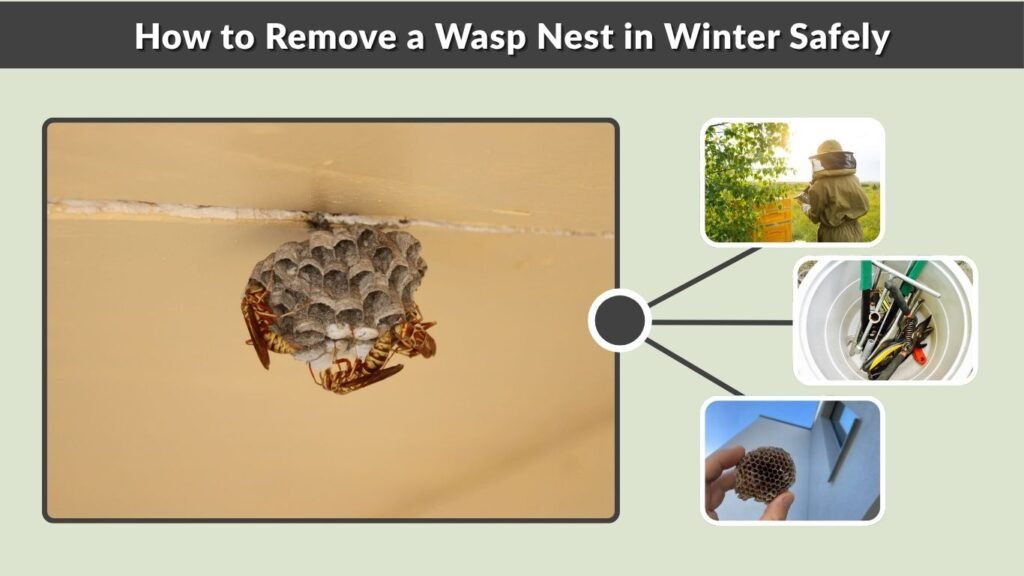
Winter wasp nest removal is usually straightforward when the nest is completely abandoned and easily accessible. Nevertheless, appropriate precautions are necessary because insects may remain active during warmer winter days. Avoid handling nests inside walls, underground, or high above the ground without professional assistance.
Step-by-Step Winter Wasp Nest Removal
- Check nest activity: Observe from a safe distance on suitable days to identify any remaining wasps.
- Confirm abandonment: Do not assume that a nest is empty simply because temperatures are low.
- Wear protective clothing: Use gloves, long sleeves, closed shoes, and eye protection.
- Prepare suitable tools: Choose a scraper or small hand tool appropriate for the nesting surface.
- Remove the empty nest: Carefully detach it without damaging nearby structures.
- Dispose of the material: Place the abandoned nest in a bag and discard it appropriately.
- Clean the area: Remove remaining debris and inspect for possible nesting openings.
What If You Find Live Wasps?
Stop immediately if you discover living wasps inside or around the nest.
Move away calmly and avoid disturbing the colony. Contact a qualified pest control professional if the nest requires removal.
How to Remove Different Wasp Nests in Winter
Not all winter wasp nests should be handled in the same way. Paper wasps usually construct exposed nests, while yellowjackets often occupy underground cavities or protected structural spaces. Bald-faced hornets build large enclosed nests in trees. Each nesting location presents different accessibility and safety concerns.
Removing a Paper Wasp Nest in Winter
Abandoned paper wasp nests often hang beneath roof eaves, porch ceilings, or outdoor fixtures.
Once inactivity is confirmed, an accessible nest can usually be carefully detached with a suitable tool. Avoid ladders and other situations where reaching the nest creates additional hazards.
Removing a Ground Wasp Nest in Winter
Yellowjackets commonly build underground nests in abandoned animal burrows or soil cavities.
These abandoned nests generally do not need to be dug out. If the area must be excavated, confirm inactivity first and avoid disturbing nearby structures or underground utilities.
Removing a Large Wasp Nest From a Tree
Large enclosed nests are frequently associated with bald-faced hornets. In cold regions, these nests are generally abandoned after freezing weather.
An empty nest can be left to deteriorate naturally. If removal requires climbing, cutting large branches, or working at height, hire a professional.
Should You Remove a Wasp Nest or Leave It Until Spring?
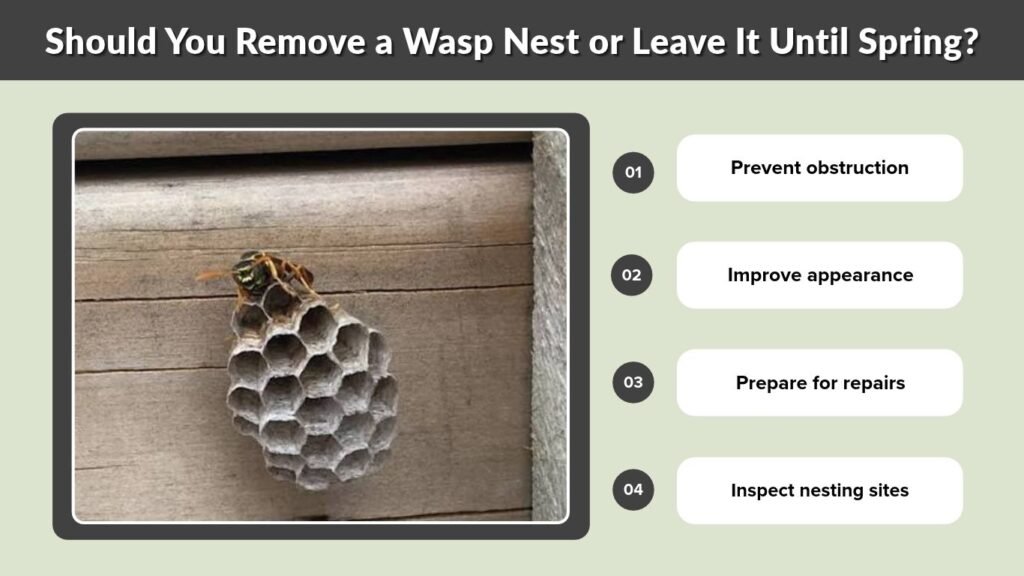
Not every abandoned wasp nest needs removal. In many cases, leaving an empty nest in place causes no harm because weather and wildlife gradually break it down. However, nests near frequently used spaces, ventilation openings, or maintenance areas may justify removal. Consider accessibility and safety before deciding.
Reasons to Remove an Abandoned Nest
- Prevent obstruction: Old nests may interfere with vents or maintenance access.
- Improve appearance: Removing visible nests can improve the appearance of porches and outdoor structures.
- Prepare for repairs: Empty nests may need removal before painting or renovation.
- Inspect nesting sites: Removal provides an opportunity to identify structural gaps.
When Should You Leave a Nest Alone?
Leave a nest undisturbed if its occupants are uncertain, it is difficult to reach, or removal creates unnecessary risks.
Large nests high in trees rarely require removal unless they interfere with maintenance or other activities.
Winter Wasp Nest Removal Mistakes to Avoid
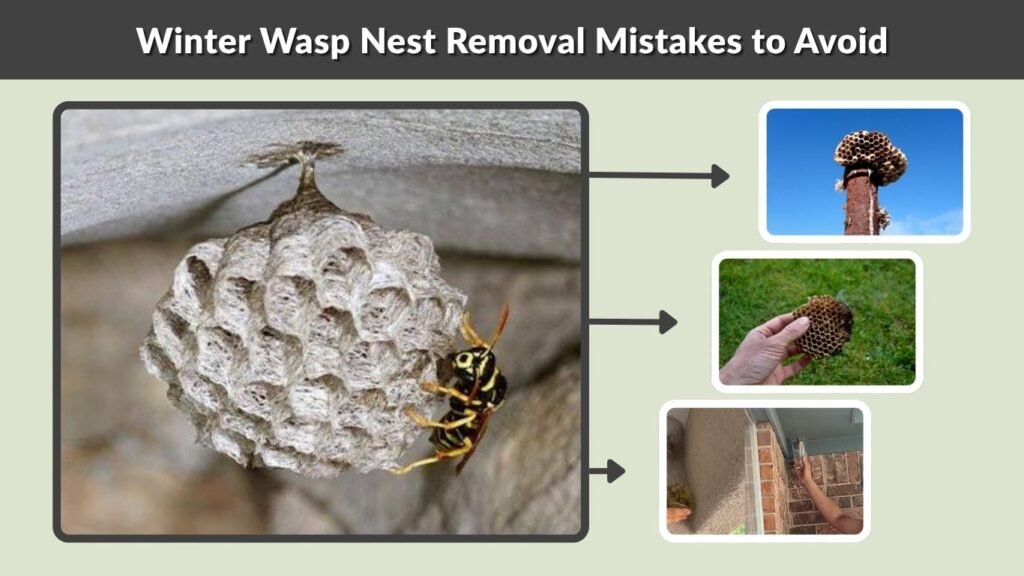
Winter removal may be less hazardous than summer treatment, but careless actions can still cause injuries. Misidentifying an active nest, climbing unstable ladders, or using dangerous removal methods can create unnecessary problems. Always verify the nest’s condition before beginning work.
Common Mistakes During Winter Removal
- Assuming all nests are empty: Some colonies survive in warmer climates.
- Burning nests: Fire creates serious risks to buildings and vegetation.
- Using gasoline: Flammable liquids should never be used for insect control.
- Blocking active entrances: Trapped wasps may enter occupied rooms.
- Removing inaccessible nests: High or concealed nests should be assessed professionally.
FAQs
1. Can I remove a wasp nest in winter myself?
Yes, you can generally remove a small, abandoned wasp nest when it is easily accessible and confirmed inactive. Wear appropriate protective clothing and avoid unnecessary disturbance. Large nests, concealed colonies, and nests requiring ladders are better handled by trained professionals.
2. What month is best for removing a wasp nest?
In colder regions, midwinter or late winter is often suitable because sustained freezing weather has usually ended colony activity. The exact timing depends on local conditions. In warmer regions, winter may not provide the same safety advantage, so checking for activity is essential.
3. Will removing a wasp nest in winter prevent new nests?
Removing an abandoned nest does not guarantee that wasps will stay away. New queens can establish colonies in nearby sheltered spaces during spring. Regular inspections, repairing gaps, and maintaining outdoor areas can help reduce future nesting opportunities.
4. Can a wasp nest remain active throughout winter?
Yes, some colonies may survive winter in warm regions or protected structures. Although most temperate social wasp colonies die after sustained freezing weather, exceptions occur. If wasps continue entering and leaving a nest, assume it is active and avoid disturbing it.
5. Is it better to leave a wasp nest until winter?
Waiting until winter is often reasonable when the nest is away from people and presents little immediate risk. Freezing weather may naturally eliminate the colony. However, nests near entrances, playgrounds, or frequently used areas may require professional treatment before winter arrives.
