
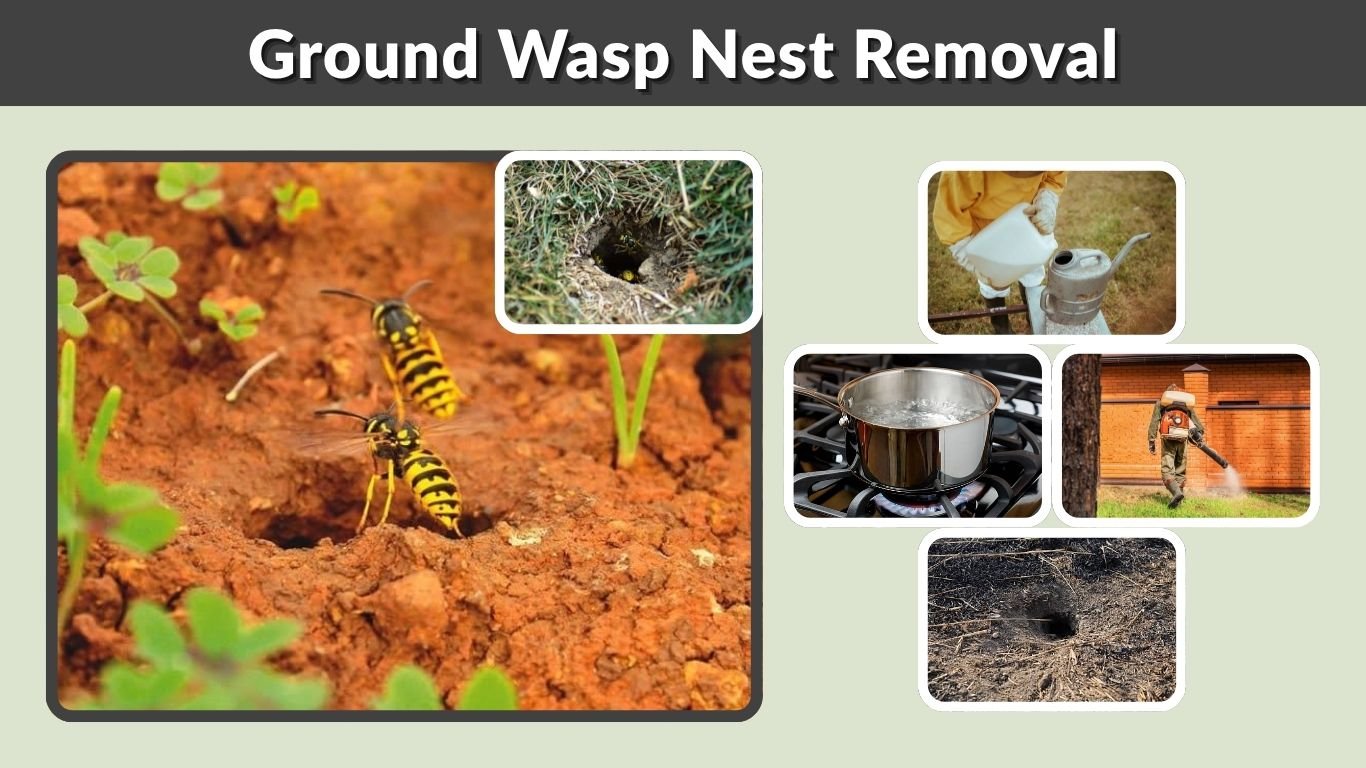
Finding a wasp nest in your lawn or garden can be alarming, especially when insects are flying in and out of a small hole in the soil. Ground-nesting wasps may become aggressive when their nests are disturbed, creating a risk for homeowners, children, and pets. Fortunately, safe ground wasp nest removal is possible with proper identification and appropriate control methods. This guide explains how to identify underground wasp nests, understand your removal options, avoid dangerous mistakes, and prevent future nesting problems.
How to Identify a Wasp Nest in the Ground
Before attempting wasp nest removal in the ground, identify the insects and their nesting behavior. Not every ground-nesting wasp is aggressive, and some species benefit gardens by controlling other insects. Understanding the difference between social yellowjackets and solitary digger wasps helps determine whether removal is necessary.
Ground-Nesting Yellowjackets
Yellowjackets commonly build underground colonies inside abandoned rodent burrows, lawn cavities, and spaces beneath landscaping materials. Their nests may have small entrances with numerous insects flying in and out throughout the day.
These social wasps defend their colonies aggressively when threatened. Underground yellowjacket nests can contain hundreds or thousands of workers later in the season, making accidental disturbance dangerous. A steady stream of insects entering one opening is an important warning sign.
Ground Digger Wasps
Ground digger wasps, including cicada killers and various sand wasps, usually construct individual burrows in loose or sandy soil. They may appear around lawns, flowerbeds, patios, and sunny garden areas.
Unlike yellowjackets, most solitary digger wasps rarely sting unless handled or trapped against the skin. Several females may nest close together, but they do not form one large defensive colony. Ground digger wasp nest removal is often unnecessary unless their activity creates a specific problem.
How to Remove a Wasp Nest in the Ground Safely
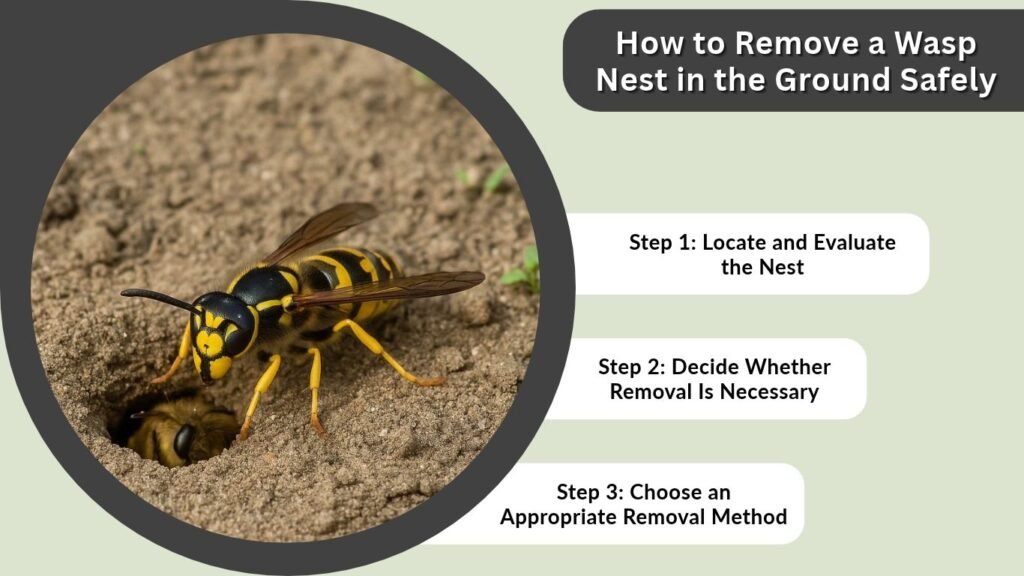
Removing a wasp nest from the ground requires careful planning because underground colonies may react defensively to vibrations, digging, and nearby movement. The safest approach depends on the wasp species, nest location, colony size, and potential exposure to stings. Professional pest control is generally preferable for active yellowjacket colonies.
Step 1: Locate and Evaluate the Nest
Observe the area from a safe distance during daylight to identify where wasps enter and leave the soil. Look for repeated flight activity around a small opening, but avoid approaching the entrance, moving nearby objects, or disturbing the ground.
Keep children and pets away from the area. Do not use lawnmowers, weed trimmers, or digging tools near an active nest. If the insects are aggressive or the entrance is difficult to identify, stop inspecting and contact a professional.
Step 2: Decide Whether Removal Is Necessary
Not every underground wasp nest requires treatment. If the colony is far from walkways, playgrounds, or regularly used outdoor spaces, leaving it undisturbed may be the safest choice.
However, active yellowjacket nests near doorways, gardens, or children’s play areas can pose significant risks. Professional removal is especially important when someone nearby has a known sting allergy, when the colony is large, or when the nest is close to a building.
Step 3: Choose an Appropriate Removal Method
For ground-nesting yellowjackets, pest management professionals may use insecticidal dust or foam products specifically labeled for underground wasp nests. Dust formulations can reach wasps moving through the nest entrance, while appropriately labeled foams are another treatment option.
Homeowners considering treatment should recognize that nighttime activity is generally lower, but stings are still possible. Follow every pesticide label requirement, including protective equipment and permitted application sites. Do not attempt treatment without a safe exit route or if you are allergic to stings.
After treatment, monitor the location only from a safe distance. Activity may continue temporarily, and additional treatment may be necessary. Never assume the colony is inactive immediately after applying a product.
Dangerous Ground Wasp Nest Removal Mistakes to Avoid
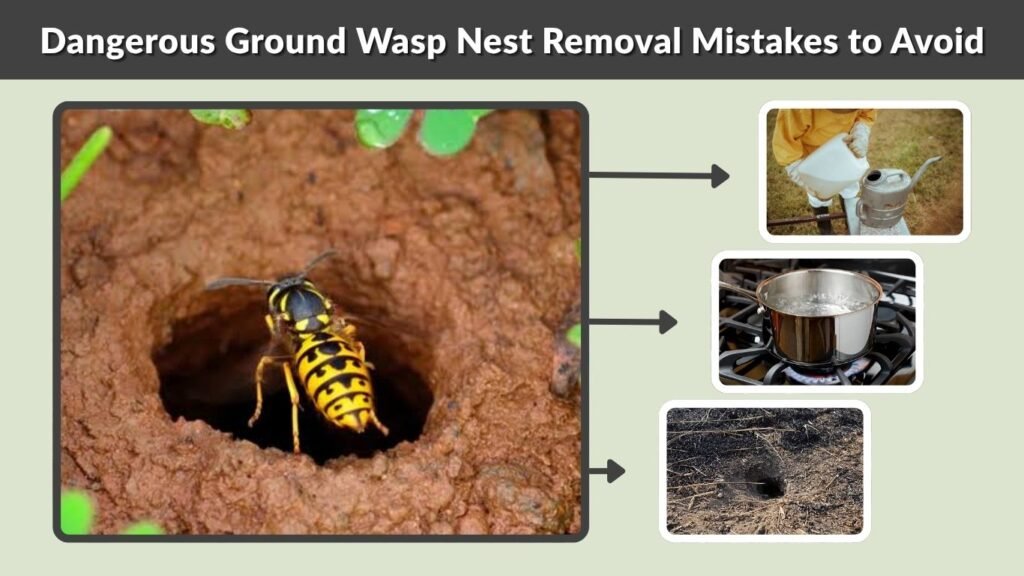
Certain homemade removal techniques can make underground wasp infestations more dangerous. Disturbing an active colony may trigger numerous defensive stings, while unsuitable chemicals or excessive water can damage surrounding soil and plants.
Avoid these common mistakes:
- Pouring gasoline into the nest: Gasoline creates serious fire, health, and environmental hazards.
- Using boiling water: Hot water can cause burns, may fail to reach the colony, and can provoke wasps.
- Burning the nest: Fire can spread to grass, landscaping, or nearby structures.
- Digging into an active nest: Excavation exposes the colony and increases the risk of multiple stings.
- Blocking active entrances: Sealing an entrance before the colony is controlled may redirect wasps, especially when nests extend into building structures.
Household mixtures and improvised traps are not dependable substitutes for appropriate ground-nest treatment.
How to Prevent Ground Wasp Nests in Your Yard
Preventing future nesting is often easier than dealing with an established underground colony. Although no landscaping method guarantees complete protection, reducing suitable nesting sites and maintaining outdoor spaces can make your property less attractive to certain ground-nesting wasps.
Maintain Healthy Grass and Garden Soil
Some solitary digger wasps prefer exposed, well-drained soil where they can excavate burrows. Maintaining thicker grass and repairing bare lawn patches may discourage these insects from establishing nests in frequently used areas.
Mulching suitable garden beds and planting groundcover can also reduce exposed soil. These measures primarily discourage solitary nesting wasps; they do not guarantee protection against yellowjackets that occupy existing underground cavities.
Monitor Your Yard Regularly
Inspect lawns, garden borders, retaining walls, and landscaping areas periodically from a safe distance during warmer months. Watch for repeated wasp movement around ground openings, particularly where children or pets regularly play.
Keep outdoor garbage containers closed, clean food spills promptly, and avoid leaving sugary drinks or exposed food outside. These habits reduce yellowjacket foraging activity, although they will not directly eliminate an established underground nest.
When to Hire a Professional for Ground Wasp Nest Removal

Professional pest control is the safer option for large colonies, aggressive yellowjackets, nests near house foundations, or situations involving people with sting allergies. Technicians can identify the insects, assess the nest location, and select a treatment appropriate for the property.
Ground wasp nest removal costs vary depending on the colony’s size, accessibility, location, and whether follow-up treatment is required. Request a written estimate and ask whether the service includes reinspection.
If wasps are entering a wall or foundation cavity, avoid sealing their active entrance. A professional should evaluate the colony first because displaced yellowjackets may find routes into indoor living spaces.
FAQs
1. What is the best way to remove a wasp nest in the ground?
The safest option for an active underground yellowjacket colony is professional pest control. Technicians commonly use insecticidal dust or foam labeled for the situation. Solitary digger wasps often require no treatment because they are generally non-aggressive and their nesting activity is temporary.
2. Can I remove a ground wasp nest naturally?
You can sometimes avoid removal altogether by keeping people away until the colony naturally dies off in colder weather. For solitary digger wasps, maintaining thicker grass and covering bare garden soil may discourage future nesting. Natural approaches are not reliable for eliminating an active yellowjacket colony.
3. How long does it take to get rid of ground wasps?
The time depends on the wasp species, colony size, treatment, and location. Some correctly treated yellowjacket colonies may become inactive within a few days, while others require additional treatment. Continue avoiding the nest until the colony’s inactivity has been confirmed.
4. Will ground wasps return to the same nest?
In most temperate climates, yellowjacket colonies follow an annual cycle, and old colonies generally do not survive the winter. New queens may establish nests in suitable locations the following season. Solitary digger wasps may also return to favorable soil conditions, although individual nests are generally not reused year after year.
5. Is it safe to remove a ground wasp nest yourself?
DIY removal carries a risk of multiple stings, particularly with large yellowjacket colonies. People with sting allergies should never attempt treatment themselves. When a nest is near homes, walkways, children, or pets, hiring a qualified pest control professional is the safer choice.
