
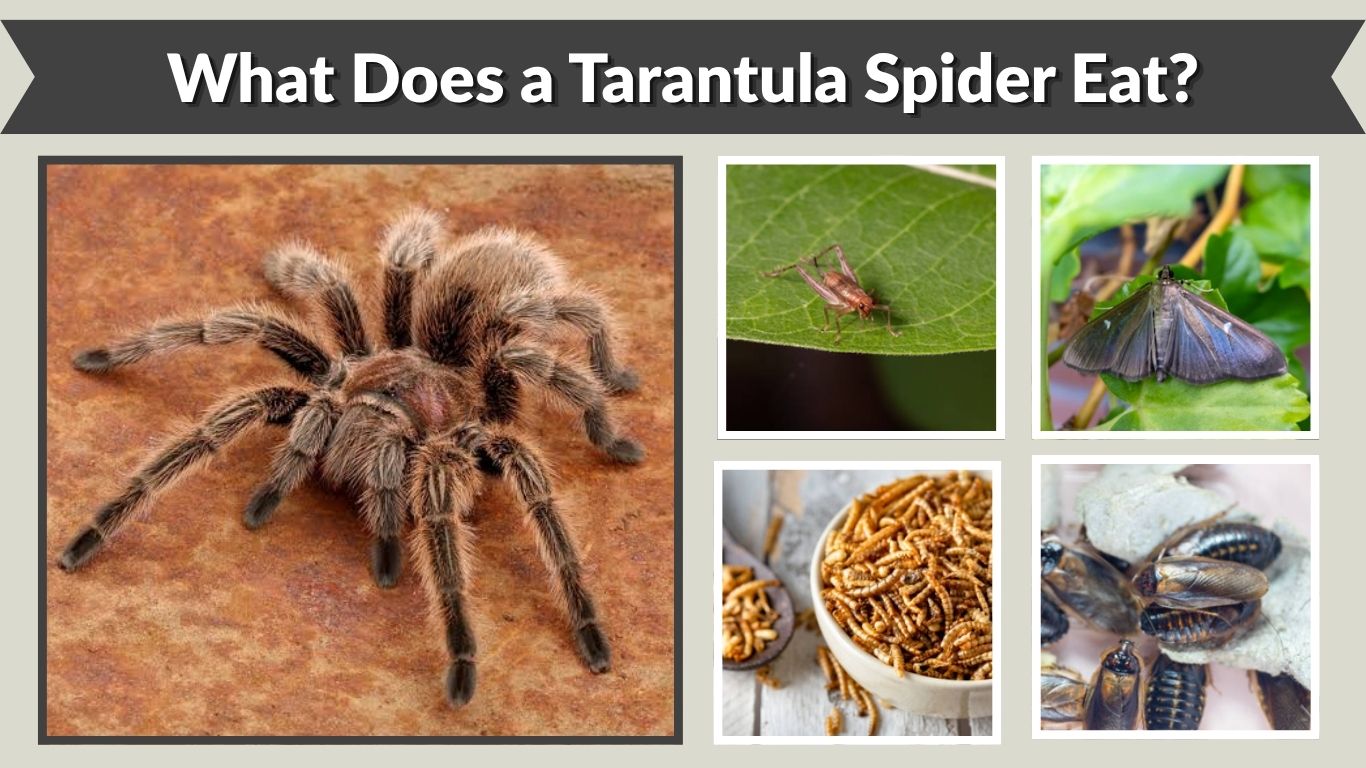
Tarantulas are carnivorous hunters that mainly eat insects and other small animals. In the wild, their diet depends on species, body size, habitat, and whatever prey is available nearby. Most tarantulas feed on crickets, roaches, beetles, grasshoppers, and other invertebrates, while very large species may occasionally capture small vertebrates. Pet tarantulas also need appropriately sized live prey rather than human food. Below, you’ll learn what a tarantula spider eats, the 10 best foods for tarantulas, how they hunt, and how often they need to feed.
What Does a Tarantula Spider Eat?
Tarantulas are opportunistic carnivores. They usually eat live animals that are small enough for them to overpower safely. Their main diet consists of insects and other arthropods, although larger tarantulas are capable of taking bigger prey.
A tarantula does not chew food in the same way humans do. After capturing prey with its fangs, it injects venom and digestive fluids. These fluids break the prey’s tissues down into a liquid or soft material that the spider can suck into its mouth.
Wild tarantulas may eat:
- Crickets
- Cockroaches
- Grasshoppers
- Beetles
- Caterpillars
- Moths
- Mealworms
- Other spiders
- Small lizards
- Occasionally small rodents or frogs
Most of their meals, however, are insects.
10 Best Foods for Tarantula Spiders
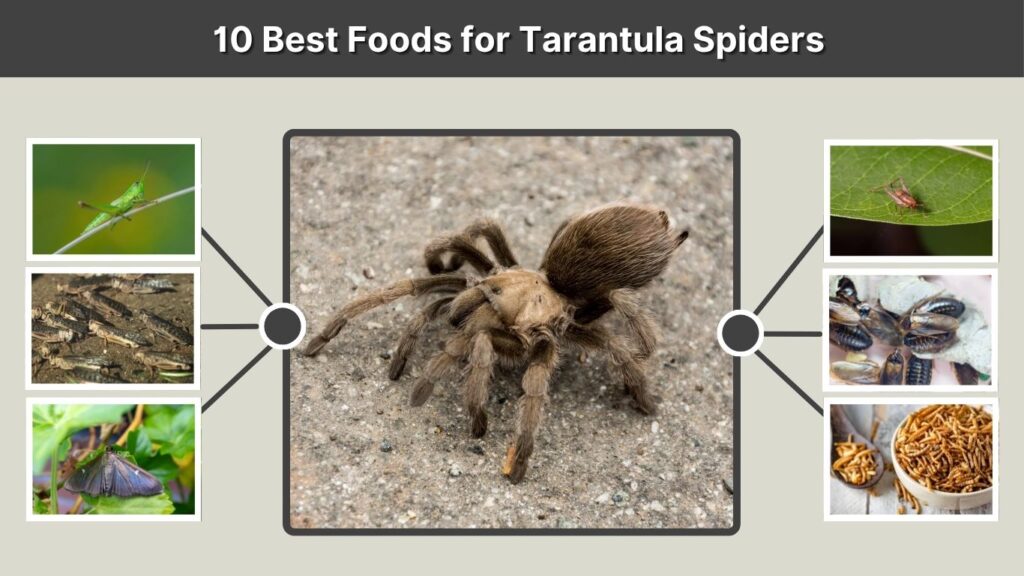
The best foods for tarantulas are appropriately sized insects that provide good nutrition without creating unnecessary risk. For pet tarantulas, feeder insects should ideally come from reputable captive-bred sources.
1. Crickets
Crickets are among the most commonly used foods for tarantulas. They are widely available, easy for most tarantulas to catch, and suitable for many species.
A cricket should generally be smaller than the tarantula’s body length. Juvenile tarantulas can eat smaller crickets, while adults can handle larger ones.
Crickets also move frequently, producing vibrations that encourage a tarantula’s natural hunting response.
Avoid leaving uneaten crickets inside the enclosure for extended periods, particularly when your tarantula is preparing to molt. A hungry cricket can potentially injure a vulnerable spider.
2. Dubia Roaches
Dubia roaches are another excellent tarantula food. They are nutritious, relatively easy to keep, and less likely to jump around an enclosure than crickets.
Their sturdy bodies provide a substantial meal for medium and large tarantulas. They also have a good nutritional profile when properly fed before being offered to the spider.
One drawback is that roaches may hide or burrow into substrate. If your tarantula does not eat one promptly, removing it may become difficult.
3. Mealworms
Mealworms are convenient feeder insects for juvenile and adult tarantulas. They are inexpensive, readily available, and easy to store.
Because mealworms can burrow quickly, they should be placed where the tarantula can detect them. Some keepers crush the worm’s head before offering it to prevent it from disappearing into the substrate.
Mealworms contain relatively high amounts of fat, so they are best used as part of a varied diet rather than as the only food source.
4. Superworms
Superworms are larger relatives of mealworms and can provide a substantial meal for adult tarantulas.
Their active movement attracts hunting spiders, and their larger size makes them particularly suitable for robust terrestrial species.
However, superworms have strong jaws and should not be left unattended with a tarantula for long periods. They can also burrow into substrate if not captured quickly.
5. Grasshoppers
Grasshoppers are natural prey for many wild tarantulas. Their size and active movements make them attractive targets for larger spiders.
Adult tarantulas can quickly overpower appropriately sized grasshoppers using their powerful fangs.
For captive tarantulas, it is safer to use captive-raised feeder grasshoppers or locusts when available. Wild insects may have been exposed to pesticides, parasites, or other harmful substances.
6. Locusts
Locusts provide protein and make excellent prey for medium to large tarantulas. Their movement encourages natural ambush behavior and can keep feeding interesting.
They are particularly useful for species capable of handling larger prey.
As with any feeder insect, the locust should not be excessively large compared with the tarantula. Offering oversized prey can increase the chance of injury.
7. Cockroaches
Several captive-bred cockroach species can be used as tarantula food. Besides Dubia roaches, red runner roaches are popular because they move quickly and strongly stimulate hunting behavior.
Roaches are generally nutritious and can be raised easily as feeder colonies.
Avoid feeding household cockroaches caught inside kitchens, bathrooms, or outdoors. They may have encountered pesticides, cleaning chemicals, parasites, or contaminated materials.
8. Beetles and Beetle Larvae
Wild tarantulas frequently encounter beetles and their larvae. These insects can become part of a natural tarantula diet when the spider is large enough to overpower them.
Captive-bred beetle larvae, such as appropriately sized feeder grubs, may also be offered occasionally.
Adult beetles can have hard exoskeletons and may defend themselves effectively, so softer-bodied feeder insects are usually easier and safer for captive tarantulas.
9. Moths
Moths are flying insects that can occasionally become prey for arboreal and terrestrial tarantulas.
Arboreal species may be particularly capable of catching moths that land close to their retreat or webbing.
For captive feeding, commercially raised insects are preferable to wild moths. Wild moths can potentially carry pesticide residues or parasites, especially if collected around agricultural or treated residential areas.
10. Caterpillars
Soft-bodied caterpillars can be nutritious prey for tarantulas. Their slow movement makes them easy for spiders to capture.
Some captive-bred caterpillars, such as hornworms, can be offered occasionally to larger tarantulas. Hornworms contain considerable moisture and may be useful as part of a varied feeding schedule.
Never collect random caterpillars outdoors for feeding. Certain species contain defensive chemicals or feed on toxic plants, making them unsuitable prey.
Do Tarantulas Eat Mice?
Large tarantulas are physically capable of killing very small rodents, and wild individuals may occasionally consume vertebrates. However, mice are not a normal requirement in a tarantula’s diet.
For captive tarantulas, feeding mice is generally unnecessary. Rodents can fight back, potentially injuring the spider, and they may create more waste than ordinary feeder insects.
A healthy adult tarantula can receive adequate nutrition from appropriately sized insects such as roaches, crickets, locusts, and worms.
Do Tarantulas Eat Other Spiders?
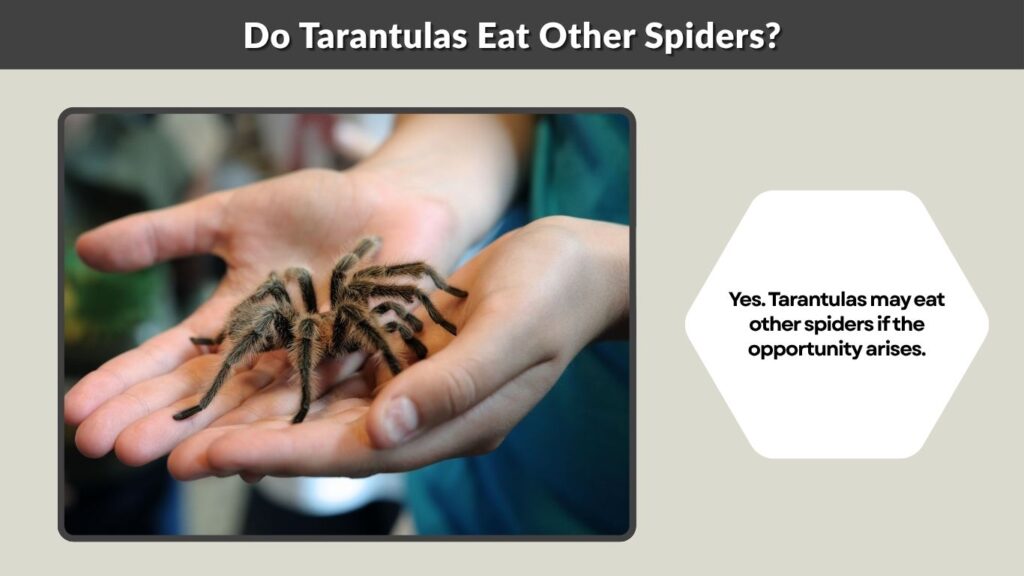
Yes. Tarantulas may eat other spiders if the opportunity arises.
They are solitary predators and do not generally recognize another spider as a companion. A smaller spider entering a tarantula’s hunting area could be treated as prey.
Cannibalism can also occur between tarantulas, especially when individuals are kept together or during unsuccessful mating encounters. For this reason, most tarantula species should be housed separately.
How Do Tarantulas Catch Their Food?
Tarantulas are mainly ambush predators. Instead of building large sticky webs to trap flying insects, they usually remain near a burrow, retreat, or webbed area and wait for prey to approach.
Sensitive hairs on their legs and bodies allow them to detect tiny vibrations in the ground and surrounding surfaces.
Once prey comes within reach, the tarantula lunges forward, grabs it with its legs, and delivers a bite using its fangs. Venom helps immobilize the prey.
Digestive enzymes then begin breaking down the animal internally. The tarantula eventually consumes the softened or liquefied tissues.
How Often Do Tarantulas Eat?
How often a tarantula needs food depends heavily on its age, species, size, temperature, and metabolism.
Young spiderlings generally eat more frequently because they are growing quickly. They may accept small prey several times per week.
Juveniles may be fed approximately once or twice weekly, while many healthy adults can eat once every one or two weeks.
Some tarantulas naturally refuse food for weeks or even months, especially before molting. A temporary loss of appetite does not necessarily indicate a problem.
What Should You Not Feed a Tarantula?
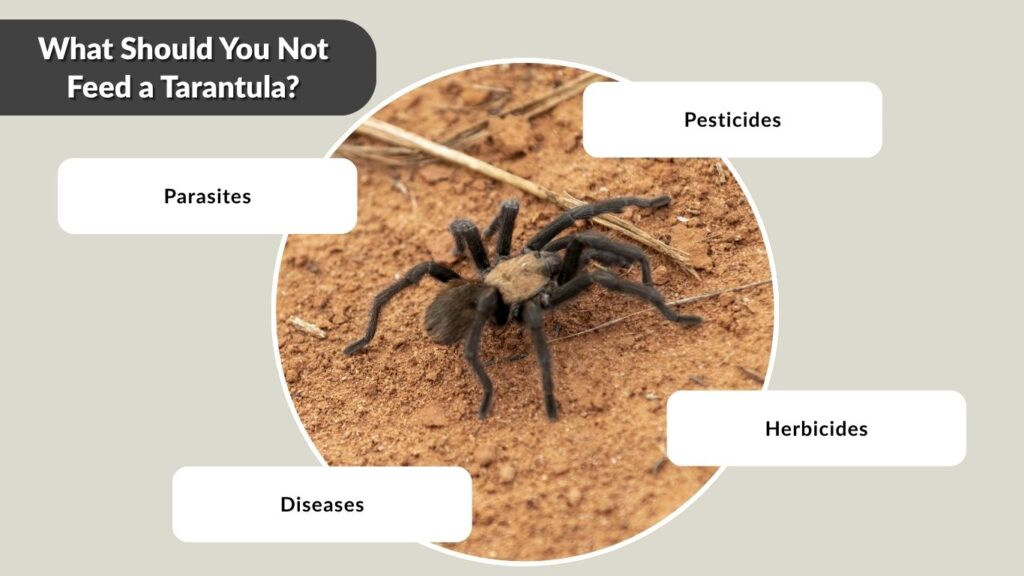
Avoid giving a tarantula processed human foods such as meat scraps, bread, fruit, sweets, or cooked foods. Tarantulas are adapted to eating whole animal prey.
Wild-caught insects should also be avoided when possible because they may carry:
- Pesticides
- Herbicides
- Parasites
- Diseases
- Environmental contaminants
Avoid prey that is much larger than the tarantula, since large insects can injure the spider.
Never leave live prey in the enclosure when your tarantula is molting. A molting tarantula is extremely vulnerable and cannot defend itself effectively.
Do Tarantulas Drink Water?
Yes. Although tarantulas obtain some moisture from their prey, they also drink water directly.
Adult and juvenile tarantulas should have access to a shallow water dish containing clean, fresh water. Keeping a water source available is especially important in captivity.
Tarantulas do not need sponges or cotton inside their water dishes. A simple shallow dish is usually sufficient.
FAQs
What is a tarantula’s favorite food?
There is no single favorite food for every tarantula. Crickets and cockroaches are among the most commonly accepted prey, while mealworms, locusts, and other insects can add variety.
Can tarantulas eat fruit?
No. Tarantulas are carnivores and are not adapted to eating fruit. Their digestive system is designed primarily for consuming liquefied animal tissues.
Do tarantulas eat mosquitoes?
A tarantula could eat a mosquito if it managed to catch one, but mosquitoes are far too small to be an important food source for most adult tarantulas.
Can a tarantula eat every day?
Tarantulas usually do not need to eat every day. Feeding too frequently can lead to an excessively large abdomen. Adults commonly eat much less often than rapidly growing spiderlings.
Why is my tarantula not eating?
Tarantulas frequently stop eating before a molt. They may also refuse food because of temperature, stress, recent feeding, or normal seasonal behavior. Remove uneaten prey and continue providing fresh water.
