
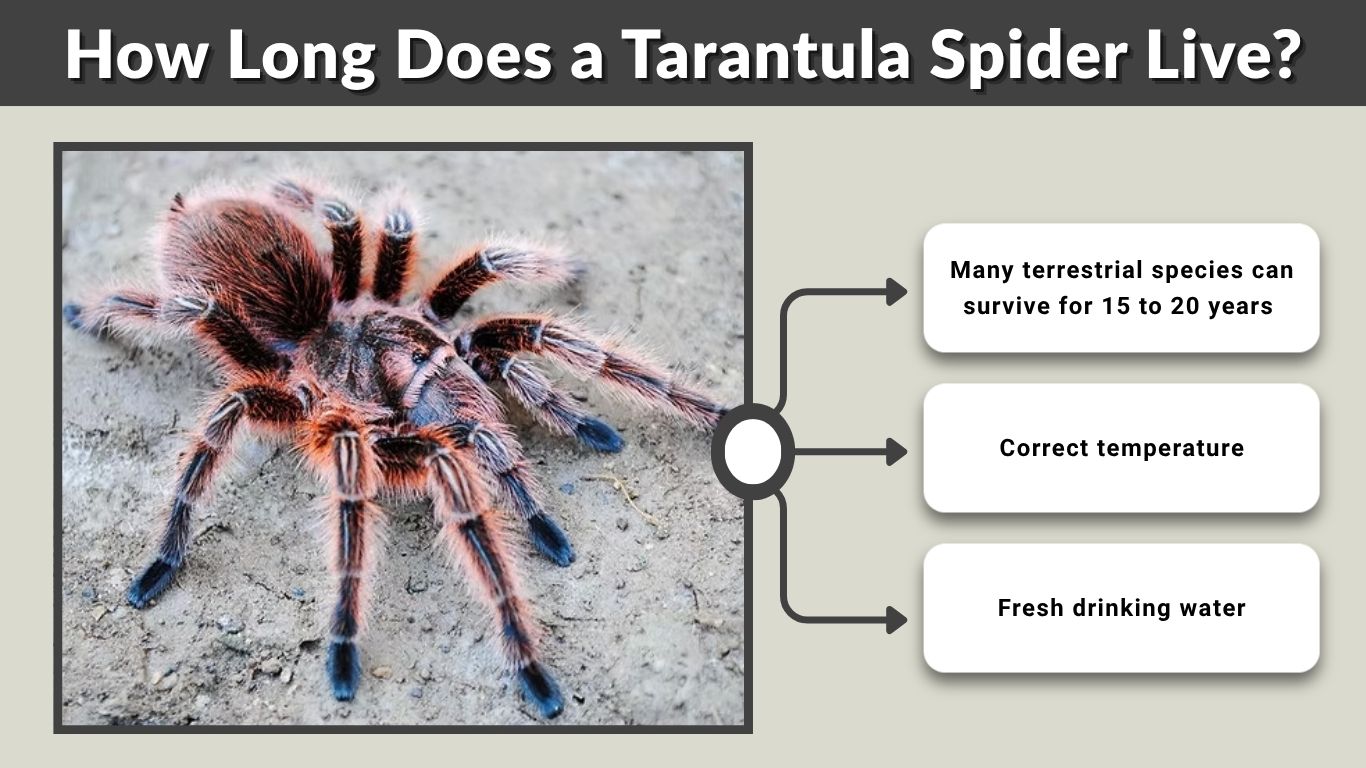
Tarantulas can live surprisingly long lives compared with many other spiders. Their lifespan depends on species, sex, environment, food availability, and whether they live in the wild or captivity. Female tarantulas generally live much longer than males, with some females surviving for 20 years or more. Males usually live only a few years and often die relatively soon after reaching maturity. Below, you’ll learn how long a tarantula spider lives, why males and females have such different lifespans, and what factors can affect their longevity.
How Long Does a Tarantula Spider Live?
A tarantula can live anywhere from a few years to more than 20 years, depending largely on its sex and species.
Female tarantulas are the long-lived members of the group. Many females live around 10 to 20 years, while some slow-growing species can survive for 25 years or longer under favorable conditions.
Male tarantulas have much shorter lives. Many males live around 3 to 7 years in total, and once they reach sexual maturity, they may survive for only several months to a few years.
A simple lifespan estimate is:
- Female tarantulas: about 10–25+ years
- Male tarantulas: about 3–7 years
- Mature males: often 1–2 years after their final molt
- Fast-growing species: generally shorter-lived
- Slow-growing species: often longer-lived
The exact lifespan varies considerably among different tarantula species.
How Long Do Female Tarantulas Live?
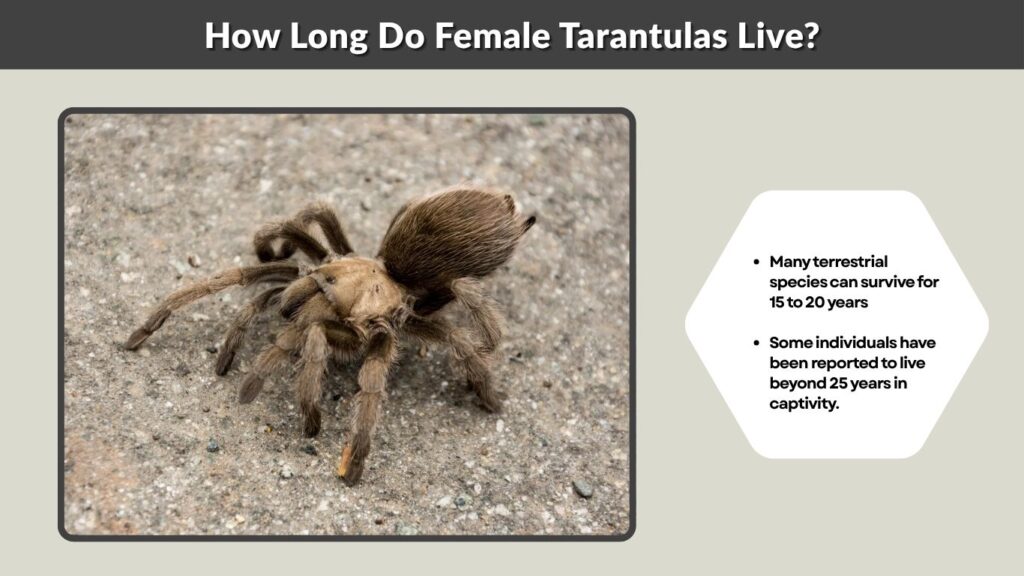
Female tarantulas usually live much longer than males. Many terrestrial species can survive for 15 to 20 years, and some individuals have been reported to live beyond 25 years in captivity.
Their long lifespan is partly connected to their slower growth and lifestyle. Female tarantulas spend much of their lives around established burrows or retreats and do not need to wander long distances looking for mates.
They continue molting after reaching adulthood. Each molt replaces the old exoskeleton and allows the spider to repair some damaged structures.
Some commonly kept terrestrial tarantulas, particularly those from the Americas, are known for especially long female lifespans.
How Long Do Male Tarantulas Live?
Male tarantulas usually have much shorter lifespans than females.
A male may spend several years growing before reaching sexual maturity. Once mature, however, his behavior changes dramatically. He often leaves his burrow and begins wandering in search of females.
Mature males generally stop growing and typically do not live for many years afterward. Depending on the species, they may survive anywhere from several months to around two years after their final molt.
Their shorter lifespan is connected to reproduction. Mature males expend considerable energy searching for mates and often eat less frequently during this stage.
Why Do Female Tarantulas Live Longer Than Males?
The main reason females live longer is that their reproductive strategies are very different.
Females typically remain near secure shelters and may reproduce multiple times during their long adult lives. They continue molting and maintaining their bodies after maturity.
Males, on the other hand, are biologically focused on finding mates after reaching adulthood. Their final molt produces reproductive structures such as mating hooks or specialized pedipalps.
After maturity, males usually stop molting. Their bodies gradually deteriorate, making their adult lifespan much shorter than that of females.
How Long Do Tarantulas Live in Captivity?
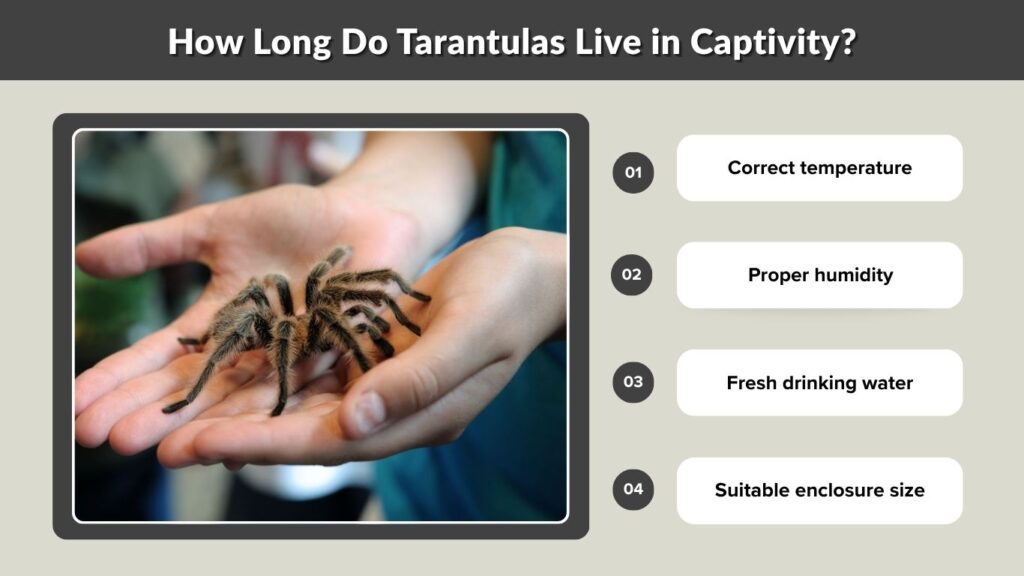
Tarantulas can often live longer in captivity than in the wild because they face fewer predators and have reliable access to food, water, and shelter.
A well-kept female tarantula may live for 15 to 25 years or even longer, depending on species.
Captive males still have naturally shorter lifespans. Proper care cannot completely overcome the biological difference between male and female tarantulas.
Captive lifespan depends heavily on appropriate husbandry, including:
- Correct temperature
- Proper humidity
- Fresh drinking water
- Suitable enclosure size
- Appropriate substrate
- Safe feeding practices
- Minimal unnecessary handling
Providing stable conditions reduces stress and lowers the risk of accidents.
How Long Do Tarantulas Live in the Wild?
Wild tarantulas can potentially reach similar biological ages, but many die earlier because of environmental hazards.
Predators such as birds, reptiles, mammals, and specialized wasps can kill tarantulas. Young spiderlings are particularly vulnerable because of their small size.
Wild tarantulas may also face drought, flooding, habitat destruction, food shortages, parasites, and injuries.
Female tarantulas often increase their chances of survival by staying inside deep burrows for much of their lives. Mature males are more exposed because they wander across open ground in search of females.
Tarantula Lifespan by Species

Lifespan varies considerably among different types of tarantulas.
Mexican Red Knee Tarantula
Female Mexican Red Knee Tarantulas are famous for their longevity and may live around 20 to 30 years with proper care. Males generally live far shorter lives.
Chilean Rose Tarantula
Female Chilean Rose Tarantulas can often live around 15 to 20 years or longer. They are slow-growing spiders, which contributes to their long lifespan.
Brazilian Black Tarantula
Female Brazilian Black Tarantulas may live around 15 to 20 years or more. Males typically survive only several years.
Pink Toe Tarantula
Pink Toe Tarantulas generally have shorter lifespans than many large terrestrial species. Females may live around 8 to 12 years, while males usually live only a few years.
Texas Brown Tarantula
Female Texas Brown Tarantulas can potentially live for well over 10 years. Males live much shorter lives and become highly mobile after reaching maturity.
What Factors Affect a Tarantula’s Lifespan?
Several factors can determine how long an individual tarantula survives.
Species
Genetics plays an important role. Slow-growing terrestrial tarantulas often live longer than many fast-growing arboreal species.
Sex
Sex is one of the strongest predictors of lifespan. Female tarantulas generally outlive males by many years.
Temperature
Constantly high temperatures can increase metabolism and growth rates. While this may cause a tarantula to mature faster, faster growth may also be associated with a shorter overall lifespan.
Food
Tarantulas need adequate nutrition, but they should not be constantly overfed. Adults can often go surprisingly long periods without food.
Water
Fresh water is essential. Dehydration can become dangerous, especially during hot or dry conditions.
Molting
Molting is one of the most vulnerable periods in a tarantula’s life. Disturbance, dehydration, or live prey remaining in the enclosure can cause serious injuries during a molt.
How Long Can a Tarantula Live Without Food?
Tarantulas have slow metabolisms and can survive surprisingly long periods without eating.
Healthy adult tarantulas may sometimes go several weeks or months without food. Some individuals voluntarily fast before molting and may continue refusing food afterward.
Large adult females may occasionally survive for many months without eating if they have access to water.
However, intentionally withholding food is unnecessary. A tarantula should be offered appropriately sized prey according to its age, size, and condition.
How Can You Help a Pet Tarantula Live Longer?
Good husbandry can help a captive tarantula reach its natural lifespan.
Provide an enclosure designed for whether the species is terrestrial, burrowing, or arboreal. Maintain appropriate temperature and humidity without creating an overly wet environment.
Keep clean water available at all times and feed captive-bred insects such as crickets, roaches, and mealworms.
Avoid excessive handling because falls can seriously injure a tarantula, especially a heavy terrestrial species.
During premolt and molting periods, remove live feeder insects and avoid disturbing the spider.
Do Tarantulas Die After Mating?
Male tarantulas do not necessarily die immediately after mating, but they usually have limited time remaining after reaching maturity.
Some males may mate with several females before dying naturally. Others may be injured or killed during mating encounters.
Female tarantulas normally survive mating and may reproduce again in later years. They can continue living and molting long after producing an egg sac.
FAQs
What is the average lifespan of a tarantula?
Female tarantulas commonly live between 10 and 20 years, while males usually live around 3 to 7 years. Lifespan varies depending on species.
Can a tarantula live for 30 years?
Yes. Females of some long-lived, slow-growing species can potentially survive for 25 to 30 years under excellent conditions.
Why do male tarantulas die sooner?
Males have a shorter reproductive lifespan. After reaching maturity, they stop growing, wander in search of females, and generally survive only a limited period.
Do pet tarantulas live longer than wild tarantulas?
They often can. Captive tarantulas avoid many predators and environmental hazards and receive consistent access to food, water, and shelter.
How do you know if a tarantula is getting old?
Older tarantulas may become less active, eat less frequently, or experience more difficulty during molts. Mature males can also develop a thin appearance as they age after their final molt.
