

Carpenter bees (Xylocopa spp.) are among the largest and most noticeable bees you’ll find around homes, gardens, and farms. Known for drilling holes in wood, they are often mistaken for wood-eaters like termites. In reality, carpenter bees are important pollinators with a diet based on nectar and pollen. To better understand their role in nature and how they differ from other bees, let’s explore exactly what carpenter bees eat, what they feed their larvae, and which plants attract them most.
What Do Carpenter Bees Eat? (The Basics)
Adult carpenter bees survive primarily on nectar and pollen. Nectar provides carbohydrates that fuel their energy for flight and foraging, while pollen offers proteins and fats essential for reproduction and growth.
Like honeybees, carpenter bees use their long tongues to extract nectar from flowers. However, they are not social bees and don’t store food for colonies. Instead, females collect nectar and pollen to provision their nests for their offspring.
Do Carpenter Bees Eat Wood?
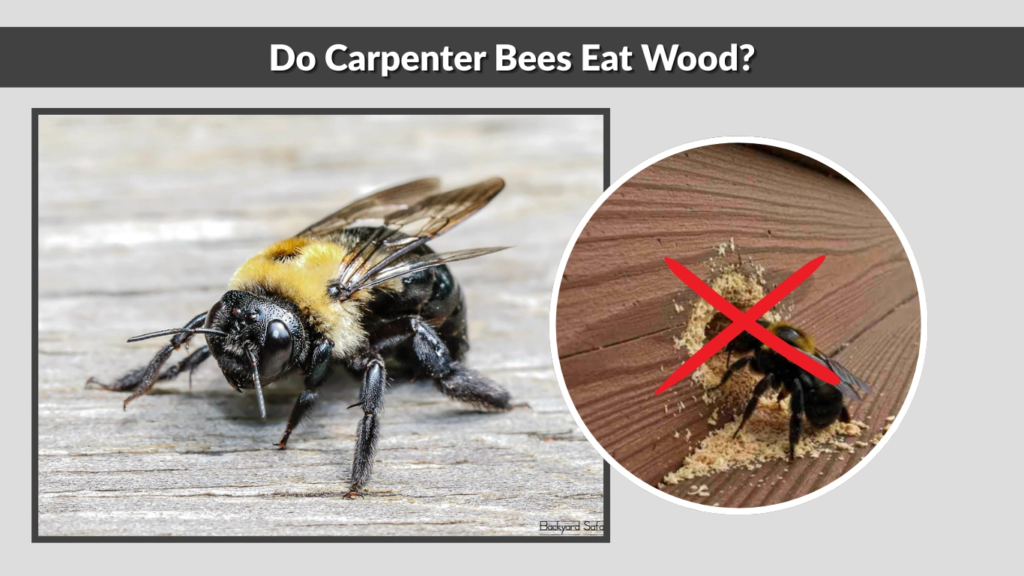
One of the most common myths is that carpenter bees eat wood. The truth is:
- They do not consume wood for food.
- Instead, females drill holes into untreated or soft wood to create nesting tunnels.
- The wood is simply discarded as sawdust (known as “frass”).
This distinction is important: termites eat wood as nourishment, while carpenter bees only use it as nesting material.
What Do Carpenter Bee Larvae Eat?

Larval carpenter bees are completely dependent on food provided by the female. After creating tunnels in wood, she constructs several small chambers. In each chamber, she places a mixture of pollen and nectar, often called “bee bread.”
- This bee bread is the sole food source for larvae.
- It is rich in protein and carbohydrates, essential for growth.
- Once sealed inside the chamber, the larvae consume this mixture until they mature into adults.
Without pollen and nectar, carpenter bee larvae cannot survive—another reason why flowering plants are vital for their life cycle.
What Do Male Carpenter Bees Eat?
Male carpenter bees are easily noticed because they hover aggressively near nests. But when it comes to feeding, their role is limited.
- Males feed mainly on nectar from flowers for energy.
- They do not collect pollen or feed larvae.
- Most of their time is spent defending territory and searching for mates rather than foraging.
This makes the female the primary food gatherer for the next generation.
What Do Eastern Carpenter Bees Eat?

The Eastern carpenter bee (Xylocopa virginica), common in North America, has similar feeding habits to other species. They thrive on nectar-rich flowering plants during spring and summer.
Their diet is closely linked to seasonal blooms, including:
- Early spring blossoms like redbud and wisteria.
- Summer crops like tomatoes and blueberries.
- Late-season flowers such as goldenrod.
This species is particularly valuable to agriculture because of its ability to perform buzz pollination, shaking pollen loose from flowers like tomatoes and peppers.
What Do Carpenter Bees Eat and Drink?

Carpenter bees rely on three basic nutritional sources:
- Nectar – their primary source of sugar for energy.
- Pollen – protein for larvae and reproductive health.
- Water – occasionally consumed, though not as central as nectar and pollen.
Unlike honeybees, they do not produce or store honey, so their diet is immediate and seasonal.
What Plants Do Carpenter Bees Like to Eat? (9 Common Foods)
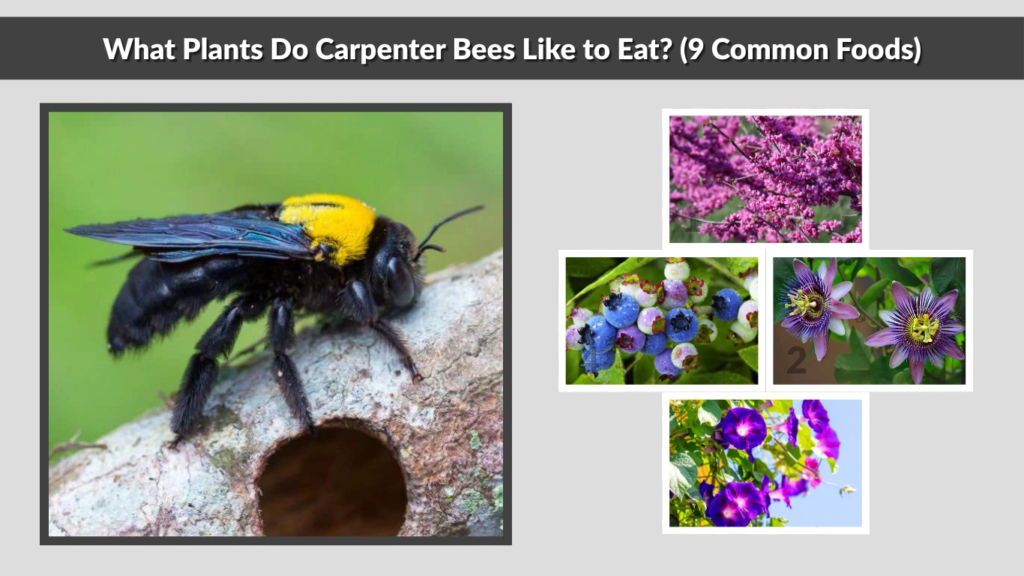
Carpenter bees are especially drawn to large, open, or tubular flowers that suit their size. Here are nine common foods they rely on:
- Wisteria – abundant nectar, often covered in buzzing carpenter bees.
- Passionflower – exotic blooms with ample pollen and nectar.
- Morning Glory – trumpet-shaped flowers ideal for their tongues.
- Blueberry flowers – a favorite food source and vital for pollination.
- Tomato blossoms – pollinated through “buzz pollination.”
- Sunflowers – wide, open heads with easy pollen access.
- Lavender – fragrant blooms that attract carpenter bees strongly.
- Citrus blossoms – provide sweet nectar during flowering seasons.
- Hibiscus – large, open flowers that accommodate their size.
These plants not only feed carpenter bees but also benefit from their pollination services.
What Do Carpenter Bees Eat for Food in Gardens and Farms?
Carpenter bees are important pollinators for both wild and cultivated plants. Their large size and ability to perform buzz pollination make them valuable to agriculture. In gardens and farms, they often feed on:
- Vegetable blossoms like tomatoes, eggplants, and peppers.
- Fruit crops such as blueberries, strawberries, and citrus.
- Flowering herbs like basil, rosemary, and thyme.
- Wildflowers that provide steady nectar supplies.
Their feeding benefits farmers and gardeners by increasing fruit set and crop yield. While their wood-boring habits may cause frustration, their contribution to pollination is undeniable.
FAQs
Do carpenter bees eat human food or sugar water?
No, carpenter bees do not typically feed on human food. They are naturally drawn to flowers. However, in controlled environments, some may sip sugar water if no nectar is available.
What flowers attract carpenter bees the most?
Wisteria, passionflower, tomato blossoms, lavender, and sunflowers are among their favorites. Large, fragrant flowers with abundant nectar are especially attractive.
Do carpenter bees eat the same food as honeybees?
Yes and no. Both feed on nectar and pollen, but honeybees store food in hives, while carpenter bees consume it directly and provide only enough for their larvae.
Do carpenter bees eat wood like termites?
No. Carpenter bees drill into wood to create nests but do not consume it. Termites eat cellulose, while carpenter bees discard wood shavings.
How do carpenter bees feed their young?
Females collect nectar and pollen, mix them into bee bread, and store it in sealed chambers. Each larva consumes this supply until it matures.
