

Carpenter bees are solitary insects that bore into untreated wood to build nesting tunnels. Within these tunnels, females lay eggs and leave food supplies for their young. The developing offspring, known as carpenter bee larvae, are an essential stage in the bee’s life cycle. Sometimes these larvae fall out, appear on the ground, or get exposed by predators. This article explains their identification, life cycle, diet, threats, and common issues related to larvae management.
Identification of Carpenter Bee Larvae

Carpenter bee larvae are often mistaken for other insects, so proper identification is important.
Appearance
- Color: Creamy white to pale yellow.
- Shape: C-shaped, grub-like body with no legs.
- Head: Small and slightly darker than the rest of the body.
- Size: Can grow up to 1 inch long when fully developed.
Unlike termites, which are often confused with them, carpenter bee larvae are larger, thicker-bodied, and found inside pollen-packed tunnels rather than wood galleries filled with soil.
Stages of Development
The larvae pass through several stages before pupating:
- Egg stage – laid in separate chambers inside wooden tunnels.
- Larvae stage – grub-like appearance, consuming stored food.
- Pupa stage – transformation into adult bee begins.
- Adult stage – emerges from the tunnel to start a new cycle.
These stages make up the full development of carpenter bees and can last several weeks to months depending on temperature and resources.
Life Cycle of Carpenter Bee Larvae
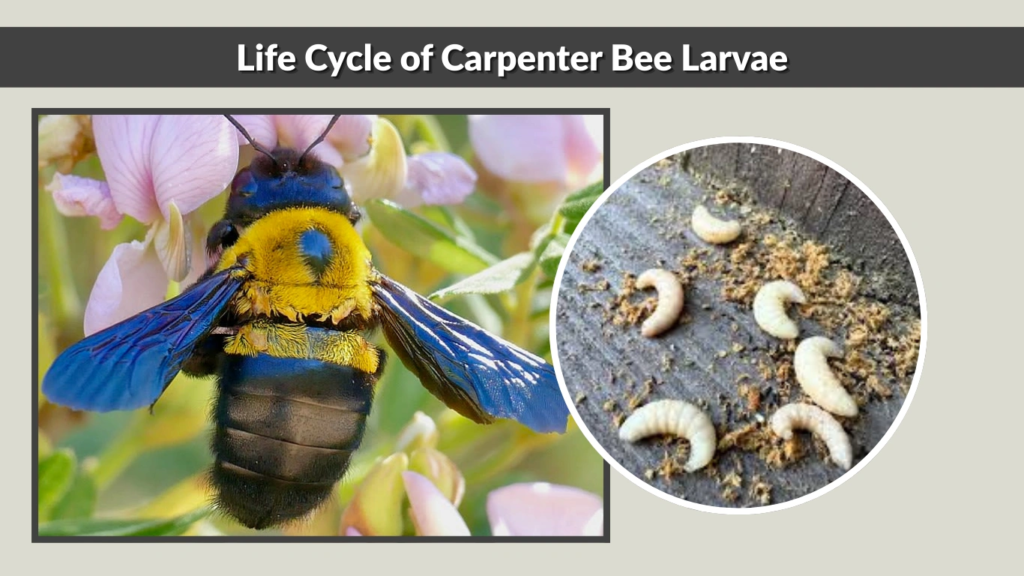
The carpenter bee life cycle begins in spring, when females bore into softwoods like pine, cedar, or untreated lumber. Each tunnel is divided into cells where an egg is laid and provisioned with a ball of pollen and nectar.
- Egg-laying: Typically occurs in spring and early summer.
- Larvae development: Once the egg hatches, the larvae feed exclusively on the pollen ball.
- Gestation period: Development lasts around 5–7 weeks, depending on climate.
- Emergence: Adult bees generally appear in late summer or early fall.
This solitary system differs from honeybees or bumblebees, where larvae are tended directly by worker bees. Carpenter bee larvae are largely independent, relying only on the provisions left by their mother.
Diet of Carpenter Bee Larvae
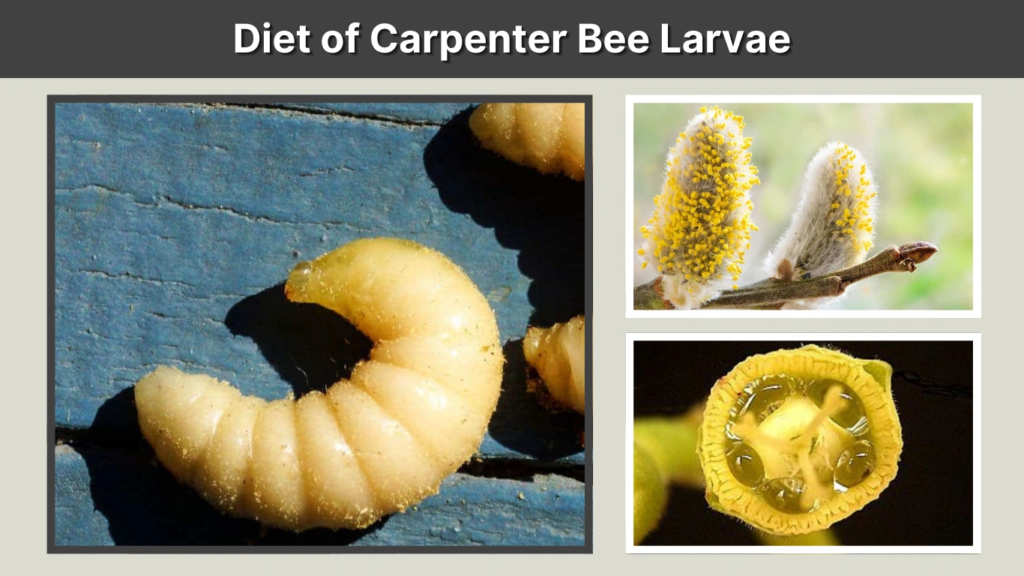
Contrary to a common misconception, carpenter bee larvae do not eat wood. Instead, their diet is based on:
- Pollen: The main source of protein.
- Nectar: Provides essential sugars for energy.
Each larval cell contains a pollen “loaf” prepared by the mother bee. This food sustains the larvae until they pupate. Adults never return to feed larvae, making the mother’s preparation critical for survival.
Predators and Threats
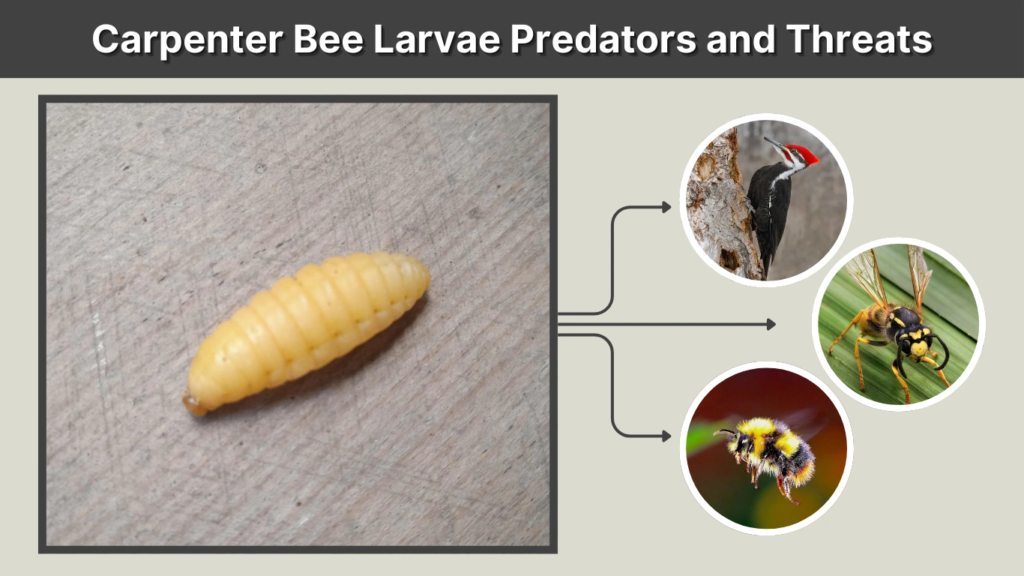
Carpenter bee larvae face numerous natural enemies. Predation often explains why larvae may be found falling from holes or scattered on the ground.
Birds
- Woodpeckers: One of the most common predators, woodpeckers drill into tunnels to feed on larvae. This is why heavy carpenter bee infestations are often accompanied by woodpecker damage.
- Crows: Known to peck into soft wood in search of developing larvae.
Insects
- Wasps: Some parasitic wasps invade tunnels and attack larvae.
- Flies: Certain black-and-white flies lay eggs inside bee tunnels, and their maggots consume carpenter bee larvae.
- Bumble bees: Rare cases of competition and aggression may result in larvae being displaced or destroyed.
Environmental Threats
- Exposure: Larvae sometimes fall out of nests if tunnels are damaged or invaded.
- Disease: Fungal or bacterial infections can kill developing larvae, though this is less common.
These natural threats highlight that larvae are an important food source in the ecosystem, even though they play a key role in the survival of carpenter bees.
Problems Associated with Carpenter Bee Larvae
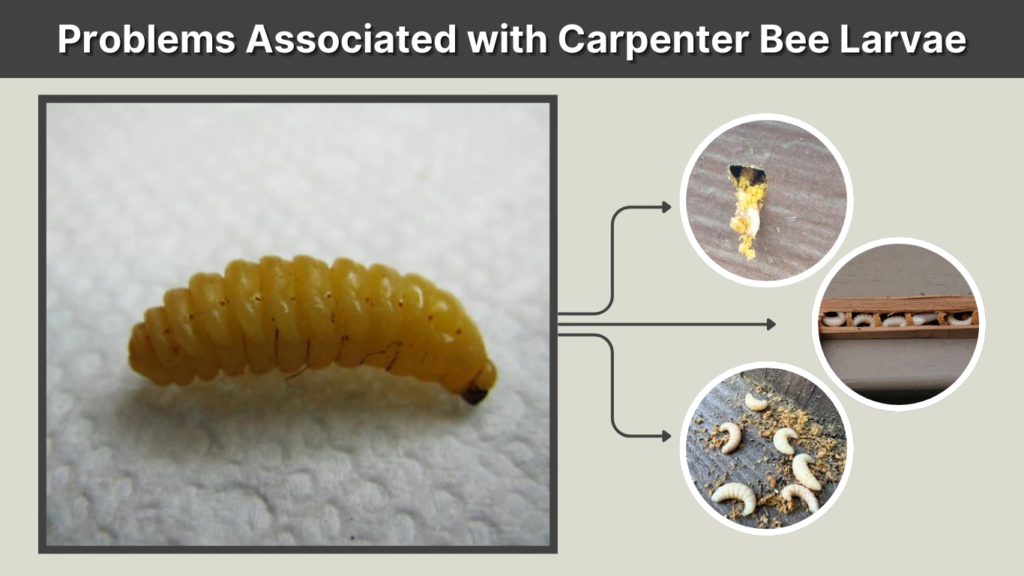
Although carpenter bee larvae are part of a natural life cycle, their presence can sometimes create problems for homeowners.
Falling Out of Holes
One of the most common issues people notice is larvae falling out of wooden tunnels or being found on the ground. This usually happens when:
- A tunnel has been disturbed by predators, such as woodpeckers.
- The structural integrity of the wood has weakened.
- The larvae have been displaced during nest damage.
Dying or Dropping Larvae
Larvae may also appear dead or dying if their pollen provisions were insufficient or contaminated. Environmental factors like moisture or extreme temperatures can also harm them. Finding dead larvae near wooden structures is often a sign of a compromised nest.
Confusion with Other Insects
Carpenter bee larvae are sometimes mistaken for termite larvae, especially in the spring months (such as May). However, termite infestations look different, with mud tubes and hollow wood, while carpenter bee tunnels are clean and round. Correct identification is crucial for treatment.
Removal and Control Methods
When carpenter bees nest in buildings or wooden furniture, dealing with larvae becomes a priority. While some prefer leaving them alone for ecological reasons, others seek removal due to structural concerns.
How to Get Rid of Carpenter Bee Larvae
- Seal holes: Once larvae have emerged, sealing drilled tunnels with wood filler or caulk prevents reuse.
- Pesticides: Targeted insecticides can kill larvae inside tunnels, but this should be used cautiously to avoid harming non-target species.
- Professional removal: Pest control specialists can eliminate larvae and prevent further damage.
- DIY deterrents: Applying citrus oil, almond oil, or other natural repellents to holes can discourage adult bees from laying eggs.
How to Kill Carpenter Bee Larvae
Direct killing methods are usually discouraged unless necessary. If removal is unavoidable:
- Use an insecticidal dust or spray applied directly into the tunnels.
- Plug holes after 24–48 hours to trap larvae and prevent adults from returning.
- Always wear protective clothing, as adult bees may defend the nest.
Eco-Friendly Options
- Leave nests alone if they are in non-structural wood, such as fence posts.
- Encourage natural predators like woodpeckers in controlled settings.
- Replace untreated wood with painted or pressure-treated lumber to prevent future infestations.
Comparison with Other Bees
Carpenter bee larvae are often confused with the young of other bees.
- Bumble Bee Larvae: Similar in appearance but raised inside wax cells within colonies. Bumble bee adults actively feed and tend their larvae, unlike carpenter bees.
- Honey Bee Larvae: White, legless grubs like carpenter bees, but they develop in wax combs and are part of a large social hive.
- Other Solitary Bees: Many solitary bees create pollen provisions for larvae, but carpenter bees are unique in using wooden tunnels.
This comparison shows that carpenter bees are solitary, but their larvae share many developmental traits with social bee species.
Conclusion
Carpenter bee larvae represent the hidden, developing stage of one of nature’s most misunderstood insects. They may appear unusual when found outside of their tunnels, but inside, they follow a carefully structured life cycle supported by their mother’s pollen provisions.
FAQs
Do woodpeckers eat carpenter bee larvae?
Yes. Woodpeckers are one of the main predators of carpenter bee larvae. They peck into wooden tunnels to extract the developing grubs, often causing additional damage to structures. Heavy carpenter bee activity usually attracts woodpeckers, making them both a control factor and a secondary problem for homeowners.
What do carpenter bee larvae eat?
Carpenter bee larvae feed on a “pollen loaf” prepared by the female bee. This provision consists of a mixture of pollen and nectar collected from flowers. The larvae consume this stored food until they pupate and transform into adults. They do not eat or chew wood during development.
How can you get rid of carpenter bee larvae?
To remove larvae, insecticidal dust or sprays may be applied directly into tunnels. After treatment, sealing the holes with caulk or wood filler prevents reuse. Natural deterrents like citrus or almond oil can also discourage nesting. Professional pest control is recommended for large infestations or structural risks.
What do carpenter bee larvae look like?
Carpenter bee larvae are white, soft-bodied, and C-shaped, resembling grubs. They have small, darker heads and can grow up to an inch long. Unlike termite larvae, they are larger and found inside pollen-packed tunnels rather than soil-filled wooden galleries, making them easier to identify with careful observation.
Do wasps or other insects eat carpenter bee larvae?
Yes. Certain wasps, flies, and even other bees may attack or consume carpenter bee larvae. Parasitic flies sometimes lay eggs in the tunnels, and their maggots feed on the larvae. Bumble bees and wasps can also displace larvae when competing for nesting sites or resources.
