
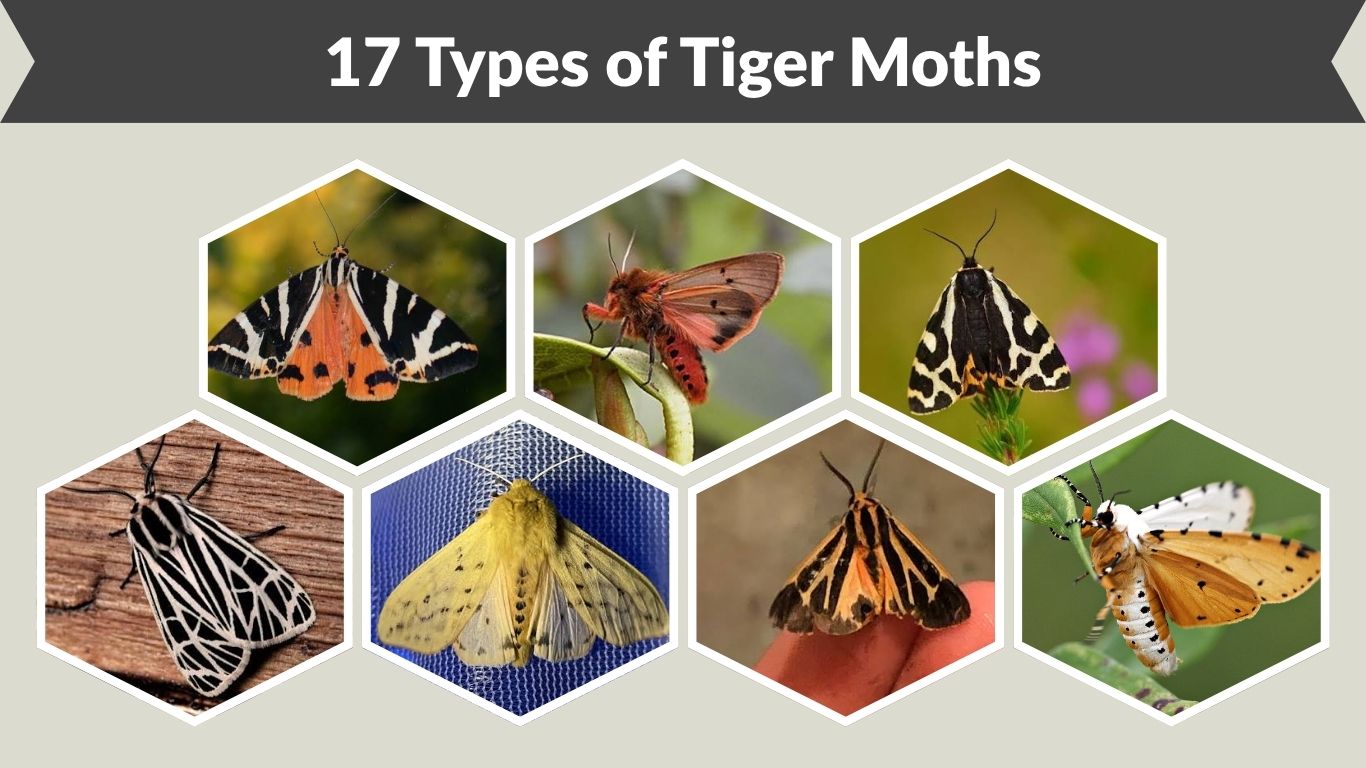
Tiger moths are fascinating insects recognized for their bold wing patterns, bright warning colors, and woolly caterpillars. While some species display brilliant red, orange, or yellow hindwings, others feature elegant black-and-white markings. These moths inhabit forests, grasslands, gardens, wetlands, and urban environments worldwide. Explore 17 types of tiger moths and discover their characteristics, habitats, feeding behaviors, and life cycles.
1. Garden Tiger Moth
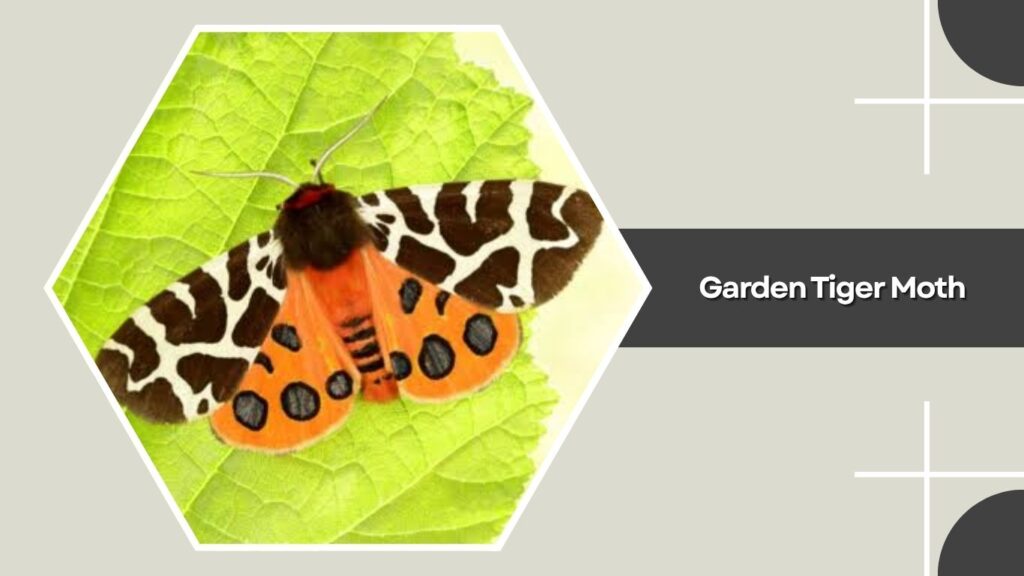
The garden tiger moth (Arctia caja) is a boldly patterned species known for its brown-and-white forewings and vivid orange hindwings. Its caterpillar is commonly called a woolly bear because of its dense covering of dark and reddish hairs. Both stages use defensive features to discourage predators.
Characteristics
- Wingspan: Approximately 2–2.6 inches
- Forewings: Dark brown with irregular cream-colored patches
- Hindwings: Orange or red with blue-black spots
- Body: Thick and covered with short hairs
- Activity: Mainly active at night
- Caterpillar: Black and reddish-brown with long hairs
- Defense: Produces unpleasant chemicals and displays bright warning colors
Habitat and Distribution
Garden tiger moths occur across Europe, Asia, and parts of North America. They inhabit gardens, meadows, grasslands, hedgerows, woodland edges, wetlands, and open countryside.
They prefer cool or temperate environments containing a variety of low-growing plants. Adults are most often observed during summer and may be attracted to outdoor lights.
Behavior and Diet
Adults generally remain hidden during the day and fly at night. When threatened, the moth opens its forewings to reveal its brightly colored hindwings, warning predators that it may taste unpleasant.
The caterpillars feed on nettle, dock, dandelion, plantain, willowherb, and numerous other plants. Although not venomous, their hairs can irritate sensitive skin.
Life Cycle and Reproduction
Females lay clusters of round eggs on suitable food plants. The caterpillars hatch during summer and feed on various leaves.
Young caterpillars usually overwinter while partly grown and resume feeding in spring. Mature larvae create loose cocoons using silk mixed with their body hairs. Adult moths emerge in summer, typically producing one generation per year.
2. Scarlet Tiger Moth
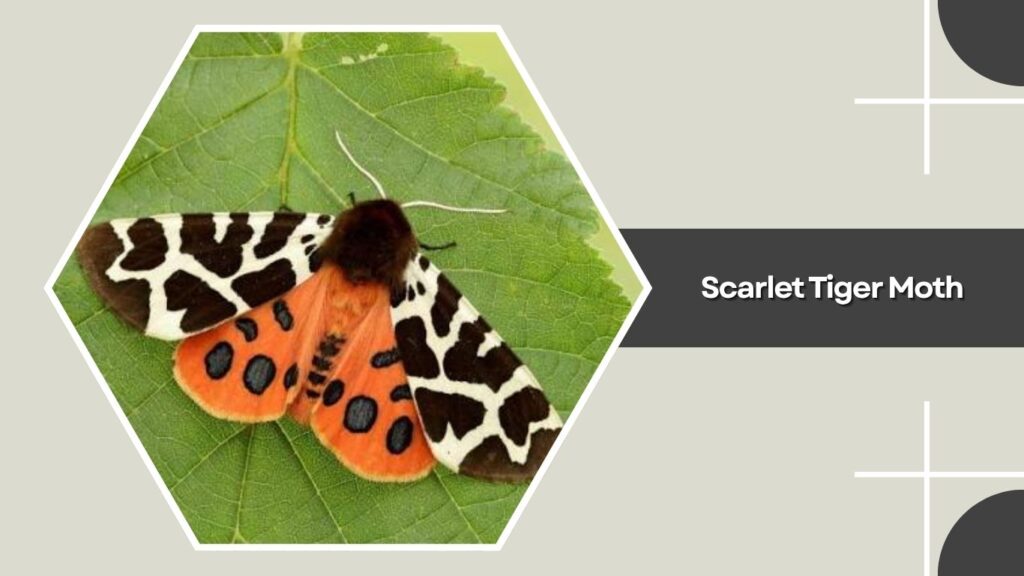
The scarlet tiger moth (Callimorpha dominula) is an attractive species with dark metallic forewings covered in pale spots and bright red hindwings. Unlike many moths, adults frequently fly during daylight. Their striking colors make them highly noticeable in sunny woodland clearings and flower-rich wetlands.
Characteristics
- Wingspan: Approximately 1.8–2.2 inches
- Forewings: Black or metallic green with cream and yellow spots
- Hindwings: Bright red with dark markings
- Body: Dark with reddish coloration near the abdomen
- Activity: Flies during both day and night
- Caterpillar: Black with yellow markings and short hairs
- Defense: Bright colors warn predators of an unpleasant taste
Habitat and Distribution
Scarlet tiger moths are found across parts of Europe and western Asia. They prefer damp woodland, riverbanks, marshy meadows, shaded gardens, and hedgerows.
Adults are usually present from late spring through midsummer. They are often associated with warm, sheltered environments containing abundant caterpillar food plants and nectar-producing flowers.
Behavior and Diet
Adults may fly in warm sunshine but are also active at night. They frequently visit flowers to drink nectar and can sometimes be observed resting openly on vegetation.
The caterpillars feed on comfrey, nettle, bramble, honeysuckle, and several other plants. Young larvae often begin with low-growing vegetation before using larger plants after overwintering.
Life Cycle and Reproduction
Females lay groups of eggs on the undersides of host-plant leaves. Caterpillars hatch in summer and begin feeding soon afterward.
The larvae overwinter while still small and continue developing the following spring. When mature, they form light cocoons among leaves or near ground level. Adults emerge several weeks later, and one generation is generally produced annually.
3. Jersey Tiger Moth
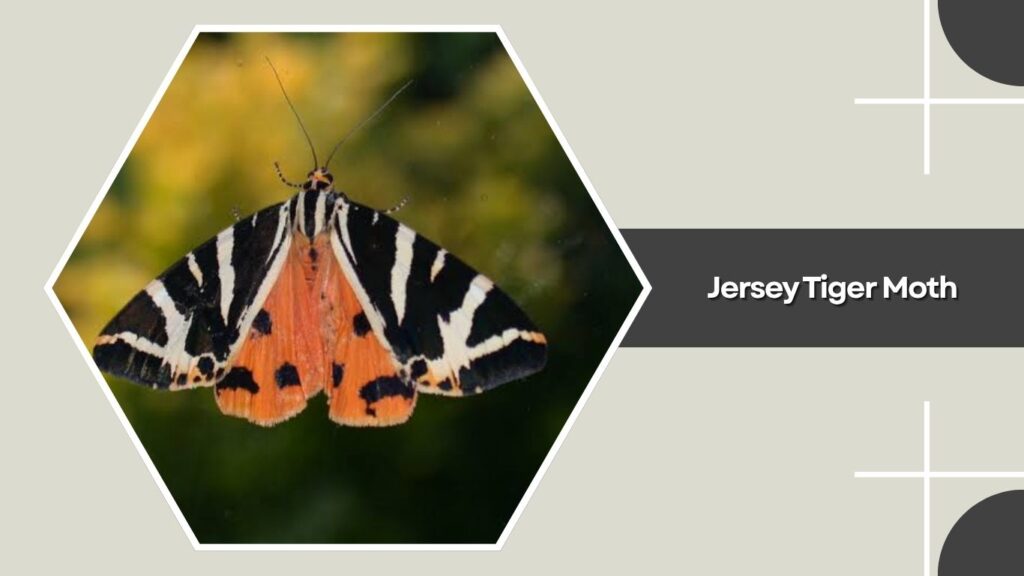
The Jersey tiger moth (Euplagia quadripunctaria) is a distinctive species with black-and-cream striped forewings and brightly colored hindwings. Despite its name, it is not limited to the island of Jersey. Adults are strong flyers and may be active during daylight as well as at night.
Characteristics
- Wingspan: Approximately 2–2.6 inches
- Forewings: Black with bold cream or white stripes
- Hindwings: Orange or red with black spots
- Body: Dark, slender, and sometimes marked with orange
- Activity: Active during the day and at night
- Caterpillar: Dark brown or black with an orange dorsal stripe
- Flight period: Primarily during summer
Habitat and Distribution
Jersey tiger moths occur across southern and central Europe, western Asia, and some nearby islands. In certain regions, their range has expanded into urban and suburban environments.
They inhabit woodland edges, rocky valleys, hedgerows, gardens, coastal areas, and flower-rich grasslands. Adults are particularly common in warm, sheltered locations.
Behavior and Diet
Adults frequently visit flowers during daylight, especially in warm weather. They feed on nectar from plants such as buddleia, hemp-agrimony, and thistles. They may also become active after dark and visit artificial lights.
The caterpillars eat nettle, bramble, plantain, dandelion, and several other low-growing plants. Older larvae may also feed on shrubs.
Life Cycle and Reproduction
Females lay their eggs on or near suitable caterpillar food plants. The young larvae hatch during late summer and begin feeding before colder weather arrives.
Caterpillars overwinter while still small and resume feeding in spring. Mature larvae pupate inside loose cocoons hidden among vegetation or leaf litter. Adults generally emerge in midsummer, completing one generation each year.
4. Cream-Spot Tiger Moth
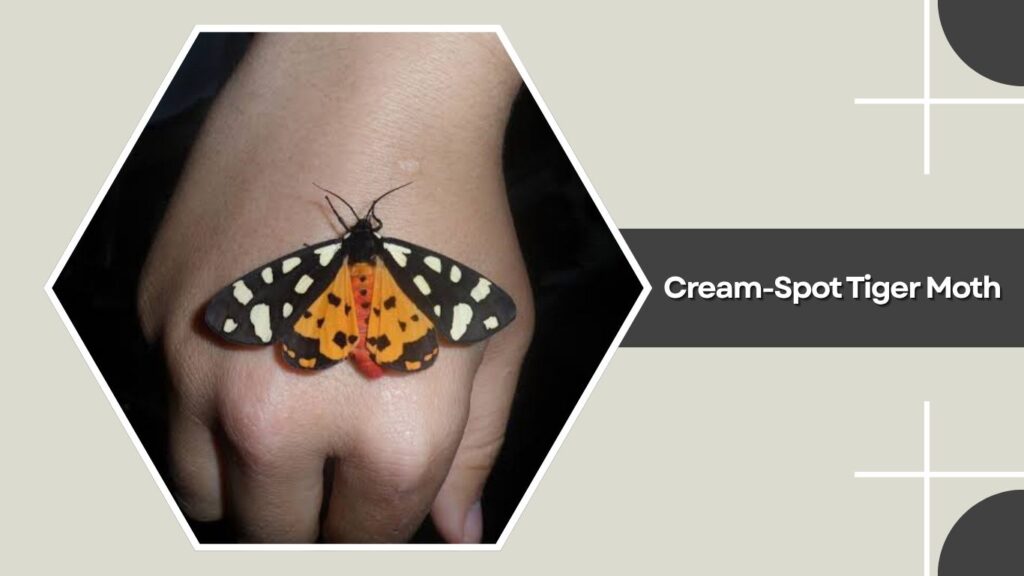
The cream-spot tiger moth (Arctia villica) is a large, dramatic species recognized by its black forewings, cream-colored spots, and orange hindwings. Its bold pattern provides an effective warning to predators. The moth normally remains hidden during daylight and becomes active after sunset.
Characteristics
- Wingspan: Approximately 1.8–2.4 inches
- Forewings: Black with large cream-colored patches
- Hindwings: Orange with dark spots
- Head and thorax: Mostly dark with pale markings
- Abdomen: Orange with black spots
- Caterpillar: Dark brown or black with long brown hairs
- Activity: Primarily nocturnal
Habitat and Distribution
Cream-spot tiger moths occur across southern and central Europe, North Africa, and western Asia. They favor warm habitats such as dry grasslands, rocky hillsides, woodland clearings, gardens, hedgerows, and coastal areas.
Adults generally appear from late spring through early summer. During the day, they hide in dense vegetation and may fly away quickly if disturbed.
Behavior and Diet
Adults are active at night and can be attracted to artificial lights. Their orange hindwings are concealed while resting but are suddenly exposed when the moth takes flight, potentially startling predators.
The caterpillars feed on dandelion, plantain, dock, nettle, dead-nettle, and other low-growing plants. Their dense hairs offer protection, although they may irritate sensitive skin.
Life Cycle and Reproduction
Females place groups of eggs on suitable plants. The caterpillars hatch in summer, feed for a period, and then overwinter before completing their growth.
During spring, the larvae become active again and continue feeding. Mature caterpillars form cocoons close to the ground, incorporating some of their hairs into the silk. Adults emerge during the warmer months.
5. Ruby Tiger Moth
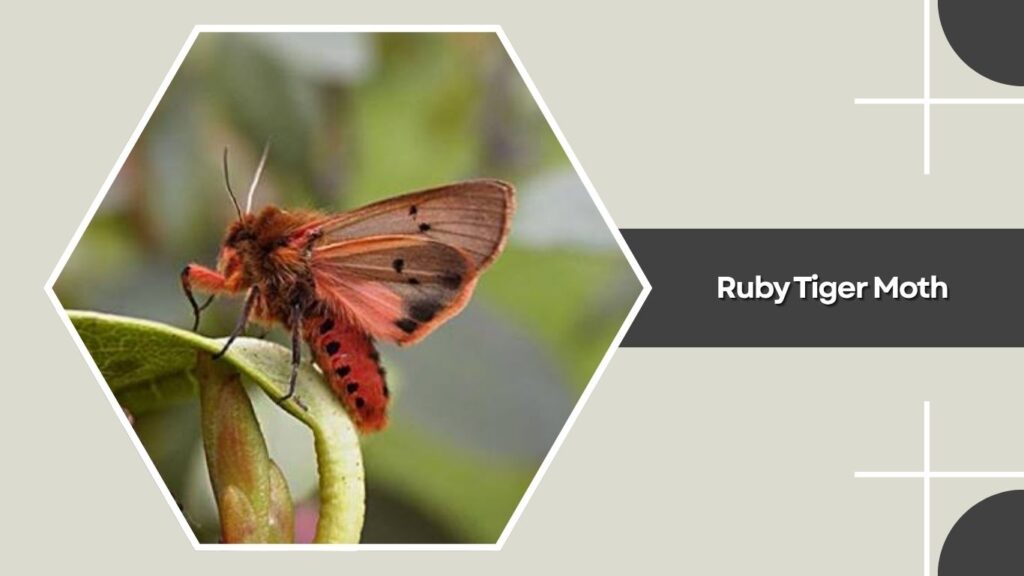
The ruby tiger moth (Phragmatobia fuliginosa) is a small but colorful species with reddish-brown forewings and bright red or pink hindwings. Its body is covered with soft-looking hairs, while the abdomen displays dark spots. The caterpillar is a type of woolly bear with dense reddish-brown hairs.
Characteristics
- Wingspan: Approximately 1.2–1.8 inches
- Forewings: Reddish-brown or rusty pink
- Hindwings: Bright red or pink with dark spots
- Body: Hairy with a red abdomen and black markings
- Activity: Mainly nocturnal
- Caterpillar: Dark with dense rusty-brown hairs
- Defense: Warning coloration and unpleasant taste
Habitat and Distribution
Ruby tiger moths are widely distributed throughout Europe, North Africa, and much of temperate Asia. They occupy gardens, grasslands, farmland, woodland edges, wetlands, parks, and disturbed habitats.
Their ability to use many different food plants allows them to survive in both natural and urban environments. Adults may be seen from spring through early autumn.
Behavior and Diet
Adults fly mainly at night and are frequently attracted to outdoor lights. Their reddish coloration and chemical defenses help protect them from predators.
The caterpillars feed on dandelion, dock, plantain, ragwort, heather, and various other low-growing plants. They are most frequently seen crawling across open ground while searching for food or a place to pupate.
Life Cycle and Reproduction
Females lay clusters of eggs on suitable vegetation. After hatching, the caterpillars feed actively and pass through several growth stages.
The species may produce two generations per year in warmer areas. Caterpillars from the later generation usually overwinter and resume development in spring. Mature larvae form silk cocoons among leaf litter before transforming into adult moths.
6. Wood Tiger Moth
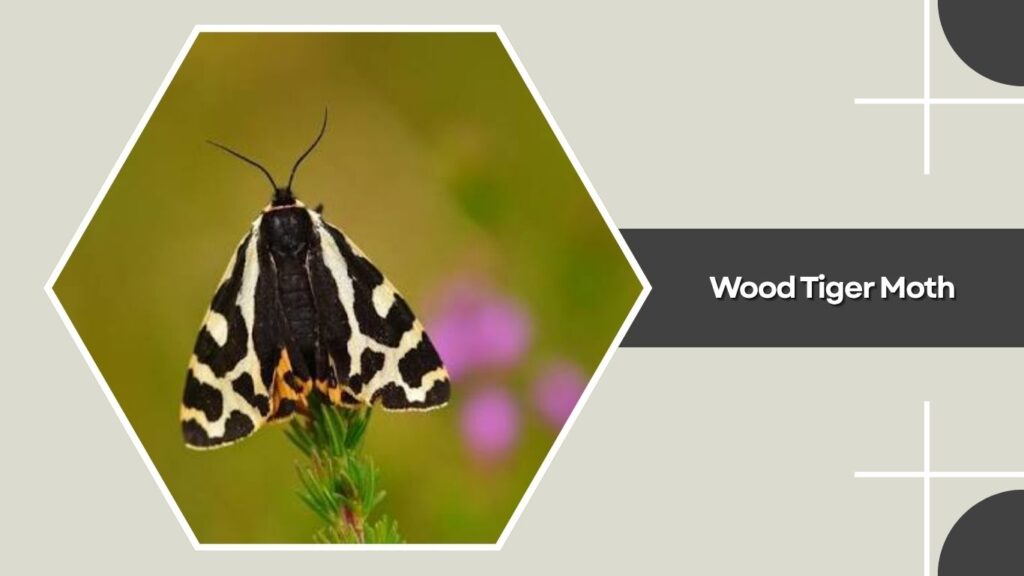
The wood tiger moth (Arctia plantaginis) is a colorful species with considerable variation between individuals and sexes. Males generally have white or yellow hindwings with dark markings, while females often display red or orange coloration. Its contrasting patterns warn predators that the moth contains defensive chemicals.
Characteristics
- Wingspan: Approximately 1.2–1.6 inches
- Forewings: Black with cream, white, or yellow patterns
- Male hindwings: White or yellow with dark markings
- Female hindwings: Red, orange, or yellow with black spots
- Body: Hairy with contrasting warning colors
- Caterpillar: Black with orange-brown hairs
- Activity: Frequently active during daylight
Habitat and Distribution
Wood tiger moths occur across northern and central Europe, northern Asia, and parts of North America. They inhabit meadows, open forests, mountain slopes, heathlands, grasslands, and woodland clearings.
The species generally prefers cooler environments with a mixture of grasses, wildflowers, and low-growing plants. Adults are normally observed from late spring through summer.
Behavior and Diet
Male wood tiger moths commonly fly during daylight while searching for females. When threatened, adults display their brightly colored hindwings and may release defensive fluids that taste unpleasant to predators.
The caterpillars feed on plantain, dandelion, dock, nettle, and numerous other plants. Their broad diet allows them to survive in several different habitats.
Life Cycle and Reproduction
Females lay clusters of eggs on vegetation near appropriate food plants. The caterpillars hatch during summer and feed on a range of leaves.
Larvae usually overwinter while partly developed and resume feeding when temperatures rise. A mature caterpillar forms a silk cocoon containing some of its body hairs. The species typically produces one generation annually.
7. Virgin Tiger Moth
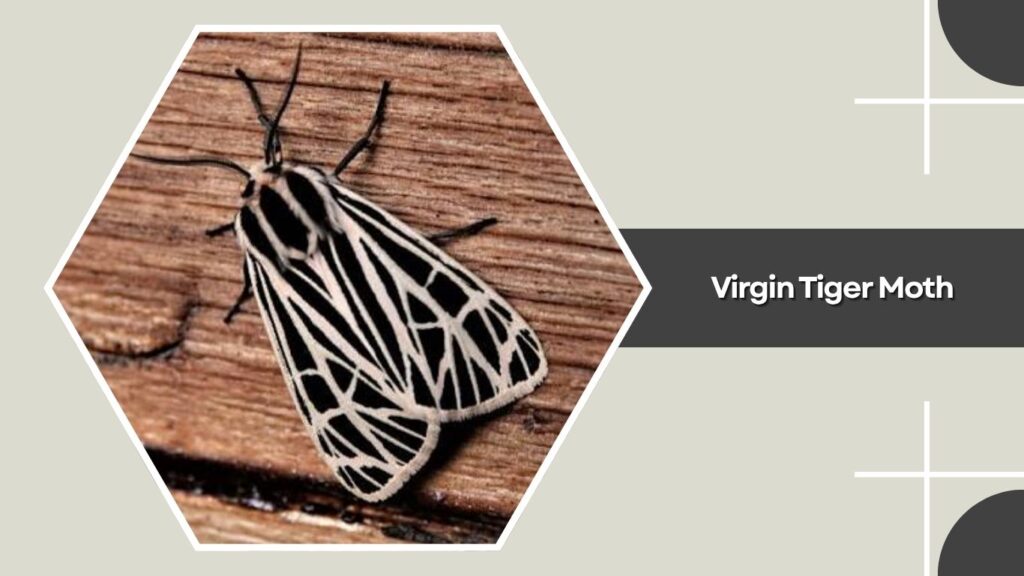
The virgin tiger moth (Apantesis virgo) is a striking North American species with bold black-and-cream forewings and reddish-orange hindwings. Its abdomen is also orange with a row of dark spots. The colorful appearance functions as a warning to birds and other predators.
Characteristics
- Wingspan: Approximately 1.8–2.4 inches
- Forewings: Black with cream-colored lines and patches
- Hindwings: Red, pink, or orange with dark spots
- Abdomen: Orange with black markings
- Body: Thick and covered with short hairs
- Caterpillar: Black with yellow, orange, or reddish hairs
- Activity: Primarily nocturnal
Habitat and Distribution
Virgin tiger moths are widely distributed across the United States and southern Canada. They inhabit meadows, grasslands, farmland, gardens, woodland edges, parks, and open fields.
Adults are usually present during late spring and summer. They remain concealed among vegetation during daylight and may be attracted to porch lights after dark.
Behavior and Diet
Adults fly mainly at night. When disturbed, they reveal their colorful hindwings, which can surprise predators and signal their unpleasant taste.
The caterpillars feed on various low-growing plants, including clover, plantain, lettuce, cabbage, and other herbaceous vegetation. Although they may occur in gardens, they rarely become serious pests.
Life Cycle and Reproduction
Females lay groups of eggs on or near caterpillar food plants. After hatching, the larvae begin feeding and develop a dense covering of hairs.
Depending on the climate, the species may overwinter as a caterpillar or pupa. Mature larvae form loose silk cocoons among fallen leaves and vegetation. Adults emerge during the warmer months to mate and begin the next generation.
8. Isabella Tiger Moth
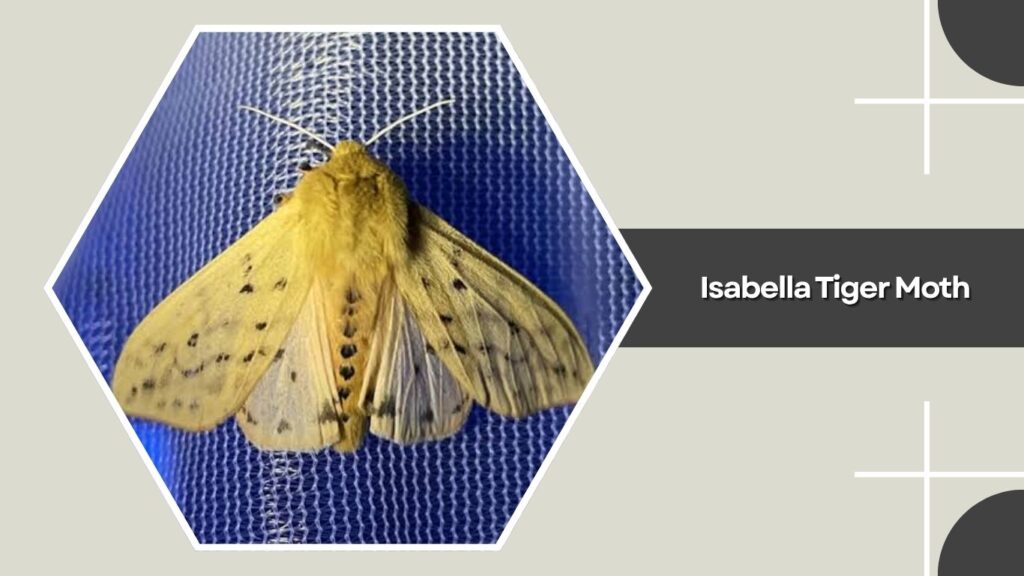
The Isabella tiger moth (Pyrrharctia isabella) is best known for its caterpillar, the banded woolly bear. This familiar caterpillar has black hairs at both ends and a reddish-brown band around its middle. Folklore claims its colors predict winter severity, but the band actually changes with age and growth.
Characteristics
- Wingspan: Approximately 1.8–2.5 inches
- Forewings: Pale yellow, orange-yellow, or cream
- Hindwings: Paler with scattered dark spots
- Abdomen: Yellow-orange with rows of black spots
- Adult activity: Mainly nocturnal
- Caterpillar: Black at both ends with a rusty central band
- Defense: Curls into a tight ball when threatened
Habitat and Distribution
Isabella tiger moths are widespread throughout North America. They inhabit gardens, meadows, pastures, woodland edges, roadsides, parks, and urban areas.
Their caterpillars are frequently seen crossing sidewalks and roads during autumn while searching for sheltered overwintering sites. Adults may appear from spring through summer.
Behavior and Diet
Adult moths fly after dark and may visit artificial lights. The caterpillar responds to danger by curling into a ball, protecting its softer underside with its stiff outer hairs.
Banded woolly bears feed on dandelion, plantain, clover, grasses, nettle, and many other plants. Their flexible diet allows them to live in a wide variety of environments.
Life Cycle and Reproduction
Females place clusters of eggs on suitable vegetation. The caterpillars hatch, feed, and molt several times before colder weather arrives.
The caterpillar overwinters beneath leaf litter, logs, or other sheltered material and can survive freezing temperatures. It resumes activity in spring, forms a hairy silk cocoon, and emerges as an adult. One or two generations may occur annually.
9. Giant Leopard Moth
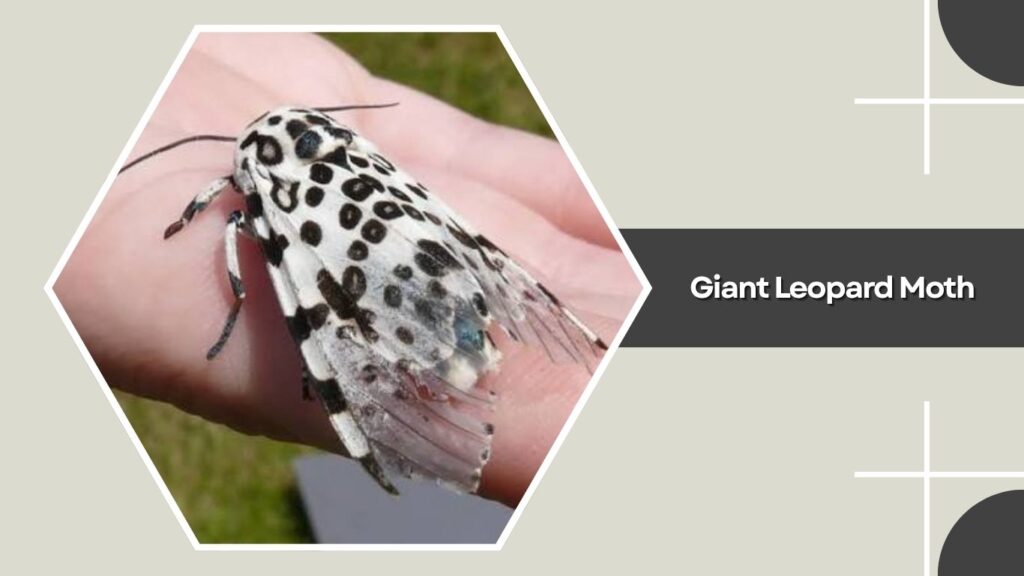
The giant leopard moth (Hypercompe scribonia) is a large North American tiger moth with brilliant white wings covered in blue-black spots. Beneath the wings, its abdomen is metallic blue with orange markings. The caterpillar is a large black woolly bear that reveals bright red bands when it curls its body.
Characteristics
- Wingspan: Approximately 2.2–3.6 inches
- Wings: White with solid and hollow blue-black spots
- Abdomen: Metallic blue with orange markings
- Body: Large, thick, and furry
- Caterpillar: Black with dense, stiff hairs
- Hidden bands: Bright red skin visible between body segments
- Activity: Primarily nocturnal
Habitat and Distribution
Giant leopard moths occur across the eastern and southern United States, with their range extending into parts of Mexico and southern Canada. They inhabit gardens, forests, meadows, farmland, parks, and suburban neighborhoods.
Adults are usually observed during late spring and summer. They rest in sheltered places during the day and often approach artificial lights at night.
Behavior and Diet
Adult giant leopard moths fly primarily after dark. If disturbed, they may display their brightly colored abdomen or release defensive chemicals that discourage predators.
The caterpillars feed on many plants, including dandelion, plantain, violet, honeysuckle, lettuce, willow, and cherry. Although the hairs look sharp, they generally do not sting, but sensitive individuals should avoid unnecessary handling.
Life Cycle and Reproduction
Females lay groups of eggs on suitable host plants. The larvae hatch and feed through several stages, eventually becoming large black woolly bears.
Caterpillars usually overwinter beneath logs, bark, rocks, or fallen leaves. In spring, each mature larva forms a thin cocoon incorporating its own hairs. The adult emerges several weeks later, usually completing one generation annually.
10. Harnessed Tiger Moth
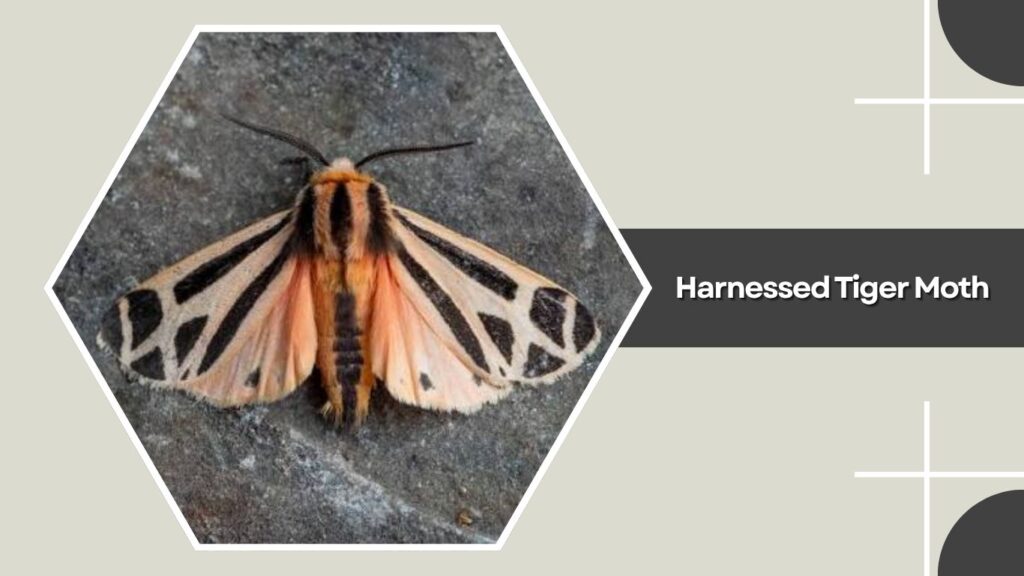
The harnessed tiger moth (Apantesis phalerata) is named for the cream-colored lines crossing its dark forewings like straps or a harness. Its bright orange-red hindwings and abdomen are marked with dark spots. This medium-sized species is commonly encountered in open habitats across eastern North America.
Characteristics
- Wingspan: Approximately 1.2–1.8 inches
- Forewings: Black or dark brown with cream-colored lines
- Hindwings: Orange, red, or pink with dark spots
- Abdomen: Orange with a row of black markings
- Body: Hairy and moderately thick
- Caterpillar: Dark with long black, orange, and cream hairs
- Activity: Mainly nocturnal
Habitat and Distribution
Harnessed tiger moths are found across eastern and central North America. They inhabit meadows, fields, farmland, gardens, woodland edges, roadsides, and suburban areas.
Adults usually fly from late spring through summer. In warmer parts of their range, they may remain active for a longer period or produce additional generations.
Behavior and Diet
Adults fly after sunset and are commonly attracted to outdoor lighting. Their bright hindwings remain covered while resting but become visible during flight or when the moth feels threatened.
The caterpillars feed on clover, corn, dandelion, plantain, grasses, and several other low-growing plants. They usually feed alone and rarely cause significant harm to crops or gardens.
Life Cycle and Reproduction
Females lay clusters of eggs on or near suitable food plants. The caterpillars hatch, feed, and develop dense coverings of protective hairs.
Mature larvae create loose silk cocoons among leaf litter, soil debris, or vegetation. Depending on local conditions, the species may produce more than one generation per year. It can survive winter as a caterpillar or pupa.
11. Banded Tiger Moth
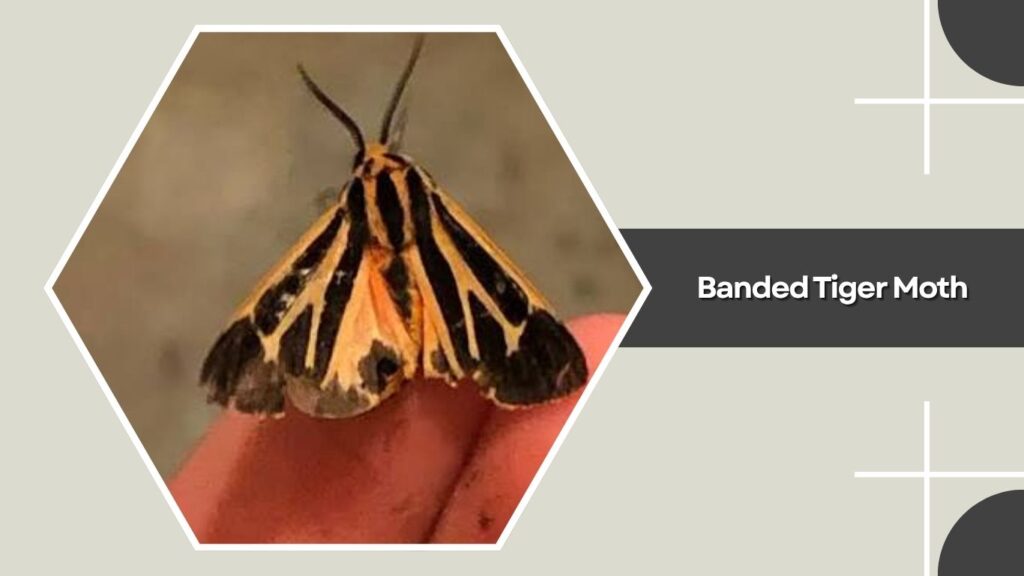
The banded tiger moth (Apantesis vittata) is a colorful North American species with cream-colored bands across its dark forewings. Its orange or reddish hindwings contain bold black markings that warn predators about its chemical defenses. The moth closely resembles several related tiger moth species.
Characteristics
- Wingspan: Approximately 1.3–1.8 inches
- Forewings: Dark brown or black with cream-colored bands
- Hindwings: Orange, red, or pink with black markings
- Abdomen: Orange with a line of dark spots
- Body: Thick and covered with short hairs
- Caterpillar: Dark with black, brown, and cream hairs
- Activity: Primarily nocturnal
Habitat and Distribution
Banded tiger moths occur throughout eastern and central North America. They inhabit grasslands, gardens, farmland, open woodlands, meadows, roadsides, and suburban landscapes.
Adults are most frequently observed during spring and summer. Their flight season may extend longer in warm southern areas, where more than one generation can develop annually.
Behavior and Diet
Adult moths fly at night and are commonly attracted to porch lights. Their dark forewings provide camouflage while resting, while their brightly colored hindwings become visible when they take flight.
The caterpillars feed on clover, dandelion, plantain, grasses, and various other herbaceous plants. Their broad diet helps them survive in both natural and disturbed habitats.
Life Cycle and Reproduction
Females deposit clusters of eggs on suitable food plants. After hatching, the caterpillars feed and molt repeatedly as their dense hairs become more noticeable.
Mature larvae spin loose cocoons among leaf litter or low vegetation. Depending on the climate, the species may overwinter as a caterpillar or pupa. Adults emerge once warm conditions return.
12. Parthenice Tiger Moth
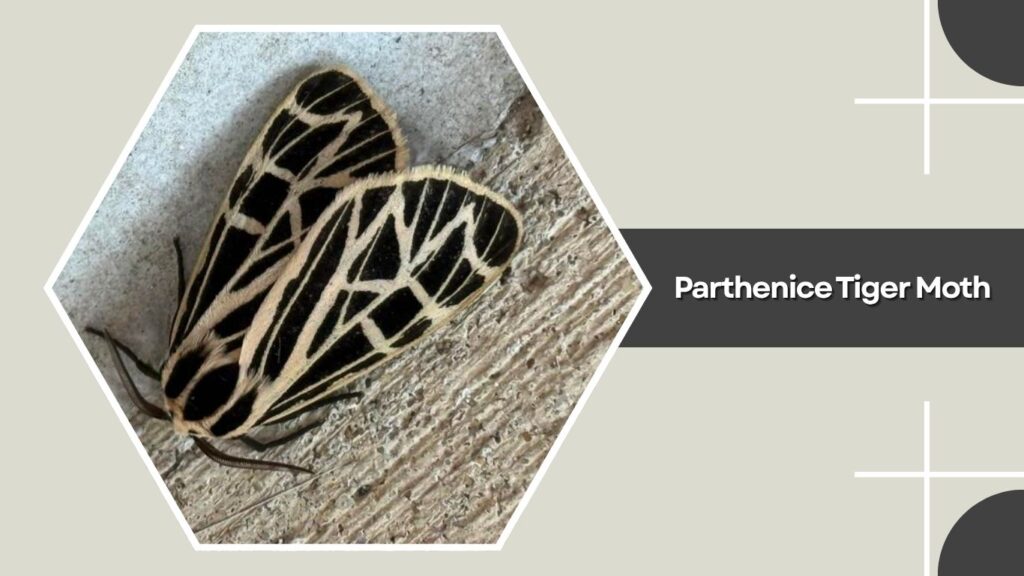
The Parthenice tiger moth (Apantesis parthenice) is a boldly marked species found across much of North America. Its dark forewings are covered with pale lines, while its hindwings are usually reddish or pink with dark patches. Like related tiger moths, it uses bright warning colors for protection.
Characteristics
- Wingspan: Approximately 1.5–2 inches
- Forewings: Dark brown or black with pale yellow lines
- Hindwings: Pink, red, or orange with dark patches
- Abdomen: Reddish-orange with black markings
- Body: Moderately thick and hairy
- Caterpillar: Black with dense brownish or yellowish hairs
- Activity: Mainly nocturnal
Habitat and Distribution
Parthenice tiger moths are widely distributed from southern Canada through much of the United States. They occupy prairies, meadows, woodland edges, gardens, fields, and other open habitats.
Adults generally appear from late spring through early autumn. The exact flight period and number of annual generations depend on regional temperatures.
Behavior and Diet
Adults usually fly after dark and may gather near outdoor lights. When disturbed, they expose their brightly colored hindwings and abdomen, signaling that they may be unpleasant for predators to eat.
The caterpillars feed on dandelion, clover, plantain, dock, and various grasses and wildflowers. They are generalist feeders and rarely cause substantial damage.
Life Cycle and Reproduction
Females lay eggs in groups on the leaves of appropriate food plants. The larvae begin feeding shortly after hatching and develop a thick covering of protective hairs.
Fully grown caterpillars form silk cocoons among plant debris or fallen leaves. The species may produce one or more generations per year. Later generations can overwinter as caterpillars or pupae.
13. Agreeable Tiger Moth
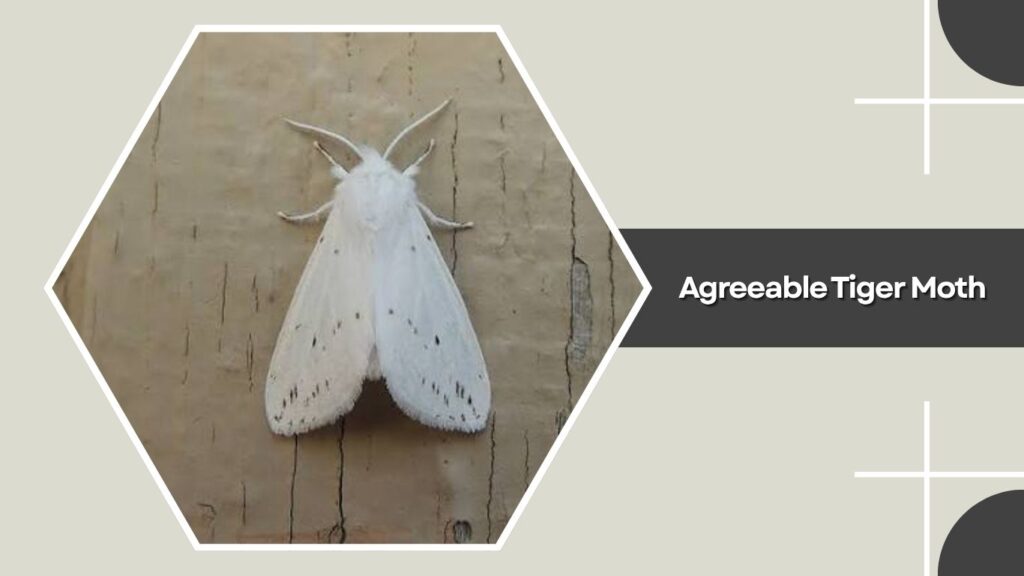
The agreeable tiger moth (Spilosoma congrua) is a pale, delicate-looking species native to North America. Adults are usually white or cream with a few small black spots. Its understated appearance differs considerably from the bold red, orange, and black patterns displayed by many other tiger moths.
Characteristics
- Wingspan: Approximately 1.2–1.8 inches
- Wings: White or creamy white
- Markings: Several small black spots on the wings
- Thorax: White with dark spots
- Abdomen: Yellowish or orange with rows of black spots
- Caterpillar: Yellowish, brown, or black with long hairs
- Activity: Primarily nocturnal
Habitat and Distribution
Agreeable tiger moths occur across eastern and central North America. They inhabit deciduous forests, woodland edges, fields, gardens, parks, and suburban neighborhoods.
Adults usually fly from spring through summer. They are most likely to be noticed when resting on plants during the day or visiting artificial lights after dark.
Behavior and Diet
Adult agreeable tiger moths are nocturnal and generally remain concealed during daylight. Their pale wings can make them highly visible against dark surfaces but provide camouflage on light-colored bark and flowers.
The caterpillars feed on dandelion, plantain, dock, corn, and numerous other herbaceous plants. Despite their woolly appearance, they are generally harmless, though sensitive skin may react to the hairs.
Life Cycle and Reproduction
Females lay clusters of eggs on suitable host plants. Newly hatched caterpillars may remain near each other before spreading out as they mature.
After completing several growth stages, the caterpillar creates a thin silk cocoon containing some of its body hairs. The species can produce multiple generations in warmer areas and may overwinter as a pupa.
14. Salt Marsh Moth
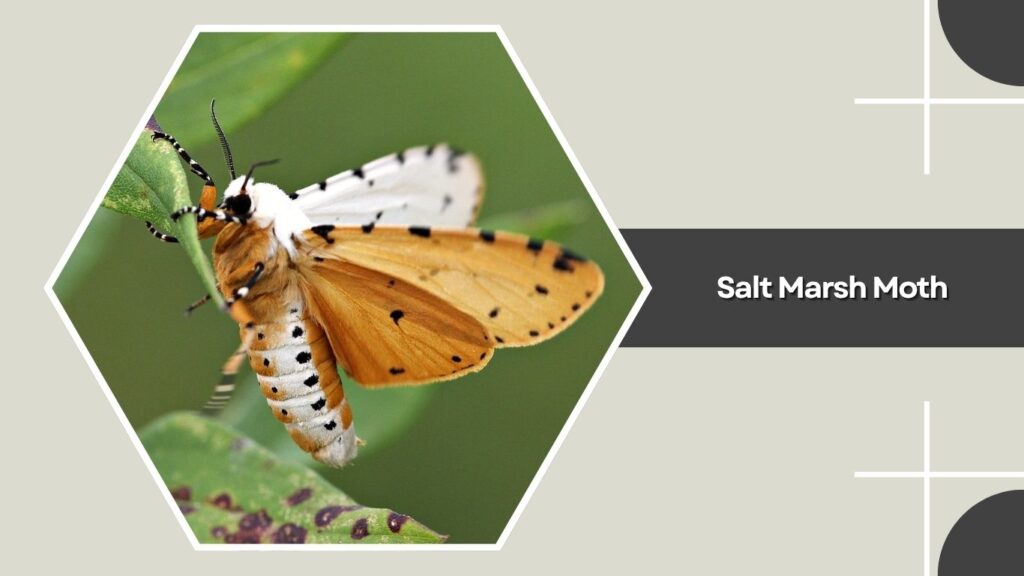
The salt marsh moth (Estigmene acrea) is a widespread tiger moth whose caterpillar is often called the salt marsh caterpillar or woolly bear. Despite its name, the species is not limited to salt marshes. It commonly occurs in gardens, fields, farms, and many other open habitats.
Characteristics
- Wingspan: Approximately 1.6–2.7 inches
- Forewings: White with variable black spots
- Hindwings: White in males and yellowish-orange in females
- Abdomen: Yellow or orange with rows of black spots
- Male antennae: Broad and feathery
- Caterpillar: Yellow, reddish-brown, or black with long hairs
- Activity: Mostly nocturnal
Habitat and Distribution
Salt marsh moths occur throughout North America and extend into Mexico, Central America, and parts of South America. They live in coastal marshes, grasslands, agricultural fields, gardens, roadsides, and disturbed areas.
Adults may be present during much of the warm season. The species is especially abundant in regions containing plentiful low-growing vegetation.
Behavior and Diet
Adults fly at night and are attracted to artificial lights. Their appearance varies considerably, particularly in the number and arrangement of black spots on their wings.
The caterpillars eat many plants, including cabbage, corn, beans, cotton, lettuce, alfalfa, and weeds. Large populations can occasionally damage crops, though the larvae usually feed across several plant species.
Life Cycle and Reproduction
Females lay large clusters of yellowish eggs on the undersides of leaves. Young caterpillars initially feed together before spreading to nearby vegetation.
Mature larvae form silk cocoons mixed with their body hairs beneath plant debris or in the soil. Several generations can occur annually in warm climates. The species may overwinter as a mature caterpillar or pupa.
15. Ornate Tiger Moth
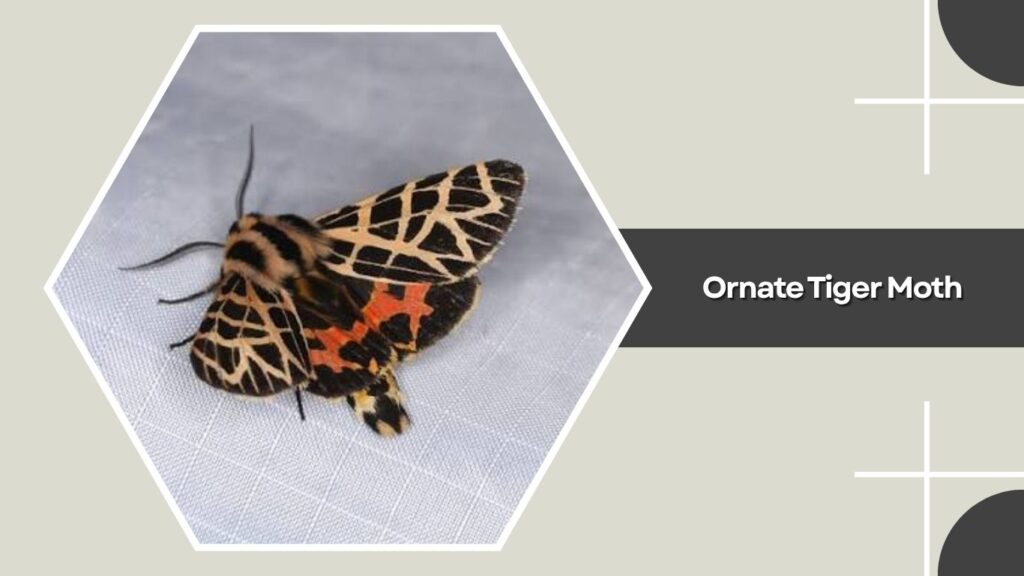
The ornate tiger moth (Apantesis ornata) is a beautifully patterned species native to western North America. Its dark forewings carry bold cream-colored lines, while its hindwings may be orange, red, or yellow with black markings. Its appearance varies across its geographic range.
Characteristics
- Wingspan: Approximately 1.4–2 inches
- Forewings: Black or dark brown with broad cream-colored lines
- Hindwings: Orange, yellow, or red with dark spots
- Abdomen: Brightly colored with black markings
- Body: Thick and covered with short hairs
- Caterpillar: Dark with dense black and reddish-brown hairs
- Activity: Primarily nocturnal
Habitat and Distribution
Ornate tiger moths occur across western North America, from southern Canada through the western United States and into parts of Mexico. They inhabit grasslands, coastal dunes, shrublands, mountain meadows, open forests, and gardens.
Adults generally appear during spring and summer. The flight season varies according to elevation, latitude, and local climate.
Behavior and Diet
Adult ornate tiger moths usually fly after dark and may be attracted to outdoor lighting. Their pale forewing markings break up the outline of the body, while the colorful hindwings serve as a warning display.
The caterpillars feed on lupine, plantain, dandelion, and numerous other low-growing plants. Their dense hairs provide some protection from predators but do not function as venomous spines.
Life Cycle and Reproduction
Females deposit groups of eggs on or close to suitable caterpillar food plants. The larvae feed during the warmer months and pass through several growth stages.
Caterpillars may overwinter before completing development. Fully grown larvae spin loose silk cocoons among leaves or surface debris. Adults emerge when temperatures become favorable, usually producing one generation annually in cooler areas.
16. Anna Tiger Moth
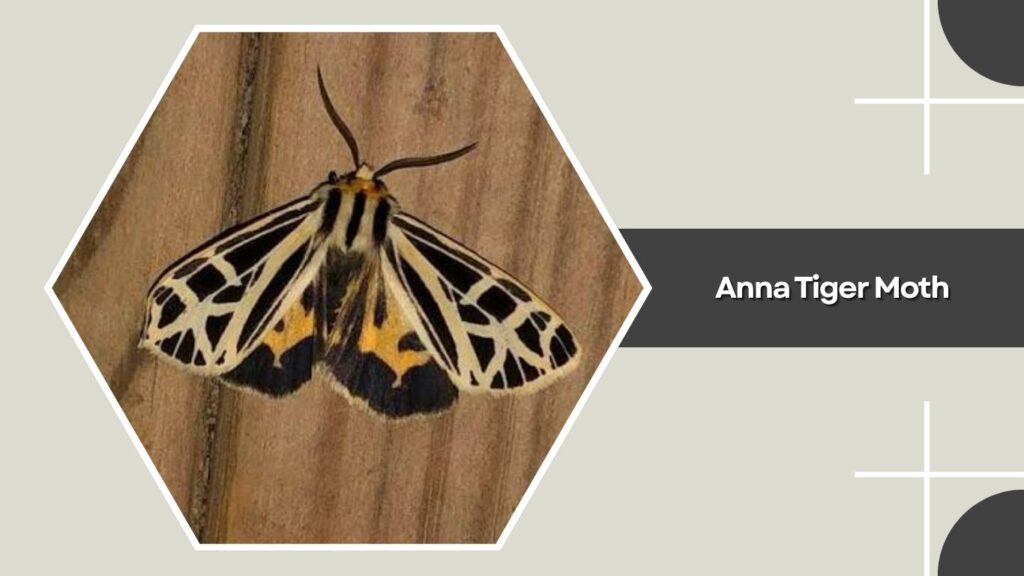
The Anna tiger moth (Apantesis anna) is an attractive North American species with black forewings crossed by cream-colored lines. Its bright yellow hindwings have broad black borders, although some females may have nearly black hindwings. Adults are generally active from late spring through midsummer.
Characteristics
- Wingspan: Approximately 1.6–2.1 inches
- Forewings: Black with thick and thin cream-colored lines
- Hindwings: Bright yellow with broad black borders
- Female coloring: Hindwings may be almost entirely black
- Body: Dark, moderately thick, and hairy
- Caterpillar: Dark with a covering of dense hairs
- Activity: Primarily nocturnal
Habitat and Distribution
Anna tiger moths occur across eastern and central North America. Their range extends from Maine southward into the Appalachian Mountains and westward toward Nebraska and Arkansas.
They inhabit meadows, fields, woodland edges, grasslands, and other environments containing plentiful low-growing plants. Adults are mainly observed between May and July.
Behavior and Diet
Adults generally fly at night and may visit artificial lights. Their dark forewings help provide camouflage, while their yellow hindwings create a sudden warning display when exposed.
The caterpillars feed on various low-growing plants, including clover and plantain. Their flexible diet allows them to develop in several open and semi-wooded habitats.
Life Cycle and Reproduction
Females lay groups of eggs on or near appropriate caterpillar food plants. The larvae hatch and feed through several developmental stages while growing their dense covering of hairs.
Mature caterpillars form loose silk cocoons among vegetation or leaf litter. The species normally overwinters in an immature stage, and adults emerge during the following warm season.
17. Mexican Tiger Moth
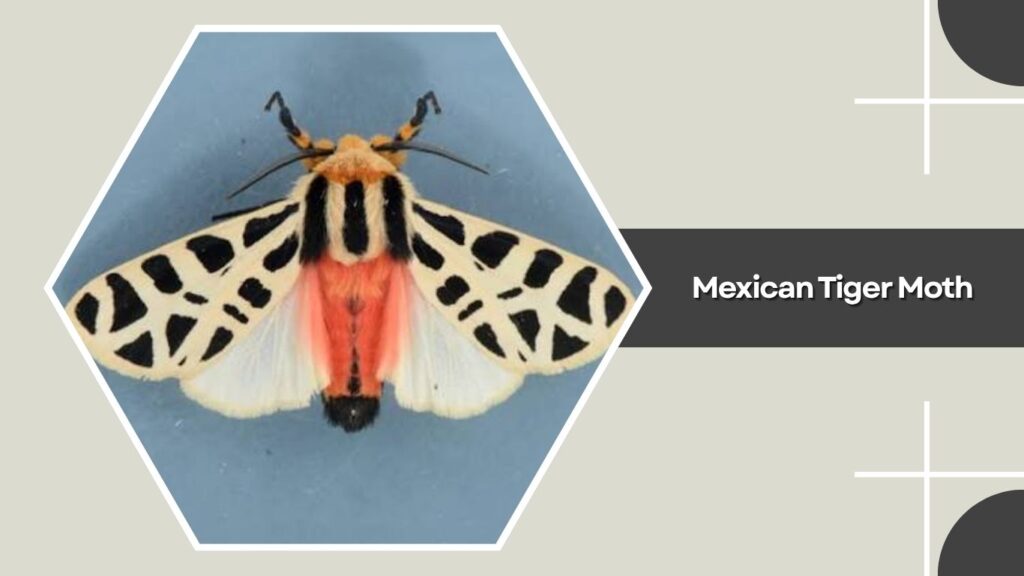
The Mexican tiger moth (Apantesis proxima) is a western North American species notable for the differences between males and females. Both sexes have patterned forewings, but females normally have reddish-pink hindwings, while males possess white hindwings. These contrasting colors are exposed when the moth takes flight.
Characteristics
- Forewing length: Approximately 0.6–0.8 inches
- Forewings: White or cream with bold black markings
- Male hindwings: Primarily white
- Female hindwings: Reddish-pink
- Body: Hairy with contrasting dark and pale markings
- Sexes: Noticeably different in coloration
- Activity: Primarily nocturnal
Habitat and Distribution
Mexican tiger moths occur in Mexico and parts of the western United States. Their northern range includes California, Nevada, western Utah, southern Idaho, and southeastern Oregon.
They occupy dry grasslands, shrublands, open woodlands, mountain valleys, coastal habitats, and other warm environments. Adults can remain active across an extended season in suitable climates.
Behavior and Diet
Adults usually fly after dark and may be attracted to outdoor lights. Their contrasting wing patterns provide visual protection, while the colorful hindwings can startle potential predators when suddenly revealed.
The caterpillars feed on low-growing vegetation. Like other woolly bear caterpillars, they have a dense covering of hairs that provides physical protection but should still be handled carefully.
Life Cycle and Reproduction
Females place their eggs on suitable vegetation. After hatching, the caterpillars feed, molt repeatedly, and gradually develop their characteristic hairy appearance.
Mature larvae create silk cocoons among leaves, soil debris, or low vegetation. Several adult flights may occur from spring through autumn in warmer portions of the species’ range. The overwintering stage varies with local climate.
